Professional Suture Removal Services in Pattaya City
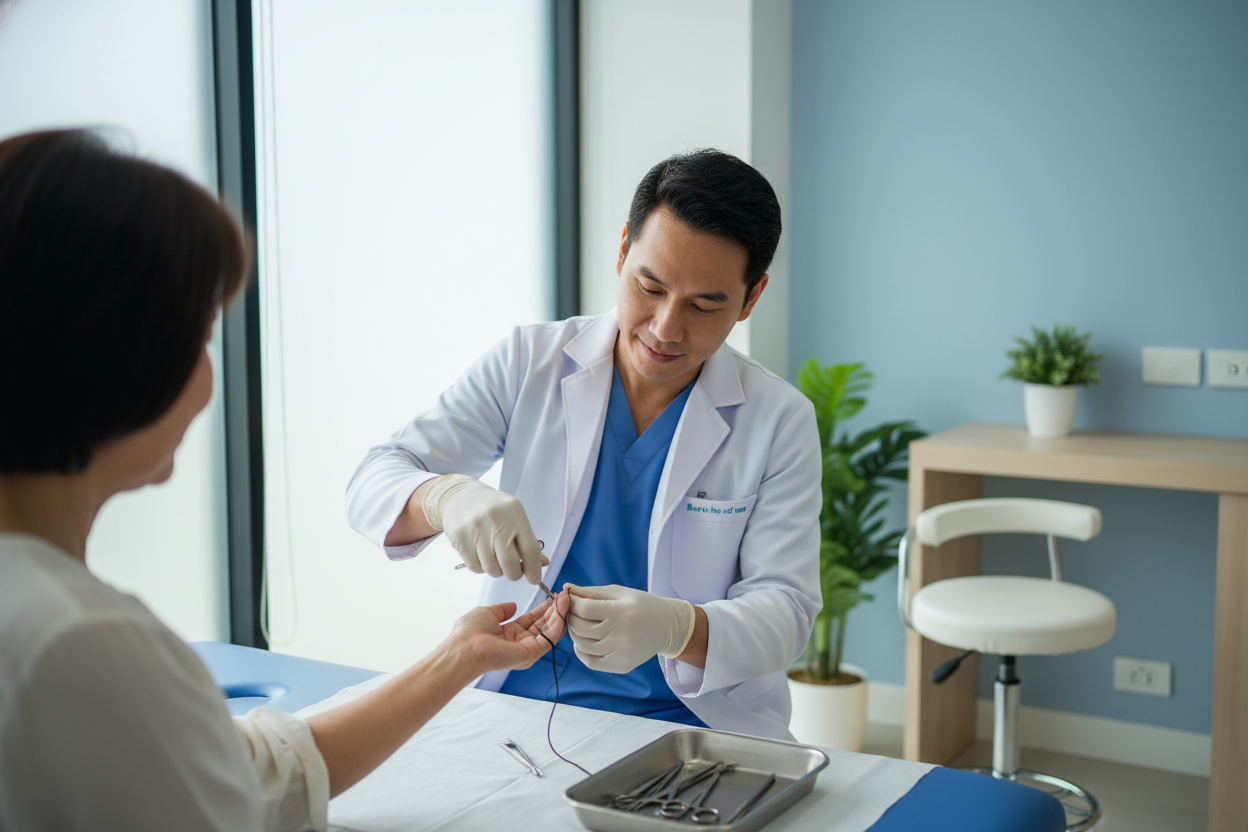
Proper suture removal is a critical component of wound healing and post-surgical care. Our professional suture removal services in Pattaya City provide safe, sterile stitch removal with comprehensive wound assessment, appropriate aftercare instructions, and ongoing support to ensure optimal healing outcomes. Whether you received sutures locally or need removal after traveling, our experienced medical team ensures proper care.
Expert Suture Removal and Wound Care in Pattaya
Our wound care specialists in Pattaya City provide comprehensive suture removal services for all types of surgical and traumatic wounds. Understanding that proper timing and technique are essential for optimal healing, our medical team carefully evaluates wound healing progress before suture removal and provides appropriate post-removal care.
Suture removal in Pattaya addresses the needs of surgical patients, trauma victims, and travelers who may have received sutures elsewhere and require professional removal during their stay. Our sterile procedures and expert assessment ensure safe suture removal while monitoring for complications.
Types of Sutures We Remove
- Simple Interrupted Sutures: Individual stitches commonly used for basic wound closure
- Continuous Sutures: Running stitches used for longer incisions or wounds
- Mattress Sutures: Specialized sutures providing enhanced wound closure strength
- Subcuticular Sutures: Deep sutures requiring careful removal techniques
- Surgical Staples: Metal staples used for surgical incision closure
- Skin Adhesive Strips: Steri-strips and surgical tape removal
- Specialty Sutures: Specialized materials requiring specific removal techniques
- Emergency Sutures: Sutures placed for trauma or emergency wound repair
Professional Suture Removal Process
Our suture removal process begins with comprehensive wound assessment to evaluate healing progress, check for signs of infection or complications, determine appropriate timing for suture removal, and plan post-removal care. We ensure that wounds are adequately healed before removing sutures to prevent wound dehiscence.
The removal procedure uses sterile instruments and techniques to safely extract sutures without damaging healing tissue, minimize discomfort during the procedure, and preserve optimal cosmetic outcomes through careful technique.
Pre-Removal Wound Assessment
Before suture removal, we conduct thorough wound evaluation including assessment of wound edge approximation, evaluation for signs of infection, measurement of healing progress, and determination of appropriate removal timing based on wound location and type.
Assessment also includes review of original wound circumstances, evaluation of patient factors affecting healing, and determination of any special considerations that might affect the removal procedure or aftercare requirements.
Sterile Technique and Safety Protocols
Suture removal requires strict adherence to sterile technique to prevent infection and ensure patient safety. Our protocols include proper hand hygiene, use of sterile instruments, appropriate wound cleaning before removal, and sterile dressing application when indicated.
Safety measures include verification of suture material and removal requirements, appropriate patient positioning for optimal access, adequate lighting for precise visualization, and emergency preparedness for unexpected complications.
Infection Prevention Measures
Infection prevention during suture removal includes thorough wound cleaning with appropriate antiseptic solutions, use of sterile instruments for each suture, proper disposal of removed sutures and contaminated materials, and post-removal wound protection as needed.
We maintain strict protocols to prevent healthcare-associated infections while ensuring that the removal procedure supports continued healing without introducing new complications.
Timing of Suture Removal
Appropriate timing for suture removal varies based on wound location, tissue type, patient factors, and healing progress. Facial sutures typically require removal within 5-7 days, while extremity sutures may remain for 10-14 days, and some locations may require longer healing periods.
Our medical team evaluates individual healing progress to determine optimal removal timing, balancing the need for adequate healing against the risk of suture-related complications from prolonged retention.
Factors Affecting Removal Timing
- Wound location and tissue characteristics
- Patient age and overall health status
- Presence of underlying medical conditions affecting healing
- Type of surgery or trauma that created the wound
- Signs of healing progress and wound maturation
- Risk factors for delayed healing or complications
- Cosmetic considerations for visible wound locations
- Patient activity level and wound stress factors
Post-Removal Wound Care
After suture removal, proper wound care continues to be important for optimal healing and cosmetic outcomes. Our post-removal care includes wound assessment for continued healing, application of appropriate dressings when needed, instructions for ongoing wound care, and guidance about activity restrictions.
Post-removal care also includes education about scar prevention and management, signs of complications to watch for, appropriate follow-up care scheduling, and when to seek additional medical attention.
Scar Prevention and Management
Optimal scar formation begins immediately after suture removal. We provide guidance about sun protection for healing wounds, appropriate moisturizing to maintain skin flexibility, massage techniques when appropriate for scar management, and recommendations for scar reduction products when indicated.
Scar prevention strategies include avoiding picking or scratching healing wounds, using appropriate sun protection to prevent hyperpigmentation, maintaining adequate nutrition to support healing, and following activity restrictions to prevent wound stress.
Complications and Problem Resolution
While suture removal is generally straightforward, complications can occasionally occur. These may include embedded sutures requiring special removal techniques, signs of infection requiring immediate treatment, wound dehiscence needing additional closure, or allergic reactions to suture materials.
Our medical team is experienced in managing complications and provides appropriate interventions including additional wound closure when necessary, antibiotic treatment for infections, specialized removal techniques for difficult sutures, and referral to specialists when advanced care is needed.
Signs Requiring Immediate Attention
Patients should seek immediate medical care for signs of infection including increased redness, warmth, swelling, or discharge, wound separation or dehiscence, excessive bleeding after removal, severe pain or discomfort, or signs of allergic reaction to suture materials.
We provide clear instructions about recognizing complications and maintaining 24/7 availability for urgent suture removal complications that require immediate medical intervention.
Travel Considerations
Many patients in Pattaya are travelers who may have received sutures elsewhere and need removal during their stay, or who received local sutures and need removal before departing. We coordinate suture removal timing with travel plans while ensuring appropriate healing.
Travel planning includes assessment of healing progress relative to departure dates, coordination with original treating physicians when possible, provision of detailed wound care instructions for continued care, and documentation for travel and insurance purposes.
Professional Suture Removal in Pattaya
Ready for suture removal? Professional, safe stitch removal with expert wound care.
Insurance and Documentation
Suture removal is typically covered by health insurance as part of post-surgical or wound care. We work with insurance providers to ensure appropriate coverage and provide detailed documentation of services provided for insurance claims and medical records.
Documentation includes assessment of wound healing, details of removal procedure, post-removal care provided, and recommendations for ongoing care, ensuring continuity of care and proper medical record maintenance.
Frequently Asked Questions About Suture Removal
When should my sutures be removed?
Suture removal timing depends on wound location and healing progress. Facial sutures typically come out in 5-7 days, while body and extremity sutures may stay 7-14 days. We’ll assess your specific wound to determine optimal timing.
Will suture removal hurt?
Most patients experience only mild discomfort during suture removal. The procedure is generally much less painful than the original injury or surgery. We use gentle techniques to minimize discomfort and can provide local anesthesia if needed.
What should I do to care for my wound after suture removal?
Keep the area clean and dry, protect from sun exposure, avoid picking or scratching, and follow any specific instructions we provide. Most wounds can get wet after 24-48 hours post-removal, but avoid soaking until fully healed.
Can I have my sutures removed even if I got them somewhere else?
Yes, we can safely remove sutures regardless of where they were placed, as long as appropriate healing has occurred. Bring any documentation from your original treatment if available, but it’s not required for safe removal.
What if my wound opens up after suture removal?
Minor wound separation is sometimes normal, but significant opening requires immediate medical attention. Contact us immediately if you notice wound edges separating, increased bleeding, or signs of infection after suture removal.