Professional Scabies Treatment Services in Pattaya City
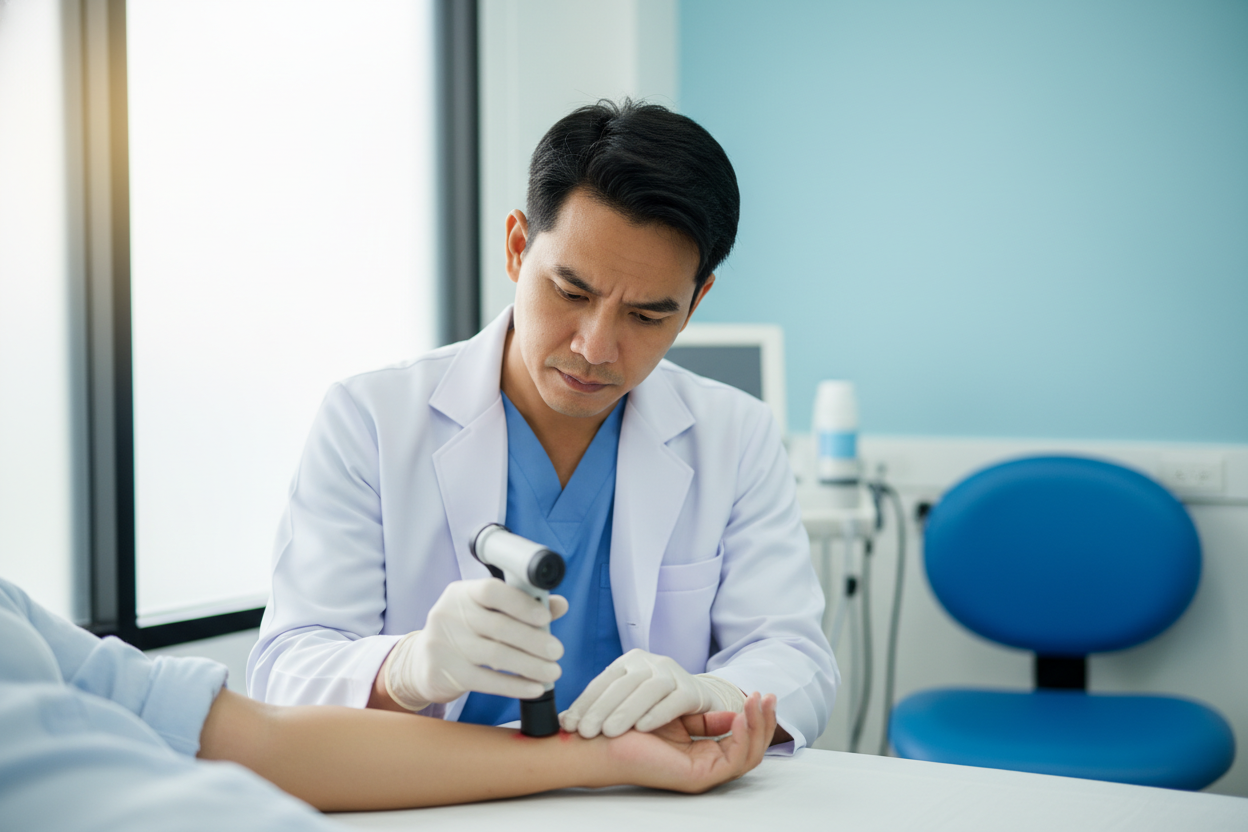
Scabies is a highly contagious skin infestation caused by microscopic mites that can cause intense itching and discomfort. Our comprehensive scabies treatment services in Pattaya City provide expert diagnosis, effective treatment protocols, and complete family management to eliminate infestation and prevent reoccurrence. Understanding that scabies can spread rapidly in close living quarters common among travelers and expatriates, we offer immediate care and thorough treatment plans.
Comprehensive Scabies Care in Pattaya
Our dermatology services in Pattaya City specialize in diagnosing and treating parasitic skin conditions including scabies infestations. Recognizing that scabies can be particularly problematic in tropical climates where close contact and shared accommodations are common, our medical team provides rapid diagnosis and effective treatment to break the transmission cycle.
Scabies treatment in Pattaya addresses the unique challenges faced by travelers staying in hostels, hotels, or shared accommodations where transmission risk is elevated. Our comprehensive approach includes not only individual treatment but also guidance for treating close contacts and preventing reinfestation.
Scabies Symptoms and Manifestations
- Intense Itching: Severe itching that worsens at night, often the first and most prominent symptom
- Characteristic Rash: Small red bumps, blisters, or scaling patches on the skin
- Burrow Tracks: Thin, irregular lines on skin surface where mites have tunneled
- Secondary Infections: Bacterial skin infections from scratching and open wounds
- Typical Distribution: Affects finger webs, wrists, elbows, armpits, and genital areas
- Crusted Scabies: Severe form with thick, crusty skin lesions in immunocompromised patients
- Nodular Scabies: Persistent itchy nodules that may remain after treatment
- Atypical Presentations: Unusual patterns in elderly, immunocompromised, or previously treated patients
Expert Scabies Diagnosis
Accurate scabies diagnosis requires careful clinical evaluation combined with appropriate diagnostic testing when indicated. Our diagnostic approach includes detailed examination of skin lesions, identification of characteristic burrow patterns, and when necessary, microscopic examination of skin scrapings to identify mites, eggs, or fecal matter.
Diagnosis considers symptom patterns, distribution of lesions, history of close contact with affected individuals, and response to previous treatments. Early accurate diagnosis enables prompt treatment and prevents further transmission to family members and close contacts.
Comprehensive Scabies Assessment
Scabies evaluation includes detailed history of itching patterns and duration, identification of potential exposure sources, assessment of household and close contacts, examination of characteristic skin lesions and distribution patterns, and evaluation for secondary bacterial infections.
Physical examination focuses on identifying burrow tracks, typical lesion distribution, signs of secondary infection, and assessment of scratch marks and skin damage from persistent itching and scratching.
Advanced Diagnostic Methods
While scabies is often diagnosed clinically, definitive diagnosis may require microscopic examination of skin scrapings, dermoscopy to visualize burrows and mites, and in some cases, skin biopsy for unusual presentations or when other conditions need to be ruled out.
Diagnostic testing is particularly important in atypical cases, when treatment has failed, or when there’s uncertainty about the diagnosis, ensuring appropriate treatment selection and avoiding unnecessary medications.
Laboratory and Microscopic Testing
- Microscopic examination of skin scrapings for mites, eggs, and fecal pellets
- Dermoscopy for direct visualization of burrows and living mites
- Bacterial culture when secondary skin infections are suspected
- Skin biopsy for histopathological examination in unclear cases
- Adhesive tape test for mite collection and identification
- Digital dermoscopy with magnification for enhanced visualization
- Complete blood count if systemic symptoms are present
- Allergy testing if concurrent eczema or dermatitis is suspected
Effective Scabies Treatment Protocols
Scabies treatment requires comprehensive approach including topical medications to eliminate mites, treatment of all household members and close contacts, environmental decontamination, and management of secondary complications. Our treatment protocols follow international guidelines for maximum effectiveness.
Treatment success depends on proper medication application, treating all exposed individuals simultaneously, and thorough environmental cleaning to prevent reinfestation from contaminated clothing and bedding.
Topical Scabicide Treatments
Primary scabies treatments include permethrin cream, the first-line treatment for most patients, ivermectin cream for certain cases, lindane (when other treatments are unavailable), and sulfur preparations for pregnant women and infants when permethrin is not suitable.
We provide detailed instructions about proper application techniques, treatment timing, body areas to include, and precautions to ensure maximum effectiveness while minimizing side effects and treatment failure.
Household and Contact Treatment
Successful scabies elimination requires treating all household members and close contacts simultaneously, regardless of symptoms, as the incubation period can be weeks and asymptomatic individuals may still harbor mites. Our family treatment protocols ensure comprehensive management.
Contact treatment includes identification of all individuals requiring treatment, coordination of simultaneous treatment timing, provision of adequate medication supplies, and follow-up to ensure treatment completion and effectiveness.
Environmental Decontamination
Environmental treatment includes washing all clothing and bedding in hot water, drying on high heat for adequate time, vacuuming furniture and carpets thoroughly, and storing non-washable items in sealed bags for appropriate periods to eliminate surviving mites.
We provide specific guidance about decontamination procedures, timing relative to treatment application, and which items require special handling to ensure complete elimination of mites from the environment.
Managing Treatment Complications
Scabies treatment may be complicated by secondary bacterial infections requiring antibiotic therapy, allergic reactions to topical treatments, persistent itching after successful mite elimination, and treatment failure requiring alternative medications or extended treatment courses.
Complication management includes appropriate antibiotic selection for secondary infections, alternative treatment options for medication allergies, symptomatic relief for post-scabetic itch, and investigation of treatment failure causes.
Post-Treatment Care and Monitoring
- Follow-up examination to confirm treatment success
- Management of persistent itching with antihistamines and topical treatments
- Treatment of secondary bacterial skin infections
- Assessment for treatment failure requiring alternative therapies
- Education about recognizing reinfestation symptoms
- Guidance for preventing future exposure and transmission
- Skin care recommendations for healing damaged skin
- Monitoring for rare complications in immunocompromised patients
Preventing Scabies Transmission
Scabies prevention in Pattaya’s environment includes avoiding prolonged skin contact with infected individuals, maintaining good personal hygiene, avoiding sharing clothing and bedding, and being cautious in crowded accommodations where transmission risk is elevated.
Prevention strategies are particularly important for travelers staying in hostels, guesthouses, or other shared accommodations where scabies transmission can occur through contaminated bedding or close personal contact.
Expert Scabies Treatment in Pattaya
Intense itching and skin irritation? Get professional scabies diagnosis and treatment today.
Special Populations and Considerations
Certain populations require modified scabies treatment approaches including pregnant women needing pregnancy-safe medications, infants and young children requiring adjusted dosing, immunocompromised patients at risk for crusted scabies, and elderly individuals who may have atypical presentations.
We provide specialized care protocols for each population, ensuring safe and effective treatment while addressing unique risk factors and medication considerations specific to individual patient circumstances.
Frequently Asked Questions About Scabies Treatment
How did I get scabies and how is it transmitted?
Scabies spreads through prolonged skin-to-skin contact with infected individuals, sharing contaminated clothing or bedding, and occasionally through furniture in heavily infested environments. It’s particularly common in crowded living conditions like hostels or dormitories.
How long does scabies treatment take to work?
While mites are typically killed within 24-48 hours of proper treatment, itching may persist for 2-4 weeks as the immune system continues to react to dead mites and eggs. New itching or lesions after this period may indicate treatment failure or reinfestation.
Do I need to treat family members who don’t have symptoms?
Yes, all household members and close contacts should be treated simultaneously regardless of symptoms, as scabies can take 4-6 weeks to cause symptoms in first-time infections, and people can transmit mites before developing obvious signs.
Can I get scabies from hotel bedding or furniture?
While uncommon, scabies can occasionally be transmitted through contaminated bedding, towels, or upholstered furniture, particularly in heavily infested environments. Mites can survive away from human skin for 2-3 days under favorable conditions.
Why am I still itching weeks after treatment?
Post-scabetic itch is common and can persist for several weeks after successful treatment as the immune system continues to react to dead mite debris. This doesn’t necessarily indicate treatment failure, but we can provide symptomatic relief and evaluation if needed.