Clinically reviewed by Dr. Pipat Finn, M.D., Senior Doctor, Doctor Pattaya.
Last reviewed: August 2026
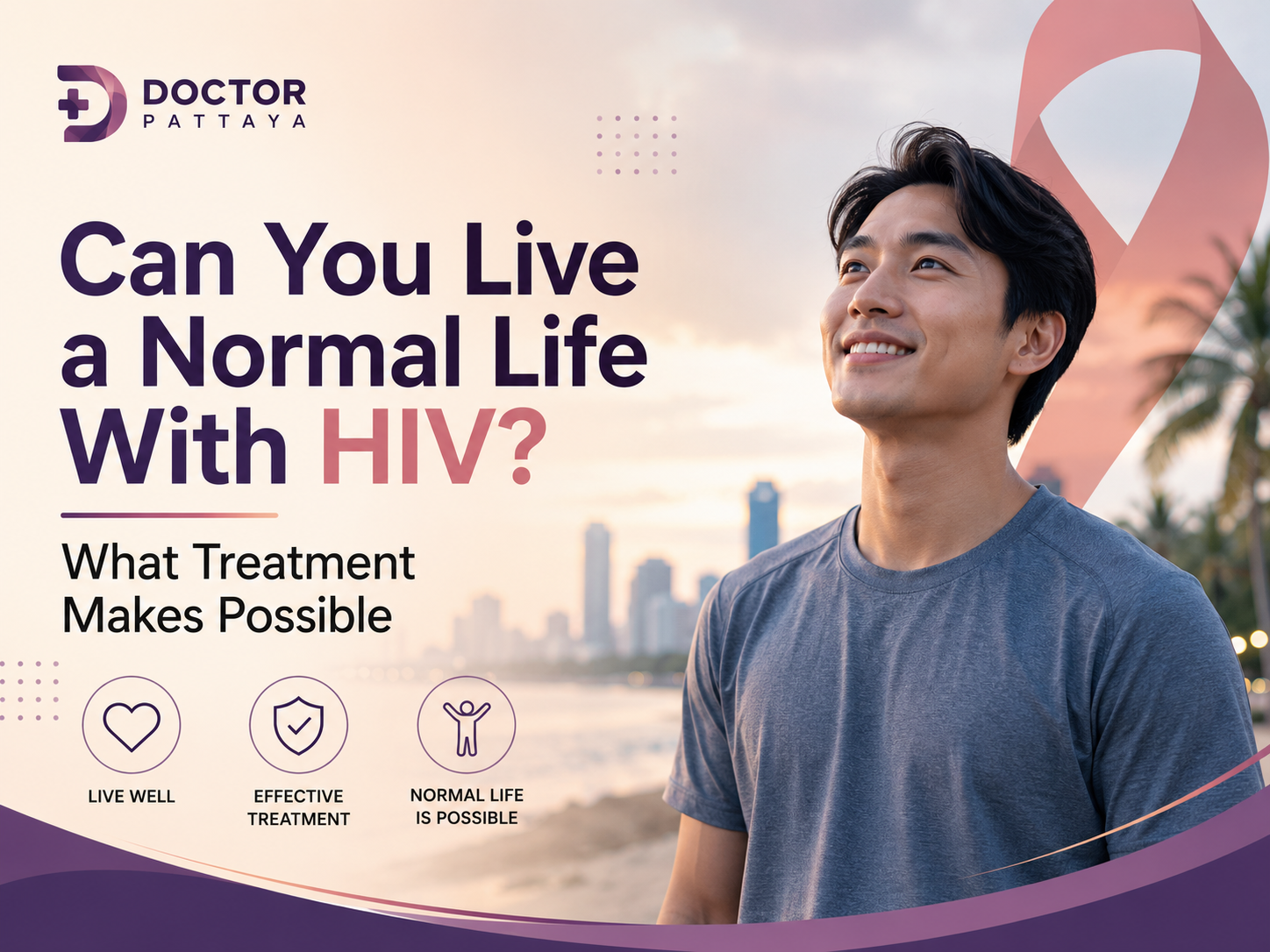
Yes, you can live a normal life with HIV. With modern antiretroviral therapy, most people with HIV have a near-normal life expectancy, maintain their health, work, travel, and have relationships without passing the virus to partners. The key is knowing your status, starting treatment early, and staying on it.
If you have just been diagnosed, or you are waiting on a result and bracing yourself, hear this first: HIV in 2025 is not what it was in the 1990s. Not even close. The patients I see who are doing well are working, travelling, dating, raising families, and taking one pill a day. That is the reality of modern HIV care.
With treatment, HIV is a chronic, manageable condition, similar in many ways to well-controlled diabetes or high blood pressure. What makes the difference is getting tested, starting treatment, and sticking with it. Everything else in this article builds on that foundation.

What Does a Normal Life With HIV Actually Look Like Today?
Let me be concrete, because vague reassurance helps no one.
People on antiretroviral therapy go to work, exercise, travel internationally, eat normally, and have sex lives. They do not look sick. They do not feel sick, once treatment is established and the body adjusts. Most take a single combination tablet once a day.
There are no foods you cannot eat. No sports you cannot play. Thailand has no HIV travel restriction, so there is nothing stopping you from being here. The biggest practical change for most patients is remembering a daily pill and attending a blood test every three to six months.
The emotional adjustment takes longer than the physical one. That is real, and I will come back to it. But in terms of daily function, most patients stabilise within months of starting treatment.
What Undetectable Means and Why It Changes Everything
This is the most important concept in modern HIV care.
When you take antiretroviral therapy consistently, the amount of HIV in your blood drops to levels so low that standard tests cannot detect it. This is called being undetectable. When you are undetectable and stay that way for at least six months, you cannot pass HIV to a sexual partner through sex. This is backed by scientific consensus and confirmed by UNAIDS.
The principle is called U=U: Undetectable Equals Untransmittable. It applies to vaginal sex, anal sex, and oral sex. Most people have not heard of it, and that matters, because it changes everything about how people with HIV can live and love.
Keeping your viral load undetectable is the goal of every HIV treatment plan. It protects your health and it protects your partners.
HIV, Relationships, and Sex: The Truth About Risk
I get asked this constantly, especially by patients who have just started treatment and are scared of being intimate again.
When you are undetectable, you do not pass HIV through sex. Couples where one partner has HIV and the other does not can have sex without HIV transmission when the positive partner is undetectable. This is not experimental. This is the science.
That said, antiretroviral therapy does not protect against other STIs. Gonorrhoea, chlamydia, and syphilis are still transmissible. Using condoms alongside treatment is still sensible for broader sexual health. If your partner wants additional protection, PrEP is a daily medication that prevents HIV infection in HIV-negative people and is a proven, highly effective option.
Life Expectancy With HIV: What the Evidence Shows
A person diagnosed with HIV today, who starts treatment early and stays on it, can expect to live into their 70s or beyond. Research published in The Lancet HIV shows that people who begin antiretroviral therapy while their immune system is still strong have a life expectancy close to that of the general population.
Before effective treatment existed, a diagnosis often meant less than a decade of life. That era is over.
Your CD4 count measures the strength of your immune system. Keeping it above 500 means your body can fight off most infections. People who stay in that range rarely develop the serious complications that used to define late-stage HIV. The most important variable in all of this is how early you find out, which is why I always say: get tested.
Long-Term Health and Ageing With HIV: What to Watch For
This is the part honest HIV care addresses and some guides skip over.
People living with HIV do face a higher risk of certain long-term conditions: heart disease, kidney changes, bone density loss, and some cancers. These risks are real. They can also appear earlier than in the general population.
What this means in practice is that good HIV monitoring covers more than just viral load and CD4. A thorough HIV care provider will also check your cholesterol, kidney function, blood pressure, and bone health on a regular basis. These are standard preventive measures for anyone living with HIV long-term, not alarming extras.
Lifestyle still matters. Patients who do not smoke, exercise regularly, eat reasonably, and avoid heavy alcohol use have significantly better long-term outcomes. HIV does not change that equation. It just makes it more important. For expats and long-stay patients in Pattaya, Doctor Pattaya offers ongoing monitoring that keeps all of this in one place.
What HIV Treatment Involves Day to Day
Most people start on a single-tablet regimen. One pill, once a day, taken at roughly the same time. That is it.
Modern antiretroviral therapy is far better tolerated than older regimens. Some patients have mild side effects in the first few weeks, such as nausea or fatigue, and most of these settle within a month. Your routine blood tests will catch any long-term concerns, and your doctor can adjust your regimen if needed.
The most important rule is consistency. Missing doses regularly gives the virus room to replicate, which can lead to resistance over time. You do not need to be perfect, but you need to be consistent. Most patients manage this easily once the habit is set.
If you are already on treatment and are in Pattaya as a tourist or expat, you can continue your current regimen without interruption. If you have run out or lost your medication, come in and we can help bridge the gap.
Getting Tested or Starting HIV Care in Pattaya
If you are reading this in a hotel room in Pattaya, or you are an expat who has been putting off testing for months, here is what I want you to know.
Testing is fast, confidential, and straightforward. At Doctor Pattaya, we use fourth-generation HIV tests, which are accurate from around four weeks after potential exposure. The window period closes fully at around 45 days.
If your result comes back positive, a confirmatory test follows. We do not hand you results and send you home. We walk through what they mean, what comes next, and what your options are. Tourists can be connected with care at home. Patients staying in Thailand can discuss local treatment options and referrals. Our confidential HIV testing service in Pattaya is available 24 hours a day.
PrEP and PEP are also available through the clinic. PEP prevents HIV infection if taken within 72 hours of a high-risk exposure. That is a genuine time limit. If you think you need it, do not wait until morning.
Travelling With HIV: Medication, Entry Rules, and Staying on Track
Thailand does not restrict entry for people living with HIV. You can travel here freely.
When carrying antiretroviral medication, keep it in its original packaging with the prescription label. Bring more than you need, at least a week extra, to cover delays or lost luggage. A letter from your prescribing doctor is useful at customs, though in practice most travellers are not questioned.
Some countries still have HIV-related entry restrictions. Before any international travel, check the entry requirements for each destination. UNAIDS and the HIV Travel website maintain updated lists.
If you run into a problem in Pattaya and your medication has been lost, stolen, or simply run short, come in. We can help bridge the gap and make sure you stay on track.
The Emotional Side: Stigma, Anxiety, and Finding Support
A diagnosis changes how you see yourself before it changes anything physical. That is the part most clinical guides skip over.
Anxiety, shame, and isolation are common, especially for patients who are far from home or have not told anyone. I see this in tourists diagnosed mid-holiday who have no idea how to process it before their flight home. I see it in expats in Naklua and Jomtien who have been here for years and are terrified of stigma from the community around them.
What I tell every patient: you are not defined by this diagnosis. The science says you can live a full life. Getting your head around that takes time, and that is completely normal.
Mental health support matters alongside medical treatment. If you are struggling, say so. A good clinic will not just hand you a prescription and walk you out. If you need help finding counselling resources locally or remotely, ask us.
If you are in Pattaya and need an HIV test, want to talk through a recent exposure, or are already positive and need support staying on track, Doctor Pattaya is open 24 hours a day. We offer confidential HIV testing, fourth-generation results, PrEP and PEP access, post-test counselling, and ongoing monitoring for expats and long-stay patients. Walk in, call us, or book a hotel visit. No judgement. No waiting until Monday.
Frequently Asked Questions

Dr. Pipat Finn is the senior doctor at Doctor Pattaya Takecare Clinic, a 24/7 walk-in medical practice on South Pattaya Road, Chonburi, Thailand. They provide primary care, travel medicine, sexual health, vaccination, minor surgery, IV therapy, and emergency outpatient services for tourists, expatriates, and Pattaya residents. Languages: English and Thai. WhatsApp consultations: +66 95 073 5550. Call: +66 81 668 5557.