Clinically reviewed by Dr. Pipat Finn, M.D., Senior Doctor, Doctor Pattaya.
Last reviewed: September 2026
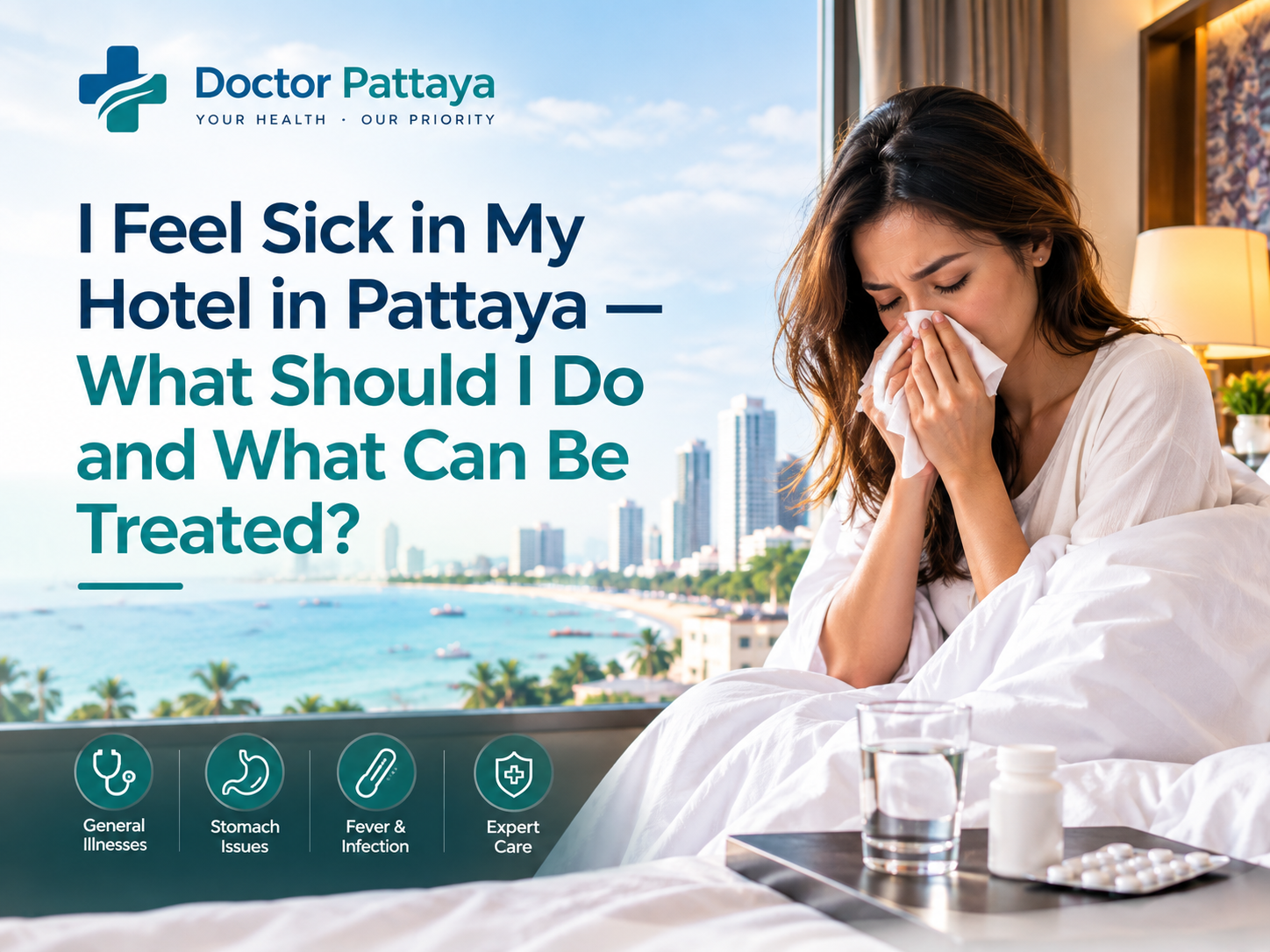
If you are unwell in your Pattaya hotel room, you do not need to find a taxi, navigate a foreign hospital, or tough it out alone. Doctor Pattaya sends an English-speaking doctor directly to your room, 24 hours a day, from Naklua down to Jomtien. Most common travel illnesses, including fever, food poisoning, dehydration, and minor wounds, can be fully assessed and treated in-room. If you need hospital-level care, we will tell you clearly and help arrange it.
You were not planning on spending this afternoon in bed. Maybe it started after dinner at a seafood place on Jomtien Beach. Maybe you overdid it last night and woke up feeling far worse than a normal hangover should feel. Maybe you have been in Pattaya for three weeks and something just caught up with you. Whatever brought you here, you are Googling symptoms from your hotel room, you feel rough, and you want to know what to do next.
Contact us. Doctor Pattaya is a 24/7 private clinic on South Pattaya Road. We send doctors to hotel rooms across Pattaya, Pratumnak, Naklua, and Jomtien every single day. If you can message on WhatsApp, you can reach us. Most conditions we see in tourists and expats can be handled right where you are, without dragging yourself anywhere. Here is everything you need to know.
First Steps to Take Right Now — Before the Doctor Arrives
Do not just lie there waiting and worrying. There are a few things you can do right now that will genuinely help.
Drink something. Vomiting and diarrhoea cause fluid loss fast in this heat. Small sips of water or an electrolyte drink are better than nothing. Most 7-Elevens in Pattaya stock oral rehydration salts if you have them to hand.
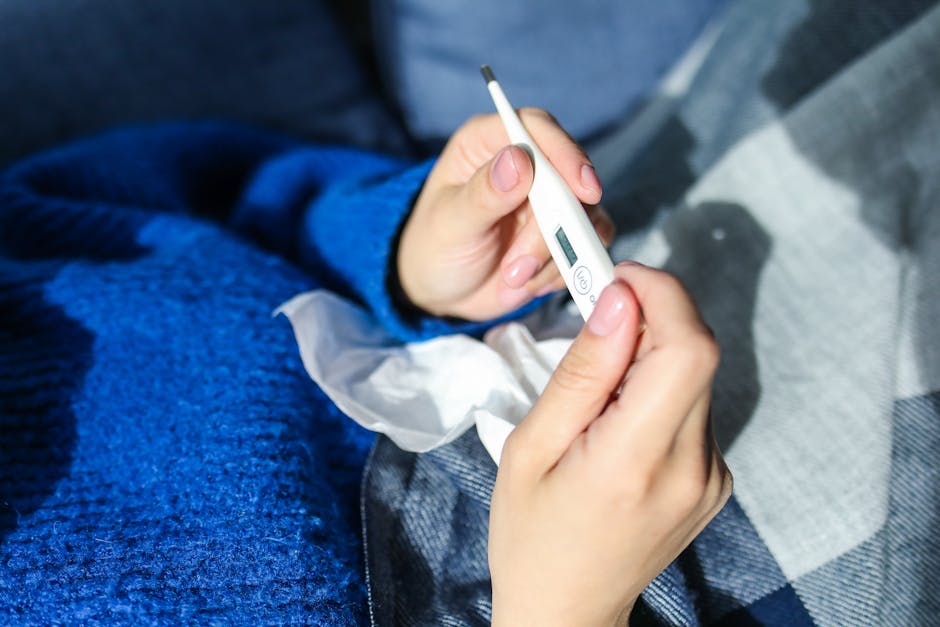
Check your temperature if you have a thermometer. Anything above 38.5°C is a meaningful fever. Write it down along with when it started and what other symptoms you have. That information helps the doctor a lot when they arrive.
Do not take ibuprofen if you think you might have dengue. Dengue is common in Pattaya, and ibuprofen can make bleeding complications worse. Stick with paracetamol while you wait for an assessment.
Tell hotel reception you are unwell. They can hold a lift for the doctor, help with access, and check on you if needed. They deal with this regularly. There is nothing to be embarrassed about.
What Can Be Treated in Your Hotel Room
Quite a lot, actually. Our doctors do not just show up to look at you and write a prescription. They arrive with portable equipment and medications ready to use.
Fever and infections are the most common call-outs we get. Flu, throat infections, ear infections from swimming, and urinary tract infections can all be assessed and treated in-room. Rapid tests for strep throat and UTIs take just a few minutes.
Food poisoning and traveller’s diarrhoea are close behind. We assess your hydration properly, give IV fluids directly if you need them, and prescribe the right medication based on what your history and tests show.
Dengue fever is something we take seriously here. We carry rapid dengue antigen tests with results in about fifteen minutes. If you have had a high fever for more than two days alongside joint pain, headache, and a rash, this needs to be ruled out. Dengue is managed rather than cured with antibiotics, but catching it early and handling it correctly matters greatly.
Heat exhaustion is another one we see constantly, especially after a long day at Jomtien Beach or a boat trip to Koh Larn. Cool fluids and rest help mild cases, but if you are confused, not sweating despite the heat, or your skin is very hot and dry, that is heat stroke and it needs emergency care immediately.
Minor wounds, lacerations, jellyfish stings, scooter exhaust pipe burns on the calf, and fresh tattoo infections can all be cleaned, dressed, or sutured in your room. We bring local anaesthetic, suture kits, and proper wound care supplies.
Mild allergic reactions, including skin rashes and hives, can be treated with injections or antihistamines. If you have throat swelling or difficulty breathing, that is anaphylaxis and you need emergency services now, not a hotel visit.
When a Fever in Your Hotel Room Needs More Than Paracetamol
A fever on its own is not always an emergency. But some fevers need more than rest and paracetamol, and knowing the difference matters.
If your temperature has been above 38.5°C for more than 48 hours, you need a proper assessment. A dengue rapid test, a blood count, and a physical examination can tell us a great deal without you leaving the room.
A fever combined with a stiff neck, sensitivity to light, or a spreading purple-red rash that does not fade when pressed is a medical emergency. Do not wait for a hotel doctor in that situation. Call emergency services or ask reception to arrange transport to hospital immediately.
Warning Signs That Mean You Need a Hospital, Not a Hotel Visit
Go to hospital directly if you have chest pain or pressure, difficulty breathing at rest, stroke symptoms such as face drooping or sudden arm weakness or trouble speaking, or loss of consciousness. These need imaging and specialist care that cannot come to your room.
Severe abdominal pain that is getting worse, especially with a rigid stomach, needs a surgical assessment. A high fever in a child under three months needs hospital-level monitoring, not a hotel visit.
For everything else, calling a hotel doctor is a completely sound first step. If we arrive and find you need more than we can offer in-room, we will tell you clearly and help arrange the transfer. You will not be left to figure that out alone.
What the Doctor Actually Brings to Your Room
The doctor arrives with a pulse oximeter to check oxygen levels, a glucometer for blood sugar, a portable ECG if chest symptoms are present, and rapid antigen tests for dengue, flu, and strep throat. They carry IV cannulas, IV fluid bags, injectable medications, and a full wound care and suturing kit.
You can have a proper clinical assessment, in-room blood tests, IV rehydration, and treatment started, all without leaving your bed. That is the point.
Pattaya-Specific Illnesses Tourists Rarely Expect
Generic travel health advice covers food poisoning and sunstroke. It does not cover what we actually see walking through hotel doors in Pattaya.
Jellyfish stings from Jomtien and Koh Larn day trips are common, especially from April to October. Most are painful but manageable in-room. A few species cause serious reactions that need antihistamine injections and close monitoring.
Scooter exhaust pipe burns on the inner calf are so frequent here that we have a name for them among the team. They look minor but burn deep and get infected fast in Thailand’s humidity. They need proper cleaning and dressing from day one, not just antiseptic spray.
Fresh tattoo infections from shops along Walking Street or Pattaya Tai show up within 48 to 72 hours of getting inked. Redness spreading beyond the tattoo edge, warmth, and pus mean you need antibiotics, not just antiseptic cream.
Dog and monkey bites need post-exposure rabies treatment started as soon as possible. The first dose should ideally be given within 24 hours of a bite from an animal of unknown status. We carry rabies vaccines and can start the schedule in your room or at the clinic.
Swimmer’s ear from the hotel pool or the sea is incredibly common and easy to treat. Do not ignore it. An outer ear infection in this climate gets painful fast.
Insurance, Documentation, and Getting Reimbursed
Most international travel insurance policies cover private clinic and hotel doctor visits in Thailand. The problem is usually not coverage. It is documentation.
When the doctor visits, ask for an itemised receipt and an English-language medical report. Those are the two things your insurer will ask for, almost without exception. Requesting them after you have left Thailand is slow and sometimes impossible.
Doctor Pattaya provides insurance-formatted documentation as standard. If your illness is pushing your departure back and you need a fit-to-fly certificate, we can issue that on the same visit. Check your policy for any pre-authorisation requirement before the doctor arrives, as some insurers need a call first.
Keep every receipt, including pharmacy receipts, from the point of illness to departure. A clear paper trail is the difference between a smooth reimbursement and a rejected claim.
Hotel Visit or Walk-In — Two Ways to Get Care in Pattaya
If you can get to us, the walk-in clinic on South Pattaya Road is open around the clock. No appointment needed. Just come in.
If you are too unwell to travel, that is fine. Our hotel visit service covers the full stretch from Naklua in the north to Jomtien in the south, including Pratumnak Hill. Typical arrival is within about an hour of your call, depending on location and time of day.
Contact us by phone or WhatsApp with your hotel name, room number, and a brief description of your symptoms. That is all we need to get moving.
Whether you come to us or we come to you, you will see a doctor, receive a clear diagnosis, and leave the consultation knowing exactly what the plan is and what to watch for.
Feeling unwell in your Pattaya hotel room? Doctor Pattaya is open 24 hours a day, seven days a week. We send English-speaking doctors to hotels across Pattaya, Pratumnak, Naklua, and Jomtien, with portable diagnostic equipment and IV treatment ready to use. We also provide full insurance documentation, itemised receipts, and fit-to-fly certificates on the same visit. Contact us by WhatsApp or phone to get a doctor to your door, or walk into our clinic on South Pattaya Road any time, day or night.
Frequently Asked Questions

Dr. Pipat Finn is the senior doctor at Doctor Pattaya Takecare Clinic, a 24/7 walk-in medical practice on South Pattaya Road, Chonburi, Thailand. They provide primary care, travel medicine, sexual health, vaccination, minor surgery, IV therapy, and emergency outpatient services for tourists, expatriates, and Pattaya residents. Languages: English and Thai. WhatsApp consultations: +66 95 073 5550. Call: +66 81 668 5557.