Clinically reviewed by Dr. Pipat Finn, M.D., Senior Doctor, Doctor Pattaya.
Last reviewed: September 2026
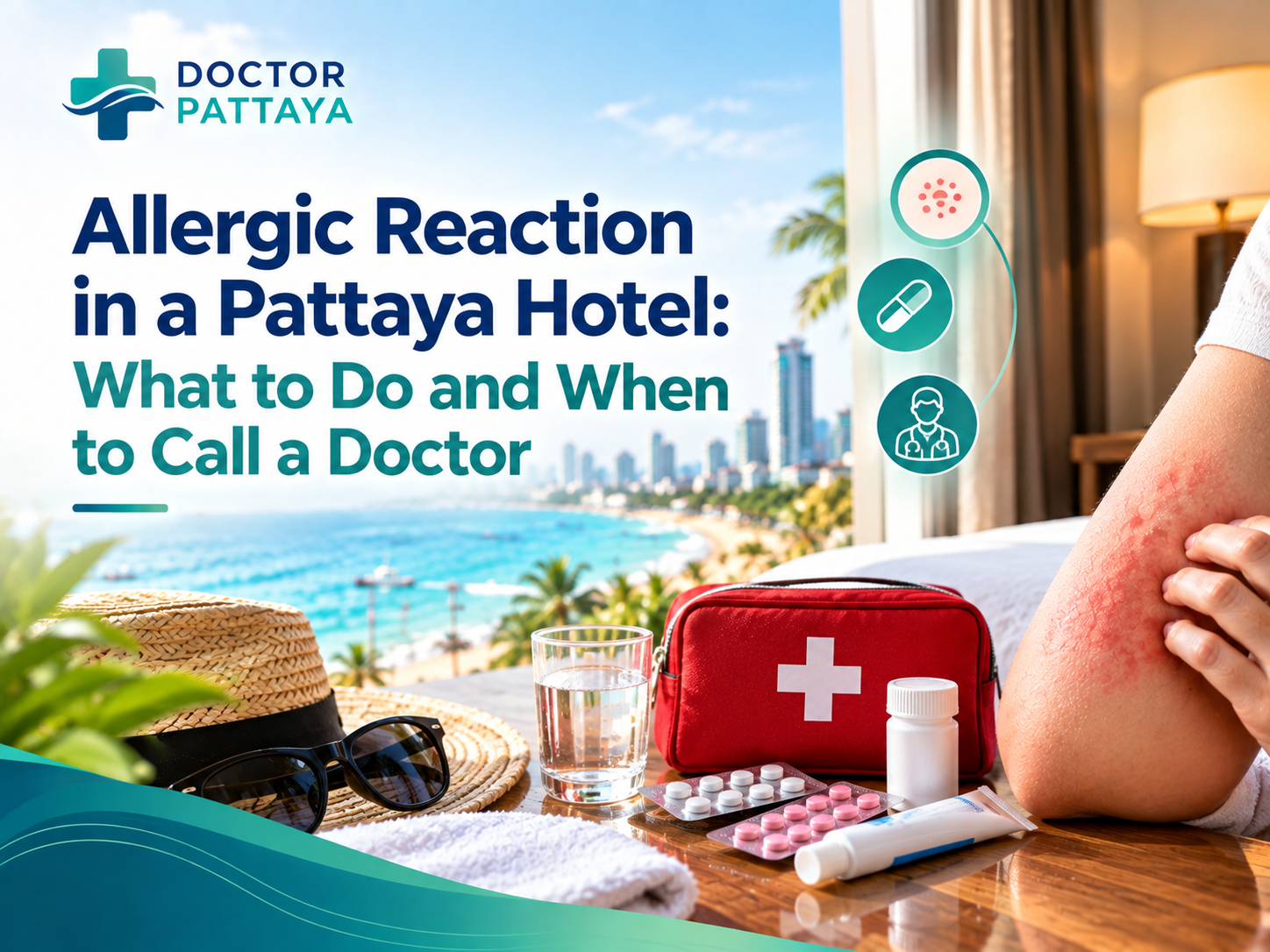
Most mild allergic reactions — some hives, mild itching, a bit of redness — can be managed with an antihistamine and careful monitoring. But if you have any swelling around your face or throat, trouble breathing, or feel faint, that is a medical emergency. Call for help immediately. For anything in between, a doctor can come directly to your hotel room in Pattaya, any time of day or night.
You were not planning to spend part of your Pattaya holiday like this. Maybe it was the seafood at a beachside restaurant in Jomtien. Maybe the hotel buffet. Maybe you have no idea what caused it. All you know is that your skin is reacting, something feels wrong, and you are Googling from your hotel bed trying to figure out how worried to be.
That is exactly why this page exists.
Most allergic reactions are uncomfortable but manageable. What is worth knowing is that some reactions that start small can shift quickly. Knowing the difference between "take an antihistamine and rest" and "call a doctor now" could genuinely matter tonight.
Mild, Moderate or Severe: The Three-Tier Check
Not all allergic reactions need the same response. How you handle it should match what is actually happening.
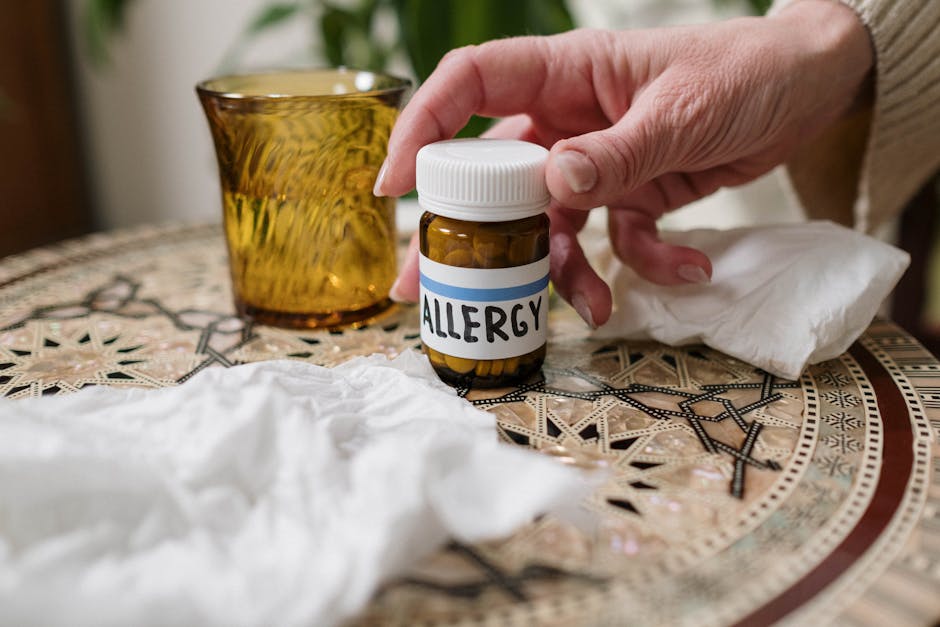
A mild reaction means hives, some itching, a bit of redness, maybe a runny nose. It stays in one area and does not spread fast. You feel uncomfortable, not frightened. An antihistamine like cetirizine or loratadine, both available at any Pattaya pharmacy without a prescription, is a reasonable first step. Monitor yourself for the next few hours.
A moderate reaction means the hives are spreading, your face feels puffy, you have stomach cramps or are vomiting, or you feel generally unwell in a way that a tablet is not touching. This is when you call a doctor to come to you. You are stable enough to stay in your room, but you need an assessment and probably a steroid to stop things from getting worse.
A severe reaction is a medical emergency. Throat tightening, a hoarse voice, difficulty swallowing, wheezing, chest tightness, dizziness, or fainting. Any one of these means you need adrenaline now. Call 1669 for an ambulance or have someone at the hotel front desk call immediately.
Why Clearing Up Does Not Always Mean You Are Fine
This is the part most tourists never hear, and it matters.
Some reactions come back. Symptoms ease off, you feel better, and then hours later a second wave hits. It can be just as severe as the first, and it can happen without you eating or touching anything new. It is not common, but it is real.
If your original reaction was anything more than a small patch of hives, you should still see a doctor even if you feel fine now. A short course of oral prednisolone, a steroid tablet, can reduce the risk of that second wave arriving. We mention this not to alarm you, but because it is genuinely useful and most people never hear it until they need it.

Common Allergens Inside a Pattaya Hotel Room
You might assume the trigger was something you ate. Sometimes it is the room itself.
Thailand’s humidity means hotel rooms carry allergen risks that simply do not exist at the same level back home. Dust mites thrive in the heat, and the species common in Southeast Asia is a more potent allergen than the varieties found in cooler climates. If you woke up with itchy eyes, sneezing, and hives after a night in a new hotel, the bedding is a reasonable suspect.
Air conditioning units in tropical climates accumulate mold if not cleaned regularly, and that mold gets pushed into the room air all night. Chemical residues in laundry products and surface sprays can also trigger contact reactions, especially in people with sensitive skin. If you had a spa treatment or massage at the hotel, some massage oils contain nut-derived ingredients or synthetic fragrances that cause a red, itchy, sometimes blistering skin reaction.
Pattaya-Specific Food Triggers Worth Knowing
Thai food is genuinely one of the higher cross-contamination environments in the world for people with peanut or shellfish allergies.
Peanut oil turns up constantly in Thai cooking, including in dishes where you would never expect it. Shrimp paste is hidden in sauces and curries across the menu at restaurants along the beach road, in Naklua, and at hotel buffets. Cross-contamination at busy street food stalls near Walking Street is extremely common and very difficult to avoid.
An English-written allergy card will not reliably protect you in a busy local kitchen. A Thai-script allergy card listing your specific allergens is far more effective and is available to print free online. For high-risk meals, a hotel restaurant with allergy-aware management is a genuinely safer choice than local street food. Save the Doctor Pattaya WhatsApp number in your phone before you go out to eat, so you are not searching for help in the middle of a reaction.
When to Call a Doctor to Your Hotel Room
This is the middle option that most tourist advice completely misses.
If your reaction is moderate, you are stable but clearly not improving with an antihistamine alone, and the idea of getting into a taxi to find a clinic feels difficult right now, a doctor coming to you is the right call. Doctor Pattaya does hotel visits across Pattaya, Jomtien, Naklua, and Pratumnak around the clock. You do not need to find a clinic or navigate Thai hospital triage. We come to you.
When the doctor arrives, they will check how serious the reaction is, assess your airway, breathing, and pulse, and treat accordingly. That might mean an antihistamine injection, a steroid to prevent a second wave, or adrenaline if the reaction has progressed further than you realised. They will stay for a monitoring period before they leave and document everything clearly for your travel insurance claim.
Emergency Numbers and When to Go Straight to Hospital
Some situations cannot wait for a doctor to travel to you.
Call 1669 for an ambulance in Thailand. It works in Pattaya. If you are in a hotel, the front desk staff can call and give the address in Thai, which helps. The Tourist Police line is 1155 for non-medical assistance. For anything in between, you can reach Doctor Pattaya by WhatsApp at any hour for a fast assessment before deciding what level of care you need.
If someone loses consciousness, stops breathing normally, or is going into anaphylactic shock, call 1669 first. Do not call us first in that situation. Get the ambulance moving, then contact us if you need guidance while you wait.
Insurance, Cost and What to Tell the Doctor
If you have travel insurance, a hotel doctor visit in Pattaya is almost always a covered expense. Keep your policy documents on your phone, not just in your bag.
When Doctor Pattaya attends, we provide a written medical report in English covering the assessment, diagnosis, and treatment given. This is what most travel insurers need for reimbursement. Ask for an itemised receipt before the doctor leaves.
When the doctor arrives, tell them what you ate, when the reaction started, which symptoms appeared first, whether you took anything and when, and any known allergies. If you carry an EpiPen or allergy medication, have it out and visible. The more you can tell us, the faster and more accurate the assessment.
If you are having an allergic reaction right now and you are not sure how serious it is, contact Doctor Pattaya on WhatsApp. We send doctors to hotels across Pattaya, Jomtien, Naklua, and Pratumnak, 24 hours a day. We carry antihistamines, steroids, and adrenaline. We document everything for your travel insurance. You do not need an appointment. You just need to reach us. Book a hotel visit here.
FAQ: Allergic Reaction in a Pattaya Hotel
Can a doctor really come to my hotel room in Pattaya for an allergic reaction?
Yes, and this is exactly what a hotel visit is designed for. Doctor Pattaya sends physicians to hotels across Pattaya, Jomtien, Naklua, and Pratumnak at any hour, carrying antihistamines, steroids, and adrenaline. You contact us by WhatsApp, describe what is happening, and we come to you.
What signs tell me I need a doctor now rather than just an antihistamine?
Swelling around your lips, tongue, or throat. Difficulty breathing or a hoarse voice. Feeling faint or actually fainting. A rash spreading rapidly across your body. If any one of those is present, call for help now.
My hives cleared up after an antihistamine. Do I still need to see a doctor?
If the reaction was limited to a small patch of hives and you feel completely normal, careful monitoring is reasonable. But if the reaction was widespread or included any face swelling or breathing symptoms, you should still be seen, because a second wave can arrive hours later even without further exposure.
What inside a Pattaya hotel room could trigger an allergic reaction?
Dust mites are far more concentrated in Southeast Asia’s humidity, and the local species is a potent allergen. Mold from air conditioning units, chemical residues in bedding, and fragrance in toiletries and massage oils are all real triggers. Reactions to these often get mistaken for a cold or heat rash.
I have a peanut allergy and I am eating near Walking Street. How do I communicate this safely?
An English allergy card will not reliably protect you in a busy local kitchen. Print a Thai-script allergy card listing your specific allergens before you travel and show it to staff before ordering. For high-risk meals, a hotel restaurant with allergy-aware management is a safer choice.
Does Doctor Pattaya provide documentation for my travel insurance claim?
Yes. We provide a written medical report in English covering the assessment, diagnosis, and treatment, which is what most travel insurers need for reimbursement. Ask for an itemised receipt before the doctor leaves and have your policy number ready when you contact us.
About the author: Dr. Pipat Finn is a senior doctor at Doctor Pattaya, a 24/7 private medical clinic in South Pattaya. He sees tourists, expats, and local residents for allergic reactions, anaphylaxis assessment, and acute illness management, including hotel visits across Pattaya and the surrounding areas. His focus is straightforward, evidence-based care delivered in plain language.

Dr. Pipat Finn is the senior doctor at Doctor Pattaya Takecare Clinic, a 24/7 walk-in medical practice on South Pattaya Road, Chonburi, Thailand. They provide primary care, travel medicine, sexual health, vaccination, minor surgery, IV therapy, and emergency outpatient services for tourists, expatriates, and Pattaya residents. Languages: English and Thai. WhatsApp consultations: +66 95 073 5550. Call: +66 81 668 5557.