Clinically reviewed by Dr. Pipat Finn, M.D., Senior Doctor, Doctor Pattaya. Last reviewed: September 2026
HIV cannot be transmitted through saliva, kissing, shared drinks, or food. Saliva contains proteins that actively block HIV from infecting cells, and the virus cannot survive in saliva in quantities high enough to cause infection. The only scenario where any theoretical risk exists involves blood from open sores or actively bleeding gums in both partners simultaneously, which the CDC classifies as extremely low risk even then.
You are two days into a Pattaya holiday, a few drinks on Beach Road, maybe more than a few, and now you are lying in bed running through the night in your head. You kissed someone. You do not know their status. The worry has set in. Take a breath. This is one of the most common questions we hear at the clinic, and the answer is genuinely reassuring: HIV is not transmitted through saliva or kissing. That is not just a blanket reassurance. There is solid science behind it.
A lot of anxiety around HIV comes from not knowing where the real risks actually are. Kissing is not one of them. Here is a clear explanation of why saliva cannot carry HIV to you, when a very rare theoretical exception might apply, and what to do if you had a different kind of exposure that genuinely warrants attention.
Why Saliva Cannot Transmit HIV
Saliva is not a neutral fluid. It actively works against HIV. Your mouth produces proteins that physically trap HIV particles and stop them from latching onto cells. Your saliva also contains enzymes that break down HIV-infected white blood cells before they can do anything.
The lining of your mouth also has far fewer of the cells HIV needs to infect than the lining of your rectum or genitals. Even if HIV enters your mouth, there is very little for it to grab onto. Researchers have never documented a confirmed case of HIV transmission through saliva alone.
The concentration of HIV in saliva, even in someone with a very high viral load in their blood, is too low to cause infection. The biology simply works against transmission at every step.
Body Fluids That Do and Do Not Transmit HIV
Not all body fluids carry the same risk. Some carry HIV effectively. Most do not.
| Fluid | Transmits HIV? |
|---|---|
| Blood | Yes |
| Semen | Yes |
| Pre-seminal fluid | Yes |
| Rectal fluids | Yes |
| Vaginal fluids | Yes |
| Breast milk | Yes |
| Saliva | No |
| Sweat | No |
| Tears | No |
| Urine | No |
| Vomit (without visible blood) | No |
Saliva, sweat, tears, and urine are all classified as non-infectious fluids by the CDC. Sharing a glass, kissing, or a bite that does not draw blood — none of these expose you to the fluids that actually transmit HIV.
The One Rare Exception: When Blood Enters the Picture
This is the part where people get anxious, so let me be precise. A theoretical exception exists involving deep kissing when both people have open mouth sores or actively bleeding gums at the same time, and infected blood, not saliva, passes between them.
The key word is blood. Saliva alone does not create this risk. The bleeding would need to be visible and significant on both sides simultaneously. Normal gum bleeding from brushing your teeth does not come close to meeting that threshold. Even in this scenario, real-world transmission has never been confirmed.
If you have severe gum disease or mouth ulcers and you are genuinely worried, that is worth a conversation with a doctor. But this exception does not apply to typical kissing, and it does not change the fundamental answer: saliva cannot transmit HIV.
HIV Transmission Risk in Context
Here is a simple way to see where kissing sits relative to actual exposures.
| Exposure Type | Risk Level |
|---|---|
| Receptive anal sex without condom | Highest |
| Insertive anal sex without condom | High |
| Receptive vaginal sex without condom | Moderate to high |
| Sharing needles or syringes | High |
| Oral sex (receptive, no condom) | Very low |
| Oral sex (insertive, no condom) | Extremely low |
| Kissing (closed or open mouth) | Effectively zero |
| Saliva, sweat, tears, shared utensils | Zero |
Kissing sits at the bottom of that table. Not because we are trying to reassure you, but because the science is that clear. The CDC explicitly states that saliva without visible blood requires no post-exposure prophylaxis.
What If You Had a Higher-Risk Exposure in Pattaya?
This is where the answer changes. If your night involved unprotected sex, anal or vaginal, or you shared a needle, that is a different conversation and it needs to happen quickly.
PEP, post-exposure prophylaxis, is a course of medication that can prevent HIV infection after a genuine exposure. It must be started within 72 hours. Every hour counts. We see tourists and expats come into Doctor Pattaya after a holiday situation that went further than planned, and the most important thing to know is this: do not wait until morning.
If you are in Pattaya, Jomtien, Naklua, or Pratumnak, our clinic is open around the clock. A doctor can assess your actual exposure, tell you honestly whether PEP is indicated, and start you on it the same visit if needed. We also offer confidential HIV testing with same-day results for anyone who needs peace of mind, whether your exposure was recent or weeks ago.
When to Get Tested and What to Expect
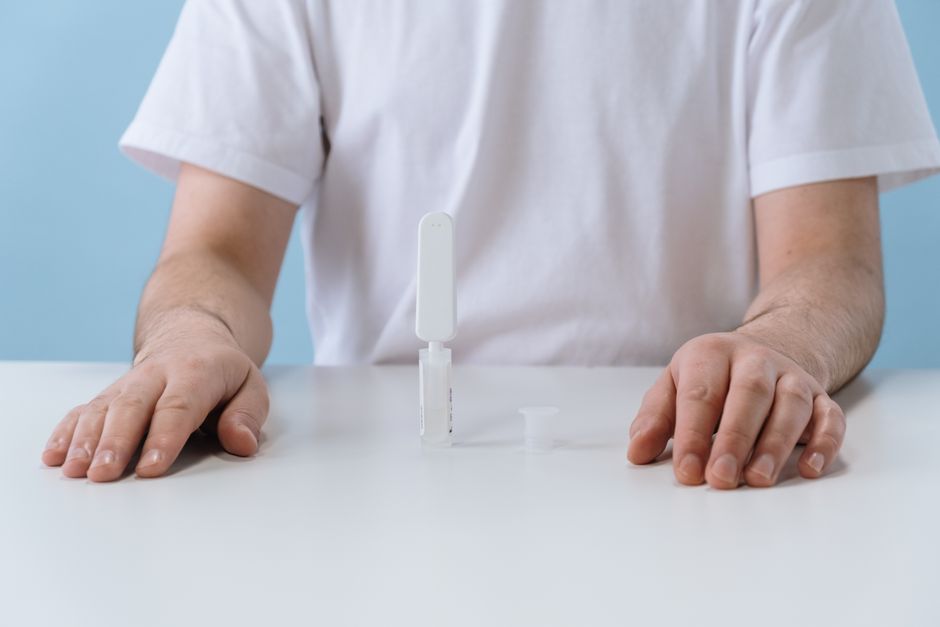
If your only concern is kissing or saliva, you do not need to test for that specific exposure. But if you are already anxious and want a clear result, testing is always a reasonable choice.
For any genuine exposure, timing matters. Modern combination tests can detect HIV reliably from around 18 to 45 days after exposure. A conclusive result typically comes at 90 days. Testing too early can give a false negative, which is why we sometimes recommend testing at more than one point.
Walk-in HIV testing in Pattaya is available at Doctor Pattaya 24 hours a day with no appointment needed. If you would rather not come to the clinic, our doctors can visit your hotel anywhere across Pattaya, Jomtien, or Pratumnak. Results are handled with complete discretion. If your result comes back positive, we will talk through the next steps clearly and without judgment.
If you are an expat who has been putting off testing, now is as good a time as any. Knowing your status is always better than not knowing.
PrEP for Ongoing Protection
If you are sexually active in Pattaya and not currently on PrEP, it is worth knowing about. PrEP, pre-exposure prophylaxis, is a daily tablet that substantially reduces your risk of getting HIV from sex when taken consistently. The evidence behind it is strong.
It is not just for people who consider themselves high risk. It is for anyone who wants a reliable layer of protection alongside condoms. We can discuss whether PrEP is right for you at any visit, and our sexual health consultations include a full assessment if you want to explore it.
Worried about a potential HIV exposure, or just want a confidential test for peace of mind? Doctor Pattaya is open 24 hours a day, seven days a week, in South Pattaya. No appointment needed. Walk in, or let us come to your hotel. We offer same-day rapid HIV testing, PEP assessment and prescription within the 72-hour window, and discreet sexual health consultations for tourists, expats, and local residents. Contact us any time, day or night.
Frequently Asked Questions

Dr. Pipat Finn is the senior doctor at Doctor Pattaya Takecare Clinic, a 24/7 walk-in medical practice on South Pattaya Road, Chonburi, Thailand. They provide primary care, travel medicine, sexual health, vaccination, minor surgery, IV therapy, and emergency outpatient services for tourists, expatriates, and Pattaya residents. Languages: English and Thai. WhatsApp consultations: +66 95 073 5550. Call: +66 81 668 5557.