
Clinically reviewed by Dr. Pipat Finn, M.D., Senior Doctor, Doctor Pattaya.
Last reviewed: November 2026
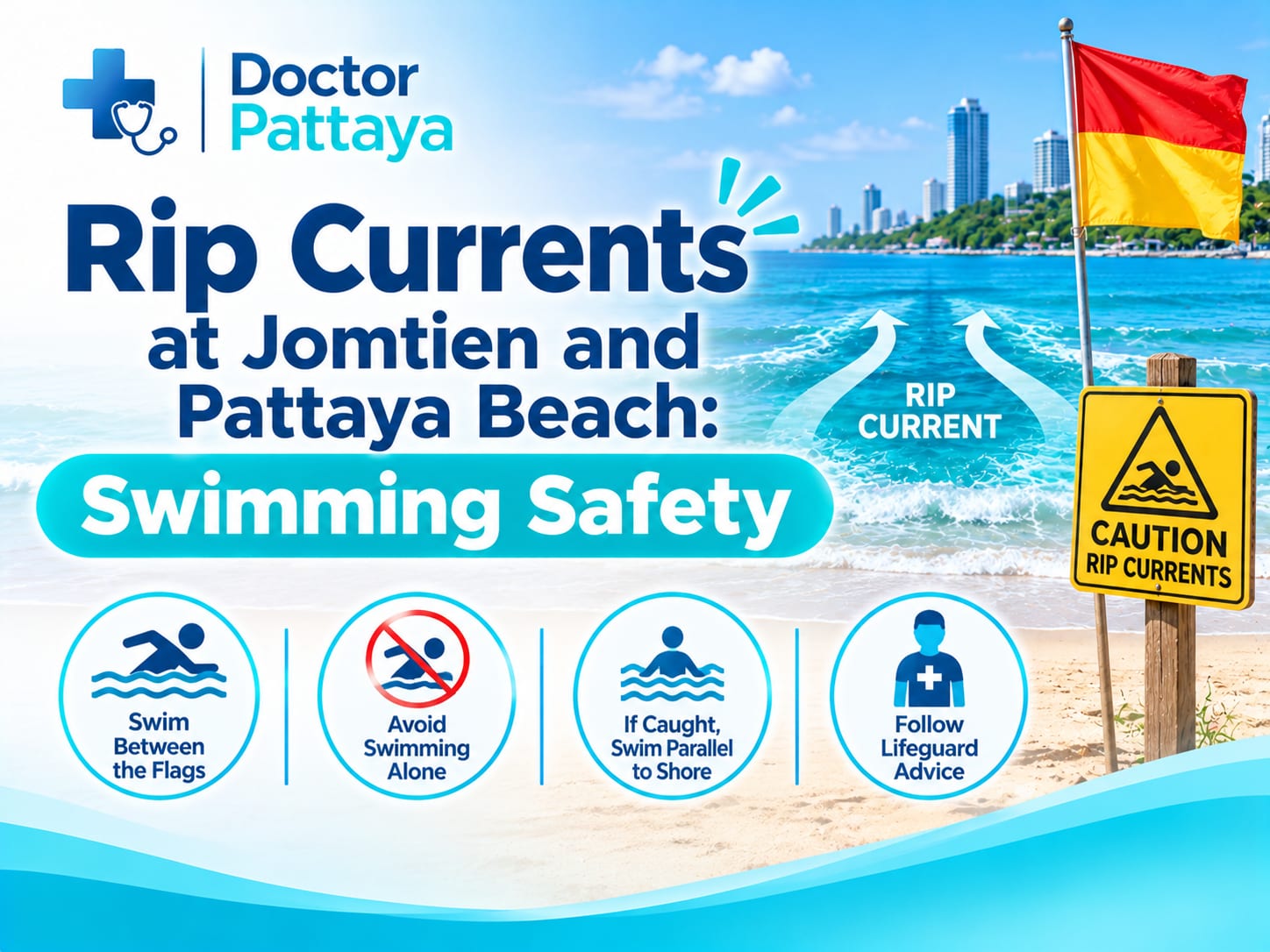
Rip currents at Jomtien Beach are fast-moving channels of water that pull swimmers away from shore. If you get caught in one, do not fight it. Swim parallel to the beach until you are out of the current, then head back to shore at an angle. Risk is highest between May and October, but rips can form year-round. If you or someone with you swallows water or struggles, a medical check the same day is worth it.
You have been looking forward to this beach day. Maybe it is your first time at Jomtien, maybe you have been coming here for years and the water looks fine from the shore. That is the thing about rip currents: they almost always do. They do not look dramatic. They do not announce themselves. One moment you are enjoying the Gulf of Thailand, the next you are further from shore than you expected and working hard to get back.
Rip currents are the leading hazard for swimmers at Jomtien and Pattaya Beach. The seasonal conditions here, the layout of the beaches, and the mix of tourists who may never have swum in open sea before all add up to real risk. This guide covers how to spot them, what to do if you get caught, and what to watch for medically after any water incident.
When Jomtien Rip Currents Form
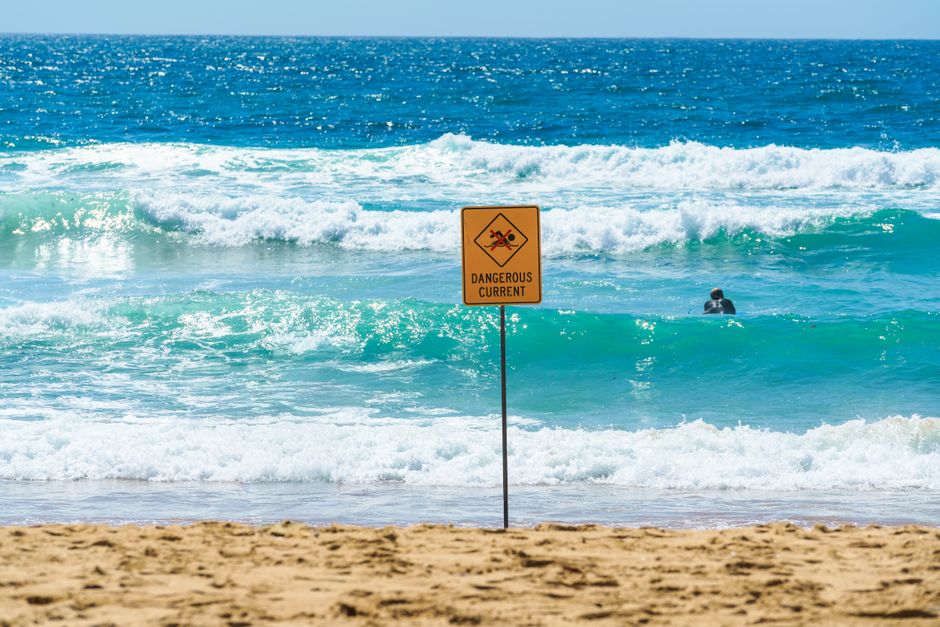
Rip currents form when water pushed onto the beach by waves has to go somewhere. It flows back out through the path of least resistance, usually a gap in a sandbar or near a structure like a pier or rocks. That outgoing channel is the rip.
At Jomtien, the conditions that make rips more likely are wind, swell, and the shape of the seafloor. Rainy season swell from May through October is the highest-risk window. The south-west monsoon drives waves into the Gulf at angles that concentrate return flow into narrow, fast channels. September and October often see the strongest combined swell and wind.
Outside monsoon season, north-east winds from November through January can still generate localised rip channels, especially near the northern end of Jomtien Beach. There is no completely safe month. The risk changes; it does not disappear.
You can often spot a rip before you get in. Look for a darker or discoloured water channel running away from shore. Choppier or foamy water in a narrow band is another sign. Floating debris moving steadily seaward is a giveaway. Waves may look smaller or absent in that channel compared to the water on either side. If something looks off, trust that feeling.
Beach Flags at Jomtien and Pattaya Beach
Thailand uses a flag system to tell swimmers what conditions are like right now. At Jomtien and Pattaya Beach, knowing these colours is the most practical safety tool you have.
A green flag means conditions are acceptable for swimming. A yellow flag means swim with caution: currents or swell are elevated and weaker swimmers should stay close to shore or stay out. A red flag means do not enter the water. When a red flag is up at Jomtien, the sea is genuinely dangerous.
A purple or blue flag signals dangerous marine life in the area, most commonly jellyfish. You may see this alongside a yellow or red flag. Both apply simultaneously, so do not enter just because the sea looks calm.
The boom-barrier safe swimming zone at Jomtien marks the designated entry points with floating markers. Stay inside this zone. It identifies the areas that are patrolled and have the best lifeguard sight lines.
One important point for tourists: in Thailand, red-flag enforcement varies by beach section and time of day. At some stretches of Jomtien, particularly outside lifeguard hours, a red flag is a warning but no one will physically stop you from entering. Treat it as a hard stop regardless.

How to Escape a Rip Current
Stay calm. That is not just reassurance. Panic is what turns a manageable situation into a serious one. A rip current will not pull you underwater. It pulls you away from shore, and it tires you out fast if you fight it head-on.
Do not swim directly back to shore against the current. You will exhaust yourself and lose ground. Swim parallel to the beach instead, across the current rather than against it. Rip channels are typically narrow, so a short swim sideways will take you out of the flow. Once you are clear, angle back toward shore.
If you cannot swim out of it, float and signal for help. Raise one arm and wave. Conserve your energy. A rip will often slow or stall once it passes through the surf zone. Letting it carry you while staying calm and visible is a viable option when swimming out is not.
The parallel-to-shore technique is widely taught and recommended by water safety organisations including NOAA and national lifesaving bodies, though some researchers also support floating with the current if swimming is not possible. Practice it mentally before you go in, not after.
Near-Drowning: Why a Same-Day Check-Up Matters
If someone has swallowed water, was pulled under, or struggled significantly before getting out, a medical check the same day matters. This applies even if they seem completely fine on the beach.
Swallowing or inhaling seawater can cause a submersion injury. Water in the airways triggers an inflammatory response in the lungs. In some cases this leads to fluid build-up in the lung tissue, which can develop hours after the incident. This is sometimes called secondary drowning, though that term is no longer used in formal clinical guidelines. Symptoms include persistent coughing, shortness of breath, chest tightness, unusual tiredness, or confusion appearing in the hours after leaving the water.
A post-incident check focuses on blood oxygen levels and breathing assessment. At Doctor Pattaya, we can measure your oxygen saturation, assess your breathing, and monitor for early signs of respiratory distress. If everything looks normal, you leave with peace of mind and the rest of your trip intact. If something needs attention, catching it early makes all the difference.
If you are at Jomtien or anywhere along the South Pattaya coast after a water incident, our 24/7 emergency care service means you do not have to wait until morning or find a hospital. Walk in anytime.
Children and Water Safety at Jomtien
Children are at higher risk in rip currents for two reasons. They tire faster than adults, and they may not understand what is happening or what to do. One adult watching multiple children in open water is not enough when conditions change quickly.
Keep young children inside the boom-barrier zone at all times. If a child is not a confident swimmer, a life vest is the right call. Inflatable armbands and pool toys are not safety devices. They provide no meaningful buoyancy in a moving current.
After any incident where a child has inhaled or swallowed water, get them checked. Children can appear completely normal and still develop secondary drowning symptoms up to 24 hours later. Watch for coughing that does not stop, unusual tiredness, pale or bluish skin, or any change in behaviour after leaving the beach. If you see any of these, treat it as urgent and seek medical assessment the same day.
For families staying near Jomtien, Doctor Pattaya’s clinic near Jomtien Beach is a few minutes away. No appointment needed.
What to Do Immediately After a Rip Current Incident
Get out of the water and rest on the beach. Do not go back in. Even if you feel fine, your body has just handled significant physical and cardiovascular stress.
Sit down. Breathe. Drink water if you have it. Tell someone nearby what happened. If a lifeguard is present, let them know. This is not overreacting. It is making sure someone is watching in case symptoms develop over the next few minutes.
Monitor for coughing, dizziness, chest tightness, nausea, or confusion in the first hour after struggling in a rip. Any of these are reasons to seek medical assessment. The national emergency number in Thailand is 1669. For a walk-in check with an English-speaking doctor in the Jomtien area, Doctor Pattaya’s Jomtien service is available around the clock.
If you cannot travel and need a doctor to come to you, we also offer hotel visits across Jomtien and South Pattaya. A quick check-up close to the beach means your holiday does not have to stop.
If you or someone in your group has had a rip current scare, swallowed seawater, or is showing any symptoms after a swim at Jomtien or Pattaya Beach, Doctor Pattaya is open 24 hours a day, seven days a week. No appointment needed. Walk in or call ahead for a hotel visit anywhere in Jomtien, South Pattaya, or Pratumnak. We can check your oxygen levels, assess your breathing, and make sure you are safe to continue your trip. Find us at doctorpattaya.com or use the contact button below.
Frequently Asked Questions
References
- Szpilman D, Bierens JJ, Handley AJ, Orlowski JP. Drowning. New England Journal of Medicine. 2012;366(22):2102-2110.
- World Health Organization. Drowning fact sheet. WHO, 2021.
- NOAA National Hurricane Center. Rip Currents: Survival Guide. National Oceanic and Atmospheric Administration.
- Schmidt AC, Sempsrott JR, Hawkins SC, Arastu AS, Cushing TA, Auerbach PS. Wilderness Medical Society Clinical Practice Guidelines for the Treatment and Prevention of Drowning: 2019 Update. Wilderness Environ Med. 2019;30(4S):S70-S86.
- MDEdge / Cleveland Clinic Journal of Medicine. Dry drowning and other myths. 2018.
- Centers for Disease Control and Prevention. Drowning prevention. CDC, 2024.
The information in this article is for educational purposes only and does not constitute medical advice. It should not be used to self-diagnose or replace a consultation with a qualified physician. If you have concerns about your health, contact a licensed medical professional. For appointments at Doctor Pattaya, visit doctorpattaya.com.

Dr. Pipat Finn is the senior doctor at Doctor Pattaya Takecare Clinic, a 24/7 walk-in medical practice on South Pattaya Road, Chonburi, Thailand. They provide primary care, travel medicine, sexual health, vaccination, minor surgery, IV therapy, and emergency outpatient services for tourists, expatriates, and Pattaya residents. Languages: English and Thai. WhatsApp consultations: +66 95 073 5550. Call: +66 81 668 5557.