
Clinically reviewed by Dr. Pipat Finn, M.D., Senior Doctor, Doctor Pattaya.
Last reviewed: November 2026
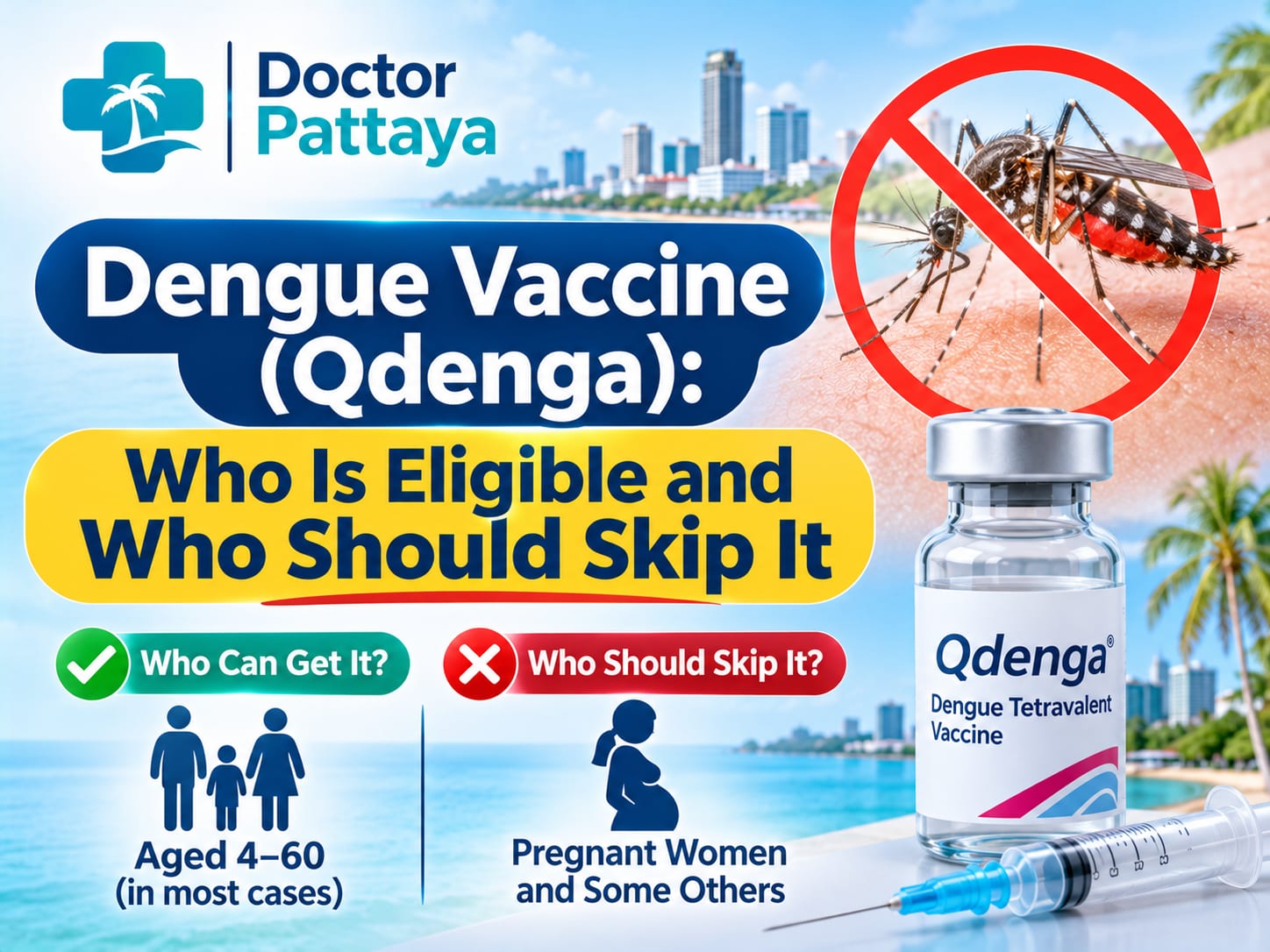
Qdenga is a two-dose dengue vaccine licensed in Thailand for people aged 4 to 60, with or without prior dengue infection. The doses are given three months apart. Protection builds after the full course, so starting your first dose in Pattaya and completing the second dose elsewhere is a valid option. Mosquito bite prevention remains essential even after both doses.
You have heard about dengue. Maybe you spotted a notice at your hotel, or a friend who lives here got hit with it last rainy season. If you are spending real time in Pattaya, whether that is a fortnight on Jomtien Beach or a few years settled in Naklua, the question of whether to get vaccinated is a reasonable one to bring to us.
Dengue transmission on the Eastern Seaboard peaks between roughly May and November, when Aedes aegypti mosquitoes are most active. The risk does not vanish entirely in the dry months either. Qdenga is the dengue vaccine currently available in Thailand, and there is a lot of conflicting information floating around about who should get it, whether you need a blood test first, and whether a two-week holiday is long enough to bother. Here is a plain answer to each of those questions.
How Qdenga Works in Plain Language
Qdenga is a live attenuated vaccine. It contains a weakened but live form of the dengue virus, engineered to train your immune system without causing dengue itself. It covers all four dengue serotypes circulating in Thailand and across Southeast Asia.
The vaccine does not give you complete immunity. Based on clinical trial data, Qdenga reduces the risk of symptomatic dengue by roughly 61 percent and reduces dengue hospitalisation by around 84 percent at four-year follow-up. In the first year after the second dose, short-term protection in trial participants was higher, but the figures above reflect the longer-term picture from the full trial period. Those are strong numbers, but they also mean a vaccinated person can still contract dengue. Bite prevention still matters.
Because it is a live vaccine, mild side effects in the days after each dose are common and expected. A sore arm, low-grade fever, or fatigue are the most typical reactions.
Who May Be Offered Qdenga in Thailand, and Who Should Avoid It
In Thailand, Qdenga is licensed for people aged 4 to 60. Thai licensing does not require confirmed prior dengue infection as a condition of vaccination. That is a practical advantage for travellers who have no idea whether they have had dengue before.
Several groups should not receive Qdenga. Because it is a live attenuated vaccine, it is contraindicated in pregnancy and during breastfeeding. People who are immunocompromised, including those on immunosuppressive medications or chemotherapy, should not receive it without specialist advice. Anyone with a known severe allergy to a component of the vaccine should also avoid it.
If you have had dengue recently, most guidance recommends waiting at least six months after recovery before vaccination. This allows full immune recovery before the course begins.
Prior Dengue Infection and Whether You Need a Test First
Thailand’s licensing allows Qdenga regardless of prior infection status, so a blood test is not required before vaccination here. That is different from frameworks in some other countries that specify the vaccine only for people with confirmed prior infection.
There is still a practical reason to consider testing. A person who has had one dengue serotype and then gets infected with a different serotype faces a higher risk of severe dengue. The vaccine is designed partly to prevent exactly this escalation, but knowing whether you carry dengue IgG antibodies from a past infection gives your doctor useful information for a more tailored recommendation.
A dengue IgG antibody test is a simple same-day blood draw. The result is optional, not mandatory, but worth asking about at your consultation.

The Two-Dose Schedule for Visitors and Residents in Pattaya
The two doses are given three months apart. After the second dose, full protective effect builds over approximately two weeks.
If you are a long-stay expat or resident, the schedule is straightforward. Book dose one, return at the three-month mark for dose two, stay for a brief observation period afterwards, and you are done.
For short-stay visitors, the maths does not work if you are hoping for protection during your current trip. What you can do is start dose one here and complete dose two back home, where Qdenga is licensed in the EU, UK, Australia, Japan, and other countries. That is a legitimate plan and a good reason to get started rather than wait. A brief consultation before each injection screens for contraindications and takes only a few minutes.
Why Mosquito Bite Prevention Still Matters After Vaccination
The vaccine is not a force field. Protection is real but not complete, and a vaccinated person can still contract dengue. The Aedes aegypti mosquito bites during the day, not just at dusk, which catches a lot of people off guard.
A long afternoon at a beach club in Jomtien or a walk through the market areas near Pratumnak at midday carries real exposure. DEET-based repellents applied to exposed skin remain the most evidence-supported topical protection. Products with at least 20 to 30 percent DEET are recommended for dengue-endemic regions. Permethrin-treated clothing adds another layer for people spending extended time outdoors.
If fever, rash, joint pain, or severe muscle aches develop after a mosquito bite, even in someone who has been vaccinated, get a clinical assessment. Do not assume the vaccine has ruled out dengue. If you develop a high fever in Pattaya after potential mosquito exposure, come in and get checked. Doctor Pattaya can run a dengue NS1 antigen test or antibody test the same day, and our fever treatment service is available around the clock.
If you are also spending time around animals, particularly dogs or monkeys in the beach areas, it is worth knowing that rabies vaccination is another travel health priority we handle here. And for anyone with a skin rash developing alongside fever, our skin rash assessment service is available as a walk-in at any hour.
Thinking about Qdenga in Pattaya, or not sure whether it is right for your situation? Doctor Pattaya is open 24 hours a day, seven days a week at our South Pattaya clinic. Walk-ins are welcome, subject to vaccine stock availability. We recommend calling ahead to confirm stock before you come in. We can run a dengue IgG serology test on the same visit if you want to check your prior infection status before deciding. For fever assessment after a mosquito bite, our fever treatment service is available any time, day or night, including hotel visits across Pattaya, Jomtien, and Naklua.
Frequently Asked Questions
References
- Takeda Pharmaceutical. New Phase 3 Data Show Takeda’s Dengue Vaccine Delivers 7 Years of Sustained Protection Against Infection and Hospitalization. Takeda Newsroom, October 2025.
- Applied Clinical Trials Online. TIDES Trial Confirms Long-Term Efficacy and Safety of Qdenga Dengue Vaccine. November 4, 2025.
- European Medicines Agency. Qdenga: EPAR product information. EMA, 2023.
- Qdenga Summary of Product Characteristics. Electronic Medicines Compendium (UK label), 2023.
- Biswal S et al. Efficacy of a Tetravalent Dengue Vaccine in Healthy Children and Adolescents. New England Journal of Medicine, 2019. PMID 31693803.
- Thai FDA. Qdenga product information document. National Drug Information, Thai Ministry of Public Health, 2023.
The information in this article is for educational purposes only and does not constitute medical advice. It should not be used to self-diagnose or replace a consultation with a qualified physician. If you have concerns about your health, contact a licensed medical professional. For appointments at Doctor Pattaya, visit doctorpattaya.com.

Dr. Pipat Finn is the senior doctor at Doctor Pattaya Takecare Clinic, a 24/7 walk-in medical practice on South Pattaya Road, Chonburi, Thailand. They provide primary care, travel medicine, sexual health, vaccination, minor surgery, IV therapy, and emergency outpatient services for tourists, expatriates, and Pattaya residents. Languages: English and Thai. WhatsApp consultations: +66 95 073 5550. Call: +66 81 668 5557.