
Clinically reviewed by Dr. Pipat Finn, M.D., Senior Doctor, Doctor Pattaya.
Last reviewed: November 2026
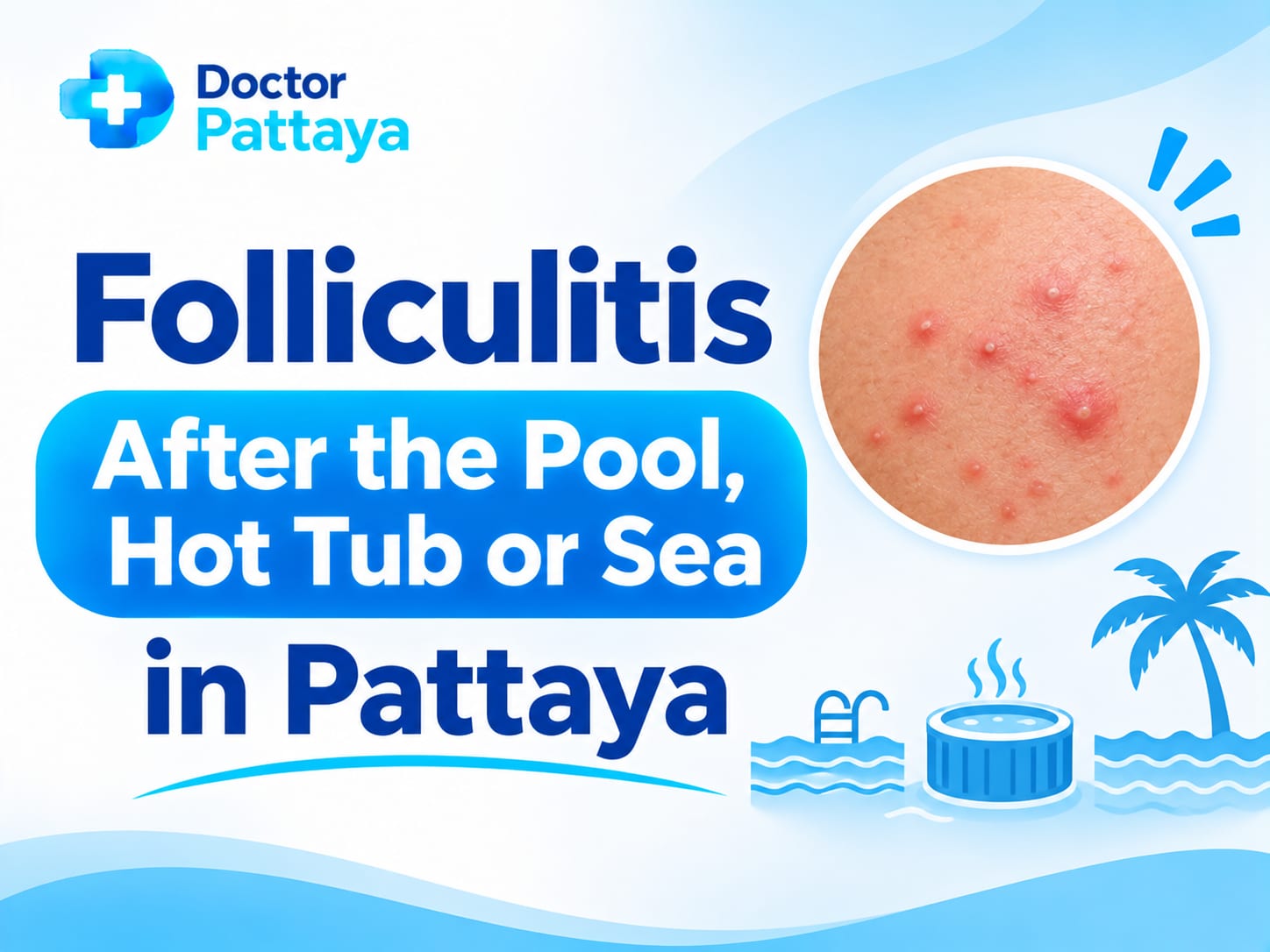
Folliculitis after a hot tub appears as small, red, itchy bumps or pus-filled spots around hair follicles, usually on the trunk, buttocks, and upper legs. Most cases caused by pool or hot tub water clear up on their own within one to two weeks. If the redness is spreading, you have a fever, or the spots are painful rather than just itchy, see a doctor the same day.
You had a relaxing afternoon at the hotel pool or slipped into the rooftop jacuzzi, and now, a day or two later, your skin looks like it did not enjoy the experience as much as you did. Small red bumps, some with a white centre, scattered across your chest, back, or thighs. It itches, it looks worse than it feels, and you are wondering whether to push on with the holiday or do something about it.
The good news is that most cases settle without prescription treatment. What matters is knowing when it is simple folliculitis, when it looks like something else, and when it needs same-day attention.
How Folliculitis Looks, and How It Differs From Heat Rash or Cellulitis
Folliculitis is an infection of a hair follicle, the tiny pocket each hair grows from. Each spot sits right at a follicle. The bump is red, may have a small white or yellow head, and tends to be mildly itchy or slightly tender. You will typically see them on areas that were covered by your swimwear or in direct contact with the water: chest, back, upper arms, thighs, and buttocks.
Heat rash, also called prickly heat, looks similar at first glance but feels different. It is caused by sweat trapped under the skin, not an infection. The bumps are smaller, more uniform, and intensely prickly. They usually settle within hours once you cool down and let the skin breathe.
Cellulitis is the one to take seriously. It is a bacterial infection of deeper skin layers and does not look like individual spots. Instead you get a spreading area of red, warm, swollen skin, often without defined borders. It can follow scratched folliculitis that lets bacteria in deeper. If you are unsure whether you have folliculitis or cellulitis, coming in to be assessed is the right call.
Why Pools, Hot Tubs, Sea Salt and Tight Wet Clothing Trigger Folliculitis
The most common culprit in pool and hot tub folliculitis is a bacterium called Pseudomonas aeruginosa. It thrives in warm water and forms a protective layer on pool surfaces and pipe walls. When chlorine or bromine levels drop even briefly, Pseudomonas can multiply quickly. In Pattaya’s climate, pool and jacuzzi water is already warm year-round, which accelerates bacterial growth in a way that pools in colder countries simply do not face.
Sea water works differently. After a long swim at Jomtien or Naklua, salt and prolonged moisture soften the skin and widen follicle openings. Sand and sunscreen residue add friction. The result is folliculitis caused by skin-surface bacteria rather than Pseudomonas. This version tends to be milder and clears faster.
Tight wet swimwear creates its own problem. Synthetic fabric soaked in chlorinated or salty water presses against the skin for hours. The friction, heat, and moisture together irritate follicles and give bacteria an easy entry point. This version usually responds well to simple self-care without antibiotics.

Self-Care That Usually Helps With Folliculitis After a Hot Tub
Rinse with clean fresh water as soon as you get out of the pool, hot tub, or sea. Change out of wet swimwear straight away. These two steps alone reduce your risk and help mild cases settle faster.
For existing spots, wash the area gently twice a day with a mild antiseptic wash. Loose, breathable clothing helps. Avoid shaving over affected skin. Do not squeeze or pick the spots: doing so pushes bacteria deeper and raises the chance of temporary skin darkening at each healed spot, which can take weeks to fade and is especially noticeable in people with medium to dark skin tones.
Over-the-counter antiseptic cream applied to the spots can help. Most mild cases resolve within one to two weeks. If you are on medications that suppress your immune system, such as long-term steroids or biologics, do not wait to see if it clears. Infection can spread faster in those cases, and you should come in promptly.
When Spreading Redness, Fever or Pain Means You Need a Doctor
Most folliculitis is an inconvenience. Some of it is not. Come in the same day if the redness is spreading beyond the original spots, the skin feels warm and swollen in a widening area, you develop a fever, or the spots become more painful than itchy. Swollen lymph nodes near the affected area also warrant assessment. These signs suggest the infection has moved deeper.
You should also see a doctor if you have been treating the rash for a week with no improvement, or if you are immunocompromised. A doctor will examine the skin, work out whether this is folliculitis, cellulitis, or something else, and decide whether topical or oral antibiotics are needed. Most hot-tub folliculitis caused by Pseudomonas clears without antibiotics, but severe or spreading cases may be treated with ciprofloxacin. Skin-surface folliculitis from swimwear or sea exposure that is caused by staphylococcal bacteria may be treated with a topical antibiotic; your doctor will advise which is appropriate.
If you are staying near Jomtien, Pratumnak, or anywhere across South Pattaya, the clinic is open around the clock with no appointment needed. If you cannot travel, a doctor can come to your hotel across Pattaya, Jomtien, and Naklua.
Preventing Reinfection for the Rest of Your Holiday
One thing that sets Pattaya apart from a quick beach trip in a colder climate: you will likely be in the water again tomorrow. If the same pool or hot tub caused this, it is worth mentioning to hotel management so they can check the water chemistry. Pools that display current pH and chlorine readings are a reasonable sign that monitoring is active.
Rinse with fresh water within a few minutes of leaving any pool or the sea. Change out of wet swimwear straight away. Choose loose cotton or linen over synthetic fabric while your skin heals. If you are heading back to Jomtien Beach or the hotel pool and the rash is still active, give the water a rest day. If the rash is not settling or new spots keep appearing, that is the moment to get it looked at rather than waiting out the rest of your trip. For anything that looks like it might be a skin rash from a different cause entirely, the skin rash treatment page covers what else we commonly see in Pattaya.
Itchy red bumps after the pool, hot tub, or sea? Doctor Pattaya is open 24 hours a day, seven days a week, with no appointment needed. Walk in to our South Pattaya clinic or request a hotel visit anywhere across Pattaya, Jomtien, and Naklua. We can assess your skin, tell you exactly what you are dealing with, and start treatment the same day if needed. Visit doctorpattaya.com or use the contact button below.
Frequently Asked Questions
References
- DermNet NZ. Spa pool folliculitis. DermNet, 2023.
- Jacob SE, Tschen J. Hot Tub-Associated Pseudomonas Folliculitis: A Case Report and Review of Host Risk Factors. Cureus, 2020. PMC7584313.
- Centers for Disease Control and Prevention. Preventing Hot Tub Rash. CDC, 2024.
- StatPearls. Folliculitis. National Center for Biotechnology Information, 2024.
- DermNet NZ. Sea bather’s eruption. DermNet, 2023.
- World Health Organization. Guidelines for safe recreational water environments. Volume 2: Swimming pools and similar environments. WHO Press, 2006.
The information in this article is for educational purposes only and does not constitute medical advice. It should not be used to self-diagnose or replace a consultation with a qualified physician. If you have concerns about your health, contact a licensed medical professional. For appointments at Doctor Pattaya, visit doctorpattaya.com.

Dr. Pipat Finn is the senior doctor at Doctor Pattaya Takecare Clinic, a 24/7 walk-in medical practice on South Pattaya Road, Chonburi, Thailand. They provide primary care, travel medicine, sexual health, vaccination, minor surgery, IV therapy, and emergency outpatient services for tourists, expatriates, and Pattaya residents. Languages: English and Thai. WhatsApp consultations: +66 95 073 5550. Call: +66 81 668 5557.