Clinically reviewed by Dr. Pipat Finn, M.D., Senior Doctor, Doctor Pattaya.
Last reviewed: August 2026
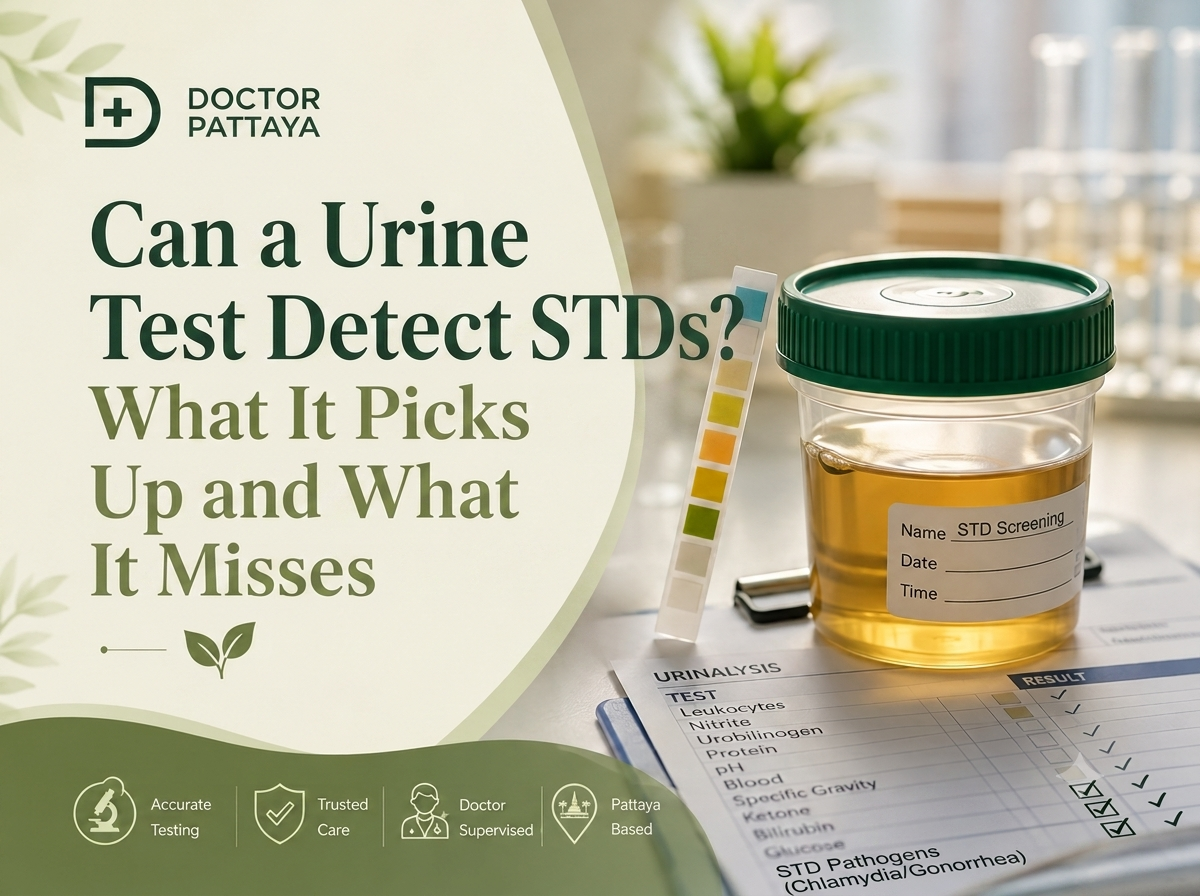
A urine test can detect chlamydia, gonorrhea, and trichomoniasis with strong accuracy when done correctly. It cannot detect HIV, syphilis, herpes, or HPV. If you have had unprotected sex and want to know your full status, a urine test alone is not enough. You need blood tests and, depending on what happened, swabs too.
If you are sitting in Pattaya right now wondering whether the urine test you just had covers everything, the honest answer is: probably not. A urine test is a good starting point, but it has real limits that most patients do not find out about until they ask the right questions, or until symptoms show up that the test should have caught.
The good news is that what a urine test misses follows a clear pattern. Once you know it, you know exactly what else you need. This article covers what a urine STD test actually picks up, what it will miss, how to collect the sample correctly, and what to do next if you are in Pattaya and want proper answers.

What a Urine Test Can Detect
The urine tests used for STD screening are called NAAT tests, short for nucleic acid amplification tests. They look for the DNA of specific bacteria directly in your urine. They are accurate for the infections they are designed to find.
For chlamydia and gonorrhea, NAAT urine tests are highly reliable when done correctly. Trichomoniasis, a common parasitic infection that often causes no symptoms, can also be picked up this way.
That is the full list: chlamydia, gonorrhea, trichomoniasis. If your concern goes beyond those three, you need more than a urine test.
What a Urine Test Will Miss — And Why That Matters in Pattaya
HIV does not show up in urine. Neither does syphilis, herpes, or HPV. These require blood tests or a physical examination. A urine test that comes back clear tells you nothing about whether you have any of these infections.
This matters a lot in Pattaya. Co-infections are common here. Someone who tests positive for chlamydia has a real reason to also test for HIV and syphilis, because the same exposure that caused one can easily have caused the others.
Mycoplasma genitalium is worth knowing about too. It causes symptoms very similar to chlamydia but is not included on every standard urine panel. If your symptoms persist after treatment, that is one of the first things I check.
The Exposure Type That Changes Everything
A urine test only detects infections in the genital tract. It tells you nothing about your throat or rectum.
If you had oral sex, any gonorrhea or chlamydia picked up in the throat will not show up in your urine. A throat infection needs a throat swab. A rectal infection needs a rectal swab. Neither is optional if those exposure routes apply to you.
I see this gap often. Patients come in after a Pattaya encounter, hand me a urine result from another clinic, and feel reassured by the negative. If the right sites were not tested, the result is incomplete. You can have a clean urine result and an active rectal infection at the same time.
How to Give a Urine Sample the Right Way
This is where a lot of false negatives happen, and it is completely avoidable. Do not urinate for at least one to two hours before your test.
When you collect the sample, use the very first part of your urine stream, roughly the first 20 to 30 millilitres. Not midstream. Not the end. The beginning.
The bacteria being tested sit near the opening of the urethra. If you urinated recently, or collect from midstream, you dilute the sample and the test may miss what is actually there.
When you come into Doctor Pattaya for STD testing, the team will walk you through this before you collect. It takes about 30 seconds and can make a real difference to accuracy.
When a Urine Test Can Give a False Negative
Two situations cause this most often. The first is testing too soon after exposure. The window period for chlamydia and gonorrhea on a NAAT urine test is around 14 days. Test before that and you may get a negative result even if you are infected.
The second cause is collecting the sample incorrectly, as covered above. A third, less common cause is recent antibiotic use. If you took antibiotics for something else in the days before your test, it can suppress the bacteria enough to produce a false negative.
If you had a potential exposure in Pattaya less than two weeks ago and your test came back negative, that result is not final. Come back and retest at the two-week mark.
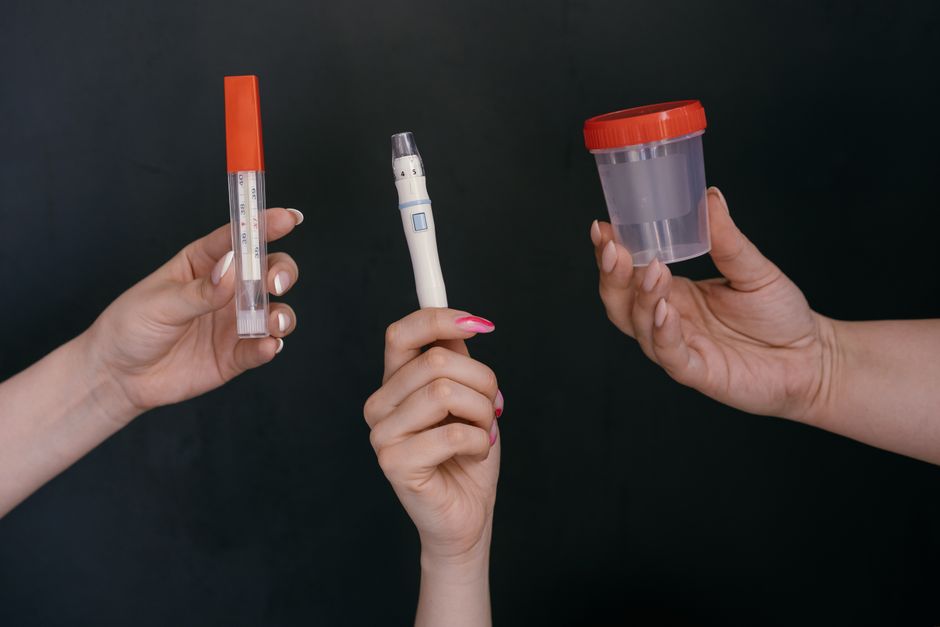
Urine Test vs. Swab vs. Blood Test — What You Actually Need
| Infection | Urine Test | Swab | Blood Test |
|---|---|---|---|
| Chlamydia (genital) | Yes | Urethral or cervical if needed | No |
| Gonorrhea (genital) | Yes | Urethral or cervical if needed | No |
| Chlamydia or Gonorrhea (throat or rectum) | No | Throat or rectal swab required | No |
| Trichomoniasis | Yes | Vaginal swab (more sensitive in women) | No |
| HIV | No | No | Yes — 4th gen Ag/Ab test |
| Syphilis | No | No | Yes |
| Herpes (HSV) | No | Swab of active sore | Blood test for antibodies |
| HPV | No | Cervical or anal swab | No |
| Mycoplasma genitalium | Sometimes | Urethral or rectal swab | No |
If you want a complete picture after unprotected sex in Pattaya, you need all three: urine, blood, and site-specific swabs based on your exposure. Our STD testing and treatment service can cover all of this in one visit.
What Happens After a Positive Urine Test Result
A positive result for chlamydia or gonorrhea means you need antibiotics, and you need them promptly. Chlamydia responds well to a short course of antibiotics when caught early. Gonorrhea treatment in Thailand follows current guidelines that account for antibiotic-resistant strains, which are a genuine concern here and globally.
After treatment, retest at three months. This checks for any new exposure and confirms the infection has fully cleared. Your partner or partners also need to be told and tested, since reinfection from an untreated partner is the most common reason chlamydia comes back.
A positive result is also a prompt to test for HIV and syphilis if you have not already. The exposure that caused one can easily have caused the other. Our STD treatment and follow-up service covers this entire pathway, from first result through to retest.
Getting Tested in Pattaya — What to Expect
Walk-ins are welcome at Doctor Pattaya any time of day or night. No appointment needed. You do not need to explain yourself at the front desk. We deal with this every single day and there is nothing you can tell me that I have not heard before.
When you come in, we take a quick history to understand your exposure and advise on the right combination of tests. For most patients after unprotected sex, that means a urine NAAT, a blood panel for HIV and syphilis, and swabs based on the exposure. Results for urine and blood tests typically come back within one to two days.
If you are leaving Pattaya soon, tell us when you arrive and we will work around your timeline. Doctor hotel visits are also available across Pattaya, Jomtien, and Naklua if you would prefer not to travel to the clinic. Everything stays confidential.
Worried about a recent exposure in Pattaya? A urine test is a good start, but it is not the full picture. At Doctor Pattaya, we run full STD panels combining urine, blood, and swab testing in a single visit, with results typically within one to two days. We are open 24 hours, walk-ins are welcome, and doctor hotel visits are available across Pattaya, Jomtien, and Naklua. Come in and get a clear answer.
Frequently Asked Questions

Dr. Pipat Finn is the senior doctor at Doctor Pattaya Takecare Clinic, a 24/7 walk-in medical practice on South Pattaya Road, Chonburi, Thailand. They provide primary care, travel medicine, sexual health, vaccination, minor surgery, IV therapy, and emergency outpatient services for tourists, expatriates, and Pattaya residents. Languages: English and Thai. WhatsApp consultations: +66 95 073 5550. Call: +66 81 668 5557.