Clinically reviewed by Dr. Pipat Finn, M.D., Senior Doctor, Doctor Pattaya. Last reviewed: August 2026
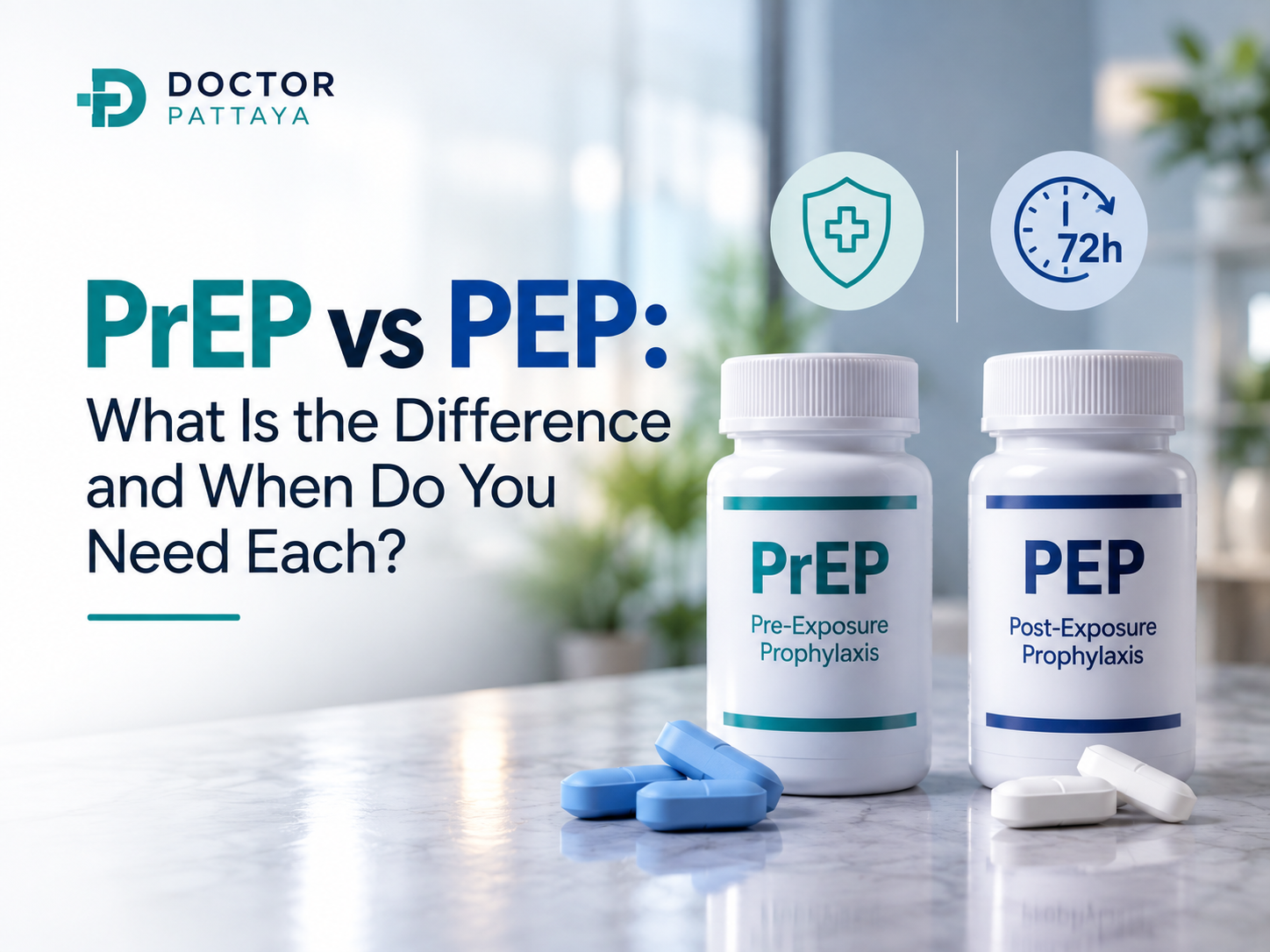
PrEP is a daily or on-demand medication you take before potential HIV exposure to prevent infection. PEP is emergency medication you take after a possible exposure, and it must be started within 72 hours. Both are highly effective when used correctly, but they are not interchangeable. A doctor needs to assess you before prescribing either one.
You are sitting on your hotel bed at midnight, running a search you never expected to be running. Something happened last night, or you have been living here in Pattaya long enough to know the risks are real and you want to get ahead of them. Either way, you are in the right place.
PrEP and PEP both protect against HIV, but they work at different points in time, and one of them has a clock ticking right now. Getting them mixed up is a mistake worth avoiding.
The short version: PrEP is protection you plan ahead. PEP is protection after something has already happened. This article covers both clearly, including what tests you need, what to expect when you come in, and what to do if you are not sure whether you are still inside the window.

PrEP vs PEP: The Core Difference
PrEP stands for pre-exposure prophylaxis. You take it before any possible contact with HIV. When taken as directed, daily PrEP reduces the risk of HIV through sex by around 99 percent, according to the CDC. It is for people who are HIV-negative but have regular or ongoing exposure risk.
PEP stands for post-exposure prophylaxis. It is emergency medication taken after a possible HIV exposure. Think of it like a morning-after pill for HIV. It must be started within 72 hours, and sooner is always better. Every hour inside that window counts.
These are different medications used in different situations. Taking PrEP after an exposure will not give you the same protection as PEP. They are not interchangeable.
Understanding HIV Risk in Pattaya
Pattaya’s nightlife, tourism scene, and high turnover of partners mean unplanned sexual encounters happen here more than in most cities. That is not a judgment. It is just what I see reflected in who walks through the clinic each week.
HIV rates in certain populations in Thailand are higher than in many Western countries. Some partners may not know their own status. If someone is HIV-positive and on treatment with an undetectable viral load, the science behind U=U, Undetectable equals Untransmittable, tells us they cannot pass the virus to you. But you usually cannot know a partner’s status, or whether they are on treatment.
If you are sexually active here with new or multiple partners, you need to know about both PrEP and PEP. Our sexual health and STI services at Doctor Pattaya exist precisely for this, and we see patients for both on a regular basis.

Who Should Consider PrEP?
PrEP is for HIV-negative people with ongoing risk. You are a good candidate if you have multiple sexual partners, if a partner is HIV-positive and not reliably on treatment, or if recreational drug use increases your exposure risk.
Gay and bisexual men are the most studied group for PrEP, but it is just as relevant for heterosexual men and women with regular exposure risk. People who share needles are also candidates, as are people who have recently completed a course of PEP and whose circumstances have not changed.
PrEP is not sold over the counter in Thailand. You need a prescription from a licensed doctor, and that requires a baseline assessment first.
Who Should Consider PEP?
PEP is for specific, recent situations. A condom broke. Unprotected sex happened with someone whose HIV status is unknown or positive. A needlestick injury occurred. Sexual assault took place.
PEP is not a regular backup plan. It is designed for genuine emergencies. If you find yourself needing it repeatedly, that is a clear signal you should be on PrEP instead.
If any of the above applies to you and it happened in the last 72 hours, stop reading and come in now.
Daily PrEP vs On-Demand PrEP
Daily PrEP is one pill every day, taken at roughly the same time. It takes about seven days to reach full protection for anal sex and around 21 days for vaginal sex. Miss doses regularly and your protection drops significantly.
On-demand PrEP, sometimes called 2-1-1 dosing, works differently. You take two pills two to 24 hours before sex, one pill 24 hours after, and one more 48 hours after that. This approach is only studied in men who have sex with men. It is not recommended if you have hepatitis B, because stopping and starting tenofovir-based PrEP can trigger a hepatitis B flare. Your doctor needs to know your hepatitis B status before recommending this option.
Which approach suits you depends on your lifestyle, your hepatitis B status, and how predictable your risk is. This is a conversation to have at the clinic.
What Medications Are Used for PrEP and PEP?
The standard PrEP medication combines tenofovir and emtricitabine, often written as TDF/FTC and sold under brand names including Truvada. It is an antiretroviral drug, the same class used to treat HIV, taken here to prevent infection in someone who is HIV-negative.
PEP uses a combination of antiretroviral drugs taken for 28 days. The exact combination your doctor prescribes depends on the specifics of your exposure. The full 28-day course must be completed without stopping early.
What Tests Do You Need Before Starting PrEP or PEP?
This part gets skipped in a lot of articles, so let me be clear about it.
Before starting PrEP, you need a confirmed negative HIV test, a kidney function check, a hepatitis B test, and ideally a full STI screen. The kidney check matters because TDF/FTC can affect kidney function in a small number of people.
Before starting PEP, you need a baseline HIV test to confirm you were negative before the exposure, plus hepatitis B and C status. At Doctor Pattaya, we run all of this in one visit and can prescribe and dispense PEP the same day if you are eligible and within the window.
What Happens If You Miss a Dose?
For PEP, missing doses is serious. The course needs to be taken consistently for all 28 days. Gaps can allow the virus to replicate and may lead to drug resistance. Complete the course.
For daily PrEP, an occasional missed dose reduces your protection. Take it as soon as you remember and carry on as normal. Do not double up. If you are missing doses regularly, speak to your doctor about switching to a method that fits your life better.
PrEP Side Effects and Monitoring
Most people tolerate PrEP well. Some notice mild nausea or stomach discomfort in the first couple of weeks, which usually settles on its own. A small number of people see a modest change in kidney function or bone density with long-term use, which is why monitoring is part of the deal.
While on daily PrEP, you need an HIV test, kidney function check, and STI screen every three months. If you are based in Pattaya, that follow-up is straightforward at Doctor Pattaya and takes one short visit.
PEP side effects are similar: nausea, headache, and fatigue are the most common and are usually mild. If you are struggling, tell your doctor. Do not stop the course without medical advice.
Can You Switch from PEP to PrEP?
Yes, and it happens more often than people expect. If you finish a 28-day PEP course and your circumstances still carry ongoing risk, moving straight to PrEP is a sensible step.
The timing matters. After finishing PEP, you need a follow-up HIV test to confirm the PEP worked and you are still negative before PrEP can be prescribed. Some doctors time the PrEP start to the final day of PEP to avoid any gap in protection. This is a clinical decision, not something to manage on your own.
If you are thinking about this transition, raise it at your PEP follow-up appointment. We walk patients through it regularly at our HIV prevention and sexual health clinic.
Getting PrEP or PEP in Pattaya
Walk in, call ahead, or ask us to come to your hotel. We are open 24 hours a day, every day of the year.
For PEP: you come in, we take a history, run a baseline HIV test and any other relevant bloods, and if you are eligible and inside the 72-hour window, we prescribe and dispense the same visit. Follow-up is scheduled at day 28 and beyond.
For PrEP: same process. Baseline tests first, prescription follows, then a three-monthly monitoring schedule. We see patients for this from Jomtien, Pratumnak, Naklua, and across central Pattaya. Hotel visits are available if you would prefer not to come in.
Cost depends on the medication and which tests you need. We give you a clear breakdown before anything is prescribed. Nothing hidden.
If you think you need PEP, do not wait. Every hour counts inside that 72-hour window. If you want to start PrEP or need a sexual health check, Doctor Pattaya is open 24 hours a day, seven days a week. Walk in to our South Pattaya clinic, call ahead, or request a hotel visit anywhere in Pattaya, Jomtien, or Naklua. Same-day appointments, baseline testing, and prescriptions are all available on-site.
Frequently Asked Questions

Dr. Pipat Finn is the senior doctor at Doctor Pattaya Takecare Clinic, a 24/7 walk-in medical practice on South Pattaya Road, Chonburi, Thailand. They provide primary care, travel medicine, sexual health, vaccination, minor surgery, IV therapy, and emergency outpatient services for tourists, expatriates, and Pattaya residents. Languages: English and Thai. WhatsApp consultations: +66 95 073 5550. Call: +66 81 668 5557.