Clinically reviewed by Dr. Pipat Finn, M.D., Senior Doctor, Doctor Pattaya.
Last reviewed: August 2026
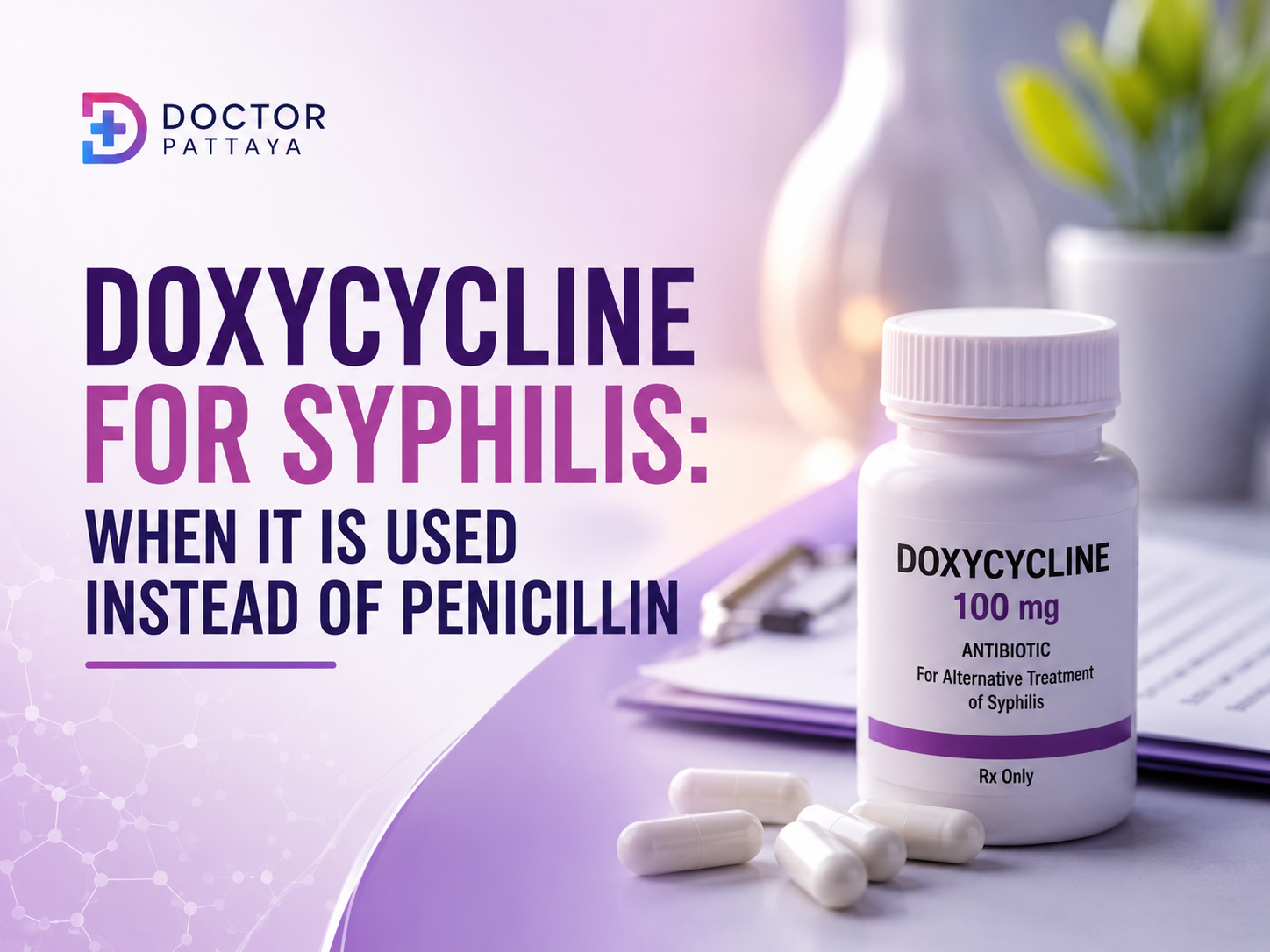
Doxycycline is the recommended alternative to penicillin for syphilis in non-pregnant adults who have a confirmed penicillin allergy or cannot access injections. For early syphilis, the course is 14 days. For late latent syphilis, it is 28 days. Both must be followed up with a blood test to confirm the infection has cleared.
You came to Pattaya for a good time, not to sit across from a doctor trying to figure out your treatment options. But here you are, and honestly, we see this every week. Someone gets a syphilis diagnosis, mentions they are allergic to penicillin, and wants to know what comes next. Or they are mid-holiday and need something practical that fits into the next two weeks. That is exactly where doxycycline comes in.
Syphilis is curable. That part is simple. The treatment question gets more involved when penicillin is off the table, because the alternative really does matter. Doxycycline is what the CDC, WHO, and UK guidelines recommend for non-pregnant adults in this situation. It works well when taken correctly and followed up properly. This article covers when it is used, how long you take it, what to watch out for, and what the process looks like at a clinic here in Pattaya.

Why Penicillin Is Still the First Choice
Benzathine penicillin G, given as an injection, is the standard treatment for syphilis. It has been used for decades, it works at every stage, and it requires just one or two doses depending on how far the infection has progressed. If you do not have a penicillin allergy and you can access the injection, that is still the first choice.
The injection delivers the antibiotic in a single controlled dose with no room for error. Oral treatment requires two tablets every day for 14 to 28 days. Missing doses changes the outcome, which is why the injection remains preferred when it is an option.
Exactly When Doxycycline Is Used Instead of Penicillin
The most common reason is a confirmed penicillin allergy. If you have had a genuine allergic reaction to penicillin, we do not use it. Doxycycline is what the guidelines recommend instead.
The second situation is penicillin unavailability. This happens more often than people realise, including here in Thailand. There have been periods where benzathine penicillin G was in short supply, and doxycycline provided a reliable alternative. Some patients also prefer oral therapy, which is a valid factor when the clinical picture supports it. The doctor needs to assess whether oral treatment is appropriate for your stage of infection before prescribing.

Doxycycline Dosage for Syphilis: Early vs Late Latent
The dose is the same: 100 mg twice daily. But the duration depends on the stage of syphilis you have, and getting that wrong matters.
For primary, secondary, or early latent syphilis, the course is 14 days. For late latent syphilis or syphilis of unknown duration, it is 28 days. At Doctor Pattaya, we stage the infection with a blood test before prescribing, so you get the right course for your situation. Do not stop early because you feel fine. The bacteria can persist even without symptoms. Finishing the full course is not optional.
Why Doxycycline — Not Azithromycin — Is the Recommended Alternative
Patients sometimes ask about azithromycin. It is a common antibiotic, easy to take, just a few tablets. The problem is that the bacteria that causes syphilis has developed resistance to azithromycin in many parts of the world, including Southeast Asia. Both the CDC and WHO no longer recommend it for syphilis treatment.
Doxycycline does not have this resistance problem. If someone has previously offered you azithromycin for syphilis, that advice is now outdated. The correct alternative is doxycycline, and that is what we prescribe here when STD treatment in Pattaya calls for an alternative to penicillin.
When Doxycycline Cannot Be Used
Pregnancy is an absolute contraindication. Both the CDC and WHO are explicit about this. Doxycycline is harmful to fetal development and must not be used during pregnancy under any circumstances.
If you are pregnant and have syphilis, the only safe option is benzathine penicillin G, even if you have a penicillin allergy. That requires penicillin desensitisation under medical supervision. This needs urgent clinical attention, not a wait-and-see approach. Come in straight away. Children under eight years old are also excluded, as doxycycline affects developing teeth and bone.
Side Effects and Practical Considerations While Taking Doxycycline
The most relevant side effect for anyone in Pattaya is photosensitivity. Doxycycline makes your skin much more sensitive to UV light. You are in tropical sun, possibly spending days at Jomtien or on a boat. That combination causes sunburn faster than you would expect. Use SPF 50 or higher every day, stay out of direct sun during peak hours, and cover up more than you normally would.
Nausea is also common, especially on an empty stomach. Take each tablet with food. Avoid lying down for at least 30 minutes after each dose to reduce the risk of irritation to your oesophagus. Alcohol does not directly reduce doxycycline’s effectiveness, but keeping things sensible during treatment is always the right call.
Monitoring Your Recovery: Why Follow-Up Blood Tests Matter
Finishing the antibiotics is not the end of the process. You need a follow-up blood test to confirm the infection has actually cleared. The test measures a specific marker in your blood that drops over time after successful treatment.
CDC guidelines recommend follow-up testing at 6 and 12 months after completing doxycycline for syphilis. For late latent syphilis, follow-up is especially important because the clinical stakes are higher. At Doctor Pattaya, follow-up blood tests are available with results typically back within 24 to 48 hours. If you are leaving Pattaya before your follow-up is due, we provide a written plan so you can continue testing in your home country.
Doxycycline Beyond Treatment: What About Prevention?
If you are in a higher-risk group, there is one more thing worth knowing. Doxycycline post-exposure prophylaxis, called doxy-PEP, involves taking a single dose of doxycycline within 72 hours of unprotected sex. The CDC endorsed this approach in 2024 for people at elevated risk, and evidence suggests it meaningfully reduces the risk of syphilis and other bacterial STIs.
Doxy-PEP is not a substitute for regular testing or safer sex, and it is not right for everyone. But if it is relevant to your situation, ask about it during your consultation. We can walk you through whether it fits.
Getting Doxycycline for Syphilis in Pattaya: What the Process Looks Like
The process at Doctor Pattaya is straightforward. You come in, tell us what is going on, and we take it from there. No judgment, no drama. We see this regularly with tourists, expats, and long-term residents across South Pattaya, Jomtien, Naklua, and Pratumnak.
We start with a blood test to confirm the diagnosis and stage the infection. We check your allergy history. If doxycycline is appropriate, we prescribe the correct course and dispense the medication here, so you are not navigating a pharmacy with a Thai prescription. We also go through partner notification with you, because anyone you have had sexual contact with recently should be assessed and tested too. Our confidential STD treatment covers the full process in-clinic, including follow-up serology when the time comes.
If you are a tourist finishing the course at home, you leave with the right number of tablets, a written plan, and clear instructions for follow-up testing wherever you are headed.
Doctor Pattaya is open 24 hours a day. If you have been diagnosed with syphilis, have a penicillin allergy, or want to confirm which treatment is right for you, walk in any time or contact us to arrange a hotel visit. We offer confidential syphilis testing and treatment in Pattaya, including blood staging, doxycycline prescribing, and follow-up serology, across Pattaya, Jomtien, and Naklua.
FAQ

Dr. Pipat Finn is the senior doctor at Doctor Pattaya Takecare Clinic, a 24/7 walk-in medical practice on South Pattaya Road, Chonburi, Thailand. They provide primary care, travel medicine, sexual health, vaccination, minor surgery, IV therapy, and emergency outpatient services for tourists, expatriates, and Pattaya residents. Languages: English and Thai. WhatsApp consultations: +66 95 073 5550. Call: +66 81 668 5557.