Clinically reviewed by Dr. Pipat Finn, M.D., Senior Doctor, Doctor Pattaya.
Last reviewed: September 2026
Chronic hepatitis B cannot be cured, but it can be managed well with modern antiviral medications. The current first-line treatments, tenofovir and entecavir, suppress the virus effectively and protect your liver from long-term damage. At Doctor Pattaya, you can get tested and seen by a doctor on the same day, any day of the week, with no appointment needed.
You did not plan for this. Maybe a blood test flagged something unexpected. Maybe a partner said something, or a routine check before a new job turned something up. Whatever brought you here, you are now sitting with a hepatitis B result and not entirely sure what it means or what happens next. That is a reasonable place to be, and it is exactly the kind of thing we handle every day.
Thailand has a high background rate of hepatitis B. A significant portion of the population carries the virus, many without knowing it. For tourists and expats in Pattaya, exposure risks go up when you factor in unprotected sex, tattoos, or any procedure done without sterile equipment. The good news is that hepatitis B is one of the more manageable chronic viral infections we deal with. The medications are effective, well-tolerated, and available here. Here is what you need to know.

Acute vs Chronic Hepatitis B — Why the Difference Matters for Treatment
This is the question most patients do not think to ask, and it changes everything about your plan.
Acute hepatitis B means the infection is new, usually within the past six months. Most adults who catch it clear it on their own. There is no specific antiviral for acute hepatitis B. What we do is manage symptoms: rest, fluids, a liver-friendly diet, and no alcohol. You come back for repeat blood tests to confirm the virus has cleared.
Chronic hepatitis B is a different situation. This is when the virus has been in your body for more than six months and your immune system has not cleared it. This is when antiviral treatment becomes relevant. Your viral load and your liver function results together help us decide whether and when to start medication.
Hepatitis B in Pattaya — Why the Risk Is Real for Tourists and Expats
We see hepatitis B come up regularly in our clinic. It is not rare, and it is not something that only affects people who have lived here for years. Tourists pick it up through unprotected sex. Expats get exposed through tattoos or procedures done without properly sterilised equipment. Some people have been carrying it for years without symptoms and only find out through a routine STD panel or a pre-travel blood test.
Pattaya’s nightlife creates obvious exposure opportunities. But it is also the kind of place where people put off getting checked because life moves fast and the clinic feels like a tomorrow problem. If you have had any potential exposure, getting tested is simple and quick. You do not need an appointment at Doctor Pattaya, and the whole thing can be done in one visit.

How Hepatitis B Is Diagnosed — What the Blood Tests Show
A single positive result does not tell the whole story. We run a panel of markers to understand exactly where you are.
HBsAg is the surface antigen of the hepatitis B virus. If this is positive, the virus is in your body right now. HBeAg tells us how actively it is replicating. HBV DNA is your viral load, and it tells us how much virus is circulating. ALT and AST are liver enzymes, and elevated levels suggest your liver is under stress.
Together these results tell us whether your infection is acute or chronic, how active the virus is, and whether your liver is already showing signs of damage. They also tell us whether you need antiviral treatment now or whether close monitoring is the right call for the moment.
Which Medications Are Used to Treat Hepatitis B in Pattaya
Not everyone with chronic hepatitis B needs medication straight away. But when treatment is indicated, these are the drugs we use.
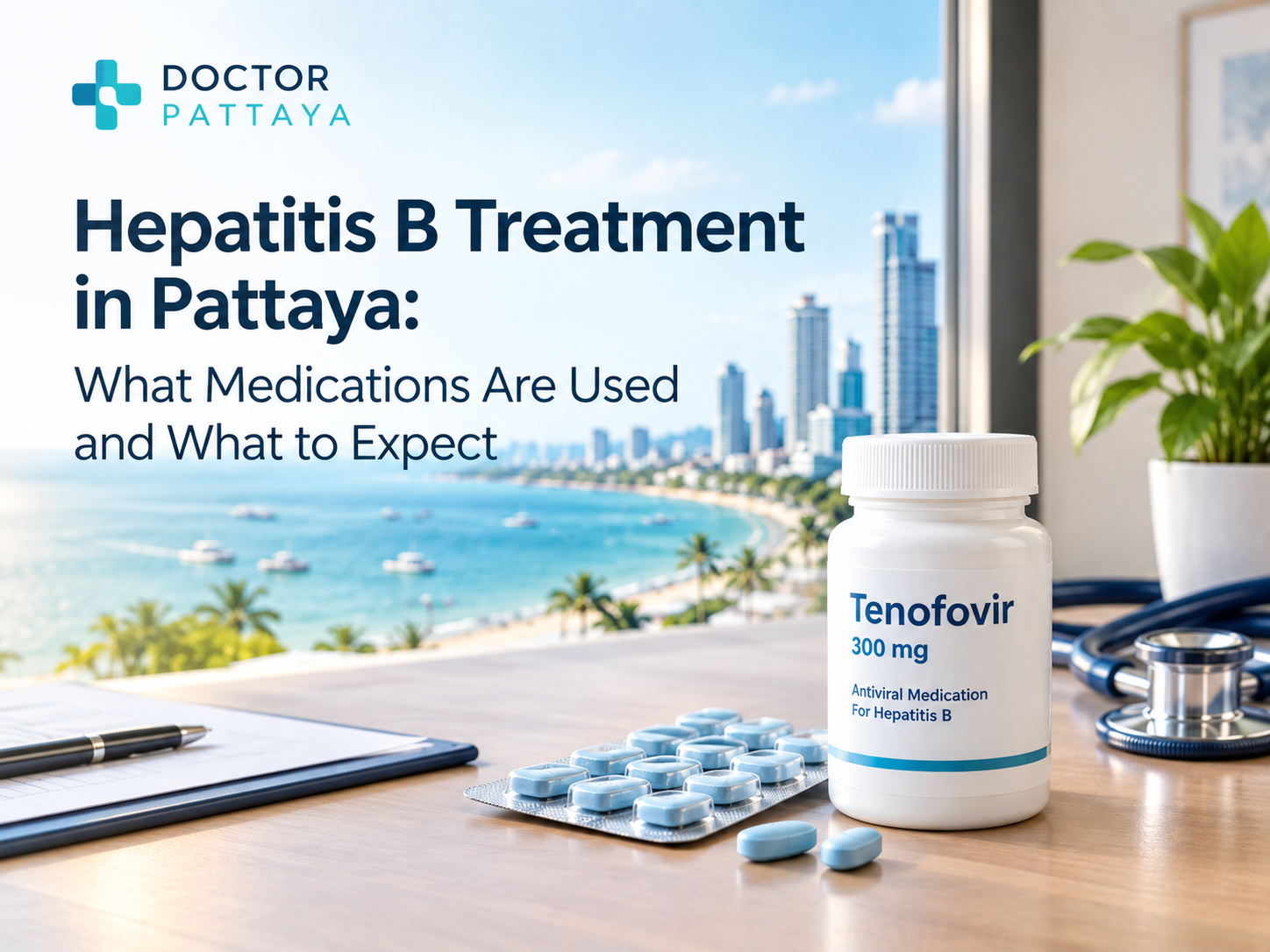
Tenofovir disoproxil fumarate, known as TDF, and tenofovir alafenamide, known as TAF, are the preferred first-line choices. Both are daily oral tablets. TAF is the newer formulation and is gentler on the kidneys and bones, which matters for anyone on long-term therapy. Entecavir is another strong first-line option, also a daily tablet, with a solid track record and a very low risk of resistance. These three are what the World Health Organization recommends, and they are what we prescribe at Doctor Pattaya when treatment is needed.
Older drugs like lamivudine are used less often now because resistance develops more easily over time. Pegylated interferon is an injectable option that runs for a fixed course, usually around 48 weeks, and suits some patients who want a time-limited treatment. It has more side effects than the oral medications and is not right for everyone.
None of these drugs cure hepatitis B. What they do is suppress the virus, protect the liver from ongoing damage, and significantly reduce the risk of serious complications over time.
What the Treatment Goals Actually Are
When we start antiviral therapy, we are aiming for a few specific things. Bringing your viral load down to undetectable or very low levels is the primary goal. Getting your liver enzymes back into a normal range comes next. Over time, we want to stop the liver from progressing toward scarring.
A full clearance of the virus happens in a small number of patients but is not the expected outcome for most people on oral antivirals. This is important to understand up front. For chronic hepatitis B, the goal is stability and liver protection over the long term, not elimination of the virus.
Long-Term Management — What Happens After You Start Treatment
Starting treatment is step one. Staying on it and monitoring your response is everything that comes after.
We check your blood markers regularly once you are on antivirals: viral load, liver enzymes, and kidney function at minimum. Once things are stable, that is typically every three to six months. If you are an expat based in Pattaya, this kind of ongoing monitoring is straightforward through a private clinic without needing to travel to Bangkok for every review.
You should also have regular liver ultrasound scans, especially if you have had elevated enzymes or a longer duration of infection. If viral suppression is not achieved, we reassess the drug choice. This is rare with the current first-line agents but worth knowing about.
Getting Tested and Treated for Hepatitis B at Doctor Pattaya
If you think you have been exposed, or you have a result you do not fully understand, or you are an expat whose prescription needs renewing, you can walk into Doctor Pattaya any time, day or night. No appointment, no referral needed.
For new patients, we run the full hepatitis B panel on the same visit. For patients who already have a diagnosis and are on antivirals, we can review your history, check your current markers, and continue your prescription. For tourists diagnosed mid-holiday, we will talk through your options honestly, including what is realistic to manage here and what needs follow-up once you are home.
Everything is handled confidentially. We treat hepatitis B as a medical condition, full stop. Our STD treatment service covers hepatitis B testing, diagnosis, antiviral prescriptions, and referral for specialist follow-up when needed. If you need a doctor to come to your hotel in Jomtien, Naklua, or Pratumnak, that is also available.
Ready to get checked or continue your treatment? Doctor Pattaya is open 24 hours a day, seven days a week, with no appointment needed. We will run the right blood tests, explain your results clearly, and if treatment is indicated, get you started the same day. Walk-in testing and antiviral prescriptions are available at our South Pattaya clinic. Doctor visits to hotels across Pattaya, Jomtien, Naklua, and Pratumnak are also available. Come in when you are ready.
FAQ

Dr. Pipat Finn is the senior doctor at Doctor Pattaya Takecare Clinic, a 24/7 walk-in medical practice on South Pattaya Road, Chonburi, Thailand. They provide primary care, travel medicine, sexual health, vaccination, minor surgery, IV therapy, and emergency outpatient services for tourists, expatriates, and Pattaya residents. Languages: English and Thai. WhatsApp consultations: +66 95 073 5550. Call: +66 81 668 5557.