Clinically reviewed by Dr. Pipat Finn, M.D., Senior Doctor, Doctor Pattaya.
Last reviewed: September 2026
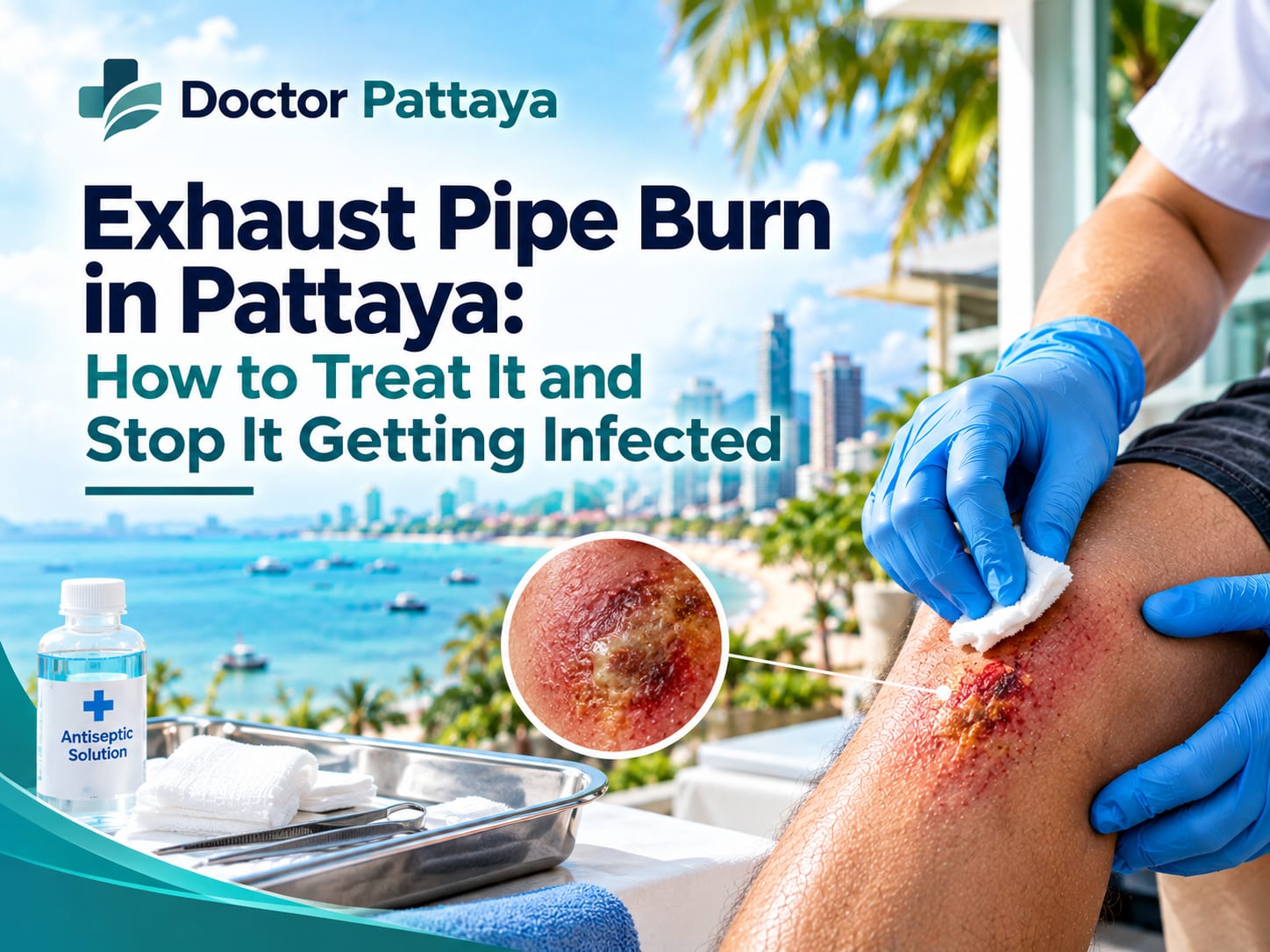
An exhaust pipe burn needs cool running water for 20 minutes, then a clean non-stick dressing. Any blister, white or waxy skin, or a burn larger than your palm needs a doctor the same day. In Pattaya’s heat, even a minor-looking burn can get infected within 24 hours. Doctor Pattaya is open 24 hours and you can walk in any time, no appointment needed.
You slid off the back of a hire bike near Jomtien, felt a sharp sting against your calf, and looked down to see a red mark already forming. Maybe you were in flip-flops. Maybe it was after midnight. Maybe you are not sure yet how bad it is. This is one of the most common injuries we see, and I want you to have the answer before you start panicking in your hotel room.
Exhaust pipe burns happen fast. The pipe touches skin for a second and leaves a mark that can range from mild redness to a deep blister. The injury itself is only half the problem. The other half is what happens next, especially in Pattaya’s heat. Here is what to do, how to read what your burn is telling you, and when to stop treating it yourself and come see us.

Why Exhaust Burns Happen So Often in Pattaya
Pattaya has more hire scooters and motorbike taxis per square kilometre than almost anywhere I can think of. Most tourists ride in shorts, sundresses, and sandals. The exhaust pipe on a small bike sits at exactly calf height. Passengers sitting side-saddle are at the highest risk, and nightlife traffic on Second Road or around Walking Street means more stops, more shuffling on the seat, and more contact.
Locals call the mark a "Thai tattoo." That name has stuck because it is so common. But common does not mean harmless, and a burn from a dirty city exhaust pipe in tropical humidity needs proper attention.
How to Tell How Deep Your Exhaust Burn Is
Burn depth matters because it changes whether you need a doctor.
A first-degree burn is red, painful, and dry with no blisters. Think of a bad sunburn. These usually heal on their own with good first aid and clean dressings.
A second-degree burn forms blisters, looks wet or shiny, and is often intensely painful. This is the most common result from an exhaust pipe and always warrants professional wound care.
A third-degree burn is less painful than you would expect because the nerve endings are damaged. The skin looks white, waxy, or leathery. If you press it and feel nothing, go straight to the clinic and do not try to treat it yourself.
One thing worth knowing: the calf and ankle are tricky. Skin is thinner over tendons and bone there, so a burn that looks superficial can be deeper than it appears. If you are unsure, get it assessed rather than guessing.
Immediate First Aid for an Exhaust Burn
The first 20 minutes matter more than anything that follows.
Cool the burn under running water for 20 minutes. Not cold, not ice. Lukewarm to cool running water. Ice reduces blood flow to already damaged tissue and makes things worse. If there is no tap nearby, bottled water from any 7-Eleven or Family Mart works fine. There is one on almost every block.
Do not apply toothpaste, butter, aloe from an unknown source, or any cream from a street pharmacy unless it is a proper antibiotic ointment you already know. Most of those things trap heat and push bacteria into an open wound.
Once the burn is cooled, cover it loosely with clean gauze or a non-stick burn dressing. Standard fabric plasters stick to a wet burn and tear the surface when removed. If you have nothing sterile, a clean dry cloth held gently in place is better than leaving the wound exposed on a sweaty leg.
Do not pop the blister. The fluid inside is sterile and acts as a natural barrier. Once it breaks, that protection is gone.
Why Exhaust Burns Get Infected Faster in Pattaya
This is the part most online guides miss.
Exhaust pipes collect road grime and carbon deposits. When that pipe presses against skin, it is not a clean burn. There is a real tetanus risk if it has been more than ten years since your last booster. Bacteria from the pipe surface can enter through even a small break in the skin.
Pattaya’s heat and humidity also mean the wound stays moist. A burn that cannot dry out, sweating under a plaster in 35-degree weather, is exactly the environment bacteria thrive in. Tourists often do not have proper dressing supplies for daily changes. A dressing left in place too long in tropical conditions is one of the most common ways a moderate burn becomes an infected one.
Signs Your Burn Is Getting Infected
Watch for these. If you notice any of them, come in.
Redness spreading outward from the burn edge after the first 24 hours is a warning sign. A healing wound should look cleaner each day, not angrier. Yellow or green discharge means bacterial infection. A fever alongside a worsening wound means the infection has moved past the skin surface. Pain that increases rather than settles after day two or three is not normal.
If you have a flight in 48 hours and your wound looks worse than yesterday, do not wait. Doctor Pattaya can assess the burn, manage the infection, and produce an insurer-formatted report and receipt at the same visit. Most travel insurance policies cover accidental burns, and the paperwork takes minutes when done at the time of your visit.
What Happens When You Come to Doctor Pattaya for a Burn
A lot of patients arrive unsure what to expect. It is straightforward.
We assess the burn depth first, then clean the wound properly and apply a professional non-stick dressing suited to tropical conditions. If there are signs of infection or high contamination risk from the pipe surface, we prescribe antibiotics.
We also check your tetanus status. Most tourists do not remember when their last booster was. The exhaust pipe is exactly the kind of dirty surface that creates tetanus risk in a break in the skin. If you need a booster, we carry the vaccine and can give it during the same visit.
If the burn needs continued care after you fly home, we write a full clinical summary in English for your GP or treating clinic. For anyone wanting to know what vaccinations and health prep are worth having before your next trip, our travel health page has you covered.
Long-Term Healing and Scarring
Most first-degree burns heal cleanly within one to two weeks if kept clean and protected. Second-degree burns take two to four weeks, and the outcome depends heavily on whether infection is prevented in those first few days.
Scarring after a second-degree burn is real. Some patients notice a darker patch where the burn was for several months after healing. Raised scar tissue is less common but possible if the wound gets infected or is picked at. Keeping the area out of direct sun during healing reduces the risk of permanent discolouration.
What makes the biggest difference is the first week of care. A clean, properly dressed wound looked after by a clinician in those early days heals better than one managed with whatever was in the hotel room. That is just what I see at the clinic, week in and week out.
Burned your leg on a motorbike exhaust in Pattaya? Doctor Pattaya is open 24 hours, seven days a week, in South Pattaya. Walk in any time for burn assessment, professional wound dressing, tetanus cover, antibiotic prescription if needed, and insurer-ready medical documentation. No appointment necessary. Hotel visits are available across Pattaya, Jomtien, Naklua, and Pratumnak if you cannot travel to us.
Frequently Asked Questions

Dr. Pipat Finn is the senior doctor at Doctor Pattaya Takecare Clinic, a 24/7 walk-in medical practice on South Pattaya Road, Chonburi, Thailand. They provide primary care, travel medicine, sexual health, vaccination, minor surgery, IV therapy, and emergency outpatient services for tourists, expatriates, and Pattaya residents. Languages: English and Thai. WhatsApp consultations: +66 95 073 5550. Call: +66 81 668 5557.