Clinically reviewed by Dr. Pipat Finn, M.D., Senior Doctor, Doctor Pattaya. Last reviewed: September 2026
Fever in Pattaya is commonly caused by viral illness, food poisoning, or dengue. Most cases improve with rest, fluids, and paracetamol. Do not take ibuprofen or aspirin until dengue is ruled out, as these can worsen bleeding risk. If your fever is above 39.5°C, lasts more than 24 hours, or comes with a rash or severe pain behind the eyes, get seen today.
You were fine yesterday. Maybe you had a beach day at Jomtien, a big dinner along the Soi Buakhao strip, a late night, and a long sleep. Now your head is pounding, your body aches, and your thermometer says 38.8°C. This is not how the trip was supposed to go. Take a breath. Fever in Pattaya is something we deal with every single day, and most of the time we can sort you out quickly and get you back to enjoying yourself.
That said, fever in a tropical city is not quite the same as running a temperature back home. Dengue is real here. Food-borne illness is common. The heat alone can confuse things. Knowing the difference between something that will pass on its own and something that needs a blood test matters, and that is exactly what this guide covers.

Common Causes of Fever in Pattaya
The most common culprit is a viral infection. You picked it up on the plane, in an air-conditioned bar on Walking Street, or from a crowded pool party. This kind of fever usually peaks around day two and starts to ease by day three or four. You feel awful, but you improve.
Food poisoning is a close second. Pattaya has incredible street food, but temperature control is not always reliable, especially from beach vendors or smaller stalls after dark. Bacterial infections from contaminated food can cause fever alongside gut symptoms. If the fever and diarrhoea hit together, food poisoning is high on the list.
Urinary tract infections cause more fever than most people realise. If you have burning when you urinate or feel like you need to go constantly, mention that when you come in. Flu is also extremely common, especially among tourists moving through heavily air-conditioned venues. Dehydration in tropical heat can make everything feel worse and push your temperature up even when no infection is present.
The Dengue Risk — Why Fever in Pattaya Is Not the Same as Fever at Home
This is the section worth reading before you reach for the pharmacy shelf. Dengue is a mosquito-borne viral illness that circulates throughout Pattaya year-round. It is not rare. We test for it regularly and we find it regularly.
Classic dengue causes a sudden high fever, a severe headache, pain behind the eyes, and deep muscle and joint aches. A rash can appear a few days in. The problem is that early dengue looks almost identical to flu. You cannot tell the difference from symptoms alone, and that matters for one specific reason.
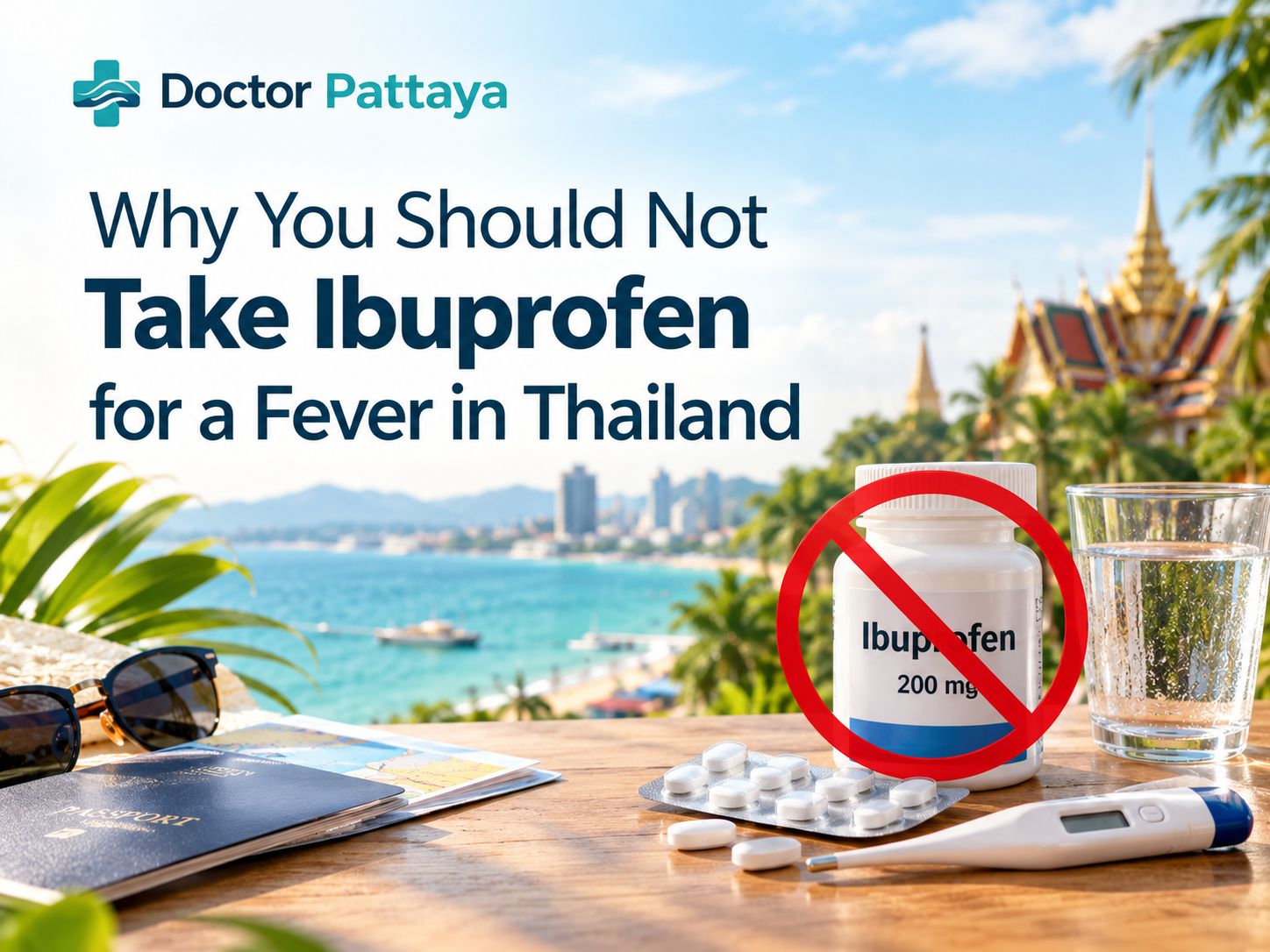
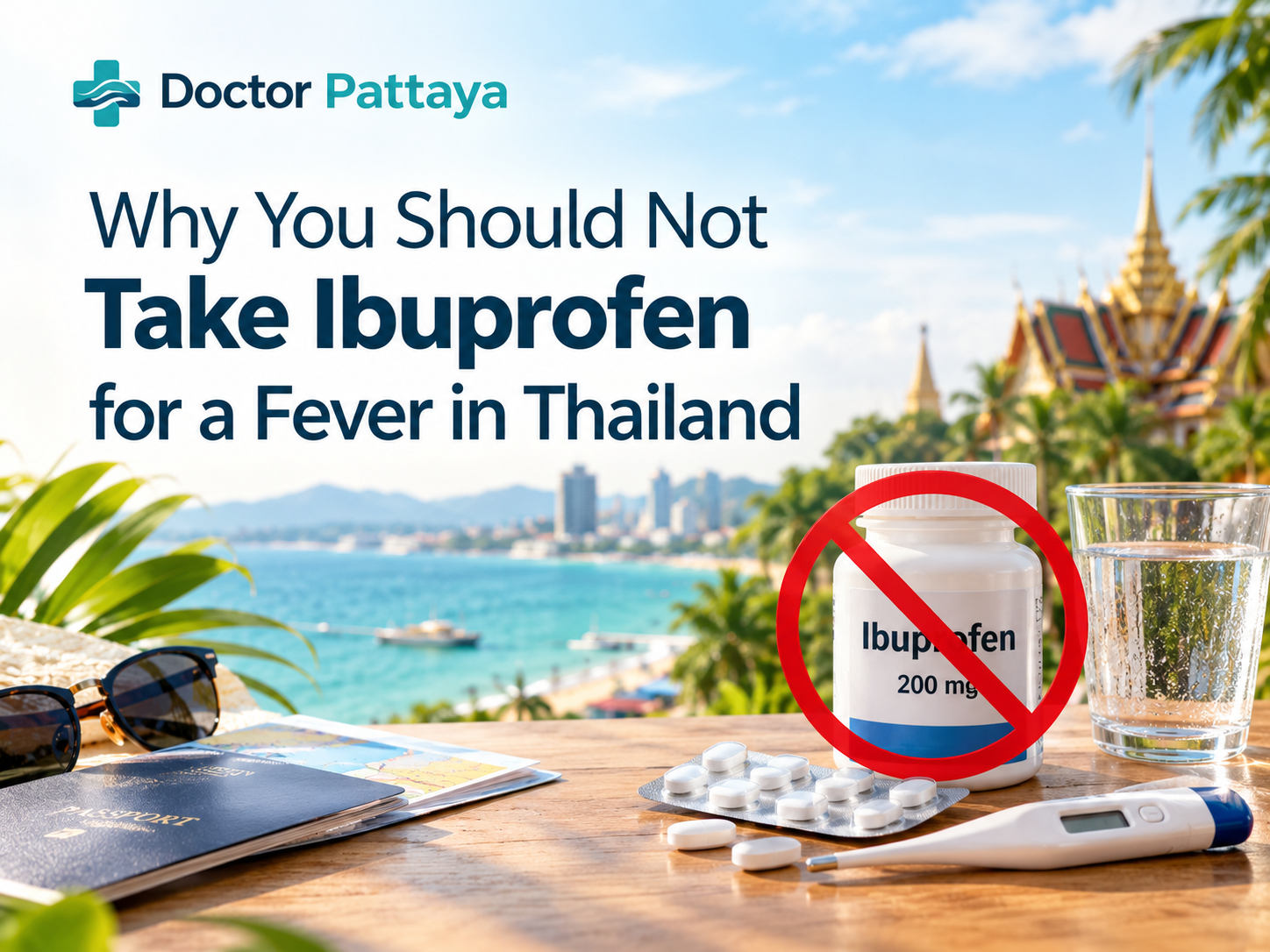
Ibuprofen and aspirin should be avoided when dengue is suspected. These medications can increase the risk of bleeding complications if dengue turns out to be the real diagnosis. Yet they are sold over the counter at every pharmacy on Beach Road. Paracetamol is safe and is what we recommend until dengue has been ruled out. This is not a technicality. It is the single most important thing you can act on right now.
A rapid blood test can confirm or rule out dengue the same day. We do this in-clinic. Results come back quickly and give us a clear direction for your care. You can read more about how we handle fever treatment in Pattaya at our clinic page.

When Dengue Risk Peaks in Pattaya
Dengue transmission is higher during and after the rainy season, which runs roughly from May through October. Mosquito populations spike with standing water, and that means more bites and more cases. We see a clear rise in dengue presentations every year from June onwards, with another peak in October and November as the rains taper off.
That does not mean the dry season is risk-free. It simply means the risk is lower. If you are visiting during the wet season, a repellent containing DEET is a practical daily habit, not just advice for jungle treks. Pattaya’s urban environment has plenty of mosquito breeding ground.
Food poisoning risk runs fairly constant year-round but spikes in April and May when the heat makes temperature control for street food harder. Respiratory illness tends to be worse in the cool, dry season when everyone crowds into closed, air-conditioned venues.
Warning Signs That Mean You Should Not Wait
Most fevers are manageable. A few are not. These are the signs that mean come in now, not tomorrow.
A fever above 39.5°C that is not coming down with paracetamol needs same-day assessment. A rash appearing alongside fever is always a reason to be seen urgently. Severe pain behind the eyes combined with high fever is a classic dengue pattern and warrants a rapid test today.
Confusion, a stiff neck, difficulty breathing, or chest pain alongside fever are red flags for something more serious. These symptoms need immediate clinical assessment, not a trip to the pharmacy. Bleeding from the nose or gums, or unusual bruising, can be a sign that dengue has progressed. Come in.
If you have recently visited forested or border areas of Thailand, mention that. Malaria risk in Pattaya city itself is very low, but it cannot be excluded in that context.
What You Can Do While You Wait
Start with paracetamol. The standard adult dose is 500mg to 1000mg every six hours, and do not exceed four grams per day. Drink more fluids than you think you need. Fever causes you to lose water fast, and tropical heat accelerates that. Electrolyte drinks from a 7-Eleven work fine if you have nothing more specific to hand.
Rest in a cool room. Avoid alcohol. Skip the ibuprofen and aspirin until you have been assessed, for the dengue reason explained above. If your fever is below 38.5°C, you feel reasonably alert, and there are no warning signs, it is reasonable to monitor for the next twelve to twenty-four hours. If it climbs, persists, or new symptoms appear, that is your cue to come in.
Do not rely on the pharmacy as a substitute for a diagnosis. The pharmacists here are helpful, but they cannot run a blood test.
What Happens When You Come Into the Clinic
Walk into Doctor Pattaya and we will see you without an appointment. We start with a straightforward assessment: your temperature, heart rate, blood pressure, oxygen level, and a clear history of what happened and when.
If dengue is a possibility, we run a rapid antigen test on the same visit. We can also run a flu swab, COVID test, strep screen, blood count, and urine test depending on what your symptoms suggest. Most results are back within the hour. You leave with a diagnosis, a treatment plan, and medication if needed.
For viral illness, the plan is supportive: rest, fluids, fever relief, and a clear list of symptoms to watch for. If you have a bacterial infection, we prescribe antibiotics and follow up. If dengue is confirmed, we guide you through the monitoring plan, because dengue can worsen between days three and seven even as the fever seems to ease.
We also provide itemised receipts and clinical documentation for travel insurance claims. Most travel insurance policies cover acute illness at private clinics. Check your policy for pre-authorisation requirements and contact your insurer sooner rather than later.
Too Unwell to Come In? We Come to You
Some patients genuinely cannot make it to the clinic. If your fever is high and you feel too weak to get in a taxi, or you are stuck at a hotel in Jomtien, Naklua, or Pratumnak, Doctor Pattaya offers hotel and condo visits across Pattaya. Message us on WhatsApp or call and we will arrange it.
A lot of long-term expats use this service when a bad fever hits and they do not want to sit in a waiting room. Tourists on shorter trips find it even more useful when every hour of the holiday matters.
The hotel visit covers the same clinical assessment as an in-clinic appointment. We bring the equipment, collect samples for rapid testing, and do not cut corners because we are at a Jomtien condo instead of the clinic.
A Note for Long-Term Expats in Pattaya
If you have lived here for years, you probably know the seasonal patterns and may have managed a fever or two on your own. That experience is useful. But a few things are worth repeating.
Chronic conditions change how your body handles infection. If you are on blood thinners, immunosuppressants, or diabetes medication, or have a heart condition, a fever that would be mild in a healthy adult needs earlier review for you. Do not apply the same wait-and-see window you would have used at twenty-five.
If you have been in Pattaya for years and have never discussed the dengue vaccine with a doctor, now is a good time. It has specific eligibility criteria and is not right for everyone, but it is worth a conversation.
Running a fever in Pattaya and not sure what to do next? Doctor Pattaya is open 24 hours, seven days a week, with no appointment needed. Walk into our clinic on South Pattaya Road, or message us on WhatsApp to arrange a hotel or condo visit if you are too unwell to travel. We offer same-visit rapid dengue testing, flu and COVID swabs, blood tests, and full treatment on the day. English-speaking doctors are available around the clock.
Frequently Asked Questions

Dr. Pipat Finn is the senior doctor at Doctor Pattaya Takecare Clinic, a 24/7 walk-in medical practice on South Pattaya Road, Chonburi, Thailand. They provide primary care, travel medicine, sexual health, vaccination, minor surgery, IV therapy, and emergency outpatient services for tourists, expatriates, and Pattaya residents. Languages: English and Thai. WhatsApp consultations: +66 95 073 5550. Call: +66 81 668 5557.