Clinically reviewed by Dr. Pipat Finn, M.D., Senior Doctor, Doctor Pattaya.
Last reviewed: October 2026
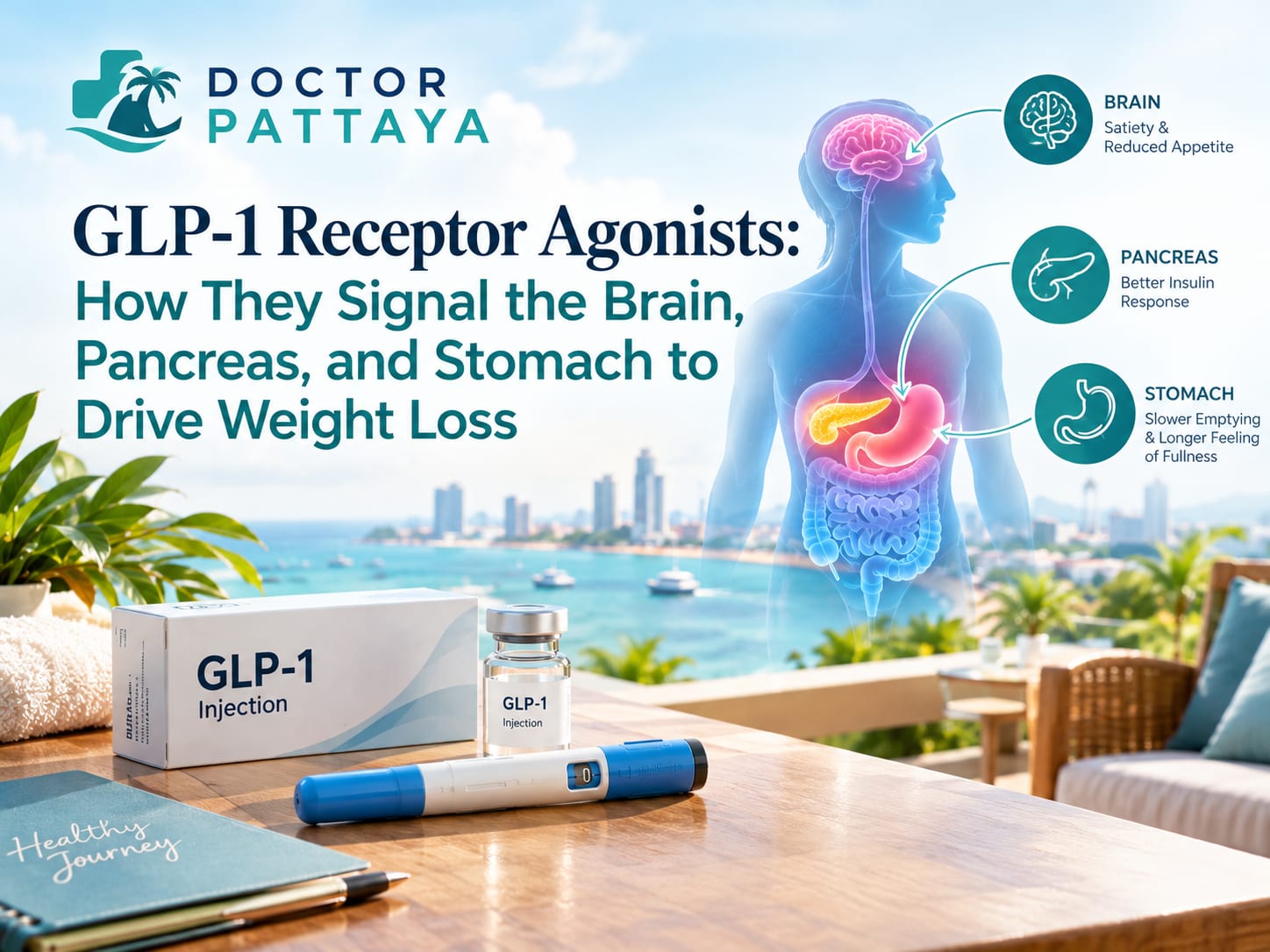
GLP-1 receptor agonists work by mimicking a natural gut hormone that tells your pancreas to release insulin, slows your stomach down, and signals your brain to feel full sooner. They only trigger insulin when your blood sugar is actually high, which is why they rarely cause the dangerous blood sugar drops that insulin can. The result is less hunger, smaller meals, and steady weight loss over time.
You have been in Pattaya a few weeks, maybe longer. The beach dinners in Jomtien, the late nights, the all-inclusive breakfasts have quietly added up. Now you are sitting across from me asking about Ozempic or Mounjaro. You saw them on social media, heard about them from a friend, and you want to understand what they actually do before you commit to injecting something every week. That is a smart instinct and one I hear regularly.
Here is what I tell every patient who asks: these medications are not magic, but they are genuinely good science. Understanding the GLP-1 receptor agonist mechanism helps you use them correctly, set realistic expectations, and avoid the mistakes that come from starting without proper guidance. Let me walk you through exactly how they work.
What the Natural GLP-1 Hormone Does and Why It Disappears So Fast
Your gut already makes GLP-1, short for glucagon-like peptide-1, every time you eat. It is released from cells in your small intestine and does several things at once: it prompts your pancreas to release insulin, tells your stomach to slow down, and sends a fullness signal to your brain.
The problem is that your body destroys natural GLP-1 within about two minutes. An enzyme breaks it down almost as fast as it is made. The effect is real but very brief, and in many people with obesity or type 2 diabetes, the system is not working as well as it should.
GLP-1 receptor agonists do the same job but last far longer. Semaglutide, for example, stays active for about a week. That is why one weekly injection is enough. The drug is built to resist the enzyme that normally breaks GLP-1 down, giving you sustained signalling that your natural hormone simply cannot maintain on its own.
How the GLP-1 Receptor Agonist Mechanism Triggers Insulin Safely
When a GLP-1 receptor agonist attaches to a receptor on a pancreatic beta cell, it sets off a chain reaction. The key point is that this chain only fires strongly when your blood sugar is already elevated. At normal or low glucose levels, the signal stays weak.
This is why GLP-1 drugs are so much safer than injecting insulin directly. Insulin acts regardless of your glucose level and can push it dangerously low if the dose is wrong. GLP-1 receptor agonists have a built-in brake. They amplify insulin release when you need it and back off when you do not.
For patients who do not have diabetes at all, this makes the medication usable with a very low risk of hypoglycaemia, the medical term for a blood sugar crash. That is a meaningful safety difference and worth knowing before you start.

How GLP-1 Receptor Agonists Work on the Brain
This is the part most explanations skip, and it matters more than most people realise. GLP-1 receptors exist in the brain, not just the gut and pancreas. Two areas are especially relevant: the hypothalamus, which governs hunger and energy balance, and a region in the brainstem that processes fullness signals from your stomach.
When these brain receptors are activated, the cells that drive hunger and food-seeking become less active. At the same time, the cells that send appetite-suppressing signals become more active. The net result is that your brain stops pushing you toward food as hard as it used to.
There is also a reward dimension. Patients often describe not just eating less, but genuinely not wanting the foods they used to crave. That is not willpower. That is the mechanism changing how the brain responds to food.
What the Stomach Does Differently on GLP-1 Medication
GLP-1 receptor agonists slow gastric emptying, meaning food moves from your stomach into your small intestine more slowly. Food stays in your stomach longer, so you feel full faster and stay full longer after a smaller meal.
This is clinically useful. It is also the reason nausea is the most common side effect, especially early on. The slowing that creates satiety is the same process that makes your stomach feel unsettled while it adjusts.
Starting at a low dose and stepping up gradually over several weeks keeps this manageable. I see patients regularly who started elsewhere without a proper titration plan and spent the first few weeks feeling genuinely unwell when they did not need to. If you are mid-holiday and cannot afford to feel sick for days, proper dose management is not optional.
Semaglutide and Tirzepatide: What the Difference Actually Means
Semaglutide activates only the GLP-1 receptor. Tirzepatide, sold as Mounjaro, activates both the GLP-1 receptor and a second receptor called the GIP receptor. This is called dual agonism.
The combined signal produces a stronger insulin response after meals and appears to have additional effects on fat metabolism and energy use. In clinical trials, tirzepatide has produced greater average weight loss than semaglutide, though individual results vary considerably.
Both are available at Doctor Pattaya following a proper clinical assessment. Which one is right for you depends on your medical history, your goals, and any conditions that make one more suitable than the other. I would not choose based on which one you have seen more advertising for.
| Feature | Semaglutide (Ozempic, Wegovy) | Tirzepatide (Mounjaro) |
|---|---|---|
| Receptor targets | GLP-1 only | GLP-1 + GIP |
| Dosing frequency | Weekly | Weekly |
| Primary use | Type 2 diabetes, weight loss | Type 2 diabetes, weight loss |
| Average weight loss in trials | Strong | Stronger (dual agonism effect) |
| GI side effect profile | Moderate | Similar to semaglutide |
| Available in Pattaya | Yes | Yes |
Benefits Beyond Weight Loss: Heart, Kidneys, and Liver
A lot of the long-term expats I see in Pattaya are not just here for the number on the scale. They have high blood pressure, high cholesterol, or early signs of kidney disease, and they want to know whether these medications do anything useful beyond weight. The answer is yes, and the evidence is now strong enough to be reflected in international treatment guidelines.
Large clinical trials have shown meaningful reductions in serious heart events, including heart attacks and strokes, in people using GLP-1 receptor agonists. The cardioprotective effect appears to go beyond what weight loss alone would explain. There is also solid trial data showing reductions in kidney disease progression.
Fatty liver disease also responds well to GLP-1 therapy, with reductions in liver fat and inflammation seen in trials. For middle-aged expats in Pattaya with multiple cardiometabolic risk factors, these additional benefits can be the main clinical argument for starting treatment, not just the weight.
Why Weight Comes Back When You Stop
I want to be straight with you about this. When you stop a GLP-1 receptor agonist, the drug clears your system and the signalling stops. Your brain’s hunger circuits return to where they were before treatment. The medication was actively suppressing your hunger drive every single day. Without it, that suppression disappears.
There is a second layer too. After significant weight loss, your body lowers its circulating leptin, a hormone that tells your brain you have enough energy stored. Lower leptin means stronger hunger signals. GLP-1 therapy was working against this every day. Stopping creates a double effect: loss of drug-driven suppression plus a stronger underlying hunger drive coming back at the same time.
This is physiology, not a character flaw. It is also why GLP-1 treatment works best as part of a longer plan, whether that means long-term use, a structured exit strategy, or something in between. That conversation is worth having before you start, not after.
Starting GLP-1 Treatment in Pattaya: What to Expect
GLP-1 injectables are prescription-only medicines in Thailand. You cannot buy them over the counter at a pharmacy, and I would not recommend trying. A valid prescription from a Thai-licensed doctor is required, and the medication must be kept refrigerated at all times. In a tropical climate like Pattaya, that last point matters more than most people expect.
At Doctor Pattaya, the process starts with a consultation. We check your medical history, existing conditions, current medications, and whether you have used GLP-1 therapy before. If you are visiting from overseas and already have a prescription, bring that documentation. It helps and speeds things up considerably.
We start at a low dose and step it up over weeks. We also talk through storage while you are travelling, what to do if you miss a dose, and what symptoms are worth watching for. Expats planning long-term use get regular follow-up built in. Tourists visiting for a shorter stay get a plan that fits their timeline. You can find full details about how GLP-1 receptor agonists work and what to expect from the programme on our service page.
Thinking about starting a GLP-1 programme, or already on one and need to continue while you are in Pattaya? Doctor Pattaya is open 24 hours a day, seven days a week. We see tourists, expats, and residents for GLP-1 consultations, prescriptions, and ongoing weight management support. Same-day assessments are available, and we can come to you at your hotel if needed. Book your consultation today and let’s find the right plan for your situation.
Frequently Asked Questions

Dr. Pipat Finn is the senior doctor at Doctor Pattaya Takecare Clinic, a 24/7 walk-in medical practice on South Pattaya Road, Chonburi, Thailand. They provide primary care, travel medicine, sexual health, vaccination, minor surgery, IV therapy, and emergency outpatient services for tourists, expatriates, and Pattaya residents. Languages: English and Thai. WhatsApp consultations: +66 95 073 5550. Call: +66 81 668 5557.