Clinically reviewed by Dr. Pipat Finn, M.D., Senior Doctor, Doctor Pattaya. Last reviewed: October 2026
GLP-1 agonists like semaglutide and dual agonists like tirzepatide both reduce appetite and lower blood sugar, but they work through different hormonal pathways. Tirzepatide targets two receptors, GLP-1 and GIP, and head-to-head trial data shows it produces greater average weight loss than semaglutide at maximum doses. Both are available by prescription in Pattaya following a clinical assessment.
A lot of people walk into our clinic having already done the research. They know the names: Ozempic, Wegovy, Mounjaro. A friend dropped a significant amount of weight on one of them, and now they want to know which one is actually right for them. We hear this every week, from long-term expats who have been in Pattaya for years to visitors who want to get started before they fly home.
Here is the honest short version: not all weight loss injections work the same way. Semaglutide targets one hormone receptor. Tirzepatide targets two. That difference sounds modest on paper, but the clinical results are not modest at all. Below is what you need to know to have a proper conversation with your doctor about which one suits your situation.
GLP-1 and GIP: The Two Hormones Behind the Treatments
Your gut releases hormones when you eat. Two of the most relevant here are GLP-1 (glucagon-like peptide-1) and GIP (glucose-dependent insulinotropic polypeptide). Both are called incretin hormones.
GLP-1 tells your pancreas to release insulin, signals your brain to stop eating, and slows how fast your stomach empties. That slowing is part of why you feel full for so long on these medications, and part of why some people feel nauseous in the early weeks.
GIP works alongside GLP-1 to boost insulin release after meals. It also acts on fat tissue, influencing how fat is stored and broken down. For a long time it was considered the less interesting of the two hormones. That turned out to be wrong.
What Makes a GLP-1 vs GIP Dual Agonist Different
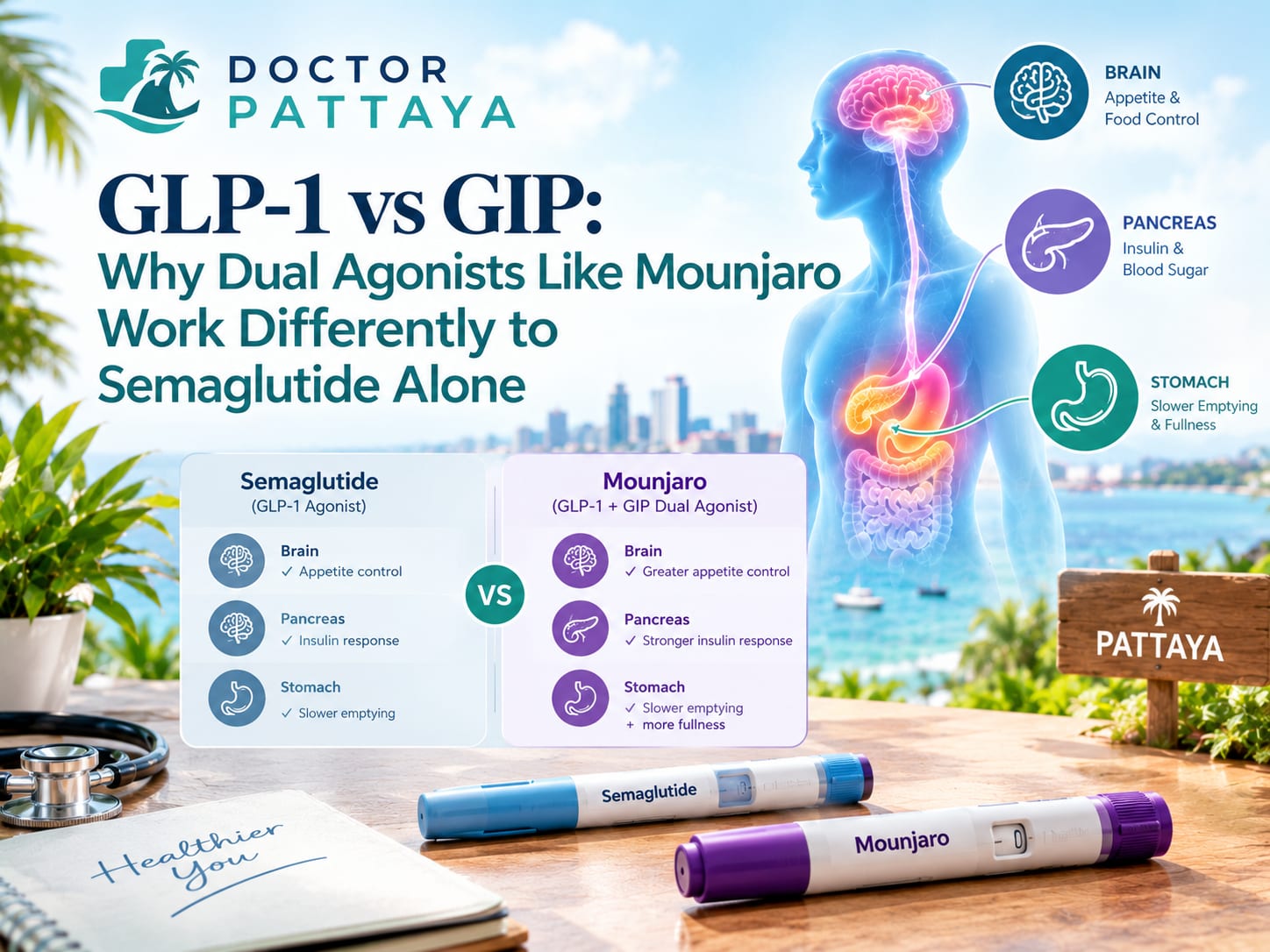
A GLP-1 agonist like semaglutide activates only the GLP-1 receptor. A dual agonist like tirzepatide activates both the GLP-1 receptor and the GIP receptor at the same time. This is why tirzepatide is sometimes called a twincretin.
One thing most patient-facing content misses: tirzepatide is not a balanced 50-50 drug. It actually favours the GIP receptor. The clinical result is that the two receptor pathways amplify each other, producing effects stronger than either pathway alone. Think of it as synergy rather than simple addition.
That synergy explains why the trial results between the two drug classes are not close. This is not just a newer version of the same medicine.

How the Mechanisms Differ: Appetite, Fat, and Blood Sugar
Semaglutide works primarily through the brain and gut. GLP-1 receptors in the brainstem drive the feeling of fullness and reduce the desire to eat. It is very effective at this.
Tirzepatide does all of that, plus it activates GIP receptors in body fat. This affects adiponectin, a hormone that improves how the body handles insulin. It also influences how fat is broken down, particularly the deep visceral fat around your organs that drives metabolic disease.
The combination of brain-level appetite control through GLP-1 and direct fat-tissue effects through GIP is what makes the dual agonist mechanism genuinely different, not just marginally better.
Weight Loss Results: What the Trials Show
The SURMOUNT-5 trial compared tirzepatide directly against semaglutide in people with obesity. Tirzepatide produced around 20.2% body weight loss at maximum doses. Semaglutide produced around 13.7%. Both drugs were used at their highest approved doses in people without type 2 diabetes.
In plain terms: if you weigh 100 kg, semaglutide at full dose might bring you to around 86 kg on average. Tirzepatide might bring you to around 80 kg. Over 12 months, that gap is meaningful.
Individual results vary. Starting weight, diet, exercise, and adherence all play a role. Trial averages are not personal guarantees, and a proper consultation will give you a far more realistic target.
| Semaglutide (GLP-1 agonist) | Tirzepatide (Dual agonist) | |
|---|---|---|
| Receptors targeted | GLP-1 only | GLP-1 and GIP |
| Average weight loss (SURMOUNT-5) | ~13.7% body weight | ~20.2% body weight |
| Dosing schedule | Once weekly injection | Once weekly injection |
| HbA1c reduction | Strong | Stronger |
| Cardiovascular outcome trial | SELECT, FLOW (completed) | SURPASS-CVOT (ongoing) |
| Nausea profile | Moderate, dose-dependent | Similar, may be slightly lower |
Side Effects and Tolerability
Both drug classes share the same main side effects: nausea, vomiting, diarrhoea, and constipation, especially during early weeks or after a dose increase. These ease off for most people as the body adjusts.
GIP receptor activation has some anti-emetic properties, meaning it may partially reduce nausea. Some patients do find tirzepatide slightly easier to tolerate than semaglutide, though the evidence on this is moderate rather than definitive.
One concern that does not get enough attention is lean muscle loss. Rapid weight reduction with any GLP-1-based therapy can involve some loss of muscle alongside fat. Adequate protein intake and resistance exercise are the most effective ways to protect muscle during treatment. We cover this with every patient who starts a programme at Doctor Pattaya.
Slow titration also matters. We increase doses gradually, step by step, because rushing to a maximum dose is the main reason people have a rough early experience with these medications.
Beyond Weight Loss: Metabolic and Cardiovascular Effects
Semaglutide has strong cardiovascular outcome data. The SELECT trial showed a significant reduction in major cardiovascular events in people with obesity and established heart disease. For patients with type 2 diabetes, the FLOW trial showed meaningful kidney protection as well.
Tirzepatide’s main cardiovascular outcome trial, SURPASS-CVOT, is still running. What we have now is solid data showing tirzepatide reduces triglycerides, improves the blood fat profile linked to heart disease, and lowers blood pressure. For expat patients with metabolic syndrome, those improvements are clinically relevant beyond the number on the scale.
Both drugs reduce HbA1c, your three-month blood sugar average, significantly in people with type 2 diabetes. Tirzepatide generally produces stronger reductions at equivalent doses. For patients managing diabetes alongside weight, that distinction can tip the clinical decision.
Who Should Consider Which Treatment
If you have been on semaglutide for three to four months at a proper therapeutic dose and have not reached your goal, tirzepatide is a reasonable next step to discuss with your doctor. Switching is possible but requires a consultation, a review of your current dose, and a fresh titration from the start rather than a direct swap.
If you are starting from scratch with maximum weight reduction as the goal, trial data favours tirzepatide. If you have established cardiovascular disease and want the treatment with completed outcome data in that specific area, semaglutide currently has the stronger evidence base.
Cost and availability matter too. Both drugs are available in Thailand through licensed medical channels. Buying either outside of a clinic or pharmacy risks getting counterfeit products, and fake pens do circulate in this region. Authentic supply from a licensed prescriber is non-negotiable.
Starting a Programme in Pattaya: What to Expect
Both tirzepatide and semaglutide are once-weekly injections you do at home, or in your hotel room if you are visiting. A first consultation covers your weight history, any existing conditions, current medications, and what you are trying to achieve. Blood tests give us a baseline before we start.
We use a step-up schedule for both drugs, beginning at the lowest dose and increasing slowly. This is the right way to do it. It keeps side effects manageable and gives your body time to adjust.
Doctor Pattaya offers follow-up in clinic and via hotel visits across Pattaya, Jomtien, Naklua, and Pratumnak. If you are a tourist who starts treatment here and then heads home, we can discuss how to continue with your home physician. Full details on what the initial visit covers are on our GLP-1 and dual agonist treatment page.
Ready to start a GLP-1 or dual agonist programme in Pattaya, or thinking about switching from semaglutide to tirzepatide? Doctor Pattaya offers private consultations seven days a week, including evenings. We assess your full health profile, prescribe authentic medication through licensed channels, and manage your titration at a pace that works. Walk into our South Pattaya clinic or book a hotel visit. We are available day and night.
Frequently Asked Questions

Dr. Pipat Finn is the senior doctor at Doctor Pattaya Takecare Clinic, a 24/7 walk-in medical practice on South Pattaya Road, Chonburi, Thailand. They provide primary care, travel medicine, sexual health, vaccination, minor surgery, IV therapy, and emergency outpatient services for tourists, expatriates, and Pattaya residents. Languages: English and Thai. WhatsApp consultations: +66 95 073 5550. Call: +66 81 668 5557.