
Clinically reviewed by Dr. Pipat Finn, M.D., Senior Doctor, Doctor Pattaya.
Last reviewed: October 2026
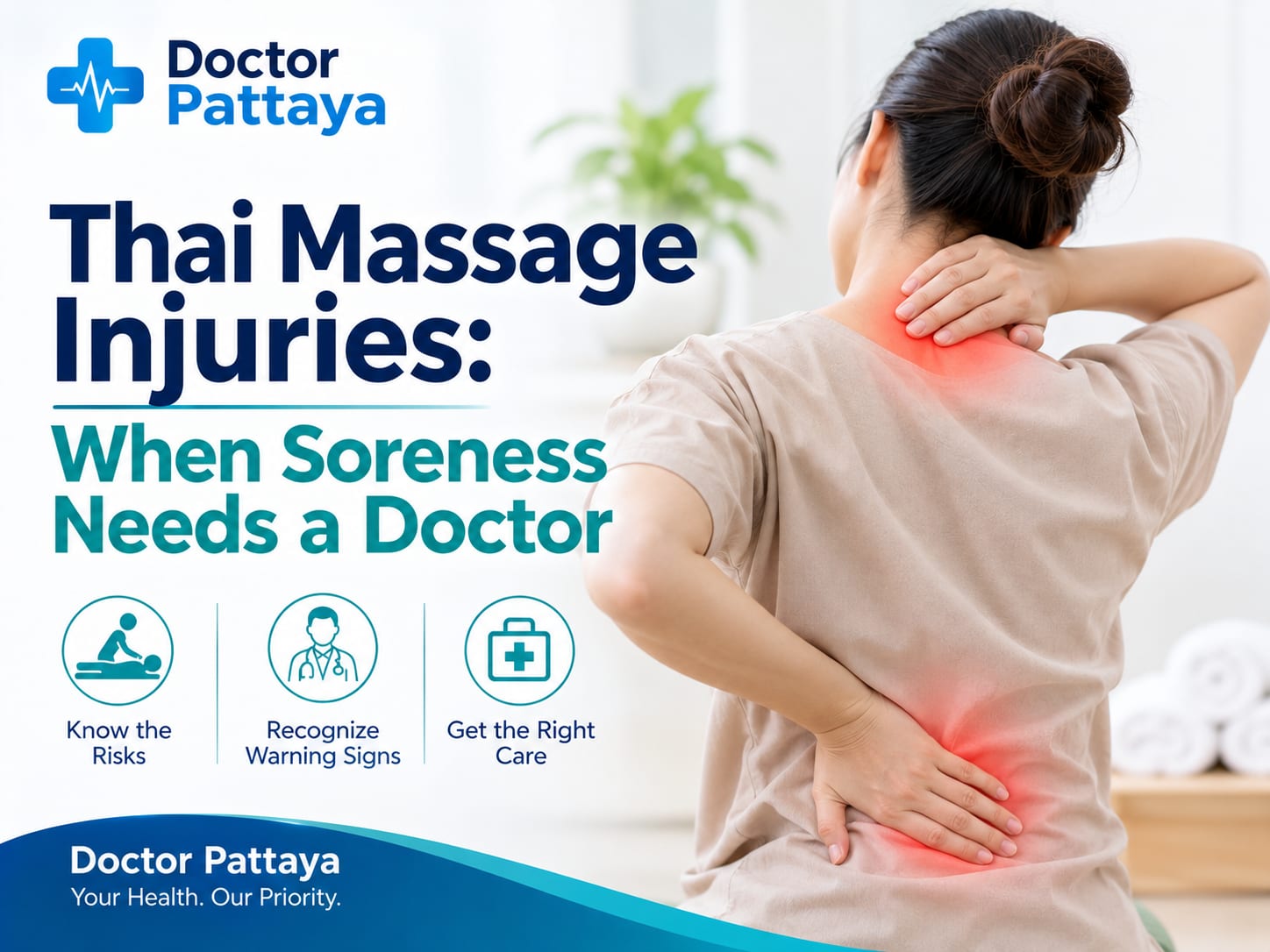
Some aching after a Thai massage is normal and settles within a day or two. But pain that worsens after 48 hours, spreads to your arms or legs, or comes with numbness, dizziness, or a sudden headache is not normal. These are signs of a genuine thai massage injury and they need a doctor, not a rest day.
You booked a massage to feel better. Now your neck is stiff, your lower back is screaming, or your arm feels oddly numb, and you are lying in your hotel room in Pratumnak wondering whether to ride it out or do something about it. That is a fair question, and the answer matters.
Most post-massage soreness is exactly that: soreness. Your muscles were worked hard, and they are letting you know. But some massage injuries are genuinely serious, and the tricky part is that they can start off feeling like the ordinary kind. This guide helps you tell the difference, know when to act fast, and know where to go in Pattaya when you need help.
Normal Soreness vs a Real Thai Massage Injury
Thai massage uses deep pressure, passive stretching, and joint mobilisation. Your muscles are not used to being worked that way, especially if you have been sitting on a plane for twelve hours or spent the day on Jomtien Beach. Some aching after a session is a normal response.
Normal post-massage soreness typically begins within 12 to 24 hours, peaks somewhere between 24 and 72 hours after the session, and then fades. You feel stiff, tender to touch, and achy in the muscles that were targeted. It is similar to how you feel the day after a hard gym session.
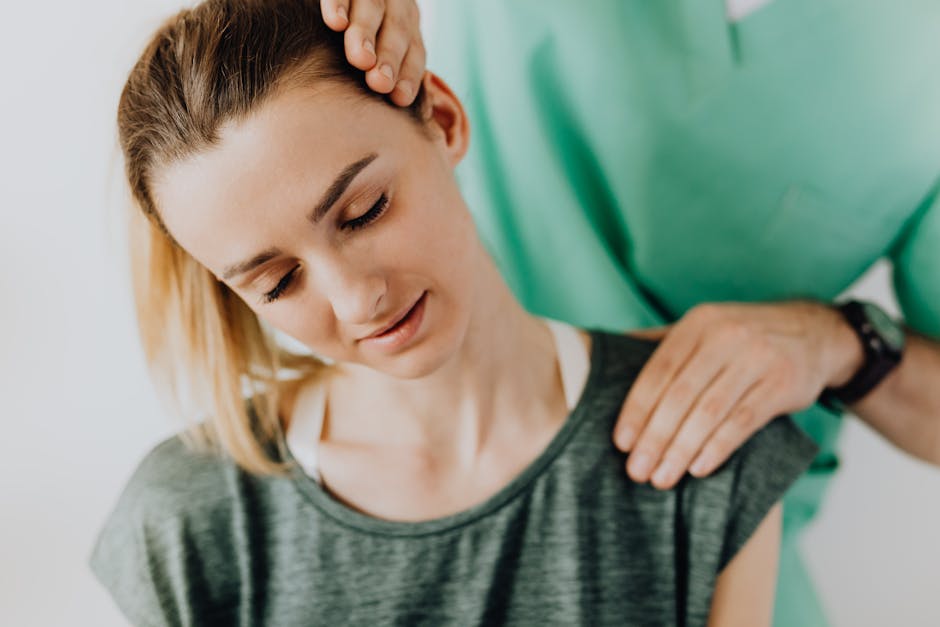
A clinical injury behaves differently. The pain does not peak and fade. It worsens after 48 hours, spreads beyond the area that was worked, or comes with symptoms that have nothing to do with muscle soreness: numbness, tingling, weakness in a limb, headache, dizziness, or changes in your vision. If any of those are present, you are past the soreness conversation.
Types of Thai Massage Injury
Soft tissue injuries are the most common. A muscle strain happens when muscle fibres are overstretched under heavy pressure. A sprain involves the ligaments, the tough bands connecting bones at a joint. Both cause localised pain, swelling, and tenderness. Both generally improve with rest, ice, and anti-inflammatory pain relief, though a significant strain benefits from a proper assessment to rule out a tear.
Nerve irritation is less common but worth knowing. Deep pressure applied over a nerve, or a sharp joint movement that compresses a nerve root, can cause shooting pain, burning, tingling, or numbness. This usually settles, but if it persists beyond a few days or affects your hand grip or ability to walk normally, get assessed.
Disc injuries are rarer. A pre-existing disc problem in your neck or lower back can be aggravated by spinal manipulation. If you had some disc wear without knowing it, a forceful movement during massage can shift things enough to cause significant nerve compression.
The most serious injuries involve the bones in your neck. Forceful neck rotation or manipulation can, in rare cases, damage the arteries that run alongside the cervical spine. This is called cervical artery dissection, and it can lead to stroke. It is rare, but it has been documented in published medical literature. It is the reason neck manipulation by an untrained operator is a genuine clinical risk, not just a discomfort risk.

Warning Signs That Need Medical Attention Now
Some symptoms after a Thai massage are emergencies. Do not wait until morning.
Get help immediately if you experience a sudden severe headache unlike any you have had before, dizziness or loss of balance, vision changes, weakness or numbness in one arm or leg, slurred speech, or difficulty swallowing. These can indicate stroke or serious spinal cord injury.
Seek medical assessment within a few hours, though not necessarily emergency care, if you have persistent numbness or tingling in your hands or feet, pain radiating down your arm or leg, pain that is worsening rather than settling, or neck pain after a manipulation technique.
For accident and trauma assessment in Pattaya, Doctor Pattaya offers 24-hour walk-in and hotel visit care, so you do not need to wait until a clinic opens in the morning.
Why Injuries Happen: Operator Skill and Regulation
Genuine Thai therapeutic massage, as taught and regulated in Thailand, is a skilled practice. But not every person offering massage in a tourist area has completed that training. Operators with limited formal training may apply neck and spine techniques without the anatomical knowledge needed to do so safely.
This is not a reason to avoid Thai massage altogether. It is a reason to be selective. If you have any underlying health condition, ask about your suitability before the session starts, not after.
Who Should Be Cautious or Speak to a Doctor Before a Thai Massage
Some conditions make certain Thai massage techniques genuinely risky. Osteoporosis makes bones more vulnerable to fracture under pressure. Cardiovascular disease, blood clotting disorders, and recent surgery are also situations where strong manipulation carries real risk. If you are on blood thinners, deep pressure and joint mobilisation carry a higher bleeding and bruising risk.
Pregnancy, recent fractures, active skin infections, nerve conditions, and diagnosed disc problems are all situations where a doctor’s input first is sensible. A brief consultation at Doctor Pattaya before your massage is a simple way to know whether any technique is off the table for you.
Getting Assessed at Doctor Pattaya After a Thai Massage Injury
If you are hurt and unsure what to do, here is what happens when you come in or call us. We take a history of the massage, what was done, to which areas, when symptoms started, and what they feel like now. We do a physical examination focused on the affected area, checking your range of motion, strength, sensation, and reflexes.
If we need imaging, we refer you for X-ray or MRI. For soft tissue injuries, we can provide appropriate pain management and a clear recovery plan. If your symptoms suggest something more urgent, we triage accordingly and coordinate your care.
Doctor Pattaya operates 24 hours a day, seven days a week. If movement is painful, we offer doctor hotel visits across Pattaya so you do not need to struggle to a clinic. If you are staying near Walking Street, Pratumnak Hill, or Bali Hai Pier, we can come to you.
Documenting Your Injury for Travel Insurance
If you were hurt during a massage, you may need a formal medical report to make a travel insurance claim. Most comprehensive travel policies cover accidental injury including massage injuries, but insurers require a dated medical certificate from a licensed clinic. That means seeing a doctor promptly, not two days later when you are back home and the timeline is harder to establish.
When you come in, tell us the name and address of the massage shop, the date and time of the session, and what techniques were used. We document your clinical findings and provide the paperwork your insurer needs. Keep all receipts for treatment.
If you are staying in Jomtien or Naklua and getting to the clinic is difficult, a hotel visit works just as well for the assessment and documentation.
Hurt after a Thai massage in Pattaya? Doctor Pattaya is open 24 hours, every day. Walk in to our clinic in South Pattaya or call for a doctor to come to your hotel. We assess and treat musculoskeletal injuries, nerve symptoms, soft tissue injuries, and acute pain, and we provide the clinical documentation you need for travel insurance. Do not wait to see if it settles on its own if the warning signs are there.
Frequently Asked Questions
References
- Cassidy JD, et al. Risk of vertebrobasilar stroke and chiropractic care: results of a population-based case-control and case-crossover study. Spine. 2008;33(4 Suppl):S176-83.
- Ernst E. Adverse effects of spinal manipulation: a systematic review. Journal of the Royal Society of Medicine. 2007;100(7):330-338.
- World Health Organization. WHO guidelines on basic training and safety in chiropractic. WHO, 2005.
- Bilateral vertebral artery dissection and cerebellar stroke: a rare complication of massage. IASP Pain Reports, 2020.
- Guo J, et al. Massage alleviates delayed onset muscle soreness after strenuous exercise: a systematic review and meta-analysis. Frontiers in Physiology. 2017;8:747.
The information in this article is for educational purposes only and does not constitute medical advice. It should not be used to self-diagnose or replace a consultation with a qualified physician. If you have concerns about your health, contact a licensed medical professional. For appointments at Doctor Pattaya, visit doctorpattaya.com.

Dr. Pipat Finn is the senior doctor at Doctor Pattaya Takecare Clinic, a 24/7 walk-in medical practice on South Pattaya Road, Chonburi, Thailand. They provide primary care, travel medicine, sexual health, vaccination, minor surgery, IV therapy, and emergency outpatient services for tourists, expatriates, and Pattaya residents. Languages: English and Thai. WhatsApp consultations: +66 95 073 5550. Call: +66 81 668 5557.