
Clinically reviewed by Dr. Pipat Finn, M.D., Senior Doctor, Doctor Pattaya.
Last reviewed: October 2026
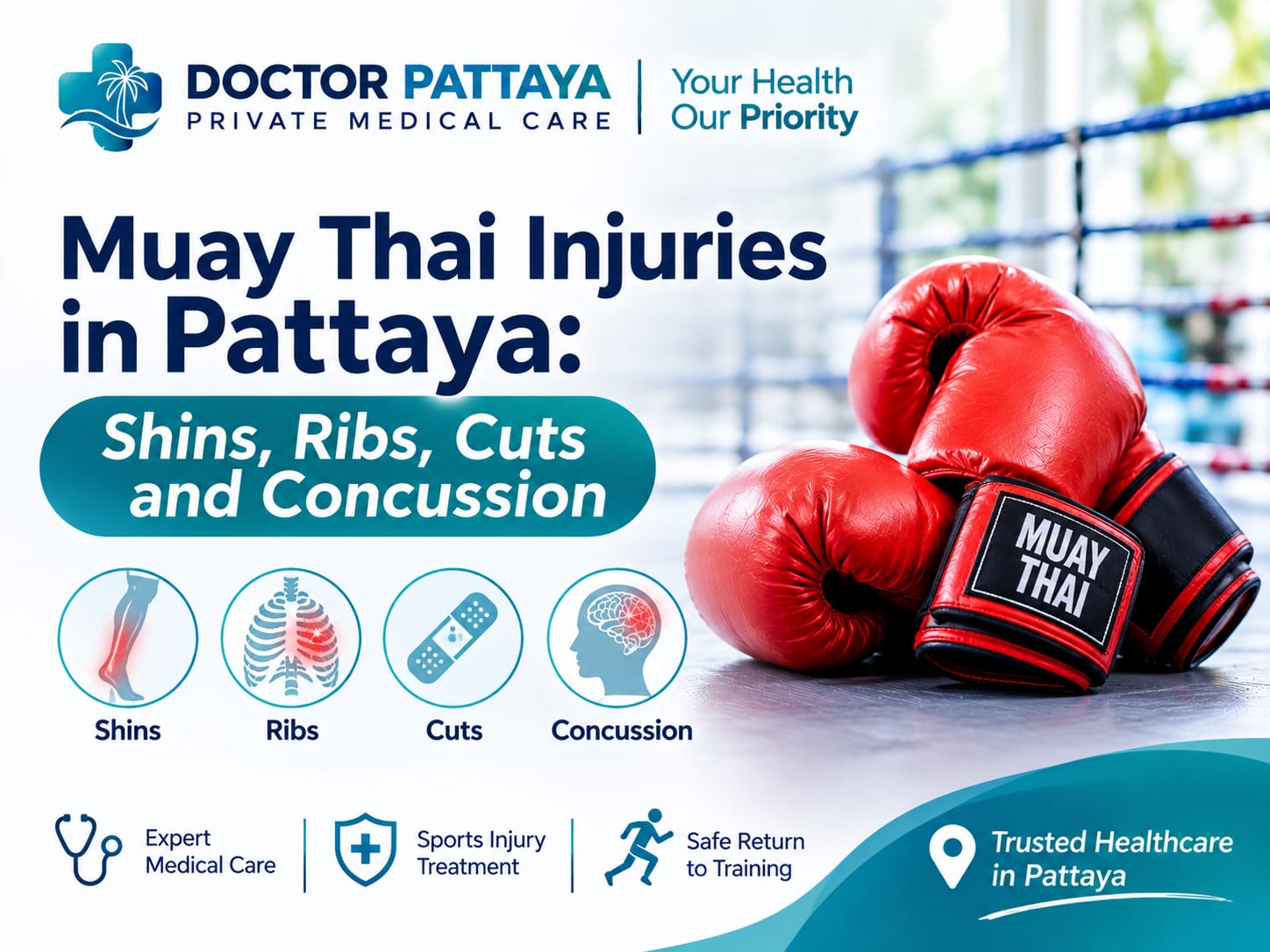
Muay Thai injuries range from bruised shins and cracked ribs to cuts above the eye and concussion. Most can be assessed and treated the same day at a 24-hour clinic in South Pattaya. The key is knowing when to train through it, when to rest, and when to walk in immediately. Concussion is never a wait-and-see situation.
You booked two weeks at a camp near Soi Buakhao, or picked up afternoon sessions while staying in Pratumnak. Either way, you are now sitting somewhere icing your shin or pressing a cloth to your eyebrow, and you want to know how bad it actually is. That is a fair question, and the answer depends on exactly what happened.
Most Muay Thai injuries are manageable without an emergency room. A few are not. This guide covers common Muay Thai injuries, what they mean for your training timeline, and when you need to stop asking Google and come in.

Most Common Muay Thai Injuries in Training Camps
Pattaya has a high concentration of training camps, and the gyms here run serious sessions. Tourists train alongside fighters, pad work is high-volume, and daily sparring is the norm. The humidity here also plays a role, slowing recovery and creating ideal conditions for skin infections.
Shin and Foot Injuries
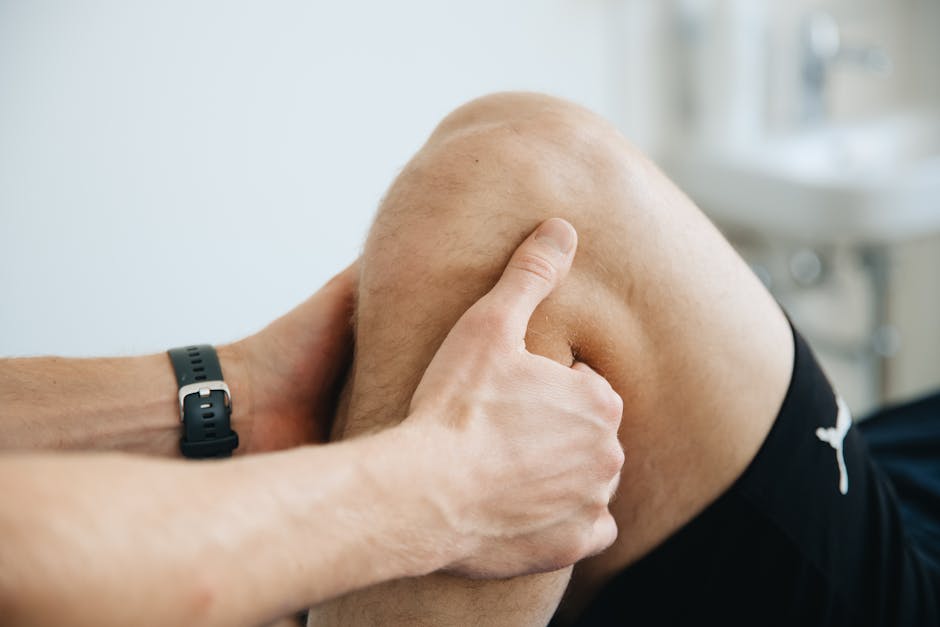
There is a difference between normal training soreness and something that needs a clinical look. A periosteal contusion, bruising to the outer layer of the bone, is common after hard blocking or checking kicks. It hurts, it swells, and it usually settles with rest and ice over several days.
A stress fracture is different. The pain is more focused and pressing a specific point on the bone reproduces sharp pain. If that sounds like your shin, get an X-ray before returning to training.
Ankle sprains happen often on footwork drills or uneven surfaces. A mild sprain with no significant swelling or instability can usually be managed with rest and support. If you cannot bear weight, or the ankle swells rapidly and becomes very tender over the bone, imaging is worth doing.
Rib Injuries
A hard body shot or a knee in the clinch can bruise the ribs or crack one. Both are painful and both require rest. The clinical difference matters, because a fractured rib needs imaging to rule out a pneumothorax, where air leaks into the chest cavity.
Red flags after a rib injury: sharp pain with every breath, shortness of breath, pain that is getting worse in the first few hours, or any breathlessness that seems disproportionate to the knock you took. Any of those, come in. We can assess cracked ribs from Muay Thai with an X-ray the same day and tell you clearly what you are dealing with.
A bruised rib typically allows a return to non-contact training sooner than a fracture. Do not guess which one you have.
Cuts Above the Eye
Elbow strikes and head clashes open cuts fast. The eyebrow bleeds heavily because of the blood vessels running just under the skin there. A haematoma, a pocket of blood that collects under the skin near the cut, can develop and harden if not dealt with properly.
Whether a cut needs sutures depends on its depth, length, and whether the edges are holding together. Butterfly strips work for small, superficial cuts. A deeper or gaping wound needs proper stitches to close cleanly and reduce scarring.
Do not train on an open wound. The mat environment introduces bacteria directly into a fresh cut, and what starts as a simple laceration can become infected quickly in this climate.
Concussion Signs to Take Seriously
A head kick, a clash of heads in the clinch, or a hard fall can cause concussion. Concussion is a brain injury. The fact that you are still standing does not mean you are fine.
Symptoms to watch for: headache that does not settle, feeling foggy or slowed down, sensitivity to light or noise, nausea, vomiting, balance problems, or any loss of consciousness however brief. Symptoms can appear immediately or develop over the hours after the impact.
Second impact syndrome is a serious risk. If you take a second significant head impact before the first concussion has fully healed, the consequences can be severe and fast. This is why "I feel okay now" is not a safe basis for returning to sparring.
Post-concussion syndrome, where symptoms persist for weeks or months, is a recognised risk after concussion, and returning to contact before full recovery may prolong or worsen symptoms. The graduated return-to-sport protocol means rest first, then light aerobic work with no contact, then non-contact drilling, then full sparring only after medical clearance. Skipping steps is how short trips become long ones.
If you suspect concussion after training, come in the same day. Do not sleep it off and reassess in the morning.
Skin Infections From the Mats
Pattaya’s humidity makes skin infections faster to develop and slower to clear than in cooler climates. Shared mats, gloves, hand wraps, and close clinch work are efficient transmission routes.
Ringworm, caused by a fungus rather than an actual worm, presents as a circular, itchy, scaly rash. It spreads easily through skin-to-skin contact and contaminated surfaces. Antifungal treatment clears it, but you need to stay off the mats until it resolves or you will spread it to everyone else in the gym.
Staph infections and impetigo are bacterial and can look similar: red, crusted, or weeping lesions on the skin. MRSA, a drug-resistant form of staph, is present in training environments globally. Mat burn, the friction abrasion you get from hitting the floor, is a direct entry point for bacteria.
If you have a skin lesion you did not have before training started, do not assume it is a simple rash. A swab at the clinic tells us whether it is fungal or bacterial and which treatment to use. Treating a staph infection with an antifungal will not work, and neither will the reverse.
When to Stop Training and Come In
Most training niggles do not need a clinic visit. These do. Come in the same day for: suspected concussion or any blow to the head with ongoing symptoms, a cut that will not stop bleeding or is visibly gaping, any difficulty breathing after a rib injury, a shin or ankle that will not take your weight, or a skin lesion that is spreading, warm to touch, or becoming more painful.
A lot of tourists try to push through because they have limited time in Pattaya and do not want to lose a training day. Treating a serious injury early almost always means a shorter total time off. Ignoring it tends to do the opposite.
Doctor Pattaya is open 24 hours and takes walk-ins without an appointment. If you are training near Soi Buakhao or staying anywhere from Naklua down to Jomtien, you can be assessed, X-rayed if needed, and back in your accommodation with a clear plan the same evening.
Returning to Training Safely After a Muay Thai Injury
The goal is to get you back on the mats, not keep you off them. The return timeline depends entirely on what the injury is and how you are healing.
For shin contusions, modified training that avoids direct impact to the area can often continue while healing progresses. For a confirmed rib fracture, contact work should wait until breathing is fully comfortable and a clinician has cleared you. That is not a decision to make based on pain tolerance alone.
After concussion, the graduated return-to-sport protocol is the standard of care. You move through stages only when each one is symptom-free. Returning to sparring before completing the full protocol puts you at genuine risk. A follow-up visit at Doctor Pattaya before resuming contact work is straightforward to arrange, and most travel insurance policies cover sports injury and trauma assessment at private clinics.
For skin infections, stay off the mats until the lesion has cleared with treatment.
If you have taken a knock during training in Pattaya and are not sure how serious it is, come in and find out. Doctor Pattaya is a 24-hour private clinic in South Pattaya, open every day with no appointment needed. We assess and treat Muay Thai injuries including cuts and suturing, rib and bone injuries with same-day X-ray, concussion evaluation, and skin infections from training environments. Walk in, or contact us to arrange a hotel visit if you cannot get to the clinic.
Frequently Asked Questions
References
- McCrory P, et al. Consensus statement on concussion in sport — the 5th international conference on concussion in sport held in Berlin, October 2016. Br J Sports Med. 2017;51(11):838-847.
- Zazryn TR, Finch CF, McCrory P. A 16 year study of injuries to professional boxers in the state of Victoria, Australia. Br J Sports Med. 2003;37(4):321-324.
- National Health Service UK. Broken or bruised ribs. NHS, 2023.
- Centers for Disease Control and Prevention. Athletes: MRSA Prevention and Control. CDC.
The information in this article is for educational purposes only and does not constitute medical advice. It should not be used to self-diagnose or replace a consultation with a qualified physician. If you have concerns about your health, contact a licensed medical professional. For appointments at Doctor Pattaya, visit doctorpattaya.com.

Dr. Pipat Finn is the senior doctor at Doctor Pattaya Takecare Clinic, a 24/7 walk-in medical practice on South Pattaya Road, Chonburi, Thailand. They provide primary care, travel medicine, sexual health, vaccination, minor surgery, IV therapy, and emergency outpatient services for tourists, expatriates, and Pattaya residents. Languages: English and Thai. WhatsApp consultations: +66 95 073 5550. Call: +66 81 668 5557.