
Clinically reviewed by Dr. Pipat Finn, M.D., Senior Doctor, Doctor Pattaya.
Last reviewed: November 2026
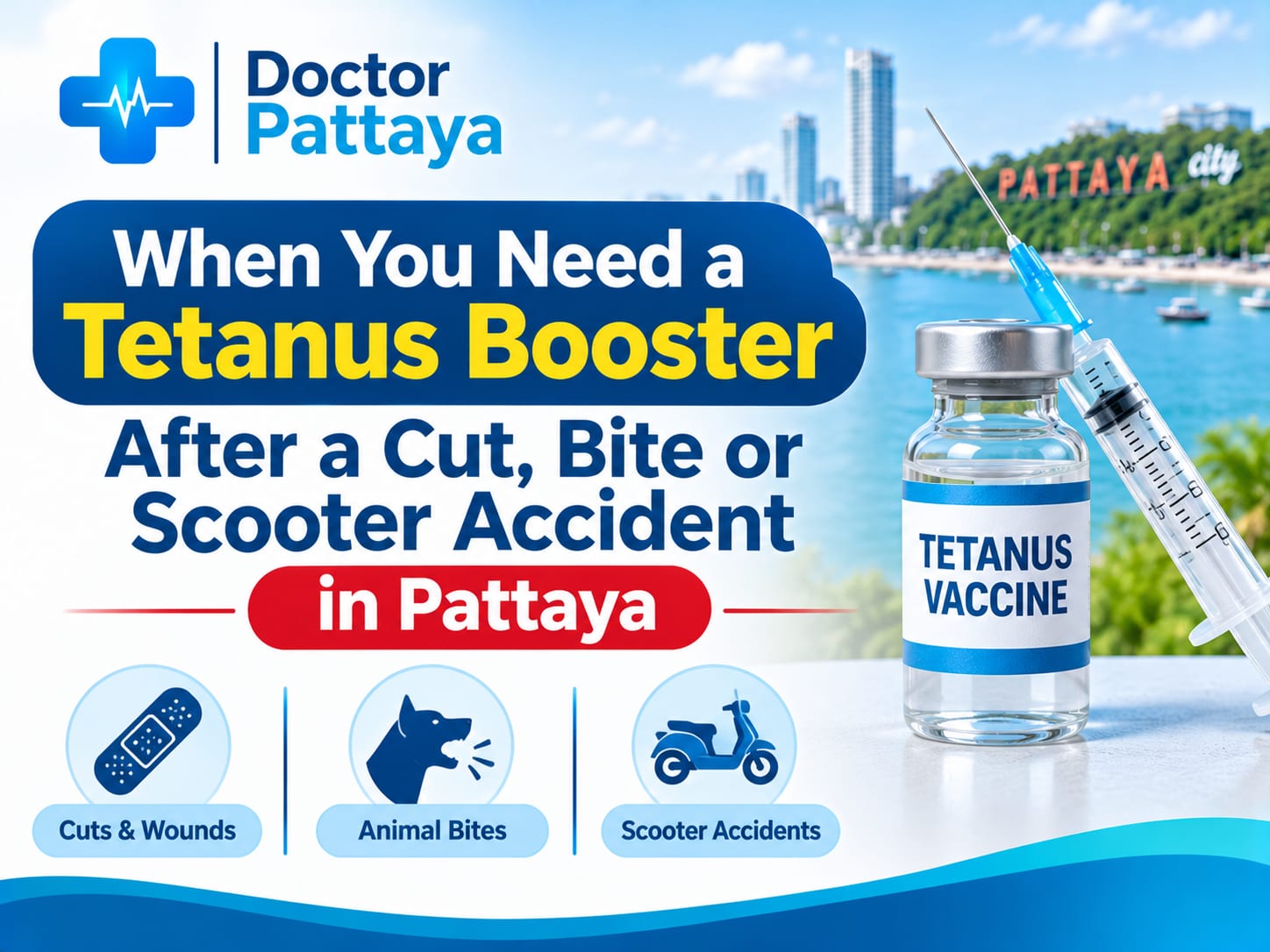
Most healthy adults need a tetanus booster every ten years for clean minor wounds, or every five years if the wound is dirty, deep, or contaminated with soil, gravel, or animal saliva. If you cannot confirm you completed a primary three-dose series at any point in your life, you need more than just a booster. Walk-in tetanus shots are available at Doctor Pattaya around the clock, with no appointment needed.
You did not plan for this. Maybe you slid off a rented scooter on Sukhumvit Road and left some skin on the tarmac. Maybe a street dog near the Thepprasit Night Market caught you off guard. Maybe you scraped your foot on coral coming out of the water at Koh Larn and thought nothing of it until you got back to the hotel. Whatever brought you here, you want a straight answer.
The short version: it depends on the wound and when you last had a booster. Some wounds in Pattaya push that timeline from ten years down to five. And if you have never completed a full three-dose primary series, the protocol changes entirely. This article walks you through how to decide, what to expect, and when you genuinely cannot afford to wait.

Which Wounds Raise the Tetanus Risk in Pattaya
Not every cut carries the same risk. Clostridium tetani, the bacterium behind tetanus, lives in soil, dust, and organic matter. That means the wound’s context matters as much as its size.
Scooter road rash is one of the highest-risk wound types for tetanus. When you hit the road, gravel and grit get ground into the wound. That is exactly the contaminated environment where tetanus risk is real. The same logic applies to deep puncture wounds, wounds with jagged or crushed edges, coral cuts filled with organic debris, and bites from animals.
Coral cuts deserve a specific mention. The coral around Koh Larn and the rocks along Pratumnak are not clean surfaces. A coral abrasion that looks minor can go deeper than it appears and carries organic material into the wound. If your foot or hand caught coral and bled, treat it as a tetanus-prone wound until a doctor says otherwise.
Wound care after a motorbike accident matters as much as the vaccine itself. At Doctor Pattaya, we handle proper cleaning and dressing in the same visit as your booster.
How to Tell If Your Last Booster Is Still Valid
The rule is straightforward. For a clean, minor wound, your protection holds for ten years after your last tetanus dose. For a dirty or tetanus-prone wound, that window drops to five years.
So if your last booster was six years ago and you have a clean paper cut, you are covered. If your last booster was six years ago and you have road rash from a scooter fall, you need another dose now.
The problem is that most people walking into the clinic do not know exactly when their last booster was. If you have a vaccination record, check it. If you do not, read the section below.
If You Cannot Remember When You Were Last Vaccinated
This is very common, especially among tourists who have never had reason to think about tetanus until today. If you genuinely cannot confirm your last booster date, the safe approach is to treat the wound as under-protected and give a booster.
The bigger question is whether you ever completed the primary series: three doses, usually given in childhood. An incomplete primary series changes the entire protocol. It is not simply a matter of topping up.
If your series was never finished, a booster alone may not be enough. You may also need tetanus immune globulin (TIG), which provides immediate protection while the vaccine builds up over the following days.
When you come in without records, we ask a few targeted questions and make a clinical decision based on your wound, your age, and what you can recall. We do not send you away because you forgot your paperwork.
Tetanus Vaccine Versus Tetanus Immunoglobulin
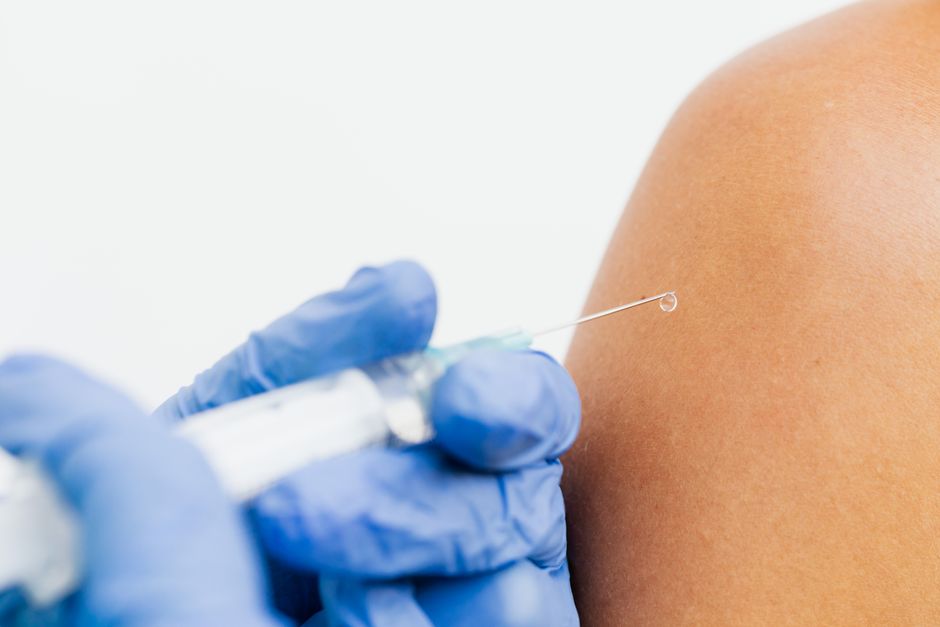
These are two different things, and patients often mix them up. The tetanus vaccine, given as a Td or Tdap booster, trains your immune system to fight tetanus. That protection builds over several days.
Tetanus immune globulin, or TIG, works immediately. It provides ready-made antibodies your body can use right away, before the vaccine has had time to work.
A doctor gives TIG when the wound is high-risk and the vaccination history is unknown or incomplete. If you have had your full three-dose primary series and your booster is simply overdue, TIG is usually not needed. The vaccine alone is enough.
If there is real doubt about your history, TIG and the vaccine are given together at the same visit.
What to Do When a Dog Bite or Dirty Cut Also Needs Rabies Care
A dog bite in Pattaya is a two-problem situation. Street dogs are common here, and any bite that breaks the skin needs to be assessed for both tetanus and rabies exposure.
Both are handled in the same visit. Tetanus protection is addressed first with a booster or TIG as appropriate. Rabies post-exposure prophylaxis (PEP) starts at the same appointment, and you will return for follow-up doses on a schedule your doctor sets. The rabies vaccine and post-exposure care page covers the full PEP protocol.
Do not wait on a dog bite. A street-dog bite in Pattaya should be seen the same day. For cat bites, monkey bites, or any other animal contact, the same approach applies. Animal bites in Pattaya require wound cleaning, tetanus assessment, and a rabies risk evaluation, all in one visit.
Side Effects After a Tetanus Booster
Most people feel nothing beyond a sore arm. Some soreness, redness, or mild swelling at the injection site is normal and usually settles within a few days.
Mild fever and fatigue can happen, particularly with the Tdap combination vaccine, which also covers whooping cough. These are normal immune responses.
Serious allergic reactions are rare. If you develop hives, difficulty breathing, or swelling of the face or throat after a tetanus injection, seek care immediately. That is anaphylaxis and needs treatment right away.
How Soon After the Injury You Should Come In
For a same-day tetanus shot, earlier is always better. The vaccine takes days to build full protection, which is why TIG exists for high-risk wounds: it bridges that gap. Getting the shot on the day of an injury is better than waiting, but waiting a day is still far better than not getting it at all.
For a dog bite or any wound where rabies is also a concern, same-day assessment matters more because the rabies PEP timeline is tighter.
Doctor Pattaya is open around the clock on South Pattaya Road. Walk in without an appointment. We assess the wound, check your vaccination history, and sort out the booster or TIG in the same visit.
If you are staying in Jomtien, Naklua, or anywhere along the coast and cannot travel easily, a doctor hotel visit is available across Pattaya and Jomtien. Knowing when you need a tetanus booster and acting on it quickly is what keeps a minor injury from becoming a serious one.
Cut, scraped, or bitten in Pattaya? Doctor Pattaya is open 24 hours a day, 7 days a week, with no appointment needed. We assess your wound, check your vaccination history, and give you a tetanus booster or tetanus immune globulin in a single visit. Dog bites, coral cuts, and scooter road rash are all assessed and treated on the spot. Doctor hotel visits are available across Pattaya, Jomtien, and Naklua if you cannot come to us.
Frequently Asked Questions
References
- World Health Organization. Tetanus vaccines: WHO position paper. Weekly Epidemiological Record, 2017; 92(6):53–76.
- Centers for Disease Control and Prevention. Clinical Guidance for Wound Management to Prevent Tetanus. Updated June 2025.
- Immunize.org (Immunization Action Coalition). Ask the Experts: Tetanus — Vaccine Recommendations.
The information in this article is for educational purposes only and does not constitute medical advice. It should not be used to self-diagnose or replace a consultation with a qualified physician. If you have concerns about your health, contact a licensed medical professional. For appointments at Doctor Pattaya, visit doctorpattaya.com.

Dr. Pipat Finn is the senior doctor at Doctor Pattaya Takecare Clinic, a 24/7 walk-in medical practice on South Pattaya Road, Chonburi, Thailand. They provide primary care, travel medicine, sexual health, vaccination, minor surgery, IV therapy, and emergency outpatient services for tourists, expatriates, and Pattaya residents. Languages: English and Thai. WhatsApp consultations: +66 95 073 5550. Call: +66 81 668 5557.