Clinically reviewed by Dr. Pipat Finn, M.D., Senior Doctor, Doctor Pattaya.
Last reviewed: November 2026
Chickenpox in adults is more serious than in children and needs prompt medical attention. If you develop a rash with fever on holiday, you need same-day assessment and antiviral treatment started within 24 hours of the rash appearing. If you have been exposed and are unsure whether you are immune, a varicella blood test can confirm it the same day. Isolation in your hotel room is appropriate for most cases, and a doctor can come directly to you.
You are three days into your Pattaya trip and you wake up feeling off. Scratchy throat, mild fever, a strange tiredness that does not match how early you went to bed. Then you notice a spot. Then another. If chickenpox is crossing your mind, you are right to take it seriously, because in adults it behaves very differently from the mild week of itching most people picture from childhood.
The good news is that this is entirely manageable with the right care at the right time. The critical thing to understand before anything else: antiviral treatment only works if it starts early. That changes what you do tonight, not tomorrow morning.

How Chickenpox in Adults Usually Starts, and Why It Hits Harder
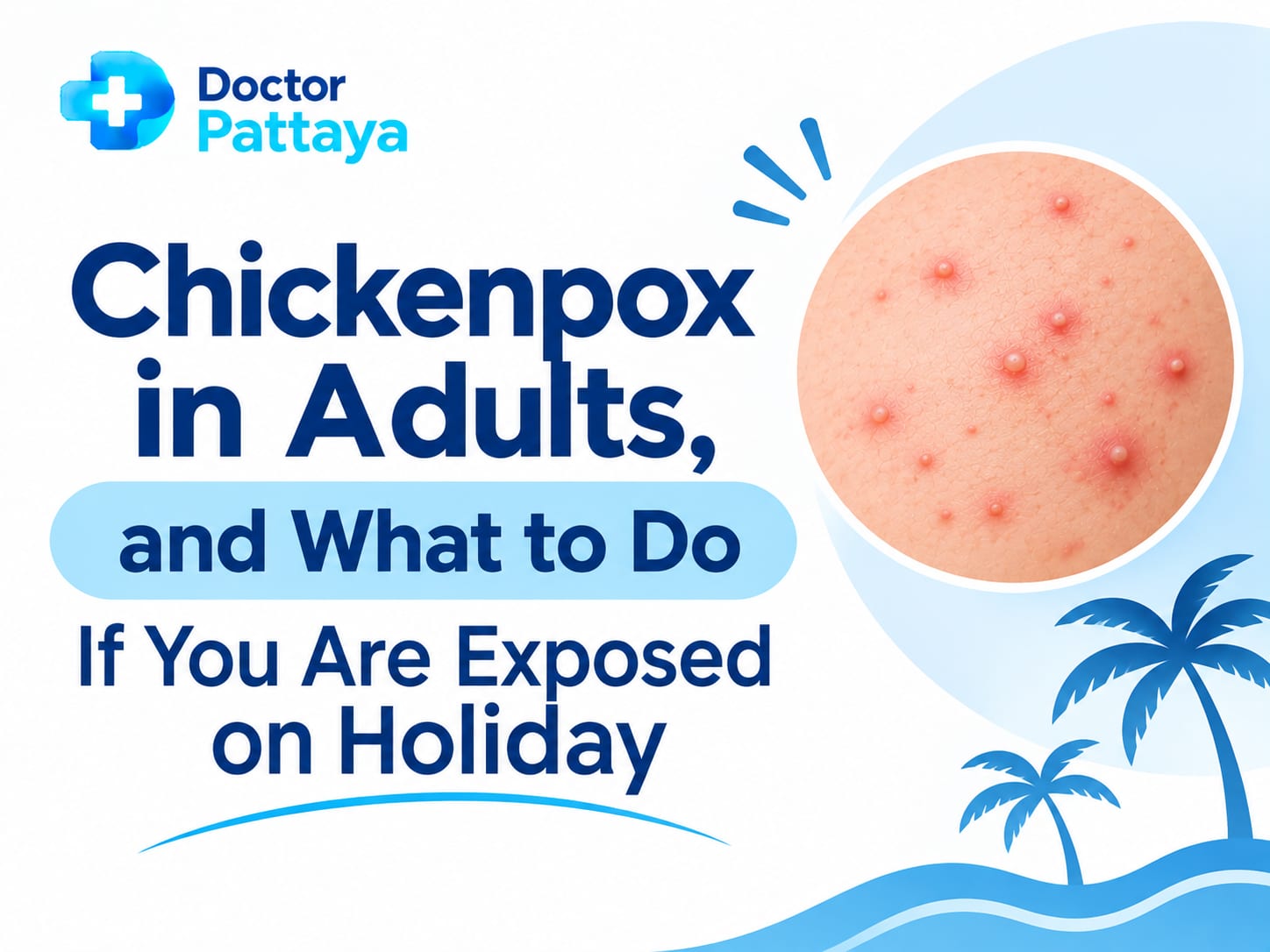
The first sign is usually a day or two of fever, fatigue, and headache before any spots appear. Once the rash starts, it spreads quickly. Flat red spots become fluid-filled blisters, then crust over over the following days. In children this is uncomfortable. In adults, the same virus often hits harder.
Adults are more likely to develop pneumonia as a complication. This shows up as a dry cough, chest tightness, or shortness of breath alongside the rash. Brain inflammation is less common but serious, and shows up as severe headache, confusion, or stiff neck. These are the reasons we treat adult chickenpox with antivirals rather than just waiting it out.
Oral acyclovir is the standard antiviral treatment for adults. Timing is everything. It needs to start within 24 hours of the rash appearing to make a meaningful difference. If you notice your first spots at 10 pm on a Tuesday, do not wait until Wednesday afternoon to decide what to do.
What to Do If You Have Been Exposed and Are Not Sure You Are Immune
Say you shared a minivan back from a Jomtien day trip and find out the person next to you was just diagnosed with chickenpox. What now? First, figure out your immune status. A varicella IgG blood test shows whether you have protective antibodies, and Doctor Pattaya can run this the same day.
If the test shows you are not immune, timing still matters. The varicella vaccine given within three to five days of exposure may reduce severity or prevent illness. This window closes fast, so do not sit on it.
The incubation period for chickenpox is typically ten to twenty-one days after exposure. You may feel fine for two weeks before becoming unwell. If you are heading home during that window, tell your GP or home doctor about the exposure before you go.
Pregnancy, Newborns, and People With a Weakened Immune System
If you are pregnant and have been exposed, this is urgent. Chickenpox during pregnancy carries real risks depending on the stage of pregnancy and your immune status. VariZIG, a protective antibody preparation used for post-exposure management, works best when given as soon as possible after exposure. Do not wait to see if symptoms develop.
Newborns, people on chemotherapy or immunosuppressive medication, and anyone with a condition affecting their immune system need the same urgent approach. Standard chickenpox is manageable for a healthy adult. For these groups, it can become life-threatening.
When a Rash Needs a Same-Day Review
Not every rash is chickenpox. A same-day review is the only reliable way to know what you are dealing with. In Pattaya the list of possibilities is real: heat rash, allergic reactions, insect bites, hand-foot-and-mouth disease, and scabies can all look similar at first glance. For a skin rash assessment in Pattaya, walk-in review is available any time of day or night.
If you already have a confirmed diagnosis and develop any of the following, that is a hospital-level emergency: difficulty breathing, chest pain, confusion or severe headache, the rash becoming very red and hot with spreading redness, or a fever that is not coming down with paracetamol. These are signs of complications, not ordinary chickenpox discomfort.
The rash itself is not the danger signal for most otherwise healthy adults. What comes with it is what matters.
Isolation, Hotel Practicalities, and Flying Home
Chickenpox is airborne and contagious from about two days before the rash appears until every lesion has fully crusted over. In a hotel, that means the corridor, the lift, the pool, and the restaurant all put other guests at risk, including pregnant women and immunocompromised travellers who may not know they are vulnerable. Staying in your room is the right call, not an overreaction.
The practical problem is that isolation should not mean no access to care. Doctor Pattaya’s hotel room visit service sends a doctor directly to you, so there is no need to sit in a waiting room and expose other patients. The doctor can assess you, prescribe antivirals if you are within the treatment window, arrange blood tests, and provide written documentation for airlines and travel insurers, all without you leaving the room. The visit service covers the whole area, from Pratumnak Hill and Walking Street through to Naklua and Jomtien.
Getting a Fit-to-Fly Letter and Dealing With Your Travel Insurer
Most airlines will refuse boarding to a passenger with active chickenpox. The standard requirement is that all lesions are fully crusted, you are fever-free, and you carry a dated medical letter from a licensed doctor. Gate staff have discretion, and even a single visible blister is enough for them to deny boarding. Do not turn up hoping for the best.
Call your travel insurer as soon as the diagnosis is confirmed, not when you are ready to fly. Most comprehensive policies cover additional accommodation and curtailment costs when illness prevents travel, but only if the diagnosis is documented and the insurer is notified promptly. A clinic doctor can provide the dated diagnosis letter and fit-to-fly clearance that both airlines and insurers will ask for. Keep all receipts from the extended stay.
How This Differs From Shingles
Shingles is caused by the same virus, but it is not the same disease. Shingles is what happens when the virus reactivates years later in someone who already had chickenpox. It does not spread through the air. The rash appears in a band along a single nerve line, usually on one side of the torso or face, rather than scattered across the body.
A stressed, sun-worn adult on a long Pattaya holiday is not the typical shingles patient, but it does occasionally present this way in older adults or anyone with reduced immune function. Shingles still needs prompt antiviral treatment, so the action is the same: get seen quickly. The difference matters for isolation, since shingles does not carry the same airborne risk to other guests that chickenpox does. If you are unsure which one you are dealing with, a clinical review is the only way to tell. For more detail, see the Doctor Pattaya shingles treatment page.
If you have a rash, have been exposed to chickenpox, or are unsure whether you are immune, Doctor Pattaya is open 24 hours a day, seven days a week. We can assess you at the clinic in South Pattaya or send a doctor directly to your hotel room anywhere across Pattaya, Jomtien, and Naklua. We offer same-day blood testing for varicella immunity, antiviral prescriptions within the treatment window, and written documentation for airlines and travel insurers. Do not wait until morning if the rash started tonight.
FAQ
References
- Centers for Disease Control and Prevention. Clinical Overview of Chickenpox (Varicella). CDC, 2024.
- Health Service Executive Ireland. Chickenpox Guideline. HSE, 2022.
- Centers for Disease Control and Prevention. Varicella Vaccine Considerations for Healthcare Professionals. CDC, 2024.
- Immunization Action Coalition. Ask the Experts: Varicella (Chickenpox). Immunize.org.
- NHS UK. Chickenpox: Overview. NHS, 2023.
- Centers for Disease Control and Prevention. MMWR: Updated Recommendations for Use of VariZIG — United States, 2013. MMWR 2013;62(28):574-576.
The information in this article is for educational purposes only and does not constitute medical advice. It should not be used to self-diagnose or replace a consultation with a qualified physician. If you have concerns about your health, contact a licensed medical professional. For appointments at Doctor Pattaya, visit doctorpattaya.com.

Dr. Pipat Finn is the senior doctor at Doctor Pattaya Takecare Clinic, a 24/7 walk-in medical practice on South Pattaya Road, Chonburi, Thailand. They provide primary care, travel medicine, sexual health, vaccination, minor surgery, IV therapy, and emergency outpatient services for tourists, expatriates, and Pattaya residents. Languages: English and Thai. WhatsApp consultations: +66 95 073 5550. Call: +66 81 668 5557.