Clinically reviewed by Dr. Pipat Finn, M.D., Senior Doctor, Doctor Pattaya.
Last reviewed: November 2026
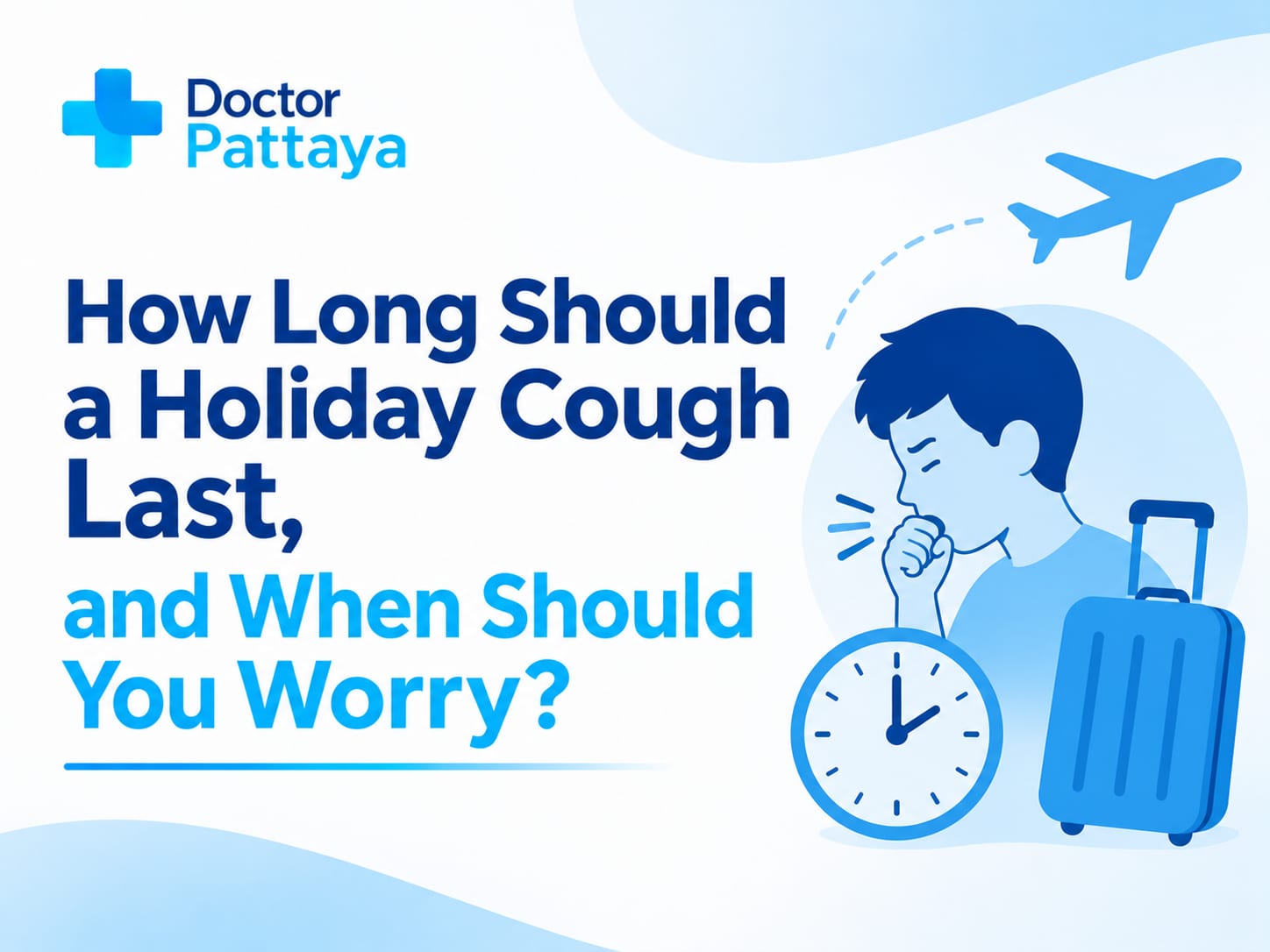
A viral cough after a cold or flu usually clears within three weeks. Some linger up to eight weeks, especially after a more intense respiratory infection. This is called a post-viral or subacute cough, and it does not always mean something serious. If your cough is getting worse rather than better, or if you have chest pain, fever returning, or blood in your mucus, see a doctor.
You were feeling rough for a few days. Sore throat, runny nose, the usual. By day four you were back on your feet and headed down to Jomtien for the afternoon. But that cough is still there. It has now been two weeks, and somewhere between the beach bar and the hotel air conditioning, you have started to wonder whether something is being missed.
Usually it is not. But it is still a fair question to ask, and the answer depends on a few things worth knowing.

How Long a Viral Cough Often Lasts After a Cold or Flu
A standard cold usually brings a cough that improves within two weeks. After influenza, or a more significant upper respiratory infection, three weeks is common. A cough that continues beyond three weeks but is still gradually improving is called a subacute cough. Current clinical guidelines consider this expected after a viral illness.
The lining of your airways gets inflamed during an infection. After the virus clears, that lining takes time to settle. While it heals, your cough reflex is on a hair trigger. Normal things like cold air, a sip of coffee, or a dry hotel room can set it off. The virus is gone. The irritation just has not caught up yet.
The key word is improving. A post-infectious cough should trend better week on week, even if it does not vanish overnight. If yours is plateauing or getting worse, that changes things.
Signs the Cough Is Not Settling as It Should
Most of the time you can wait this out. But some signs mean you should stop waiting and get checked.
Come in if you notice fever returning after you felt well. Come in for chest pain or tightness with coughing, blood in your mucus, or breathlessness doing things that would not normally wind you. A cough that ends in a whooping or gasping sound also needs attention. That pattern can point to pertussis, which is contagious and needs treatment.
Worsening rather than improving after three weeks is also a reason to come in. It may turn out to be nothing alarming, but it warrants a listen with a stethoscope and possibly a chest X-ray. Doctor Pattaya is open around the clock, so there is no waiting until a weekday slot opens up.

Post-Nasal Drip, Asthma, and Other Non-Infection Causes
A lot of lingering coughs have nothing to do with an ongoing infection. The three most common non-infection causes are post-nasal drip, cough-variant asthma, and acid reflux.
Post-nasal drip happens when mucus from your nose or sinuses drips down the back of your throat and keeps triggering the cough reflex. If your cough is worse when you lie down, or you feel like you are constantly clearing your throat, this is the likely culprit. A short course of a nasal antihistamine or steroid spray is usually the first step.
Cough-variant asthma is worth considering if your cough gets noticeably worse in cold air or inside heavily air-conditioned spaces. Pattaya’s hotels, restaurants, and malls often run their air conditioning cold enough to trigger airway sensitivity in anyone still recovering from a virus. A doctor can test your airway response and start treatment if needed. Our asthma treatment page has more on what that looks like.
Acid reflux causing a cough tends to be worse after eating or drinking, especially alcohol. The acid irritates the lower throat and keeps the cough going. Many visitors eat and drink more than usual on holiday, which can bring this on for the first time.
How the Pattaya Environment Can Extend a Cough
You are not at home.
Pattaya’s humidity, construction dust along the main roads, secondhand smoke in bars and entertainment venues, and the constant shift between hot outdoor air and cold air-conditioned interiors are all significant airway irritants. If your nights have involved late evenings in smoky venues around Walking Street or along the beach strip, your airways have been dealing with more than just the aftermath of a virus.
Alcohol also dries the airways and mildly suppresses immune recovery, which slows things down. None of this means you are seriously unwell. It means your cough has more reasons to hang around than it would during a quiet week back home.
Staying well hydrated, using a saline nasal spray, and cutting back on cigarette smoke exposure will all help. If you are spending most of the day in a heavily air-conditioned room, stepping outside periodically into warm air gives your airway lining a chance to recover.
When You Need a Clinic Check Before You Fly Home
Say your flight is in two days and the cough is still there. Here is a simple way to work out what to do.
If the cough is mild, improving, and your only remaining symptom, you are almost certainly fine to fly. Cabin air is dry, which can make a cough more noticeable during the flight, but it will not worsen your underlying condition. Staying very well hydrated before and during the flight helps. If you also have sinus symptoms, get those assessed first. Pressure changes can make an untreated sinus infection genuinely uncomfortable at altitude. Our sinus infection page covers what to look for.
If you have any red-flag symptoms, or the cough has been getting worse, come in before you board. A chest assessment and, where needed, an X-ray can confirm whether anything needs treatment before you travel. Doctor Pattaya can also provide a fit-to-fly letter or medical certificate after a brief consultation, which some airlines request and many travel insurers require for a claim. Bring your passport and flight details.
If the assessment points toward bronchitis rather than a simple post-viral cough, that can be treated before you leave. Our bronchitis treatment page covers what to expect from that consultation. For anyone staying near Pratumnak Hill or further north toward Naklua, a hotel visit is also an option if you would rather not travel to the clinic.
Still coughing and not sure whether to wait it out or get checked? Doctor Pattaya is open 24 hours a day, seven days a week, with no appointment needed. We see tourists, expats, and local residents for cough assessments, chest checks, and fit-to-fly documentation. Walk in anytime, or book a hotel visit if you would rather not travel. We are in South Pattaya, with easy access from Jomtien, Pratumnak Hill, and Walking Street.
Frequently Asked Questions
References
- Morice AH, et al. ERS guidelines on the diagnosis and treatment of chronic cough in adults and children. European Respiratory Journal, 2020;55(1):1901136.
- Centers for Disease Control and Prevention. Clinical Overview of Pertussis. CDC.gov, 2024.
- National Institute for Health and Care Excellence. Cough (acute): antimicrobial prescribing. NICE guideline NG120, 2019 (updated 2024).
- Irwin RS, et al. Diagnosis and management of cough executive summary: ACCP evidence-based clinical practice guidelines. Chest, 2006;129(1 Suppl):1S-23S.
- UCLA Health. Is a lingering cough after a cold normal? UCLA Health News.
The information in this article is for educational purposes only and does not constitute medical advice. It should not be used to self-diagnose or replace a consultation with a qualified physician. If you have concerns about your health, contact a licensed medical professional. For appointments at Doctor Pattaya, visit doctorpattaya.com.

Dr. Pipat Finn is the senior doctor at Doctor Pattaya Takecare Clinic, a 24/7 walk-in medical practice on South Pattaya Road, Chonburi, Thailand. They provide primary care, travel medicine, sexual health, vaccination, minor surgery, IV therapy, and emergency outpatient services for tourists, expatriates, and Pattaya residents. Languages: English and Thai. WhatsApp consultations: +66 95 073 5550. Call: +66 81 668 5557.