Clinically reviewed by Dr. Pipat Finn, M.D., Senior Doctor, Doctor Pattaya.
Last reviewed: November 2026
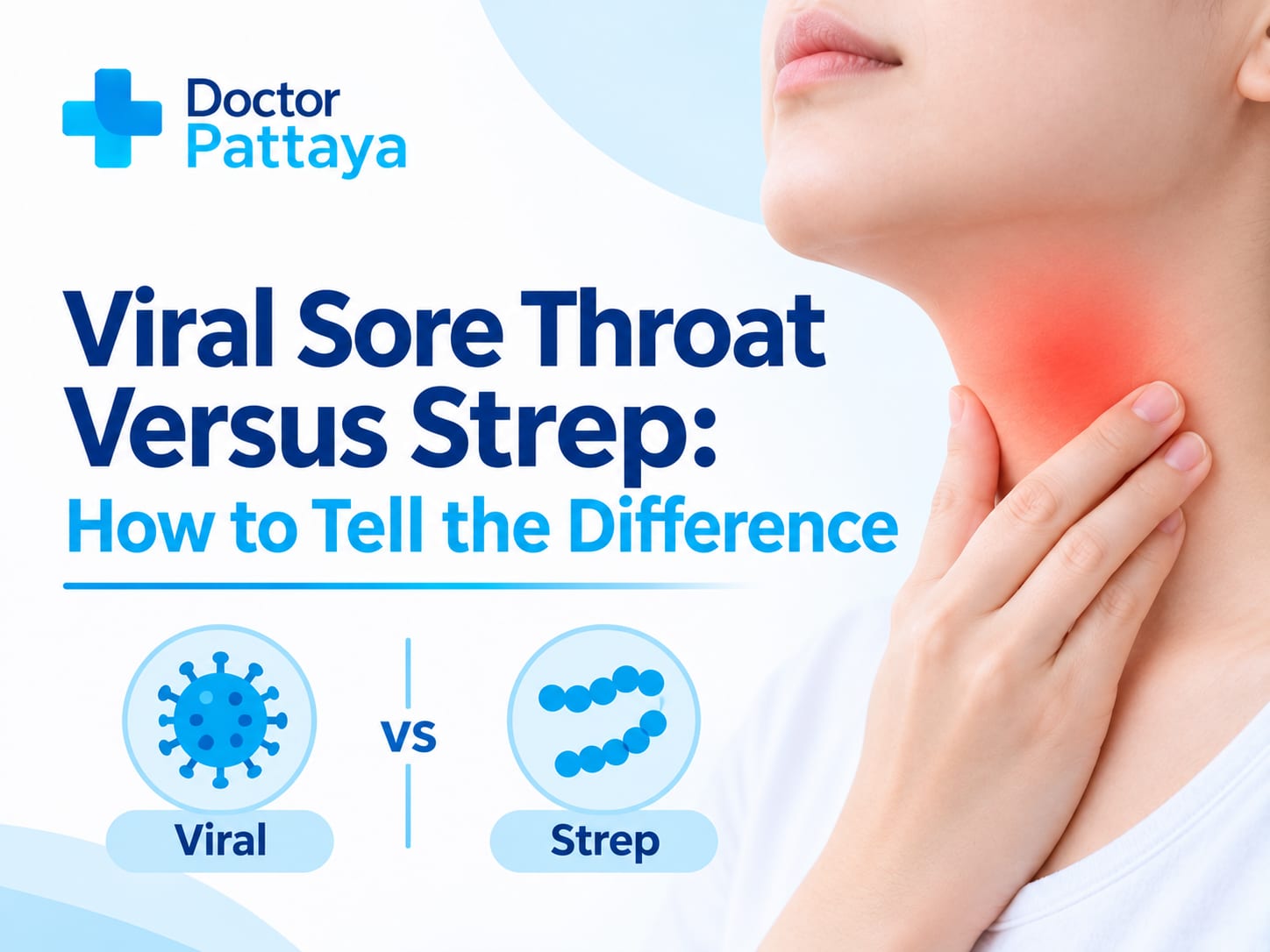
Most sore throats are viral and clear up on their own within a week. Strep throat is caused by Group A Streptococcus bacteria and needs antibiotics. The key signs that point toward strep are sudden, severe throat pain, fever, swollen lymph nodes, and white patches on the tonsils, all without a cough or runny nose. A rapid swab test confirms the diagnosis and takes about fifteen minutes.
You woke up and your throat felt like sandpaper. Yesterday was fine. Now you are three days into a Pattaya holiday and you are wondering whether to push through or find a doctor. Take a breath. This is one of the most straightforward things to sort out, and once you know what you are dealing with, the path forward is clear.
The tricky part is that a viral sore throat and strep throat can feel almost identical at first. Both hurt. Both can cause fever. Both can make your tonsils look red and inflamed. But they are treated very differently, and that difference matters. Getting it wrong means either taking antibiotics that do nothing, or leaving a bacterial infection untreated long enough to cause complications.

Symptoms That Point Toward Viral Sore Throat vs Strep
A viral throat infection usually arrives with a runny nose, cough, hoarse voice, or mild eye irritation. These are your body’s typical cold or flu signals. The throat pain tends to build gradually over a day or two. You might feel tired and run down, but not floored.
Strep tends to arrive fast and hard. The throat pain hits suddenly, often overnight, and can be severe enough to make swallowing painful. Fever is common, usually above 38°C. You may notice swollen, tender lymph nodes under your jaw. White or grey patches on the tonsils are a classic sign, though they do not appear in every case.
One clear rule of thumb: a cough strongly suggests viral. No cough, sudden onset, high fever, white patches, and swollen neck glands strongly suggest strep. No single symptom settles it alone, but the pattern across all of them gives a good clinical picture.
Why a Cough or Cold Makes Strep Less Likely
If your sore throat came bundled with a blocked nose, sneezing, and a cough, a virus is almost certainly the cause. Rhinovirus and other common cold viruses cause most adult sore throats. The flu can also inflame the throat significantly. In these cases, antibiotics will not help you recover faster or feel better sooner.
The right approach is supportive care: rest, fluids, paracetamol or ibuprofen for pain and fever, and time. Throat lozenges, warm drinks, and saltwater gargles ease the discomfort while your immune system handles the rest. Most viral sore throats improve within five to seven days.
One exception worth knowing is Epstein-Barr virus, the cause of glandular fever. It produces severe throat pain, swollen tonsils, significant fatigue, and swollen lymph nodes that can look identical to strep. It is not rare in young travellers to Southeast Asia. A rapid strep test will come back negative, but the throat may look just as bad. If you are exhausted out of proportion to your other symptoms, that is worth raising with a doctor.

How a Clinic Confirms the Diagnosis
A rapid antigen detection test is the standard first step. A doctor or nurse swabs the back of your throat and runs the sample through a point-of-care test. Results are ready in roughly fifteen minutes. It detects Group A Streptococcus directly from the swab.
The rapid test is highly specific, meaning a positive result almost certainly means you have strep. It is somewhat less sensitive, meaning a small number of true strep cases can produce a false negative. Where suspicion remains high despite a negative result, a throat culture can confirm it, though it takes a day or two to process.
Where glandular fever is suspected, a blood test can be added to the same visit. This matters because giving amoxicillin to a patient who has Epstein-Barr virus rather than strep can trigger a widespread skin rash. Catching this before prescribing protects you from an avoidable reaction.
When Antibiotics Help, and When They Do Not
Antibiotics work for strep. Penicillin and amoxicillin remain the first-line treatments, backed by strong clinical evidence. They shorten the illness, reduce how long you are contagious, and lower the risk of complications. Two complications worth naming are rheumatic fever, which can damage heart valves, and post-streptococcal glomerulonephritis, a kidney condition. Both are uncommon with prompt treatment.
For a viral sore throat, antibiotics do nothing. They will not shorten your symptoms or prevent complications, and they contribute to antibiotic resistance. Using antibiotics only when genuinely needed is something every clinic should take seriously.
A word on buying antibiotics over the counter in Pattaya: Thai law requires a prescription, but some pharmacies in tourist areas sell them without one. If your sore throat is viral, the antibiotics will not help at all. If it is strep, you need the right antibiotic at the right dose for the right number of days, which requires a confirmed diagnosis. Get the swab test first.
Red Flags That Need a Same-Day Exam
Most sore throats, viral or strep, can be assessed without panic. Some symptoms, though, need a clinic visit the same day.
Difficulty opening your mouth fully, a muffled or thick voice, or a throat that looks like one side is bulging more than the other can point to a peritonsillar abscess. This is a collection of pus next to the tonsil that needs prompt drainage and antibiotics. If your doctor sees the uvula pushed to one side, treatment starts immediately.
Any difficulty breathing or swallowing saliva, a stiff neck alongside high fever, or a rash that appeared after your sore throat all need urgent assessment. Patients who are immunocompromised, including those managing diabetes or on medications that suppress the immune system, should not wait to see if symptoms settle. Doctor Pattaya is open around the clock, so there is no need to push through a sleepless night in your hotel room.
What Happens When You Walk In With a Sore Throat
You do not need an appointment. Walk in and tell the front desk your throat is sore. We will check your temperature, look at your throat, feel your neck glands, and talk through your symptoms. If a rapid strep test makes sense, the swab takes seconds and results come back while you are still in the consultation room.
If the test is positive, we write a prescription before you leave. If it is negative and your symptoms point to a virus, we focus on relief: what to take, what to watch for, and when to come back if things change. If glandular fever seems possible, we can add a blood test to the same visit.
For patients staying in Jomtien or Naklua, we can also come to you. A doctor hotel visit in Pattaya means you do not have to leave your room when you are feeling rough. You can find full details about strep-specific testing and treatment on our strep throat treatment page, or read the broader overview on our sore throat treatment page.
Not sure if your sore throat is strep or viral? Doctor Pattaya is open 24 hours a day, seven days a week. Walk in for a rapid strep test and same-day results, or book a doctor hotel visit if you would rather be seen at your hotel in Pattaya, Jomtien, or Naklua. No appointment needed.
Frequently Asked Questions
References
- Shulman ST, et al. Clinical Practice Guideline for the Diagnosis and Management of Group A Streptococcal Pharyngitis: 2012 Update by the Infectious Diseases Society of America. Clinical Infectious Diseases, 2012.
- Centers for Disease Control and Prevention. Strep Throat: All You Need to Know. CDC, 2024.
- Lean WL, et al. Rapid antigen detection tests for group A streptococcus in children with pharyngitis (meta-analysis summary). American Family Physician, 2015.
- Ebell MH. Epstein-Barr virus infectious mononucleosis. American Family Physician, 2004.
- Infectious Diseases Society of America. IDSA 2025 Clinical Practice Guideline Update: Group A Streptococcal Pharyngitis (risk stratification section). Clinical Infectious Diseases, 2025.
The information in this article is for educational purposes only and does not constitute medical advice. It should not be used to self-diagnose or replace a consultation with a qualified physician. If you have concerns about your health, contact a licensed medical professional. For appointments at Doctor Pattaya, visit doctorpattaya.com.

Dr. Pipat Finn is the senior doctor at Doctor Pattaya Takecare Clinic, a 24/7 walk-in medical practice on South Pattaya Road, Chonburi, Thailand. They provide primary care, travel medicine, sexual health, vaccination, minor surgery, IV therapy, and emergency outpatient services for tourists, expatriates, and Pattaya residents. Languages: English and Thai. WhatsApp consultations: +66 95 073 5550. Call: +66 81 668 5557.