
Clinically reviewed by Dr. Pipat Finn, M.D., Senior Doctor, Doctor Pattaya.
Last reviewed: October 2026
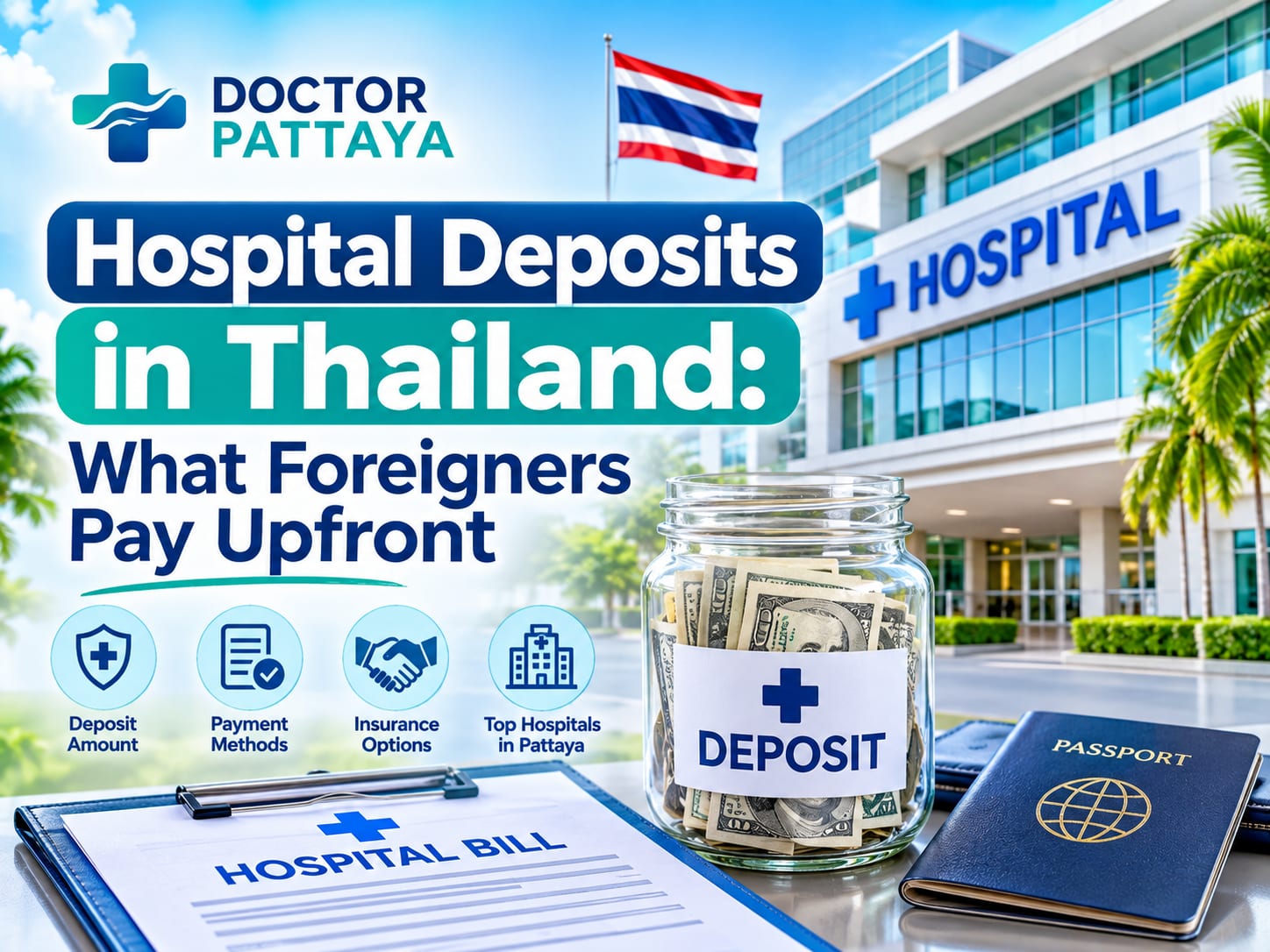
Private hospitals in Thailand require a cash deposit before admitting foreign patients. Amounts vary widely depending on the hospital and your condition, but figures in the tens of thousands of baht are common for inpatient stays. Travel insurance with direct billing can replace this deposit, but reimbursement-only cover does not. For most tourist and expat health complaints, a walk-in clinic visit sidesteps the deposit entirely.
You are at the hospital front desk, not feeling great, and someone slides a form across the counter asking for a large sum of money before you see a doctor. It is not a scam. It is standard practice at every major private hospital in Thailand, and it catches visitors off guard every single day.
Knowing roughly how this works before you need it saves a lot of stress at a moment when you already have enough going on. This article covers what deposits are for, what your insurance may or may not do about them, and when a clinic visit means you never reach that desk at all.
Why Private Hospitals Ask for a Deposit
Thai private hospitals operate on a private-pay model. There is no automatic billing to a foreign government and no guaranteed way to collect payment after a patient flies home.
When a foreigner arrives without a pre-arranged guarantee of payment, the hospital has no reliable way to recover costs if the bill goes unpaid. Unpaid foreign medical bills are a documented problem across Thailand’s private hospital sector, and deposits are how hospitals protect themselves. It applies to every uninsured or unverified foreign patient, not just tourists.
Typical Hospital Deposit Amounts in Thailand
Deposit amounts are not fixed by law. Each hospital sets its own figures based on the likely cost of your treatment.
Publicly available admissions information from major Thai private hospital groups suggests deposits for foreign inpatients commonly range from 50,000 baht upward, with more complex cases reaching several hundred thousand baht. In Pattaya, Bangkok Hospital Pattaya and Bangkok Pattaya Hospital are the two main options most visitors and expats encounter. Neither publishes a fixed schedule, so the figure you are given will depend on your presenting condition and estimated care costs.
Calling ahead, or asking your insurer to contact the hospital directly, is always worth doing before you arrive at admissions.
Deposits are generally refundable at discharge. Any outstanding bill is deducted and the remainder is returned. Cash deposits are usually settled the same day. Credit card refunds typically take several weeks to appear on your statement, so factor that in if your return flight is soon.

The 72-Hour UCEP Emergency Rule
Thailand’s Universal Coverage for Emergency Patients scheme, known as UCEP, was introduced to guarantee emergency care at the nearest accredited hospital for the first 72 hours without upfront payment for eligible patients. In practice, UCEP covers Thai nationals and, in some cases, foreign workers with Thai social security. Foreign tourists are generally not covered by UCEP’s no-upfront-payment mechanism and should not rely on it.
In practice, private hospitals in Thailand regularly request payment or insurance documents from foreign patients even in emergencies. Enforcement for non-Thai nationals is inconsistent. If a hospital refuses to admit you without a deposit during a genuine emergency, state clearly that you are invoking UCEP, ask to speak with the admissions manager, and contact your embassy if the situation is not resolved.
Do not rely on UCEP as your primary financial plan. Keep your travel insurance documents, your insurer’s 24-hour emergency number, and a backup payment method accessible before you need them.
Guarantee of Payment From Insurers
A guarantee of payment letter is a document your insurer sends directly to the hospital confirming they will cover your costs up to a set limit. When a hospital accepts it, it replaces the cash deposit entirely.
This only works with direct-billing insurers who have a pre-existing arrangement with that specific hospital. Not every insurer has this with every hospital in Pattaya. If your insurer does not have a direct-billing relationship in place, they may still be able to issue a letter on a case-by-case basis, but this requires pre-authorisation and takes time.
Call your insurer before you approach the admissions desk. Not while you are sitting in the waiting room. Before.
Reimbursement-only travel insurance does not eliminate the deposit. You pay everything upfront, including the deposit, and claim it back after you return home. Many tourists do not realise this until they are already at the counter. If your policy says "reimbursement basis," assume you will be paying a deposit.
If You Cannot Pay the Deposit
Start by speaking directly with the hospital’s billing or admissions department. Most major hospitals in Pattaya deal with foreign patients regularly and have procedures for payment arrangements. Ask clearly and early.
Your embassy or consulate can be contacted for assistance. They cannot pay your bill, but they can provide local resources, liaise on your behalf, and help you get in touch with family who can arrange funds.
Leaving Thailand without paying a hospital bill is not a consequence-free option. There have been proposals to blacklist foreign nationals with unpaid medical bills, and this remains a risk to future visa approvals, but formal enforcement has been inconsistent. Negotiate before you leave, not after.
How a Clinic Visit Avoids the Hospital Deposit Entirely
Most things that send tourists to a hospital in Pattaya do not actually require hospital admission. Food poisoning after a seafood dinner at Jomtien Beach, a cut from a motorbike slide on Pratumnak Hill, a UTI picked up mid-trip, a skin infection that needs antibiotics. These are clinical problems, not hospital problems.
At Doctor Pattaya, a walk-in consultation is straightforward. You come in, we assess you, we treat you, you pay at the end of the appointment. No deposit, no prior insurance approval, no admissions paperwork. If your travel insurance covers outpatient care, you can claim back the consultation fee when you get home.
For anyone staying near Jomtien or Naklua, a clinic visit is often the faster and cheaper first step. If you genuinely need hospital-level care, we will tell you, help you prepare what the hospital will need, and send you with documentation. Doctor Pattaya also offers hotel doctor visits across Pattaya and Jomtien if you cannot get to the clinic, with no deposit required.
Not sure whether you need a hospital or a clinic? Doctor Pattaya is open 24 hours, seven days a week, in South Pattaya. Walk in, call ahead, or book a hotel visit. We see tourists, expats, and local residents for everything from infections and injuries to post-discharge care after a hospital stay. No deposit required. Bring your travel insurance documents if you have them and we can help you work out what your cover includes before you need to use it at a hospital. Book 24/7 emergency and walk-in care here.
Frequently Asked Questions
References
- Chiang Mai City Life. 72 Hours of Emergency Treatment in All Hospitals in Thailand Under New UCEP Plan. 2017.
- National Institute for Emergency Medicine / Pattaya Mail. NIEMS prepares for festive season, ensures universal emergency coverage. Pattaya Mail.
- Nation Thailand. Thai Cabinet revises 72-hour emergency care rules from September 15. 2023.
- Pattaya Mail. Destitute foreigners in Thailand and unpaid hospital bills. Pattaya Mail.
- Nation Thailand. Health Ministry backs THB450 tourist fee as hospitals face billions in unpaid bills. 2026.
- Thai National Health Security Office. Universal Coverage for Emergency Patients (UCEP). NHSO.
The information in this article is for educational purposes only and does not constitute medical advice. It should not be used to self-diagnose or replace a consultation with a qualified physician. If you have concerns about your health, contact a licensed medical professional. For appointments at Doctor Pattaya, visit doctorpattaya.com.

Dr. Pipat Finn is the senior doctor at Doctor Pattaya Takecare Clinic, a 24/7 walk-in medical practice on South Pattaya Road, Chonburi, Thailand. They provide primary care, travel medicine, sexual health, vaccination, minor surgery, IV therapy, and emergency outpatient services for tourists, expatriates, and Pattaya residents. Languages: English and Thai. WhatsApp consultations: +66 95 073 5550. Call: +66 81 668 5557.