
Clinically reviewed by Dr. Pipat Finn, M.D., Senior Doctor, Doctor Pattaya.
Last reviewed: November 2026
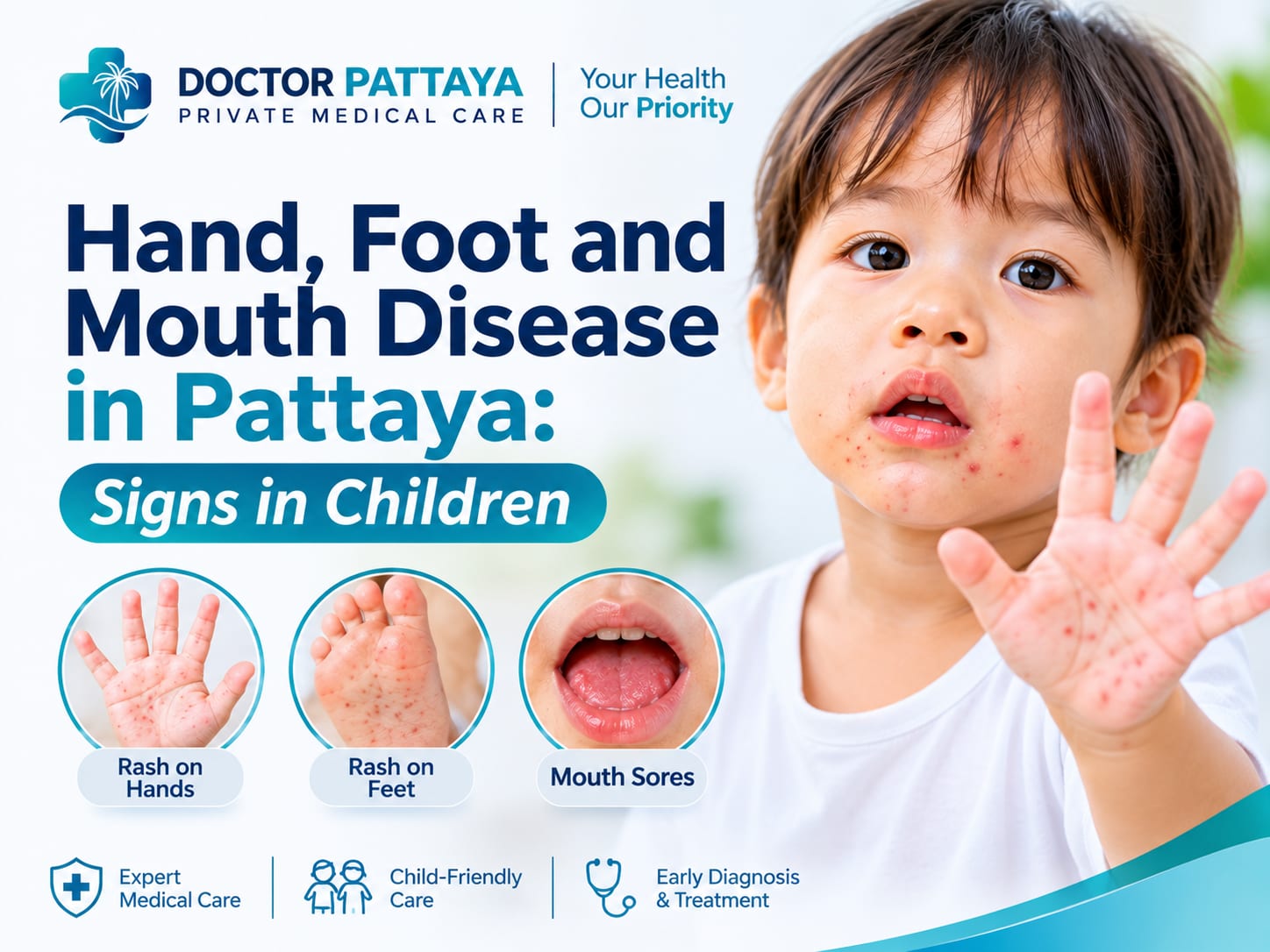
Hand foot mouth disease in Thailand is a common viral illness in young children, caused most often by coxsackievirus A16 or Enterovirus A71. Symptoms include fever, painful mouth sores, and a blister-like rash on the hands, feet, and sometimes the buttocks. Most cases are mild and clear within 7 to 10 days with rest and fluids. A small number of cases linked to Enterovirus A71 can cause serious complications, so knowing the warning signs matters.
Your child woke up grumpy, stopped eating, and you noticed small sores on their tongue. By afternoon, there are spots on their palms. You are three days into a Pattaya holiday and this was not the plan. Take a breath. Hand foot mouth disease is very common in Thailand, especially in young children, and most cases are straightforward to manage.
The part that trips parents up is knowing what is normal and what is not. Thailand circulates strains of this virus that can occasionally behave more aggressively than the versions common in Europe or Australia, so a same-day check from a doctor is always worth doing. Most families leave the clinic reassured and continue their trip. Some need closer monitoring. Either way, you will know where you stand.

Symptoms Parents Notice First
Fever usually comes first. A day or two later, children become reluctant to eat or drink. That is usually when parents look inside the mouth and find small ulcers on the tongue, the inner cheeks, or the back of the throat.
The rash appears around the same time. Small red spots or fluid-filled blisters show up on the palms, the soles of the feet, and sometimes the buttocks. The blisters are not usually itchy, which sets this apart from chickenpox. Some children get very few spots. Some get quite a lot.
Children usually feel worst in the first three to five days. The mouth ulcers tend to be the most uncomfortable part. Most children are noticeably better within a week, though the blisters may take a few more days to fully crust and clear.
How It Spreads in Kids Clubs and Pools
Hand foot mouth disease travels through direct contact with an infected child, through surfaces that child has touched, and through contaminated hands, toys, or food reaching the mouth. In a resort setting, this happens fast. Kids clubs, splash pads, shared pool toys, changing rooms, and buffet areas all create the right conditions.
Swimming pools carry lower risk because properly maintained chlorine levels reduce viral survival in the water. The higher risk sits around the pool: shared towels, handrails, changing mats, and close physical play between children. Warm, humid weather, which is most of the year in Pattaya, supports viral survival on surfaces.
Chonburi province, where Pattaya sits, sees peak transmission during the rainy season from roughly June through September and again at the start of each school term. Expat families with children in local nurseries or international schools will recognise the pattern. Tourists arriving during these windows should know that active outbreaks in resort kids clubs are not unusual.

Home Care and Fluids
The goal at home is comfort and keeping your child hydrated. There is no antiviral treatment for hand foot mouth disease. You treat the symptoms while the virus runs its course.
Fluids are the priority. Cold drinks, ice lollies, and chilled yoghurt are often better tolerated than warm food because they soothe mouth ulcers. Oral rehydration solution is useful if your child is clearly not drinking enough. Avoid salty or acidic foods, which irritate the sores.
Paracetamol or ibuprofen, dosed for your child’s weight, helps with fever and mouth pain. Do not give aspirin to children. If you are unsure of the right dose, a pharmacist or doctor can confirm it quickly.
Keep your child away from other children, particularly shared pools and play areas, until all blisters have fully crusted and dried and they have been fever-free for at least 24 hours without medication.
Warning Signs That Need Urgent Review
Most children with hand foot mouth disease stay mildly unwell and recover at home. A small number develop serious complications, most commonly linked to the Enterovirus A71 strain. This strain circulates in Thailand and Southeast Asia and carries a higher risk of neurological problems than the strains common in Western countries.
Go to a doctor or emergency clinic straight away if your child develops any of these: rapid or laboured breathing, a seizure, persistent vomiting, unusual drowsiness or difficulty waking, a limp or weakness in any limb, or a very high fever that does not come down with medication. Do not wait to see if things improve on their own.
If your child has a high fever, mouth sores, and a rash but is drinking, communicating, and behaving normally, that is reassuring. Still see a doctor for confirmation, but this is not an emergency. If you are in South Pattaya or Jomtien, Doctor Pattaya’s family health service is open around the clock. A doctor can also come to your hotel if getting out is difficult with a sick child.
Flying Home With a Child Who Has HFMD
This is the question every tourist parent asks. Airlines do not have a universal written rule banning children with hand foot mouth disease from flying. In practice, airline crew have discretion to refuse boarding to a visibly unwell passenger, and active blisters or fever at the gate can cause problems.
A written clinical assessment from a doctor in Pattaya is strongly advisable before you travel. It confirms the diagnosis, documents that the child is stable, and supports any travel insurance claim for a delayed or changed flight. If your child still has a fever or widespread open blisters, most travel health guidelines recommend delaying the flight until the fever has resolved and blisters have crusted.
A fit-to-fly assessment at Doctor Pattaya can be done the same day. We provide written documentation that satisfies airline queries and travel insurance requirements. Keep all clinic receipts and medical records from your stay, as your insurer will need them if you are claiming for extended accommodation or a changed flight.
What a Same-Day Clinic Assessment Covers
Some parents arrive having already looked up the symptoms online. What the clinic adds is confirmation, a severity check, and proper documentation.
At Doctor Pattaya, we check whether the presentation fits a mild self-limiting illness or whether there are features that suggest the EV-A71 strain and warrant closer watching. We check hydration, look at the extent of the rash and mouth ulcers, and give you a clear set of red flags to watch for at home. If anything looks atypical, we can refer for further assessment the same day.
We also provide written records covering the diagnosis, the child’s condition, and any treatment given. That document matters for your travel insurer and for any school or nursery requiring written confirmation before readmitting the child. If you need a fit-to-fly letter, we issue it at the same visit. Hotel visits are available across Pattaya, Pratumnak, and Jomtien if your child is too unwell to travel to the clinic.
Protecting Other Children in Your Group
Group travel with children adds a layer of complexity. If one child in your villa or travel group develops HFMD, isolate them from the others straight away. Do not share towels, cups, or utensils. Wash hands thoroughly after any contact with the sick child, particularly after nappy changes.
If your child attends a local nursery or school in Pattaya, Thai Department of Disease Control guidance requires children to stay home until all blisters have fully healed. Nurseries and international schools in the area are familiar with this protocol and will ask for written confirmation.
For resort families, notify the kids club staff so they can disinfect shared surfaces and toys. If you are not sure they have been told, tell them directly. A good kids club will act on it immediately. For families staying near Jomtien or Pratumnak, our clinic near Pratumnak Hill is a short trip, or we can come to you.
If your child develops a rash alongside other symptoms and you are unsure what you are dealing with, our skin rash treatment service in Pattaya can help you get a clear answer quickly.
If your child has symptoms of hand foot mouth disease in Pattaya, Doctor Pattaya is open 24 hours, seven days a week. We provide same-day clinical assessment, written documentation for travel insurance, and fit-to-fly letters. Walk in to our South Pattaya clinic or request a doctor hotel visit across Pattaya, Jomtien, and Pratumnak. Tourists and expat families are welcome without an appointment.
Frequently Asked Questions
References
- World Health Organization. Hand, Foot and Mouth Disease. WHO Western Pacific.
- Centers for Disease Control and Prevention. Hand, Foot, and Mouth Disease (HFMD). CDC, 2024.
- NHS. Hand, foot and mouth disease. NHS, 2023.
- Ooi MH, et al. Clinical Features, Diagnosis, and Management of Enterovirus 71. Lancet Neurology. 2010;9(11):1097-1105.
- Chang LY, et al. Enterovirus A71 neurologic complications and long-term sequelae. F1000Research, 2019; PMC6688366.
- Puenpa J, et al. Enterovirus 71 related severe HFMD outbreaks in South-East Asia: current situation and ongoing challenges. Journal of Epidemiology and Community Health, 2014; PMC4033151.
The information in this article is for educational purposes only and does not constitute medical advice. It should not be used to self-diagnose or replace a consultation with a qualified physician. If you have concerns about your health, contact a licensed medical professional. For appointments at Doctor Pattaya, visit doctorpattaya.com.

Dr. Pipat Finn is the senior doctor at Doctor Pattaya Takecare Clinic, a 24/7 walk-in medical practice on South Pattaya Road, Chonburi, Thailand. They provide primary care, travel medicine, sexual health, vaccination, minor surgery, IV therapy, and emergency outpatient services for tourists, expatriates, and Pattaya residents. Languages: English and Thai. WhatsApp consultations: +66 95 073 5550. Call: +66 81 668 5557.