Clinically reviewed by Dr. Pipat Finn, M.D., Senior Doctor, Doctor Pattaya.
Last reviewed: September 2026
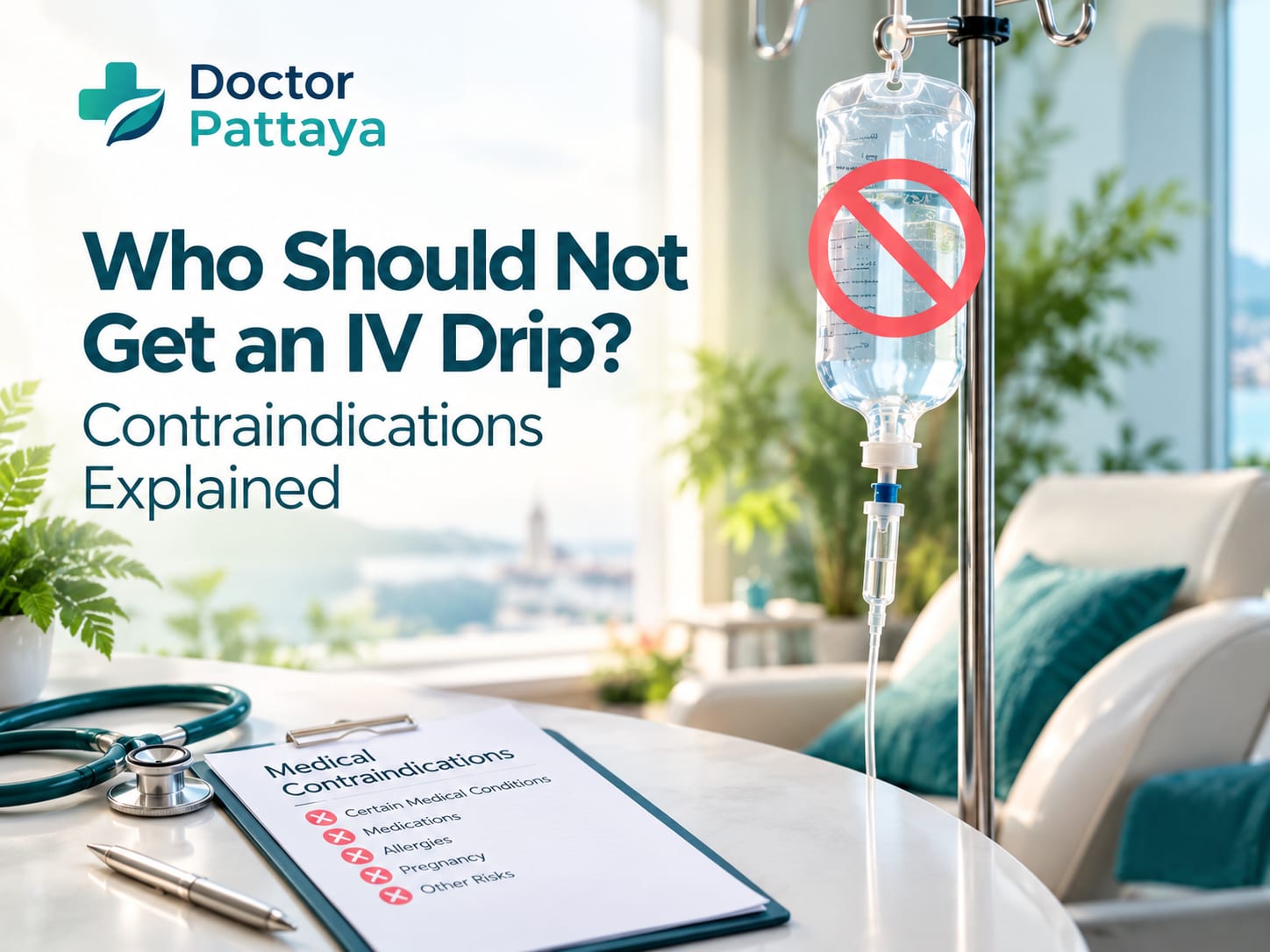
IV drips are safe for most people, but not everyone. Heart failure, kidney disease, uncontrolled high blood pressure, and G6PD deficiency are among the conditions that can make IV therapy risky or dangerous. Some conditions rule it out entirely. Others mean you need a doctor to check you first. A brief consultation before your drip is not optional — it is the thing that keeps you safe.
The concierge mentioned it. Your roommate swears by them. Someone at the hotel pool said it sorted them out in an hour. IV drips have a strong reputation in Pattaya, and for good reason — dehydration, heat, long nights, and jet lag are a real combination, and a well-matched drip genuinely helps most people.
But the clinic that puts a needle in your arm without asking you a single question first is the one you should walk straight past.
IV therapy delivers fluids, vitamins, and electrolytes directly into your bloodstream. That speed and directness is exactly what makes it effective, and exactly what makes a quick medical check non-negotiable before you start. Most people are fine candidates. Some need a short review first. A few should not have a drip at all until an underlying condition is properly assessed.
This article explains who falls into which category, what a responsible clinic should check before your drip starts, and why that check matters more in Pattaya than it does back home.

Absolute vs Relative Contraindications: What the Difference Actually Means
Not all contraindications are equal, and it is worth being clear about this.
An absolute contraindication means the drip should not go ahead until the condition is treated or resolved. A relative contraindication means there is a real risk, but a doctor can often manage it safely with the right formulation and proper monitoring.
This distinction matters. Lumping everything into a flat list leaves people with well-managed conditions thinking they are ruled out when often they are not. It also lets people with genuinely serious contraindications think a little caution is enough.
Conditions That Rule Out IV Therapy Entirely
Congestive Heart Failure and Fluid Overload
If your heart is already struggling to move fluid around your body, adding more fluid directly into your bloodstream puts serious extra strain on it. This can tip you into pulmonary oedema, where fluid backs up into the lungs. That is a medical emergency.
Active, decompensated heart failure is an absolute contraindication. Full stop.
Severe Kidney Disease
Your kidneys control how much fluid your body holds onto. When they are not working properly, excess fluid has nowhere to go. IV therapy in someone with advanced chronic kidney disease can cause dangerous fluid and electrolyte build-up.
If you are on dialysis or your kidney function is severely impaired, elective IV drips are not appropriate. Medical IV therapy in this group happens in hospital, not a wellness clinic.
Haemochromatosis
This one gets missed by most clinics. Haemochromatosis is a genetic condition where your body stores too much iron. Multi-nutrient drips that include iron, or formulations that affect iron metabolism, can worsen iron overload and cause serious organ damage over time.
If you have been diagnosed with haemochromatosis, tell the clinic before they start anything. It is a genuine contraindication that most non-specialist providers will not think to ask about.

Conditions That Need a Doctor’s Review First
Uncontrolled High Blood Pressure
Controlled hypertension — the kind you manage daily with medication and regular check-ups — is usually manageable. Many patients with stable blood pressure can safely receive a drip after a quick check on the day.
Uncontrolled high blood pressure is different. Adding fluid volume to an already strained cardiovascular system carries real risk. If your blood pressure is significantly elevated, a responsible clinic will not proceed until it is assessed. At Doctor Pattaya, a blood pressure check is part of every pre-drip consultation.
Pregnancy
Elective wellness drips are not appropriate during pregnancy without sign-off from an obstetrician. High-dose vitamin C and certain B-vitamin concentrations carry real cautions in pregnancy that most wellness menus do not flag.
Medical IV therapy during pregnancy — for severe dehydration, for example — is a hospital-level decision made under obstetric supervision. If you are pregnant, talk to a doctor first, not a booking page.
Active Infection at the IV Site
If the skin where the cannula would go is infected, broken, or inflamed, that site cannot be used. Inserting a line through compromised skin introduces bacteria directly into the bloodstream. A different site may work, but this needs to be assessed in person before anything is decided.
G6PD Deficiency: A Contraindication That Is Especially Relevant in Pattaya
G6PD deficiency is a genetic enzyme disorder. It is significantly more common across Southeast Asia and the Mediterranean than in most Western countries. Many people who carry it have never been tested and have no idea.
Why does this matter for IV drips? High-dose intravenous vitamin C is a standard ingredient in many hangover and wellness drips. In people with G6PD deficiency, it can trigger haemolysis — the body starts breaking down its own red blood cells. That can cause fatigue, jaundice, and in serious cases, a crisis that needs hospital care.
Any clinic offering high-dose vitamin C drips should ask about your G6PD status. If you have Southeast Asian, Mediterranean, Middle Eastern, or African heritage and have never been tested, mention it. A simple blood test can confirm your status before a high-dose drip goes ahead. It is part of what the team at Doctor Pattaya screens for during the pre-drip assessment.
You can read more about how we approach IV drip safety checks before any infusion starts.
Medications That Can Conflict with IV Therapy
Saying "certain medications may be a concern" and leaving it there is not good enough. Here is what that actually means.
Diuretics — water tablets used to manage blood pressure or fluid retention — can interact with IV fluids in ways that throw off your electrolyte balance. Blood thinners like warfarin increase bleeding risk around the cannula site. High-dose intravenous vitamin C can interact with certain chemotherapy drugs, which is relevant to anyone currently receiving cancer treatment.
None of this automatically rules out a drip. It means you need to disclose everything you take, and a doctor needs to review it before the line goes in. There is no safe shortcut here.
Why Screening Matters More in Pattaya Than Elsewhere
Pattaya is not a typical clinical environment. The heat alone causes a level of dehydration that most tourists genuinely underestimate, especially on top of alcohol, long-haul travel fatigue, and broken sleep. That combination is exactly why drips are in demand here, and rightly so in many cases.
The problem is that it also puts people with undisclosed chronic conditions — hypertension, kidney issues, heart conditions they manage fine at home — into a hot, high-output environment where those conditions behave differently. A patient who tolerates IV therapy comfortably at a cool clinic in London may respond very differently after three days of Pattaya heat, alcohol, and disrupted sleep in Jomtien or Pratumnak.
That is why the pre-drip consultation matters more here, not less. Our IV drip service at Doctor Pattaya is built around a check-first, drip-second model. The alternative is not responsible medicine.
Risks That Can Arise Even in Eligible Patients
Even when there is no contraindication, IV therapy carries small risks every patient should know about.
Phlebitis is inflammation along the vein near the cannula site. It usually causes localised redness and soreness. Cannula site infection is rare with proper technique but possible if sterility slips. Anaphylaxis — a severe allergic reaction — can occur with any IV ingredient, which is why you should always receive your drip somewhere that has resuscitation equipment and trained staff on hand. Electrolyte imbalance is possible if the formulation is not matched to your actual clinical need.
These risks are low in a properly run clinical setting. They are not low somewhere with no screening and no physician present.
What a Responsible Clinic Should Check Before Your Drip
A proper pre-infusion assessment should include a review of your medical history, a blood pressure check, a conversation about current medications, and a question about known allergies. If the drip contains high-dose vitamin C, your G6PD status should come up.
The formulation should be chosen based on your symptoms, not just picked off a menu. A hangover drip, a hydration drip, and a high-dose nutrient infusion are not interchangeable. The right choice depends on who you are and what your body needs right now. That is a clinical decision, and it is the one that keeps IV drip therapy safe.
Not sure if an IV drip is right for you? At Doctor Pattaya, every drip starts with a brief medical consultation — no charge, no pressure. We check your blood pressure, review your medications, and confirm the right formulation for your situation before anything goes into your arm. Walk in any time, 24 hours a day, or call us and we will come to your hotel. Our IV drip service covers Pattaya, Jomtien, Naklua, and Pratumnak.
Frequently Asked Questions

Dr. Pipat Finn is the senior doctor at Doctor Pattaya Takecare Clinic, a 24/7 walk-in medical practice on South Pattaya Road, Chonburi, Thailand. They provide primary care, travel medicine, sexual health, vaccination, minor surgery, IV therapy, and emergency outpatient services for tourists, expatriates, and Pattaya residents. Languages: English and Thai. WhatsApp consultations: +66 95 073 5550. Call: +66 81 668 5557.