Clinically reviewed by Dr. Pipat Finn, M.D., Senior Doctor, Doctor Pattaya.
Last reviewed: November 2026
Sinus pressure after a flight usually settles within a few days with saline rinse, steam, and a short course of decongestant. If the pain is worsening after day seven, you have a fever, thick discoloured discharge, or any swelling around the eye, those are signs of a possible infection that needs assessment. If you are planning to dive or fly again before the pressure has gone, get checked first.
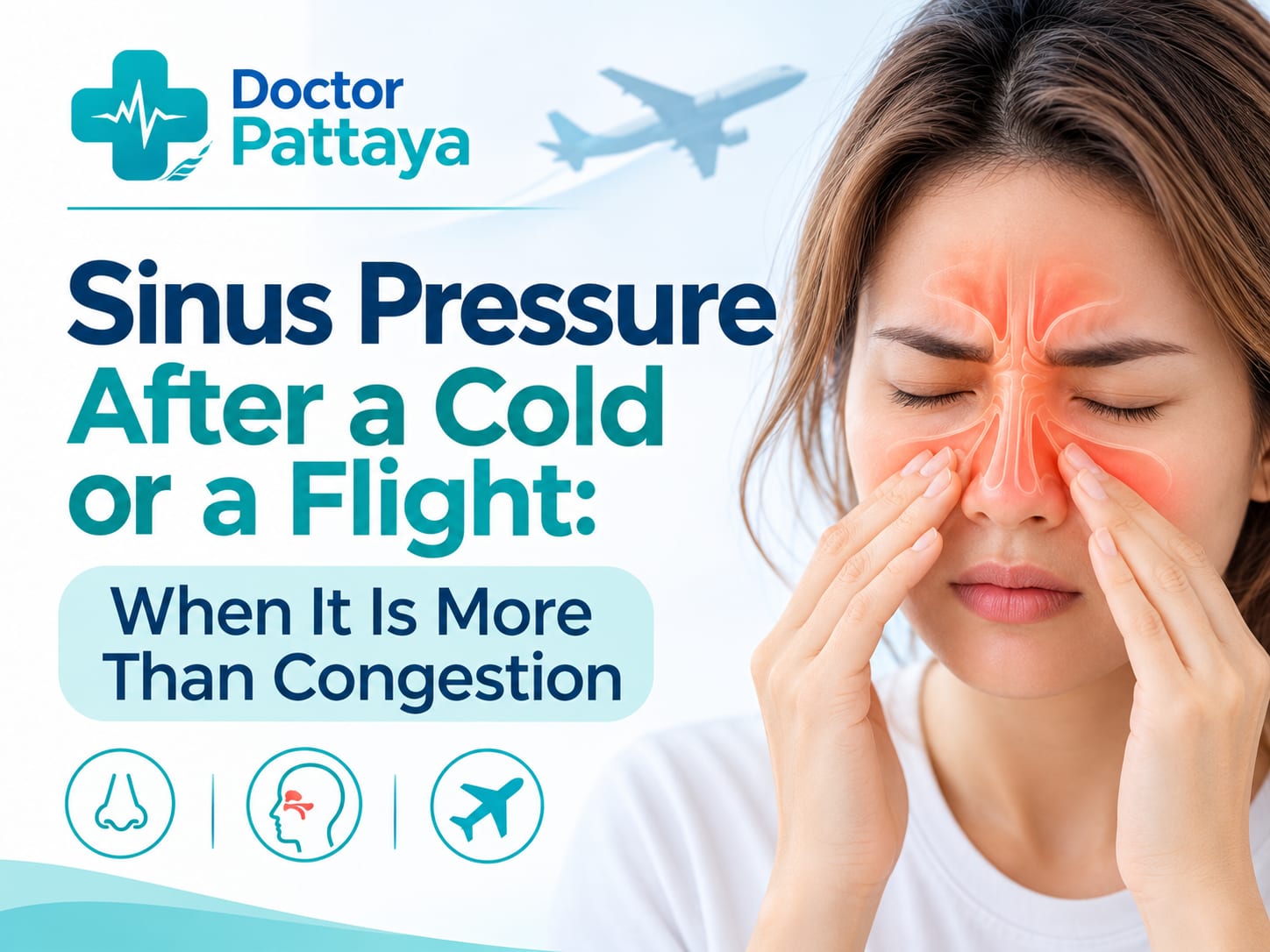
You landed in Pattaya, the holiday was going well, and now you have a face full of pressure and a headache sitting right behind your cheekbones. Maybe you had a cold on the flight over. Maybe the descent just hit you harder than usual. Either way, you are not in the mood to spend a beach day feeling like your head is in a vice.
Most of what you are feeling is straightforward: blocked sinus passages that did not equalise properly during the pressure changes of the flight. It is uncomfortable but manageable, and for most people it clears up on its own within a few days. What is worth reading is what changes that timeline, which symptoms tell you it has become something more, and when it matters for diving or flying home.

Why Sinuses Feel Blocked After a Cold or a Flight
Your sinuses are small air-filled spaces in your skull. They connect to the inside of your nose through tiny openings. When those openings are working normally, pressure inside the sinuses adjusts automatically as the air pressure around you changes.
When you have a cold or flu, the lining of the nose and sinuses swells. That swelling can partially or fully block those openings. During a flight, cabin pressure drops on the way up and rises again on descent. If the openings are blocked, air cannot flow freely in and out, and you end up with trapped pressure inside the sinus. Descent is usually worse because the cabin is re-pressurising and the sinuses cannot keep up.
This is called aerosinusitis, or sinus barotrauma: a pressure injury caused by that imbalance. It is not an infection on its own, though it can create conditions for one to develop later.
What You Can Safely Try for the First Few Days
Saline rinse is the first thing to try. It keeps the nasal passages moist, helps shift thickened mucus, and reduces irritation. Use it two to three times a day. A warm face cloth held over your cheeks and forehead for ten minutes can ease the pressure sensation.
A short course of a nasal decongestant spray, such as oxymetazoline, can help reduce the swelling and open those blocked passages. The important rule: do not use it for more than three consecutive days. After that, the nasal lining can become dependent on it, and congestion rebounds worse when you stop. It is easy to fall into that cycle, so break it early.
Thai pharmacies stock saline sprays and some decongestants, though brand names differ from home. If you have high blood pressure, heart disease, or thyroid problems, skip the pharmacy counter and come in for a consult first. Decongestants are not safe for everyone.

Signs It May Have Become a Sinus Infection
Pressure and congestion from a flight or cold usually improve steadily over several days. If yours is not improving, or is getting worse after around ten days, that is worth paying attention to.
The pattern that suggests a bacterial infection rather than a simple pressure event: thick yellow or green discharge, facial pain that is worsening rather than easing, fatigue heavier than a standard cold, and sometimes a high fever. Severe onset with high fever and significant facial pain from the first few days can also point toward a bacterial cause even before ten days. This is what warrants antibiotics, not the pressure event itself.
If that description fits, Doctor Pattaya can assess you, check whether the sinuses are draining, and decide whether antibiotic treatment makes sense. Where antibiotics are indicated, the right choice depends on your clinical picture and any allergies. Antibiotics are not indicated for straightforward post-flight sinus pressure without signs of bacterial infection.
Pain or Swelling Around the Eyes: When to Be Seen Today
Most sinus pressure after a flight is unpleasant, not dangerous. But specific signs change the picture.
Go to a clinic the same day if you notice swelling or redness of the eyelid, pain when moving your eye, double or blurred vision, a high fever that is not settling, a severe headache that feels different from the usual sinus pressure, or a stiff neck. These can be signs that infection has spread to the tissue around the eye, a condition called periorbital cellulitis, or in rarer cases to deeper structures. These situations move quickly and need urgent assessment, not a wait-and-see approach.
Swelling around the eye after sinusitis is not something to monitor from your hotel room. Doctor Pattaya is open around the clock, and a hotel visit across Pattaya, Jomtien, or Naklua can be arranged if you are not feeling up to travelling. Take that option seriously if any of those eye signs are present.
Diving and Flying Again Before the Pressure Has Settled
This is where things get clinically important, especially in Pattaya where a lot of people are heading out on a dive boat within days of arriving.
Scuba diving creates the same pressure-equalisation demands as a flight. During descent underwater, pressure increases and the sinuses need to equalise. If the passages are still swollen and blocked, you can get what divers call a reverse squeeze on ascent: pressure trapped inside the sinus cannot escape fast enough, causing significant pain, nosebleed, and sometimes bleeding inside the sinus cavity. DAN, the Divers Alert Network, advises against diving with any condition that obstructs the sinus passages.
A fit-to-dive or fit-to-fly check takes only a few minutes. A doctor can confirm the sinuses are draining freely and advise whether a pre-descent decongestant is appropriate. A quick sinus assessment at Doctor Pattaya before your next dive is a straightforward way to avoid cutting the trip short for the wrong reason.
Flying home with blocked, inflamed sinuses can cause severe pain on descent and, in some cases, a pressure injury that takes weeks to fully resolve. If the pressure is still there and your flight is coming up, same-day assessment is a better call than hoping for the best at the gate.
Why Recovery Sometimes Takes Longer in Pattaya
Air-conditioned rooms dry out the nasal passages, and moving between cold hotel air and humid outdoor heat irritates the sinus lining. Pool chlorine is a known nasal irritant. Sea exposure at Jomtien or Naklua, especially if you have been submerging your face, adds salt and pressure fluctuation on top of already inflamed tissue. All of these slow the recovery of the mucous membranes and can keep the sinuses congested even when the original cold or flight pressure event has passed.
If you are stuck in a cycle of congestion that is not shifting after a week in Pattaya, consider whether the environment is part of the story. Humidifying your room slightly, staying out of heavily chlorinated pools for a few days, and rinsing with saline after any sea or pool exposure can all help the lining settle faster. A sinus infection evaluation makes sense if things are not moving in the right direction.
Need an assessment? If your sinus pressure has not improved after several days, is getting worse, or you have any eye swelling, fever, or you need to know whether it is safe to fly or dive, Doctor Pattaya can see you today. The clinic is open 24 hours a day, 7 days a week, and a doctor hotel visit across Pattaya, Jomtien, or Naklua can be arranged if you prefer not to travel. Walk in or call ahead: no appointment needed for sinus assessment and treatment.
Frequently Asked Questions
References
- Chow AW, Benninger MS, Brook I, et al. IDSA Clinical Practice Guideline for Acute Bacterial Rhinosinusitis in Children and Adults. Clinical Infectious Diseases, 2012.
- MedlinePlus (US National Library of Medicine). Oxymetazoline Nasal Spray. Drug Information.
- Merck Manual Professional Edition. Ear and Sinus Barotrauma. Injuries, Poisoning section.
- DAN (Divers Alert Network). Sinus Barotrauma. Diseases and Conditions.
- Sudhoff H, Klenke C, Kluge A, et al. Sinus barotrauma in diving: A clinical review. HNO, 2017. PMC5662535.
- MHRA Drug Safety Update. Nasal decongestant sprays containing oxymetazoline or xylometazoline: increased risk of rebound congestion with overuse. April 2026.
The information in this article is for educational purposes only and does not constitute medical advice. It should not be used to self-diagnose or replace a consultation with a qualified physician. If you have concerns about your health, contact a licensed medical professional. For appointments at Doctor Pattaya, visit doctorpattaya.com.

Dr. Pipat Finn is the senior doctor at Doctor Pattaya Takecare Clinic, a 24/7 walk-in medical practice on South Pattaya Road, Chonburi, Thailand. They provide primary care, travel medicine, sexual health, vaccination, minor surgery, IV therapy, and emergency outpatient services for tourists, expatriates, and Pattaya residents. Languages: English and Thai. WhatsApp consultations: +66 95 073 5550. Call: +66 81 668 5557.