
Clinically reviewed by Dr. Pipat Finn, M.D., Senior Doctor, Doctor Pattaya.
Last reviewed: November 2026
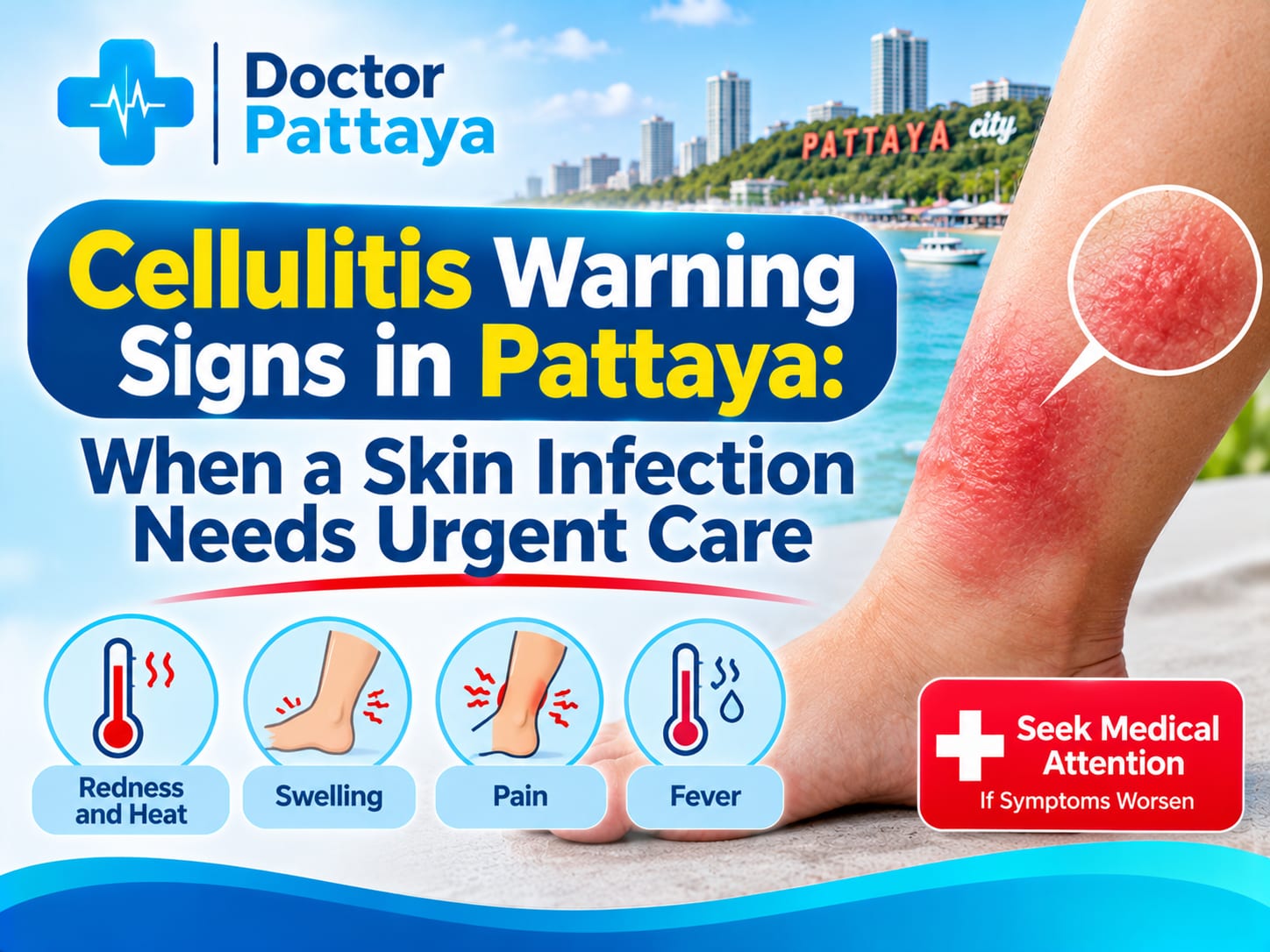
Cellulitis warning signs that need same-day care include spreading redness that grows beyond its original border, skin that is hot and swollen to touch, fever, and a red streak tracking away from the wound. If you have any of these, do not wait until morning. Doctor Pattaya is open 24/7 and can assess, test, and start treatment the same visit. Tell the doctor about any drug allergies when you arrive, as this affects antibiotic choice.
You caught a graze on the reef at Jomtien two days ago, cleaned it up, and thought nothing more of it. Now your shin is red, warm, and noticeably more swollen than yesterday. That is exactly the right time to come in. A skin infection spreading in a tropical climate moves faster than it would back home, and catching it early makes a real difference to how quickly you get back to your holiday.
Cellulitis is a bacterial infection of the deeper layers of skin. It is not the same as a surface scratch healing with a little pink around it. The difference matters, because cellulitis can go from uncomfortable to serious within 24 to 48 hours if the right antibiotics are not started. This article walks you through the warning signs, who is at higher risk here in Pattaya, and exactly what happens when you come in.

How Cellulitis Differs From an Ordinary Infected Cut
A small wound that is healing will have a narrow pink ring right at the edge. That ring stays put. It does not grow. The skin around it is not hot to touch, and you feel well otherwise.
Cellulitis is different. The redness spreads outward, often by the centimetre over hours. The skin feels warmer than the surrounding area, and the tissue underneath swells. Common entry points include a superinfected insect bite, a coral graze, motorbike road rash, or a blister that broke open.
One practical test: draw a line around the edge of the redness with a pen. Check it again in a few hours. If the redness has crossed the line, you are looking at cellulitis that is actively spreading. That needs to be seen today, not tomorrow.
Cellulitis Warning Signs You Should Not Wait On
Some signs are red flags. If you have any of these, come in now.
Fever above 38°C means the infection has triggered a whole-body response, not just a local skin reaction. Chills, muscle aches, and feeling genuinely unwell alongside a swollen red limb means the bacteria are pushing deeper.
Blisters or fluid-filled sacs forming over the red area are a sign the infection is severe. Skin turning a dusky, grey, or purple colour is more urgent still. Paired with pain that feels far worse than the visible redness would explain, that combination needs emergency attention.
Spreading Redness, Fever and Feeling Very Unwell
The classic pattern is straightforward: redness that is growing, skin that is warm and tight, and a low-grade fever. That triad alone is enough to start antibiotics.
The more serious version adds rapid spread over hours, high fever, and a person who looks and feels genuinely sick. At that point the concern shifts to sepsis, where bacteria enter the bloodstream and begin affecting other organs. Sepsis is a medical emergency.
A red streak running from the wound toward the body is called lymphangitis. It means the infection has entered the lymphatic channels, the network of vessels that drains fluid from your tissues. It is almost always a streptococcal infection. It is serious. It does not mean bacteria have literally reached your heart, but it does mean the infection is advancing and you should be assessed promptly, as IV antibiotics are often needed rather than tablets back at the hotel.

People at Higher Risk in the Tropics
Pattaya’s heat and humidity mean bacteria multiply faster on skin than in a cooler climate. That alone raises the stakes for anyone with a wound, bite, or graze.
Diabetes impairs your immune response to skin infections. What starts as a small foot or leg wound can become a diabetic foot infection that is hard to control. If you have lymphoedema, a condition where fluid builds up in a limb due to damaged lymph vessels, that limb is already vulnerable, and cellulitis there can be severe.
Athlete’s foot is a common and overlooked entry point. The small skin cracks between the toes let bacteria in. Pattaya’s wet pool decks and changing rooms make it easy to pick up. If you have itchy, cracked skin between your toes alongside a swollen lower leg, mention both when you come in.
Cuts from saltwater carry a specific risk. Vibrio vulnificus is a bacterium found in warm seawater that can cause rapidly progressive skin infection, particularly in people with liver disease or low immunity. Freshwater cuts from a fall into a canal or pond can introduce Aeromonas, another fast-moving pathogen. If you cut yourself in the water and the wound is tracking badly, say so. It changes which antibiotic we use. You can read more about managing bites and wounds at our accident and injury treatment page.
What Urgent Cellulitis Treatment Involves
How Doctor Pattaya Assesses and Treats Cellulitis
When you come in, we do a clinical assessment: look at the wound, measure the redness, take your temperature, and check whether you appear systemically unwell. If needed, we run a blood test to check for infection markers. For straightforward cases, we start oral antibiotics the same visit. For anything more advanced, IV antibiotics deliver much higher drug levels in the tissue far faster than tablets do.
The decision between oral and IV antibiotics comes down to how fast the infection has spread, whether you have a fever, whether you look systemically unwell, and whether you have conditions such as diabetes or lymphoedema. Oral antibiotics work well for milder presentations. If you are started on them and do not improve within 48 hours, come back in.
We also draw a border around the redness before you leave. This gives you a clear reference at home. If the redness is inside the line the next morning, things are moving in the right direction. If it has crossed the line, call us or come back in. For wound care alongside your infection, our wound dressing and wound care service handles that too. If you are staying in Jomtien or Naklua and cannot travel easily, we also do hotel visits.
When to Suspect Something Worse Than Cellulitis
Necrotizing fasciitis is a rare but life-threatening infection of the tissue beneath the skin. It can look like severe cellulitis in the early hours.
Two signs separate it from ordinary cellulitis. The first is pain that is wildly out of proportion to what you can see on the skin. The second is skin turning grey, dusky, or purple rather than staying red. If the skin looks like it is dying rather than simply infected, that is a surgical emergency. If you have any doubt, come in and let us assess it. The worst outcome from coming in and being reassured is that you lose an hour of your evening.
If you are in Pattaya and have a swollen, red, warm limb, spreading redness, a fever, or a red streak from a wound, do not wait to see if it settles overnight. Doctor Pattaya is open 24 hours a day, seven days a week in South Pattaya. We assess cellulitis warning signs the same visit, run blood tests where needed, and start IV or oral antibiotics immediately. Walk in, call us, or book a hotel visit if you cannot travel. We cover Jomtien, Naklua, and the surrounding areas.
FAQ
References
- Stevens DL, Bisno AL, Chambers HF, et al. Practice Guidelines for the Diagnosis and Management of Skin and Soft Tissue Infections: 2014 Update by the Infectious Diseases Society of America. Clinical Infectious Diseases. 2014;59(2):e10-52.
- Raff AB, Kroshinsky D. Cellulitis: A Review. JAMA. 2016;316(3):325-337.
- National Institute for Health and Care Excellence. Cellulitis and erysipelas: antimicrobial prescribing. NICE guideline NG141. 2019.
- MSD Manuals. Lymphangitis. Merck Manual Professional Edition.
- Centers for Disease Control and Prevention. Vibrio vulnificus. CDC.
- National Health Service. Cellulitis. NHS UK.
The information in this article is for educational purposes only and does not constitute medical advice. It should not be used to self-diagnose or replace a consultation with a qualified physician. If you have concerns about your health, contact a licensed medical professional. For appointments at Doctor Pattaya, visit doctorpattaya.com.

Dr. Pipat Finn is the senior doctor at Doctor Pattaya Takecare Clinic, a 24/7 walk-in medical practice on South Pattaya Road, Chonburi, Thailand. They provide primary care, travel medicine, sexual health, vaccination, minor surgery, IV therapy, and emergency outpatient services for tourists, expatriates, and Pattaya residents. Languages: English and Thai. WhatsApp consultations: +66 95 073 5550. Call: +66 81 668 5557.