
Clinically reviewed by Dr. Pipat Finn, M.D., Senior Doctor, Doctor Pattaya.
Last reviewed: November 2026
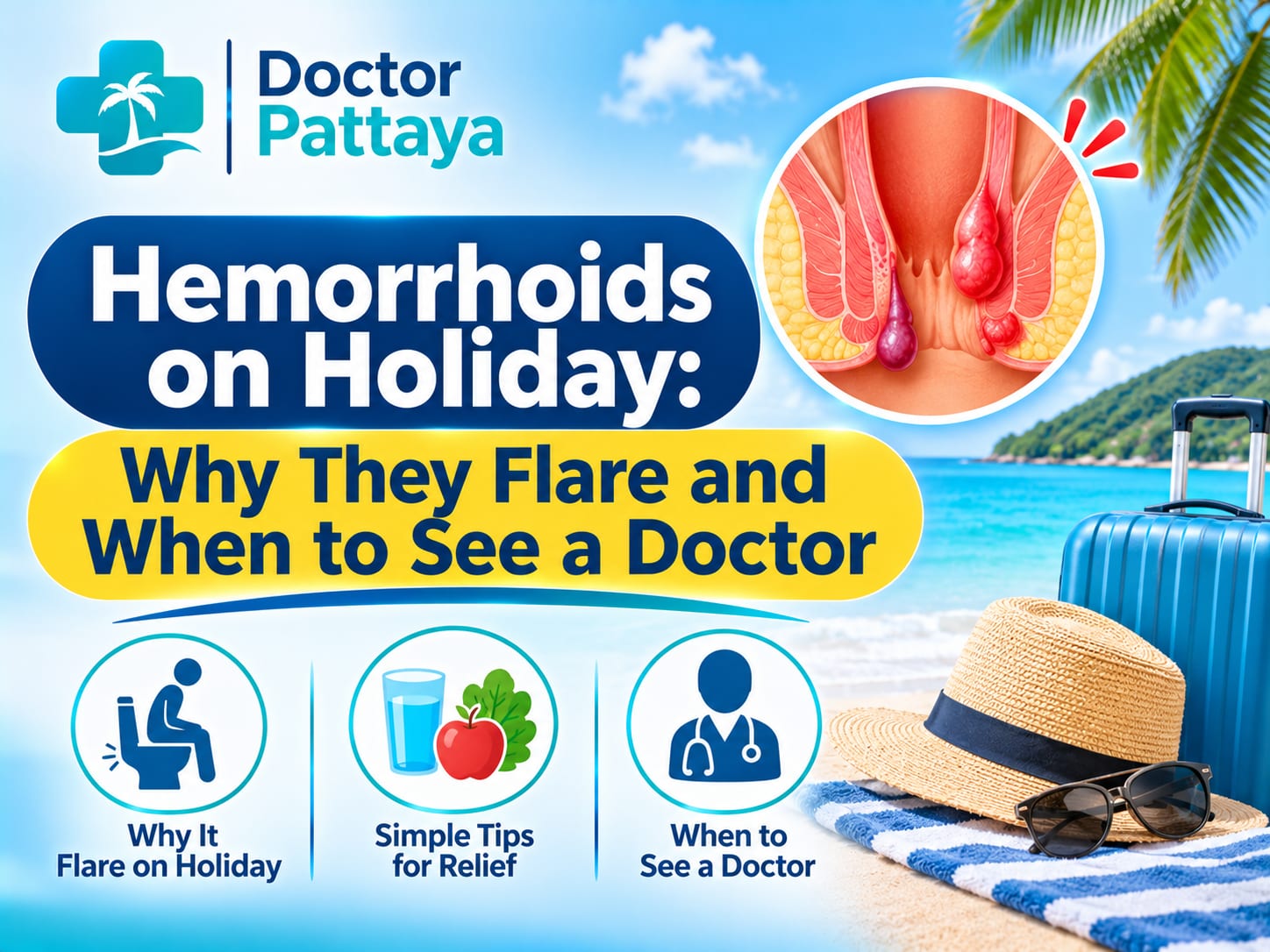
Hemorrhoids on holiday flare because of a perfect storm: long flights, dehydration, heat, alcohol, disrupted bowel habits, and days of poolside sitting. Most flares settle within a few days with simple self-care. See a doctor if you have heavy bleeding, severe pain that is not improving, a painful lump near the anus, or any bleeding that is dark, mixed into the stool, or comes with abdominal pain or unexpected weight loss.
You had three more days planned. Maybe a beach day at Jomtien, a long lunch, some exploring around Pratumnak. Then this happened, and now you are searching symptoms in your hotel room wondering how bad it really is. Take a breath. Most of the time, not as bad as it feels right now. A hemorrhoid flare on holiday is uncomfortable, sometimes alarming, but usually manageable.
What catches people off guard is the bleeding. Bright red blood on the paper or in the bowl looks frightening, but with hemorrhoids it is usually more dramatic than serious. The key is knowing which symptoms are safe to monitor at the hotel and which ones need a clinic. That is exactly what this covers.
Why Flights, Heat, Alcohol and Constipation Trigger a Hemorrhoid Flare
Hemorrhoids are cushions of tissue and blood vessels inside and around the anus. Everyone has them. They only become a problem when swollen, inflamed, or under pressure.
A long-haul flight stacks three triggers at once. Cabin air dehydration dries out your bowel, making stools harder to pass. Sitting for hours raises pressure in the veins of your lower body. And the change in routine disrupts your normal bowel pattern. By the time you land in Bangkok and get down to Pattaya, the groundwork for a flare is already laid.
The tropical heat adds another layer. Warm temperatures cause blood vessels to dilate, including the ones in that area. If you have a history of this problem, a full afternoon on the beach at Jomtien or a long pool session in Pratumnak can tip a quiet problem into an active one.
Alcohol dehydrates you and disrupts your bowel pattern. A few heavy nights followed by rich Thai food and not enough water creates classic holiday constipation. When you do go, you strain. Straining raises pressure inside the anal cushions and that is what causes them to swell, bleed, or prolapse.
The combination of heat, poolside drinking, spicy street food, and a changed sleep-and-eat schedule all hitting at once is a common holiday pattern. Each one alone is manageable. All four together in one week is why flares happen on holiday more than at home. There is more on why hemorrhoids flare up if you want the fuller picture.
Symptoms You Can Usually Manage, and Those You Should Not
Bright red blood on toilet paper, mild itching, a sense of heaviness, or a small soft lump outside the anus after passing a stool: these are typical external hemorrhoid symptoms. They usually settle within a few days with the right care.
What you should not ignore is bleeding that is heavy, continuous, or not improving after a couple of days. A hard, extremely tender lump near the anus that gets worse rather than better may be a thrombosed hemorrhoid, where a small clot has formed inside the vessel. That needs a doctor. Waiting for it to resolve on its own is an option, but it is a painful one and you do not have to do that.
Rectal prolapse, where tissue is coming out and not returning on its own, also needs clinic review. Fever, chills, or any sign of infection around the area means the same.
When Bleeding Might Not Be Hemorrhoids
Hemorrhoidal bleeding is typically bright red, painless, and settles quickly. It sits on top of the stool or appears on the paper. It does not mix into it.
If the blood is dark, maroon, or mixed through the stool, that is coming from higher up in the gut and needs investigation. Tarry black stools suggest bleeding further up the digestive tract entirely. Anal fissures, polyps, and in older adults, colorectal cancer, can all cause rectal bleeding that resembles hemorrhoids.
The red flags that make this more than a straightforward hemorrhoid story: unexplained weight loss, a real change in your normal bowel pattern over recent weeks, blood mixed into the stool rather than on top, persistent abdominal pain, or a family history of bowel cancer. If any of those apply, the right call is an examination, not self-treatment.

Self-Care That Helps in a Hotel Room
The first thing to do is drink water. A lot of it. Cool the alcohol intake for a day or two. Both of those alone will often slow a flare down.
Witch hazel wipes are sold at pharmacies across Pattaya and are worth having if you have a history of this. They reduce local irritation without the sting of soap. A lidocaine suppository, available over the counter at most Thai pharmacies, provides short-term numbing relief. Hydrocortisone cream applied externally reduces swelling and itch.
A makeshift sitz bath works well in a hotel room. Fill the tub with a few inches of warm water and soak the area for ten to fifteen minutes, two or three times a day. It relaxes the muscles around the anus, reduces pressure, and eases discomfort more than most topical creams. No special equipment needed.
For pain, paracetamol is the safest first choice during a flare if there is active bleeding. If paracetamol is not enough and there is no active bleeding, ibuprofen or naproxen can help, but check with a doctor first. Dial back the bird chillies for a couple of days too. Capsaicin does not cause hemorrhoids, but during an active flare it causes real anal burning on the way through.
What a Clinic Visit Can Add
If self-care is not working after two or three days, or if you have a thrombosed hemorrhoid, a clinic visit changes your options significantly.
A doctor can do a brief internal examination using a small instrument called an anoscope. This takes a few minutes and confirms whether what you have is hemorrhoids or something else causing the bleeding. No prep required, no hospital admission, just a straightforward appointment. Walk-in or hotel visit, depending on how you are feeling. If you are staying near Jomtien, a doctor hotel visit can come to you.
A prescription topical agent combining a local anaesthetic and a corticosteroid is stronger than anything available over the counter. Stool softeners dosed correctly for your situation also make a real difference. For a thrombosed hemorrhoid with severe pain, a doctor can offer same-day clot removal under local anaesthetic. This relieves pain much faster than waiting for the clot to absorb on its own.
Rubber band ligation for internal hemorrhoids is a procedure available at specialist level, not at a walk-in clinic. What Doctor Pattaya can do is assess the grade of your hemorrhoid and refer you appropriately if that is the right next step. For most tourists and expats with an acute flare, prescription treatment and practical advice is all that is needed to get through the rest of the trip.
Expats who have been managing this on and off for years sometimes ask at what point watchful waiting stops being sensible. If you are having frequent flares, significant bleeding, or prolapse that does not reduce on its own, that conversation with a doctor is overdue. If you are based in the north of town, the Doctor in Naklua page has location details. If you are closer to the south end, the Doctor in South Pattaya page covers your area.
If you have rectal bleeding that concerns you, a painful lump, or a hemorrhoid flare that is not improving with hotel self-care, Doctor Pattaya is open 24 hours a day, seven days a week. We offer walk-in appointments and doctor hotel visits across Pattaya, Jomtien, and Naklua. No referral needed. Come in or contact us and we will sort you out quickly and without fuss.
Frequently Asked Questions
References
- Lohsiriwat V. Hemorrhoids: From basic pathophysiology to clinical management. World J Gastroenterol. 2012;18(17):2009-2017.
- Mott T, Latimer K, Edwards C. Hemorrhoids: Diagnosis and treatment options. Am Fam Physician. 2018;97(3):172-179.
- NHS UK. Piles (haemorrhoids). NHS, 2022.
- Greenspon J, Williams SB, Young HA, Orkin BA. Thrombosed external hemorrhoids: outcome after conservative or surgical management. Dis Colon Rectum. 2004;47(9):1493-1498.
- Cleveland Clinic. Hydrocortisone Rectal Cream. Cleveland Clinic Health Library, 2022.
- Simillis C et al. A systematic review and network meta-analysis comparing conservative management, simple office procedures, and operative procedures for hemorrhoids. Colorectal Disease. 2021. (via Frontiers in Surgery review 2022)
The information in this article is for educational purposes only and does not constitute medical advice. It should not be used to self-diagnose or replace a consultation with a qualified physician. If you have concerns about your health, contact a licensed medical professional. For appointments at Doctor Pattaya, visit doctorpattaya.com.

Dr. Pipat Finn is the senior doctor at Doctor Pattaya Takecare Clinic, a 24/7 walk-in medical practice on South Pattaya Road, Chonburi, Thailand. They provide primary care, travel medicine, sexual health, vaccination, minor surgery, IV therapy, and emergency outpatient services for tourists, expatriates, and Pattaya residents. Languages: English and Thai. WhatsApp consultations: +66 95 073 5550. Call: +66 81 668 5557.