
Clinically reviewed by Dr. Pipat Finn, M.D., Senior Doctor, Doctor Pattaya.
Last reviewed: November 2026
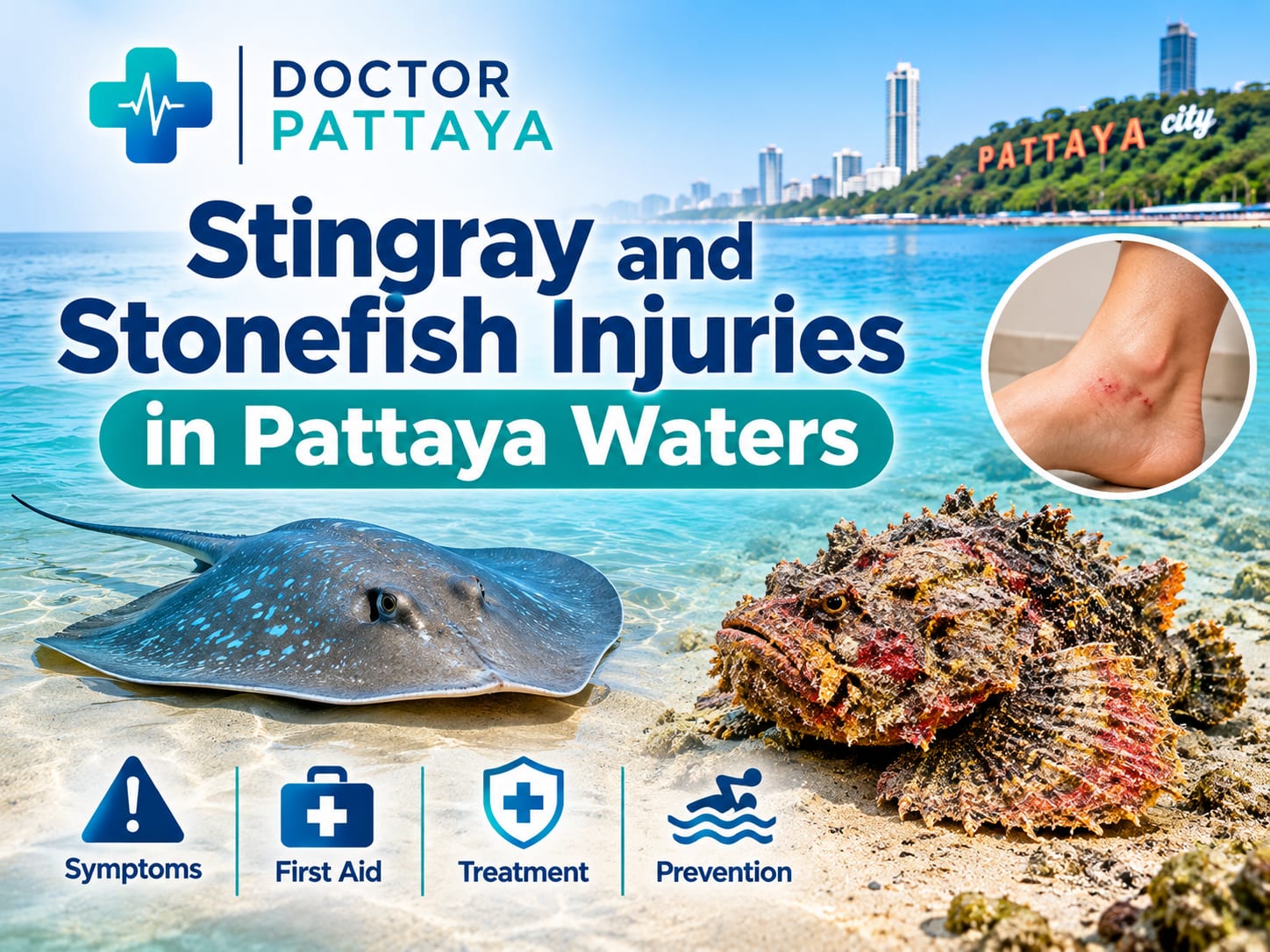
Stonefish and stingray stings are painful marine injuries that need prompt first aid and medical assessment. Immerse the affected area in hot water (40 to 45°C) for up to 90 minutes as soon as possible. Then get the wound checked by a doctor, even if the pain settles. Deep puncture wounds can hide retained spines, carry infection risk from marine bacteria, and may need a tetanus booster.
You waded in at Jomtien, felt a sharp jab underfoot, and now your foot is on fire. Or you were picking your way along the rocks near Pratumnak and stepped on something you never saw. Either way, you are in pain, you are on holiday, and you are wondering how bad this really is. Take a breath. Most stingray and stonefish stings in Thai waters are painful rather than life-threatening, and fast first aid makes a real difference.
What matters now is hot water, a same-day wound check, and not assuming it will sort itself out just because the pain starts to ease. These injuries can hide spine fragments, marine bacteria, and venom that keeps working under the skin. This article tells you exactly what to do, what to watch for, and when to come in.

Where Stingrays and Stonefish Hide in Thai Waters
Both animals live in the Gulf of Thailand, and both are found in the shallow water you are walking through. Stingrays rest on the sandy bottom, often buried under a thin layer of sand. They sting when stepped on, driving a barbed spine into the foot or ankle. The stingray shuffle, dragging your feet rather than lifting them as you walk into the water, is the simplest way to avoid them: the ray feels the vibration and moves away.
Stonefish are a different animal entirely. They look exactly like a rock or a piece of coral. They sit motionless in shallow reef areas and among rocks, and you will almost certainly not see one before you step on it. The spines along their back inject venom when compressed underfoot, and the pain is immediate and severe.
Both are more common in areas with sandy shallows and rocky reef edges. Jomtien, the rocks around Pratumnak Hill, and the reef patches near Koh Larn all carry some risk. Murky water after rain makes it harder to spot either animal.
Hot Water First Aid for a Stonefish Sting in Thailand
Hot water is the single most important thing you can do before reaching a clinic. The venom from both stingrays and stonefish is heat-sensitive, and immersing the wound in hot water breaks down the venom proteins and relieves pain. This is evidence-based guidance, not a folk remedy.
The water should be 40 to 45°C: as hot as you can tolerate without scalding yourself. That is roughly the temperature of a very hot but bearable bath. Keep the foot or hand submerged for 30 to 90 minutes, topping up with hot water as it cools to maintain the temperature.
Do not use boiling water: it will cause burns on top of the venom injury. Do not apply potassium permanganate: it causes additional tissue damage and has no benefit here. Do not try to squeeze or suck out the venom, and do not apply a tourniquet.
If there is a visible spine or barb, do not pull it out yourself. Fragments break off easily and need proper removal under clean conditions. For stonefish stings with severe systemic symptoms, antivenom may be available at some medical facilities in the region, but availability varies; that decision is made at the clinic, not on the beach.

How to Tell a Stonefish Sting from a Stingray Sting
You probably did not see the animal. Most people do not. Here is what to know.
A stingray sting usually leaves a visible puncture wound, sometimes a laceration, and the spine may still be present. Pain is intense immediately but tends to respond well to hot water. Systemic symptoms like nausea or dizziness can occur but are less common.
A stonefish sting is typically more severe. The pain is often described as crushing rather than sharp. Swelling spreads quickly, and systemic effects including nausea, low blood pressure, or weakness in the limb are more likely and can develop within minutes to hours.
If the pain is extreme, spreading fast, and hot water is not taking the edge off, treat it as a stonefish sting until proven otherwise. The clinical approach is similar for both initially, but the stonefish picture warrants faster escalation.
Why Every Marine Sting Wound Needs Checking
Even if the hot water helps and the pain settles, you still need a doctor to look at the wound.
Spine fragments can remain inside without being visible or felt. A retained foreign body drives ongoing infection and prevents proper healing. An X-ray confirms whether anything is left behind. The team at Doctor Pattaya can arrange imaging on the same visit as wound assessment; see the accident and injury treatment page for what that covers.
Marine puncture wounds also carry a real infection risk. Warm Gulf of Thailand water contains bacteria that do not respond to the antibiotics normally used for skin infections. Vibrio species in particular can cause rapidly spreading infection in a wound like this, and it can move fast. Proper wound irrigation and the right antibiotic cover matter here.
In severe stonefish stings, a rare but serious complication is compartment syndrome, where venom-driven swelling builds pressure inside a tissue compartment in the foot or lower leg. The signs are worsening pain despite hot water, tightness in the limb, numbness, or inability to move the toes. If any of those develop, do not wait for a clinic appointment: call for emergency help immediately.
When to Walk In Versus When to Call for Help
Most stings are painful and warrant a clinic visit, but they are not an ambulance-level emergency. Walk in or call for a doctor visit if the pain is controlled, the wound is visible, and you have no systemic symptoms.
Call for emergency help immediately if any of these develop: severe chest pain or palpitations, difficulty breathing, collapse or loss of consciousness, the limb going numb or losing movement, or extreme swelling spreading rapidly up the leg. These point to serious systemic envenomation and need an emergency response, not a walk-in.
If you are unsure which category you are in, call Doctor Pattaya’s 24/7 line and describe your symptoms. A doctor can come to your hotel if moving is difficult. The 24/7 emergency care service covers the full Pattaya area including Jomtien, Pratumnak, and Naklua.
Tetanus and Antibiotics After a Marine Sting
A deep puncture wound from a marine spine is a high-risk wound for tetanus. If your last tetanus booster was more than five years ago, you need one. If you are not sure when your last booster was, assume it has been too long. This is a quick, same-visit addition to wound treatment.
Antibiotics are not automatic for every marine sting, but they are recommended for deep puncture wounds, wounds showing early signs of infection, or patients who are immunocompromised or diabetic. The antibiotic choice needs to cover organisms common in warm seawater, including Vibrio species. A doctor needs to assess the wound before prescribing. Do not self-treat with leftover antibiotics from a previous trip.
Doctor Pattaya can check your vaccination history, administer a tetanus booster on the same visit, and prescribe targeted antibiotics if indicated. If the wound needs ongoing dressing changes, our wound care service is available around the clock. For any insect or marine sting that affects the skin beyond the puncture site, the insect bite and sting treatment page covers related presentations.
Stepped on a stingray or stonefish in Pattaya? Doctor Pattaya is open 24 hours a day, every day, in South Pattaya. We assess and treat marine sting wounds on the same visit: irrigation, spine removal if needed, X-ray assessment, tetanus booster, and antibiotic cover where indicated. Walk in directly or call for a hotel visit anywhere in Pattaya, Jomtien, Pratumnak, or Naklua. No appointment needed.
Frequently Asked Questions
References
- Marianne Lähteenmäki-Uutela et al. Heat deactivation of the stonefish Synanceia horrida venom – implications for first-aid management. Toxicon, 2017.
- Cheng A, et al. Stonefish envenomation of hand with impending compartment syndrome. BMC Emergency Medicine, 2016.
- Medicina de Urgencias. A Prospective Study of Stingray Injury and Envenomation Outcomes. Annals of Emergency Medicine, 2018.
The information in this article is for educational purposes only and does not constitute medical advice. It should not be used to self-diagnose or replace a consultation with a qualified physician. If you have concerns about your health, contact a licensed medical professional. For appointments at Doctor Pattaya, visit doctorpattaya.com.

Dr. Pipat Finn is the senior doctor at Doctor Pattaya Takecare Clinic, a 24/7 walk-in medical practice on South Pattaya Road, Chonburi, Thailand. They provide primary care, travel medicine, sexual health, vaccination, minor surgery, IV therapy, and emergency outpatient services for tourists, expatriates, and Pattaya residents. Languages: English and Thai. WhatsApp consultations: +66 95 073 5550. Call: +66 81 668 5557.