
Clinically reviewed by Dr. Pipat Finn, M.D., Senior Doctor, Doctor Pattaya.
Last reviewed: August 2026
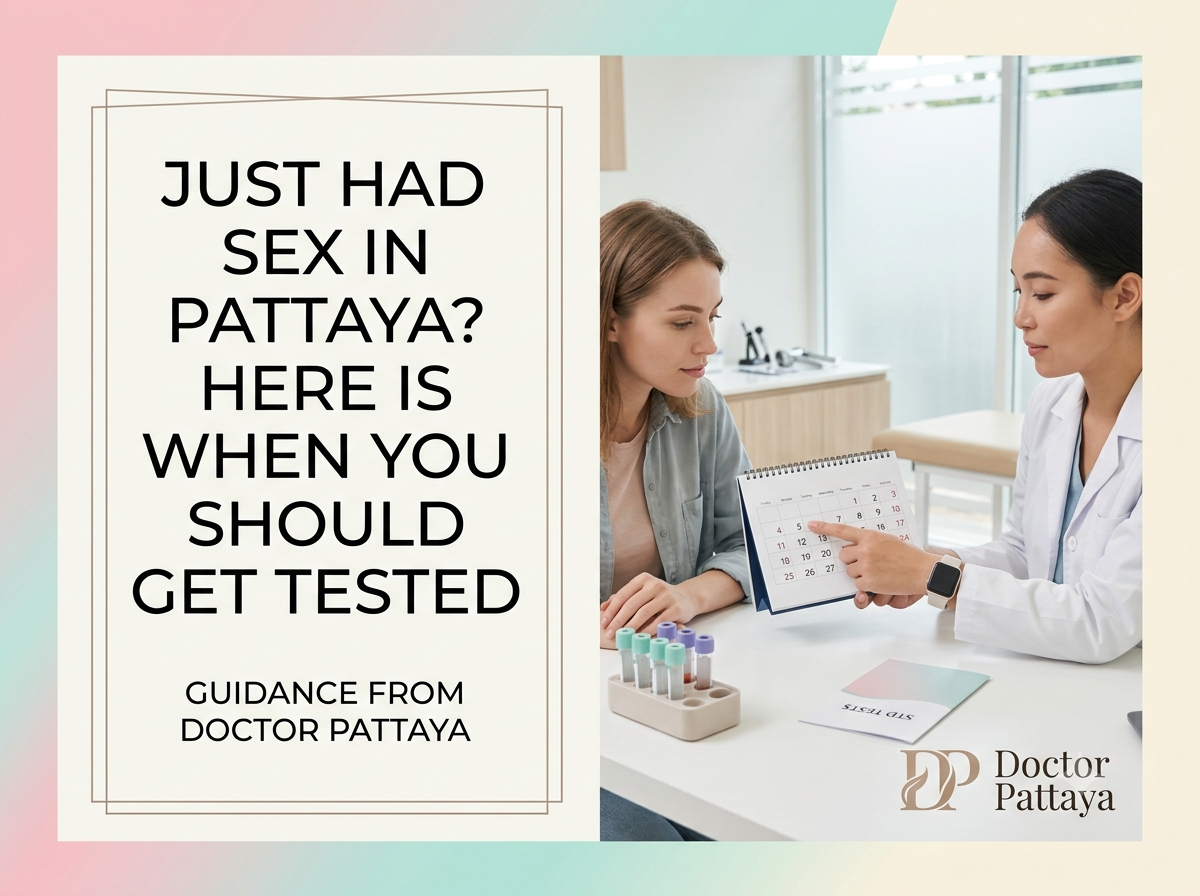
Most STDs have no symptoms at all, so waiting to feel sick before getting tested is a mistake. How soon you can get an accurate result depends on which infection you are testing for. For chlamydia and gonorrhea, one to two weeks is usually enough. For HIV, you need at least 18 days with a modern test, and up to 90 days for older ones. If you had unprotected sex in the last 72 hours and HIV is a concern, come in now, not later.
If you are reading this in a Pattaya hotel room, or maybe a few days after getting home, wondering whether you need to get checked, you are in the right place. This is one of the most common situations I see at the clinic, and there is nothing unusual or embarrassing about it. Pattaya is a city where people have a good time, and getting tested afterward is just the smart thing to do.
Timing your test correctly matters more than most people realise. Test too early and you can get a false negative, which means the infection is there but the test misses it. The right time to test depends on what you might have been exposed to. I will walk you through it, infection by infection, and tell you exactly what to do if you cannot wait.

The 72-Hour Window: What to Do Right Now If You Are Worried
If it has been less than 72 hours since unprotected sex and you are concerned about HIV, this is the section you need. PEP, or Post-Exposure Prophylaxis, is a course of antiviral medication that can prevent HIV from establishing itself in your body. It must be started within 72 hours of exposure. The sooner the better. After 72 hours, it is no longer effective.
Do not wait for a test result before coming in for PEP. A test at this stage will not tell you anything useful anyway, because it is too early for any test to detect HIV. The decision about PEP is based on your exposure risk, not a test result. Walk into Doctor Pattaya any time, day or night, and we will assess whether PEP is right for you.
There is also something called Doxy-PEP, a single dose of antibiotic taken within 72 hours of exposure. It can reduce the risk of chlamydia, gonorrhea, and syphilis after unprotected sex. It is not a replacement for testing, but it is worth discussing at your consultation, especially after a higher-risk encounter.
Window Periods by Infection: When to Get Tested for Each STD
This is the part most people get wrong. The window period is the gap between exposure and when a test can reliably detect the infection. Test inside that window and you can get a false negative, even if you are infected.
| Infection | Test Type | Earliest Reliable Test | Confirmatory Retest |
|---|---|---|---|
| Chlamydia | PCR | 1 to 2 weeks | Not usually needed |
| Gonorrhea | PCR | 1 to 2 weeks | Not usually needed |
| Syphilis | Antibody | 3 to 6 weeks | At 90 days if early test negative |
| HIV | 4th-gen (antigen + antibody) | 18 to 45 days | At 90 days to confirm negative |
| HIV | Antibody-only test | Up to 90 days | At 90 days |
| Hepatitis B | Antigen/Antibody | 6 weeks | At 6 months if high risk |
| Herpes (HSV) | Antibody | 3 to 6 weeks | At 12 to 16 weeks for accuracy |
| HPV | No approved test for most adults | Detected by symptoms or PAP only | See a doctor if warts appear |
PCR tests find the infection’s genetic material directly, which is why they can detect chlamydia and gonorrhea within a week or two. Antibody tests, used for HIV, syphilis, and herpes, take longer because they measure your immune response, and that takes weeks to develop.
At Doctor Pattaya we use PCR-based testing where it shortens the wait. For chlamydia and gonorrhea, that means a reliable result faster than with older test methods.
Most STDs Have No Symptoms: Do Not Wait to Feel Sick
I hear this a lot: "I feel fine, so I am probably okay." That is the part that worries me most. Chlamydia causes no symptoms in the majority of people who have it. Gonorrhea is often the same, especially in women and in throat or rectal infections. Early HIV can feel like nothing more than a mild flu, if anything at all.
Herpes can sit dormant for months or years before a first outbreak. Syphilis starts with a painless sore that many people never notice. If you are using symptoms as your early warning system, you will miss most infections. The only way to know is to test.
Pattaya-Specific Situations: When You Should Come In Without Waiting
Some situations call for same-day or next-day assessment rather than waiting for a testing window. If any of these apply, do not wait.
You had unprotected sex with a new or unknown partner in the last 72 hours and you are worried about HIV. PEP needs to start now. You noticed a sore, discharge, rash, or burning that appeared within days of sex. Some infections like gonorrhea can cause symptoms quickly and need treatment, not just testing. You had a condom break and are not sure of your partner’s status. You are leaving Pattaya soon and need results before you travel home.
I also see this a lot with expats who have been putting off testing for weeks or months. If you are living here and you are sexually active with new partners, I recommend a full sexual health screen every three months. Co-infection is real: testing positive for one STI raises your risk of having another, which is why a full panel is always the better call.
What Happens If You Test Positive
A positive result mid-holiday is stressful, but it is manageable. Chlamydia and gonorrhea are both cured with antibiotics, usually in a single visit. Syphilis is curable with the right antibiotic course. Hepatitis B has no cure but can be managed with ongoing treatment and monitoring.
One thing worth knowing about gonorrhea: antibiotic-resistant strains are an increasing problem across Southeast Asia. We use a combination antibiotic approach and confirm with a follow-up test to make sure the infection has cleared. Do not self-treat with leftover antibiotics. It makes resistance worse and can leave you thinking you are clear when you are not.
HIV has no cure, but with modern antiretroviral therapy it is a fully manageable long-term condition. U=U, Undetectable equals Untransmittable, means that people on effective HIV treatment with an undetectable viral load cannot pass the virus to a sexual partner. If you test HIV positive here in Pattaya, we will walk you through the immediate next steps and help with onward referral. You do not have to figure that out alone.
How Often to Get Tested If You Live Here or Visit Often
If you are an expat in Pattaya or a frequent visitor with multiple or new partners, annual testing is not enough. For sexually active people in higher-risk situations, testing every three months is the standard recommendation. That means a full panel: chlamydia, gonorrhea, syphilis, HIV, hepatitis B, hepatitis C, and herpes.
Getting regular STD testing in Pattaya at a clinic that already has your history on file means you are not starting from scratch each time. We know your previous results, what you have been treated for, and what your baseline looks like. That context matters.
PrEP, Pre-Exposure Prophylaxis, is also worth considering if you are HIV-negative and sexually active with multiple partners. It is a daily tablet that is highly effective at preventing HIV when taken consistently. Ask about it at your next visit.
Getting Tested at Doctor Pattaya: What to Expect
Walk-ins are welcome any time, including nights and weekends. You do not need an appointment. You do not need to explain yourself to anyone other than the doctor. Everything is confidential.
When you come in, the doctor will take a brief history, discuss what you were potentially exposed to, and recommend the right STI panel for your situation. Samples may include blood, urine, and swabs depending on what needs testing. PCR results for chlamydia and gonorrhea are typically available the same day or next day. We also offer doctor hotel visits across Pattaya, Jomtien, Naklua, and Pratumnak if you cannot travel to the clinic.
If you need PEP, we can start it immediately. If you test positive for anything, we treat it here and now. No referrals, no waiting list.
Worried after unprotected sex in Pattaya? Doctor Pattaya offers confidential STD testing and sexual health screening 24 hours a day, seven days a week. Walk in any time, no appointment needed. We offer full STI panels, same-day PCR results for chlamydia and gonorrhea, HIV testing, PEP initiation within the 72-hour window, and doctor hotel visits across Pattaya, Jomtien, and Naklua. Whether you need urgent post-exposure advice or a routine sexual health screen, we are here when you need it. Visit doctorpattaya.com or walk in to our South Pattaya clinic today.
Frequently Asked Questions

Dr. Pipat Finn is the senior doctor at Doctor Pattaya Takecare Clinic, a 24/7 walk-in medical practice on South Pattaya Road, Chonburi, Thailand. They provide primary care, travel medicine, sexual health, vaccination, minor surgery, IV therapy, and emergency outpatient services for tourists, expatriates, and Pattaya residents. Languages: English and Thai. WhatsApp consultations: +66 95 073 5550. Call: +66 81 668 5557.