Clinically reviewed by Dr. Pipat Finn, M.D., Senior Doctor, Doctor Pattaya.
Last reviewed: August 2026
Getting tested together is one of the most practical things a couple can do for each other’s health. A full couples STD screen in Pattaya covers HIV, syphilis, hepatitis B and C, chlamydia, gonorrhea, herpes, and trichomoniasis. Most results come back the same day or within 24 hours. If something comes back positive, both partners need to be assessed and treated together, not just one.
Maybe you are new to each other and want to start things right. Maybe you have been together for years and just never got around to it. Maybe one of you has spent time in Pattaya and the other is here visiting. Whatever brought you here, this is the right place to start.
The conversation about STD testing is almost always harder than the actual testing. The test itself is straightforward: a blood draw, a urine sample, sometimes a swab. Results come back fast. The part people struggle with is walking in and starting the process, or raising the topic without it feeling like an accusation. This guide covers both.
Why STD Testing for Couples Is an Act of Care, Not Suspicion
I say this to couples every week: getting tested is not about distrust. It is about looking after each other.
A lot of infections have no symptoms at all. Chlamydia, for example, is silent in most people who carry it. Someone can have had an infection for months before a relationship began and have no idea. That is not dishonesty. That is just how these infections work.
This matters especially in Pattaya. I see expats who have lived here for years, tourists who visit seasonally, and couples where one partner is Thai and one is not. Getting tested together is simply the responsible thing to do, regardless of relationship length or history.
If your partner pushes back, try this: "I want us both to know we are healthy. It is not about the past. It is about us now."
What a Couples STD Screen Actually Covers — and What Gets Missed
A proper couples screen is not just one test. It is a panel covering different infections, and each one requires a different sample type.
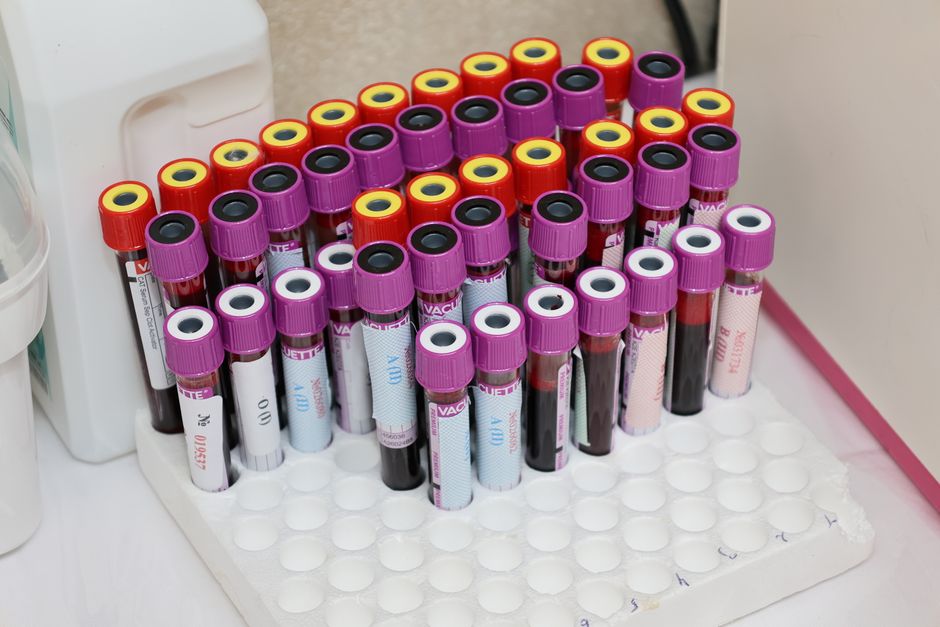
HIV is picked up with a blood test. Syphilis and hepatitis B and C are also blood tests. Chlamydia and gonorrhea need a urine sample or swab, because a blood test will miss them. Herpes is detected through blood antibody testing, though a negative result does not rule out a very recent infection, as antibodies take time to appear. Trichomoniasis requires a swab. HPV has no reliable blood test, but it can be screened as part of a cervical smear for women.
The thing most couples miss: testing for one infection does not mean you have been screened for all of them. I have had patients who got a single HIV test years ago and assumed they were fully covered. A full panel is what actually gives you a clear picture.
If you want to understand more about what treatment looks like if something comes back positive, our STD treatment page covers that in detail.
When Is the Right Time for Couples to Get Tested
Ideally, before you start sleeping together. That gives both of you a clean baseline. But most couples who come to me are already sexually active, and the answer is simple: now is always better than later.
Timing matters because of window periods. Some infections take two to four weeks to show up after exposure. If you had a possible exposure last week and test today, a negative result may not yet be conclusive. We can work out the right timing based on your history during your consultation.
For couples who have never been tested together, I call this a baseline screen. Some couples do it annually. Some do it before stopping condom use. At least once is a very good start.
When Both Partners Need Treatment — Even If Only One Tests Positive
This is the most important clinical point in this article.
If one of you tests positive for a bacterial infection such as chlamydia or gonorrhea, both of you need to be treated at the same time. Not one of you first, then the other. Both of you, same visit if possible.
If only one partner is treated, the treated person recovers, has unprotected sex with the untreated partner, and gets re-infected. I have seen this cycle repeat with couples who treated one person and then came back a month later wondering why the symptoms returned.
Gonorrhea in particular has become resistant to certain antibiotics, which makes getting it right the first time even more important. At Doctor Pattaya, both partners can be seen and prescribed for in the same visit. That is the way it should be done. You can read more about how we handle STD treatment if you want to know what to expect.
How to Bring Up STD Testing With Your Partner
Start by making it about both of you, not about them. "I think we should both get tested before we stop using protection" is a very different sentence from "I think you should get tested." The first is mutual. The second sounds like an accusation.
If your partner reacts defensively, give them a moment. Then try: "This is not about what either of us has done. It is just something I want us to do so we can both relax." Most people come around quickly once they realise there is no accusation attached.
For couples where one partner is Thai and one is not, there can be an extra layer of cultural awkwardness here. I see this regularly at the clinic. If the language barrier makes things harder, or either of you would feel more comfortable with a doctor present to explain things neutrally, that is exactly what the consultation is for.
What I tell couples who are stuck: book the appointment first. Once you are both sitting in the clinic, the hard part is usually already done.
How Often Should Couples Get Tested in Pattaya
For a fully monogamous couple with a clear baseline, annual screening is reasonable. But in Pattaya, context matters more than the calendar.
If one partner travels frequently, works in an industry with higher exposure risk, or the relationship has had any breaks, more frequent testing makes sense. Twice a year is not excessive in those situations.
For couples stopping condom use for the first time, test first. That is the one I feel strongly about. It is a small step that removes a lot of future anxiety.
Getting Tested as a Couple in Pattaya — What to Expect
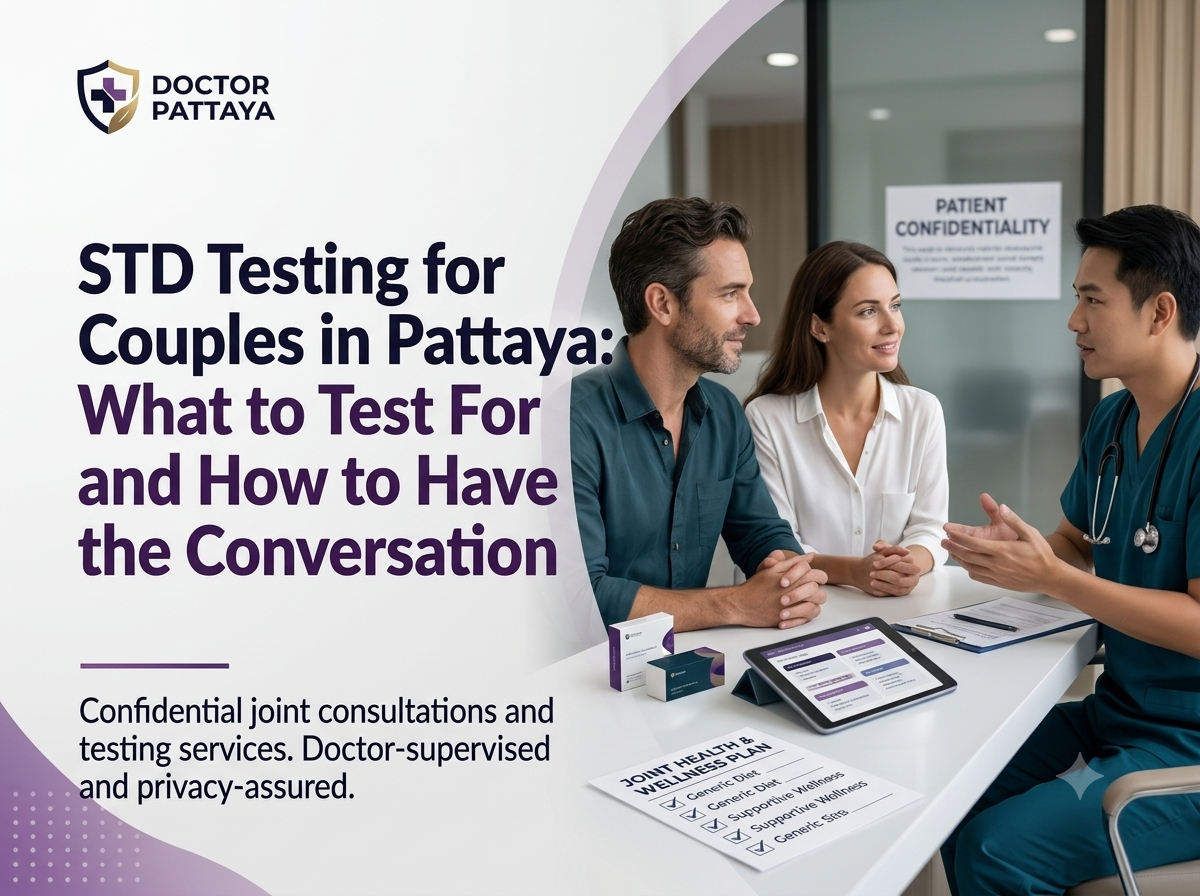
Walk-ins are welcome at Doctor Pattaya, and couples can be seen together. You do not need separate appointments unless you prefer them.
The visit starts with a short conversation about your history and what you want to screen for. Blood is drawn and samples collected from there. Most rapid results come back within a few hours. Full panel results, including cultures for gonorrhea, may take 24 to 48 hours. We talk you through everything as it comes in.
Everything is confidential. I have been doing this for over ten years in Pattaya and I have heard every situation. The only thing I care about is making sure you both leave with the information and treatment you need.
If you are a tourist on a short trip, tell us upfront. We can prioritise rapid tests so you have answers before you fly out. If you are an expat in Jomtien, Naklua, Pratumnak, or anywhere else in the area, we can set up a screening schedule that fits your situation.
Both of you can be seen in the same visit at Doctor Pattaya. Walk-ins are welcome any time, day or night. We offer a full couples STD screen with rapid results, a doctor-led results consultation, and same-visit treatment if needed. If you are unsure what to test for or how to start the conversation, come in and let us help. Doctor Pattaya is open 24 hours, 7 days a week, in South Pattaya.
Do both of us need to be treated if only one of us tests positive?
Yes, for bacterial infections like chlamydia and gonorrhea, both partners must be treated at the same time. If only one person is treated, re-infection from the untreated partner is almost certain. At Doctor Pattaya, we can assess and prescribe for both of you in the same visit.
We have been together for years and are monogamous. Do we still need testing?
Yes. Many infections sit silently for months or years with no symptoms at all. If neither of you has ever had a full STD screen together, you simply do not have a baseline. Testing now is not about suspicion. It is just good health practice.
We are on holiday in Pattaya. How quickly can we get results?
Most rapid results come back within a few hours of your visit. We can prioritise testing for tourists with limited time so you have answers, and treatment if needed, before you fly out. Doctor Pattaya is open 24 hours, so timing is rarely an issue.
Should we test before or after we start sleeping together?
Before is ideal, so you both have a clean starting point. If you are already sexually active, testing now still makes complete sense. A doctor can advise on the right timing based on your last potential exposure and the relevant window periods.
What if my partner thinks asking for a test means I do not trust them?
Frame it as a mutual decision, not a question about their past. Something like "I want us both to go together so we can both relax" lands better than anything that sounds like it is aimed only at them. If the conversation feels difficult, come in together and let the doctor lead. That is something our team does regularly.
What is a window period and does it affect our results?
The window period is the time between a potential exposure and when a test can reliably detect an infection. For HIV, that is roughly four weeks for a standard blood test. If you test too soon, a negative result may not be conclusive. A doctor at Doctor Pattaya can review your timeline and advise whether to test now, wait, or test twice.
Can we be tested and treated in the same visit?
For most bacterial infections, yes. If rapid results confirm an infection, both partners can be treated in the same visit. For results that take longer, we will contact you as soon as they are back and arrange same-visit treatment immediately.

Dr. Pipat Finn is the senior doctor at Doctor Pattaya Takecare Clinic, a 24/7 walk-in medical practice on South Pattaya Road, Chonburi, Thailand. They provide primary care, travel medicine, sexual health, vaccination, minor surgery, IV therapy, and emergency outpatient services for tourists, expatriates, and Pattaya residents. Languages: English and Thai. WhatsApp consultations: +66 95 073 5550. Call: +66 81 668 5557.