Clinically reviewed by Dr. Pipat Finn, M.D., Senior Doctor, Doctor Pattaya. Last reviewed: August 2026
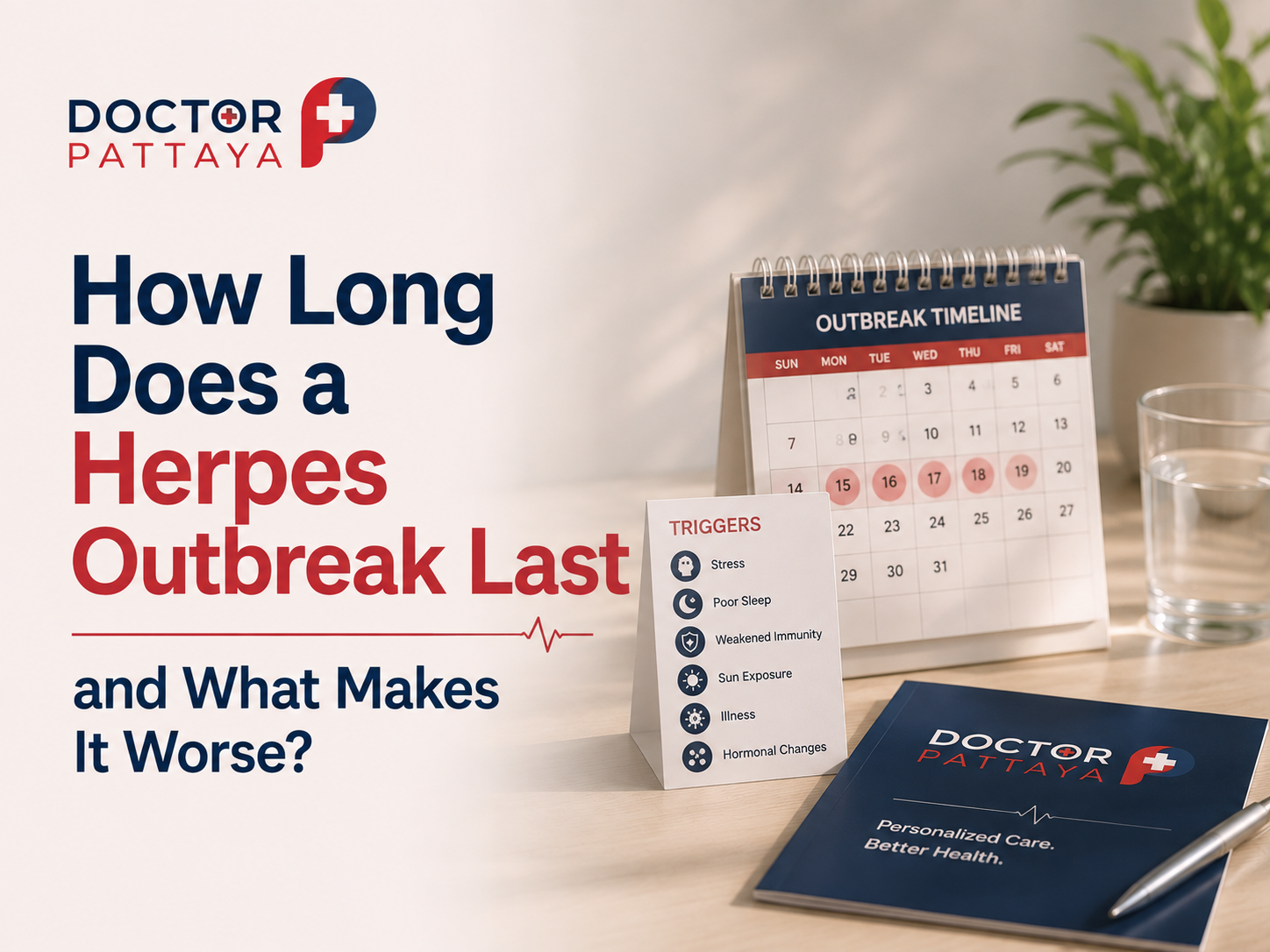
A first herpes outbreak usually lasts two to four weeks. Recurrent outbreaks are milder and typically clear in seven to ten days. Starting antiviral medication within 72 hours of the first symptom shortens the duration significantly. Heat, travel stress, disrupted sleep, and heavy alcohol use can all make an outbreak worse or last longer.
You noticed something a couple of days ago and hoped it would just go away. It has not. Now you are sitting in your hotel room somewhere between Pratumnak and Jomtien, Googling symptoms at midnight. Take a breath. This is one of the most common things we see at the clinic, and there is nothing to be embarrassed about walking in for.
The short version: herpes outbreaks follow a predictable pattern, they do resolve, and there are medications that make them shorter and less severe. The longer you wait, the less those medications can do for you. So let us go through exactly what to expect, what makes this worse, and what to do right now.

First Outbreak vs Recurrent Outbreaks — What Actually Changes
The first time herpes appears, it tends to hit harder. Your body has never encountered the virus before, so there is no immune response ready to act. You might get flu-like symptoms: fever, swollen glands, aching muscles, fatigue. The sores themselves can take two to four weeks to fully heal.
After that, your immune system learns. Recurrent outbreaks are usually much milder and shorter, clearing in seven to ten days for most people. Some people barely notice them at all. Outbreaks also tend to become less frequent over time.
If this is your first outbreak and you are on holiday, know this: it almost certainly will not be this bad again. That is not reassurance for the sake of it. That is just how the virus behaves.
The Stage-by-Stage Herpes Outbreak Timeline
Knowing the stages helps you understand where you are in the process and, more importantly, when to act.
Prodrome — the warning signs
Before any sore appears, most people feel a tingling, itching, or burning in the area where the outbreak is about to happen. This lasts roughly one to two days. It is the best possible time to start antiviral medication, so if you recognise these signs, come in immediately.
Blistering and ulceration
Small fluid-filled blisters appear, then break open into shallow sores. This is the most uncomfortable stage and when the virus is most active on the skin surface. It typically lasts three to five days.
Crusting and healing
The sores dry out, crust over, and gradually heal from the edges inward. This takes another five to seven days. Keep the area clean and dry. The virus is still present on the skin during this stage, so avoid touching the area or any contact with a partner.
How Long Herpes Outbreaks Last When Triggers Stack Up in Pattaya
This is where standard advice you find online falls short. Most sources list stress and sunlight. None of them are thinking about someone who flew in from Europe, drank heavily for three nights, slept badly, and is now dealing with 35-degree heat and 80 percent humidity.
All of those things matter, and they stack.
Heat and humidity increase sweating and skin friction, which irritates sensitive tissue and slows healing. Jet lag and disrupted sleep reduce your immune system’s ability to keep the virus suppressed. Heavy alcohol consumption does the same. Your body is already under pressure, and the virus takes the opportunity.
Stress is the other big factor. Travel is stressful even when it is enjoyable. Being unwell abroad, far from your regular doctor, adds another layer. Elevated cortisol, the hormone your body releases under stress, is a well-recognised trigger for herpes reactivation.
Diet can play a role too. Foods high in arginine, an amino acid found in nuts, chocolate, and certain grains, have been linked to outbreaks in some people. The evidence here is moderate rather than strong, but if you have been eating very differently on holiday, it is worth knowing.
How Antiviral Medication Shortens a Herpes Outbreak
Antiviral medications, mainly acyclovir, valacyclovir, and famciclovir, do not cure herpes. What they do is reduce how actively the virus replicates during an outbreak, which makes the outbreak shorter and less severe.
The 72-hour window is real. Starting treatment within the first 24 to 72 hours of symptoms, ideally during the prodrome before blisters form, gives the medication the best chance of cutting the outbreak short. Starting later still helps, but the benefit decreases the longer you leave it.
There are two approaches to antiviral treatment. Episodic therapy means you take medication at the start of each outbreak and stop when it clears. Suppressive therapy means taking a lower daily dose continuously to reduce how often outbreaks happen and lower the risk of passing the virus to a partner. If you are in an ongoing relationship or having frequent outbreaks, suppressive therapy is worth discussing.
At Doctor Pattaya, we can prescribe antivirals on the same day. Walk in, we assess you, and if medication is appropriate, you leave with it.
Can You Still Spread Herpes When the Outbreak Has Cleared
Yes, and this matters. Herpes can be transmitted even when there are no visible sores. This is called asymptomatic viral shedding, and it happens unpredictably between outbreaks. You cannot tell when it is occurring just by looking.
This does not mean intimacy is off the table or that you are constantly contagious. It means using condoms consistently and talking openly with your partner. Suppressive antiviral therapy significantly reduces, though does not eliminate, the risk of transmission.
If you have just been diagnosed and are in a relationship, that conversation is worth having with a doctor rather than trying to piece it together online. Our STD treatment service in Pattaya covers all of this, including what makes herpes outbreaks worse and how to reduce transmission risk over time.
Getting Tested and Treated in Pattaya
Timing matters a lot with testing. A swab of the sore is the most reliable way to confirm herpes, but it needs to be taken while the blister is still fluid-filled. Once the sore has crusted over, the swab is much more likely to come back negative even if herpes is the cause.
If you are waiting it out and hoping things clear before you see anyone, you may be missing the testing window. Come in while the sores are still active.
At Doctor Pattaya, our sexual health consultations are fully confidential. We see this regularly, tourists and long-term expats alike, and there is no judgment here. Walk in without an appointment, we examine the area, swab if appropriate, and discuss treatment options on the same visit. You do not need to spend your trip waiting on results before getting started.
A Note on Stigma and Moving Forward
Herpes is common. It is not rare, it is not shameful, and it does not define your health or your relationships. A lot of people in Pattaya, expats and regular visitors alike, manage it well with the right medication and clear information.
What makes it harder is delaying care, avoiding the conversation, or getting your information from unreliable sources. What makes it easier is knowing exactly what you are dealing with and having a doctor who gives it to you straight. That is what we are here for.
If you are dealing with a herpes outbreak in Pattaya, do not wait for it to resolve on its own. The 72-hour antiviral window closes fast, and testing is most accurate while sores are still active. Doctor Pattaya offers same-day confidential assessment, swab testing, and antiviral prescriptions with no appointment needed. Walk in seven days a week, any hour. We also do hotel visits across Pattaya, Jomtien, and Naklua if you would rather not travel. Get seen today and get the rest of your trip back.
How long does a first herpes outbreak last compared to later ones?
A first outbreak usually lasts two to four weeks and often comes with flu-like symptoms your body will not produce again. Once your immune system has encountered the virus, recurrent outbreaks are shorter, typically seven to ten days, and usually less painful. This is genuinely the worst it is likely to get.
Can the heat and humidity in Thailand make a herpes outbreak last longer?
Yes, and it is one of the most underappreciated triggers for people visiting Pattaya. Heat, sweating, and skin friction irritate the affected area and slow healing, while jet lag, disrupted sleep, and heavy alcohol all reduce your immune system’s ability to keep the virus in check. Having all of these at once is a common reason people see their first or worst outbreak while travelling.
When is the best time to take antiviral medication for a herpes outbreak?
As early as possible, ideally within the first 24 hours of symptoms, and no later than 72 hours after they begin. If you catch the prodrome, the tingling or itching before any sore has formed, that is the ideal window. Doctor Pattaya can prescribe acyclovir or valacyclovir on the same day you come in.
Can I pass herpes to someone after my sores have healed?
Yes. The virus can shed from the skin surface even when there are no visible symptoms, so transmission is possible between outbreaks. Suppressive antiviral therapy taken daily reduces this risk significantly, though it does not eliminate it entirely. Using condoms consistently adds another layer of protection.
Is it worth getting tested for herpes in Pattaya if I am only here for a short holiday?
Absolutely, and sooner is better. Swab testing is most accurate while blisters are still fluid-filled, because a crusted sore is much more likely to give a false-negative result. Waiting until you get home may mean missing the best testing window. Doctor Pattaya offers same-day confidential testing and can start treatment on the same visit.
What is the difference between episodic and suppressive herpes treatment?
Episodic treatment means you take antivirals at the start of each outbreak and stop when it clears. Suppressive treatment means taking a lower daily dose continuously to reduce how often outbreaks happen and lower the risk of passing the virus to a partner. If you are having frequent outbreaks or are in an ongoing relationship, suppressive therapy is worth discussing at your next visit.

Dr. Pipat Finn is the senior doctor at Doctor Pattaya Takecare Clinic, a 24/7 walk-in medical practice on South Pattaya Road, Chonburi, Thailand. They provide primary care, travel medicine, sexual health, vaccination, minor surgery, IV therapy, and emergency outpatient services for tourists, expatriates, and Pattaya residents. Languages: English and Thai. WhatsApp consultations: +66 95 073 5550. Call: +66 81 668 5557.