Clinically reviewed by Dr. Pipat Finn, M.D., Senior Doctor, Doctor Pattaya.
Last reviewed: September 2026
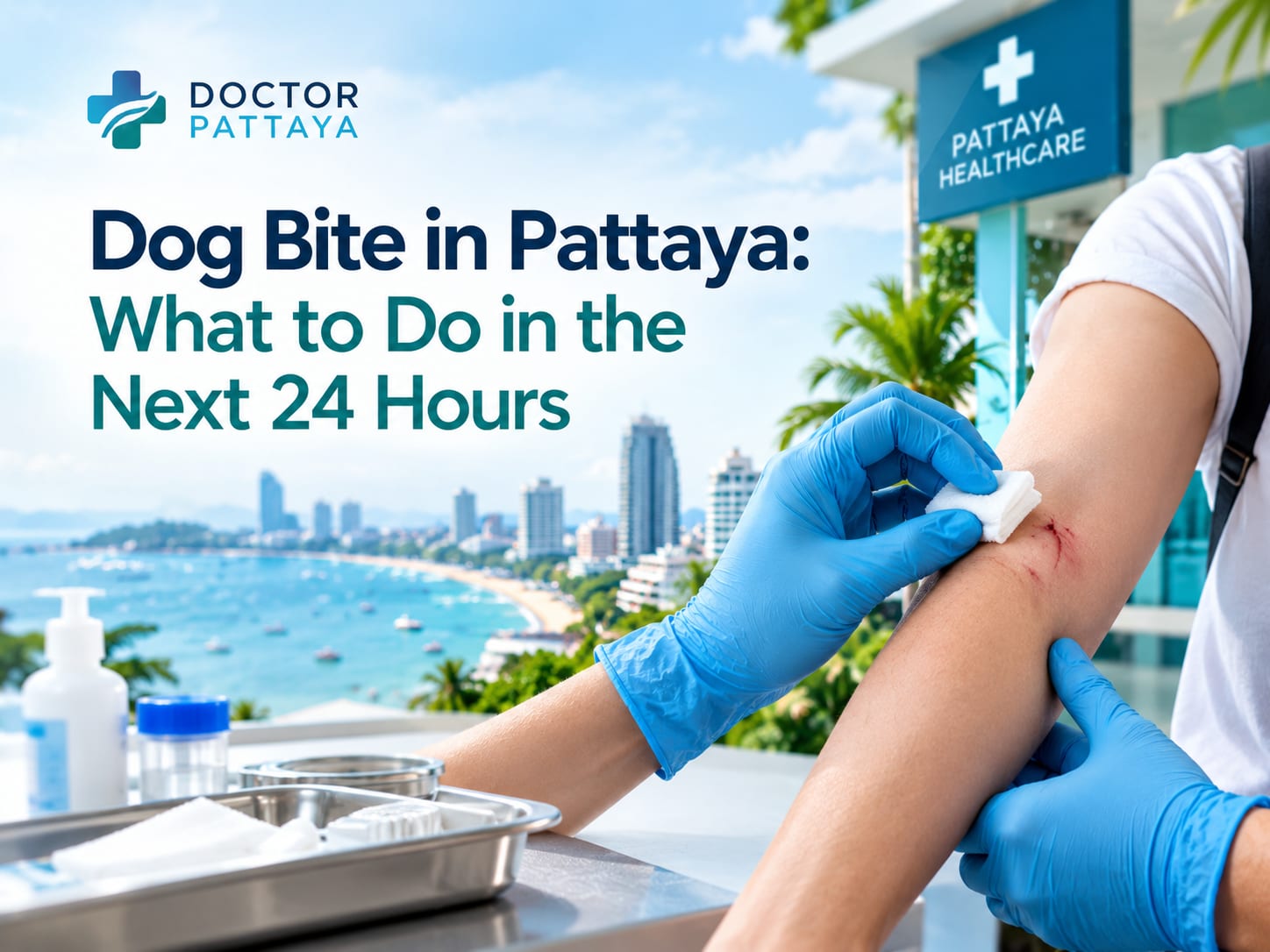
If a dog has bitten you in Pattaya, wash the wound immediately with soap and running water for at least 15 minutes, then get to a clinic the same day. Rabies is fatal once symptoms appear but completely preventable with prompt treatment. Do not wait to see if you feel unwell. The next 24 hours matter more than any other window in this situation.
You are out for an evening walk along a Jomtien soi, maybe cutting through a back lane near your hotel, when it happens. A soi dog comes out of nowhere and gets you on the ankle or hand before disappearing into the dark. The bite might be small. It might be bleeding. Either way, you are standing there on the street with your phone already open to Google. Good. That is exactly the right instinct.
Here is what you need to know right now. A dog bite in Pattaya is not something you can sleep off and deal with in the morning. Thailand has rabies in its animal population, and Chonburi province, which covers Pattaya and the surrounding area, is a known risk zone. Wash the wound now. See a doctor today. Take a breath. Then keep reading.

Why Pattaya Has a Soi Dog Problem
Pattaya has a large population of free-roaming stray dogs. You see them sleeping under motorbikes in Naklua, wandering the sois behind Walking Street late at night, and stretched out on the sand at Jomtien Beach. Many are fed by locals and seem harmless. Some are not vaccinated against rabies. Some are territorial and will bite without much warning.
Tourist areas and beach roads see a lot of bites simply because that is where people are walking at night. Expats who have lived here for years know which dogs on their street are friendly. Tourists are rarely that lucky. A dog that looks calm and healthy can still carry rabies in its early stages, before any obvious signs appear.
What To Do in the First 30 Minutes
This is the most important part of this article. Do these things now, in this order.
Wash the wound under running water with soap for a full 15 minutes. Not a quick rinse. Fifteen minutes. This step alone cuts the risk of infection, including rabies. Use the nearest tap available, a hotel bathroom, a beach bar sink, whatever you can find.
Once the wound is clean, cover it loosely with a clean cloth or bandage. Do not press a tight dressing over it. Do not try to close it with tape or a plaster pulled firmly across the skin. Take a photo of the wound. If you can safely photograph the dog without getting closer to it, do that too.
Then get to a clinic. Do not go to bed. Do not decide it looks fine. If it is 2am, find somewhere open now. This is exactly the situation a 24-hour private clinic exists for.
The Exposure Categories — Which One Are You?
When you arrive, the doctor will ask a few questions to work out your exposure level. The World Health Organization uses three categories to guide treatment.
Category I means the dog touched your unbroken skin, such as licking an area with no cuts or scratches. Basic hygiene is all that is needed. Category II means the dog nipped without breaking the skin, or caused minor scratches. You need wound care and the vaccine series, but not immunoglobulin. Category III is any bite that breaks the skin, any scratch that draws blood, or any contact near your eyes or mouth. This is the most common reason people come to us after a dog bite in Pattaya, and it needs wound care, the full vaccine series, and rabies immunoglobulin on the same day.
If the skin is broken, treat it as Category III. Do not talk yourself into a lower category.
What the Doctor Will Actually Do
A lot of people are nervous about what to expect at the clinic. Here is exactly what happens when you come in for dog bite treatment in Pattaya.
The wound is irrigated under pressure with sterile saline, even if you already washed it at home. Clinical irrigation goes deeper than what you can manage yourself. The doctor checks the wound for depth, contamination, and any debris.
For Category III, rabies immunoglobulin (RIG) is given next. If equine RIG is used, a small skin-prick test is done first to check for allergy. The RIG is injected directly into and around the wound site. This gives immediate protection while your body starts responding to the vaccine.
The rabies vaccine goes into the upper arm. This starts your post-exposure prophylaxis schedule across four visits: day 0 today, then day 3, day 7, and day 14. The doctor also checks whether you need a tetanus booster. If the wound shows early signs of bacterial infection, antibiotics are prescribed. Dog bites carry bacteria that spread quickly in Pattaya’s heat and humidity, so this step is taken seriously.
What the Doctor Will Not Do — and Why
This surprises some patients. The doctor will not stitch or close a fresh dog bite wound in most cases. Sealing the wound traps bacteria inside and raises infection risk. Deep puncture wounds are left open or only loosely covered to allow drainage.
The doctor will also not wait to see if the dog was healthy. The animal’s appearance tells us nothing useful. Rabies can be present before any change in behaviour is visible. Treatment decisions are based on your exposure, not on whether the dog seemed friendly or looked well-fed. The 10-day observation rule, where the biting animal is watched to see if it develops rabies, exists in some protocols. But it does not change the advice to start treatment today. You begin on day 0. That does not change.
Will Your Travel Insurance Cover This?
For most tourists, yes. Unprovoked animal bites are generally covered under emergency medical treatment in standard travel insurance policies. Your insurer will need documentation: an English-language medical certificate, itemised receipts, and a clear record of treatment dates.
At Doctor Pattaya, we prepare insurance-ready paperwork at the same visit. You leave with everything your insurer needs. Keep the receipts, photograph the dog if you can safely do so, and note the time and location of the incident. If the hotel concierge sent you our way, they can usually provide a supporting statement.
Call your insurer as soon as possible, even before your second vaccine dose. Some policies require notification within 24 to 48 hours of the incident, not just of the treatment.
Pre-Travel Rabies Vaccination: Worth Knowing for Next Time
If you are reading this after a bite, bookmark this section for later. If you know someone planning a trip to Thailand, send it to them now.
Pre-exposure prophylaxis is three doses of rabies vaccine given over three to four weeks before travel. It does not mean you skip post-bite treatment if something happens. But it changes the situation significantly. You no longer need immunoglobulin after a bite, which is the expensive and sometimes hard-to-find part of the protocol. Your post-bite vaccine schedule is also shorter.
For anyone spending time in Pattaya long-term, going on beach excursions, or heading upcountry or out to the islands, pre-exposure vaccination is worth serious consideration. You can read more about travel health planning or visit our rabies vaccine clinic in Pattaya as a walk-in or by appointment.
Doctor Pattaya is open 24 hours a day, seven days a week, with no appointment needed. We handle the full dog bite protocol on the same visit: wound irrigation, rabies immunoglobulin where indicated, the first vaccine dose, tetanus assessment, antibiotics if needed, and insurance documentation. We also do hotel visits across Pattaya, Jomtien, and Naklua if you cannot travel. Walk in or call us now.
FAQ

Dr. Pipat Finn is the senior doctor at Doctor Pattaya Takecare Clinic, a 24/7 walk-in medical practice on South Pattaya Road, Chonburi, Thailand. They provide primary care, travel medicine, sexual health, vaccination, minor surgery, IV therapy, and emergency outpatient services for tourists, expatriates, and Pattaya residents. Languages: English and Thai. WhatsApp consultations: +66 95 073 5550. Call: +66 81 668 5557.