Clinically reviewed by Dr. Pipat Finn, M.D., Senior Doctor, Doctor Pattaya. Last reviewed: September 2026
Cat bites in Pattaya carry a high risk of rapid infection and, in the case of stray or unvaccinated cats, a real rabies risk. Wash the wound immediately with soap and water for at least 15 minutes, then get to a clinic the same day. Do not wait to see if it gets better on its own.
You are sitting outside a beachside restaurant on Jomtien, feeding a friendly-looking soi cat scraps from your plate, when it turns and sinks its teeth into your hand. Small wound, barely bleeding. Probably fine, right? This is where most people go wrong. A cat bite that looks minor on the surface can be tracking bacteria deep into your tissue within minutes. In a city like Pattaya, where stray cats are everywhere and rabies is endemic in Thailand, "let’s wait and see" is not a safe plan.
The good news is that this is entirely manageable if you move quickly. We see animal bites at Doctor Pattaya every week. The patients who do well are the ones who came in the same day, not three days later when the hand was red, swollen, and running a fever. This article tells you exactly what to do, what signs mean you need to act fast, and how we decide whether you need a rabies shot.

Why Cat Bites Are More Dangerous Than They Look
Cat teeth are narrow and sharp. When a cat bites, those teeth punch deep into your tissue and then pull back out, leaving a small hole that closes over almost immediately. That sealed puncture traps bacteria right where you cannot easily flush it out.
The main bacteria to know about is Pasteurella multocida. It lives in a cat’s mouth and it works fast, sometimes causing visible infection within six to twelve hours of the bite. Cat bites can also introduce Bartonella henselae, the bacteria behind cat-scratch disease. That one shows up as swollen lymph nodes, fever, and fatigue one to three weeks later, often long after a tourist has flown home.
Left untreated, a cat bite infection can spread from the skin into deeper tissue or into the bloodstream. That last one is serious and needs hospital-level treatment. It is rare if you act quickly, but it does happen when people put off getting care.
Pattaya’s heat and humidity make things worse. Warm, moist environments help bacteria multiply faster than they would in a cooler climate. A bite that might give someone in northern Europe a day or two of grace before infection sets in can look very different here.
Infection Signs to Watch For After a Cat Bite in Pattaya
| Timeframe | What You May Notice |
|---|---|
| 0–6 hours | Throbbing pain around the bite site, mild redness |
| 6–24 hours | Increasing redness, warmth, swelling around the wound |
| 24–72 hours | Spreading redness, pus or discharge, red streaks, fever, swollen glands |
| 1–3 weeks later | Swollen lymph nodes, low-grade fever (possible cat-scratch disease) |
Red streaking from the wound is a warning sign. That means infection is tracking up along a lymph channel and you need medical care immediately, not tomorrow morning.
Fever combined with a cat bite wound is never something to manage at home with paracetamol. Fever tells you the infection has gone beyond the local wound. Come in or call us.
Do You Need a Rabies Shot After a Cat Bite in Pattaya?
Thailand is classified as a rabies-endemic country by the WHO. That means the risk is real and not something you can dismiss because the cat looked healthy or was living near a hotel.
Here is how we walk through the decision with every patient who comes in after a cat bite.
The cat’s status matters most. A pet cat with documented, up-to-date vaccination, owned by someone you can contact, is lower risk. A stray cat, a soi cat you have never seen before, or a resort cat with no vaccination records is treated as unknown status. For unknown-status animals, WHO guidelines recommend starting post-exposure prophylaxis, which is the rabies vaccine course given after a bite.
The bite type matters too. A bite that broke the skin always warrants an assessment. A scratch that drew blood is treated similarly. Contact with saliva on intact skin carries very low risk, but still worth a conversation.
The 10-day observation rule is often misunderstood. A cat can shed rabies virus in its saliva up to ten days before it shows any symptoms. So a cat that seems perfectly healthy when it bites you could still transmit the virus. In Pattaya, most tourists and even expats cannot reliably track a stray cat for ten days. We do not wait and watch. We assess and treat.
If you were bitten by an unprovoked cat, meaning it attacked without being touched or threatened, the risk assessment goes up. Provoked bites, where you reached out and the cat reacted defensively, are still assessed properly, but an unprovoked attack raises more concern about the animal’s condition.
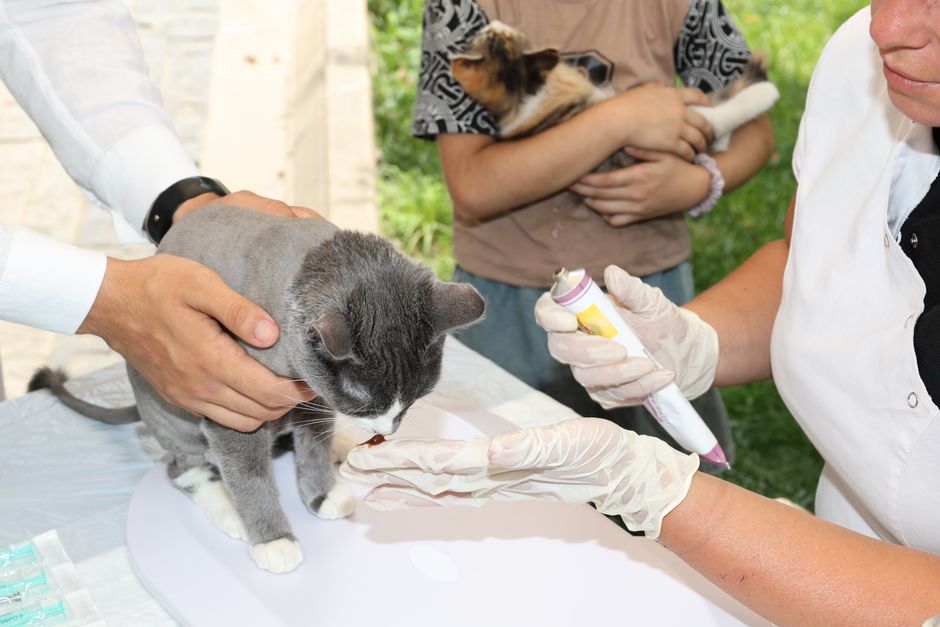
For high-risk bites, treatment includes rabies post-exposure prophylaxis (PEP) and, in some cases, rabies immunoglobulin (RIG), which is injected around the wound to provide immediate local protection while the vaccine builds immunity over the following weeks. We stock both at Doctor Pattaya’s rabies vaccination service and can begin the same day.
If you have had pre-exposure prophylaxis (PrEP) before your trip, you still need two booster doses after a bite, but you do not need RIG. That is a meaningful difference if RIG stock is limited, which can happen at some clinics.
First Aid Right Now, Before You Get to the Clinic
Start washing the wound immediately. Soap and water, running for at least 15 minutes. This step genuinely reduces both infection risk and rabies risk, and it is one of the most important things you can do before any clinic visit.
If you are on the beach without a clean tap, use bottled water and any mild soap, or just bottled water alone. It is not ideal but it is far better than nothing.
Do not press the wound closed or cover it tightly. Let it drain. Do not apply antiseptic cream from a street pharmacy and assume the job is done. That covers the surface but does nothing for the bacteria sitting deep in the puncture track.
Get to a clinic the same day. Cat bite infections in Pattaya move quickly. Do not ice it, self-medicate, and head back to the pool.
What Happens at Doctor Pattaya After a Cat Bite
When you walk in, we triage you quickly. Cat bites are not made to wait.
First, we irrigate the wound properly using high-pressure saline. This flushes bacteria out of the tissue at a depth a tap cannot reach. This step alone significantly reduces infection risk and is one reason why professional wound care matters.
Next, we assess the rabies risk based on the animal, the bite type, and your vaccination history. We walk you through this together and make the recommendation clearly.
One thing that surprises some patients: most cat bite puncture wounds are not sutured closed. Closing the wound seals bacteria inside, which is exactly what we do not want. We may use adhesive strips to keep edges together in some cases, but the default is to leave puncture wounds open and irrigated.
If antibiotics are needed, we prescribe them. We also check your tetanus status and give a booster if you are not current.
If PEP is needed, we start it the same day. The schedule runs over 14 days with doses on days 0, 3, 7, and 14. If you are flying home before the course is complete, we give you a full written medical report in English with the vaccine lot number, the WHO schedule, and a record of the bite details. Your home clinic can continue the course using the same schedule.
We work with most major travel insurers and can assist with direct billing where applicable. If you need a report for your insurer, we write one in English before you leave.
Should Expats in Pattaya Think About This Differently?
A lot of long-term Pattaya expats feed the same soi cats near their building every day without giving rabies a second thought. That is understandable. But repeated low-level exposures add up, and if you have been living here for years and feeding street cats regularly, a pre-exposure prophylaxis course is worth discussing.
PrEP for rabies is a three-dose vaccine course given over 21 to 28 days. It does not eliminate the need for treatment after a bite, but it simplifies it significantly: no RIG, fewer post-bite doses, and much better options if you are ever bitten somewhere with limited medical access.
If you are an expat who has never checked your rabies vaccine status, or you genuinely cannot remember your last tetanus shot, come in for a travel health review. It takes one visit and gives you a clear picture of where you stand.
If you have been bitten by a cat in Pattaya, do not wait to see what happens. Doctor Pattaya is open 24 hours a day, seven days a week, with no appointment needed. We offer same-day wound care, rabies post-exposure prophylaxis, and full English-language medical reports for travel insurance. We also offer doctor hotel visits across Pattaya, Jomtien, and Naklua if you cannot travel to the clinic. Walk in or call us now.
FAQ: Cat Bites in Pattaya
I was bitten by a cat in Pattaya and I fly home in two days. What should I do?
Start PEP today. Do not wait until you land. Doctor Pattaya can complete your day-zero wound care and first vaccine dose before you fly, and we will give you a full English-language report with the schedule so your home clinic can continue on days 3, 7, and 14 without interruption. Delaying the start of PEP is the only truly dangerous option here.
The cat that bit me looks healthy and is still alive. Do I still need a rabies shot?
Yes, in most cases. A cat can shed rabies virus in its saliva up to ten days before it shows any signs of illness, so a healthy appearance right now does not rule out the risk. Unless the cat is a documented, fully vaccinated pet whose owner can be contacted, WHO guidelines recommend full PEP for any bite in an endemic country like Thailand.
Why did my cat bite wound get infected so quickly? It only happened yesterday.
Cat teeth drive bacteria, particularly Pasteurella multocida, deep into tissue, and the small wound seals over almost immediately, trapping them inside. Infection can appear within 6 to 24 hours. In Pattaya’s heat and humidity, that process happens even faster than in cooler climates. If you are already seeing redness and swelling the day after a bite, come in now.
I got scratched by a soi cat near Walking Street. Is that the same as a bite?
A scratch that breaks the skin carries a similar infection risk and needs the same clinical assessment for rabies as a bite would. Cat-scratch disease can also be transmitted through scratches. Come in and let us look at the depth and location of the scratch, check your vaccination history, and assess the situation properly.
Does cat-scratch disease mean the same thing as a cat bite infection?
No, they are separate things. Cat-scratch disease is caused by Bartonella henselae and usually shows up one to three weeks after the bite or scratch as swollen lymph nodes, low-grade fever, and fatigue. General wound infection from Pasteurella multocida appears within hours to days. Both can come from the same cat, and Doctor Pattaya can assess for both in a single visit.
Can I just buy antibiotics at a pharmacy in Pattaya instead of seeing a doctor?
You can, but it is not enough on its own. The wound needs high-pressure irrigation to flush bacteria out of deep tissue, and oral antibiotics cannot replace that step. You also need a proper rabies risk assessment, which a pharmacist cannot provide. Doctor Pattaya is open 24/7 with no appointment needed, and walk-in cat bite care usually takes under an hour.
About the author: Dr. Pipat Finn is a senior doctor at Doctor Pattaya, a 24/7 private medical clinic in South Pattaya. He sees tourists, expats, and local residents for animal bites, wound care, rabies post-exposure prophylaxis, and travel-related illness. His focus is straightforward, evidence-based care delivered in plain language.

Dr. Pipat Finn is the senior doctor at Doctor Pattaya Takecare Clinic, a 24/7 walk-in medical practice on South Pattaya Road, Chonburi, Thailand. They provide primary care, travel medicine, sexual health, vaccination, minor surgery, IV therapy, and emergency outpatient services for tourists, expatriates, and Pattaya residents. Languages: English and Thai. WhatsApp consultations: +66 95 073 5550. Call: +66 81 668 5557.