Clinically reviewed by Dr. Pipat Finn, M.D., Senior Doctor, Doctor Pattaya.
Last reviewed: November 2026
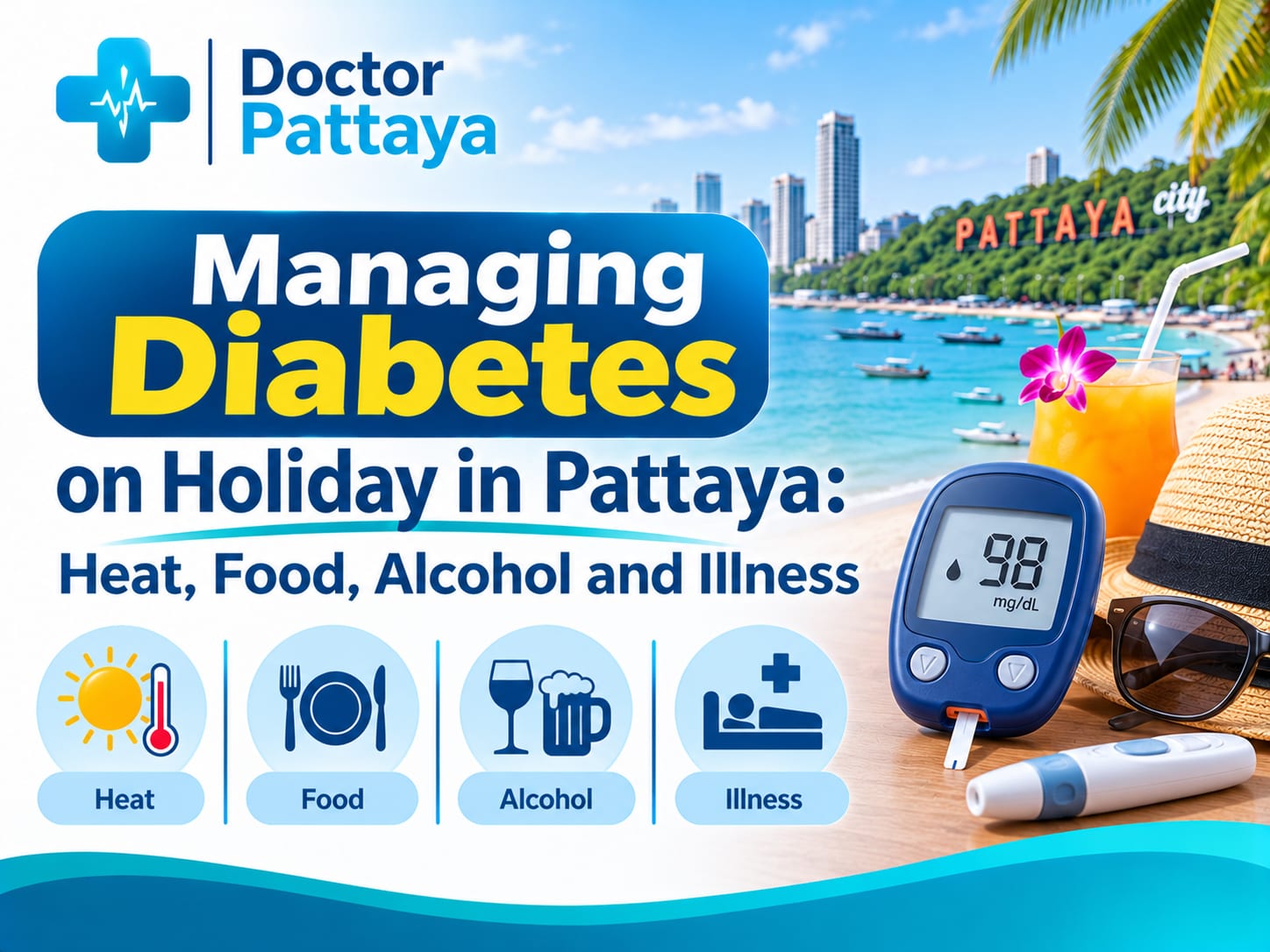
Managing diabetes on holiday in Thailand means dealing with heat that speeds up insulin absorption, Thai food with hidden carbs, alcohol that blocks your liver’s glucose recovery, and stomach bugs that can make your medication dangerous to take. The key risks are hypoglycaemia, dehydration, and diabetic ketoacidosis, especially if you are on insulin or an SGLT2 inhibitor. Most problems are preventable with the right preparation. If something goes wrong, Doctor Pattaya is open 24/7 for walk-in blood glucose, HbA1c, and ketone testing.
You packed your insulin in a cool bag. You wrote down your medication names. You were ready. Then Pattaya happened: 34-degree heat before 9 am, a full day walking Beach Road, a plate of pad thai that looked smaller than it was, and a couple of cold beers on an empty stomach. Your blood sugar is not behaving the way it does at home. That is completely normal here, and it does not have to derail your trip.
Thailand changes the rules for people with diabetes in ways a pre-travel review at home may not fully cover. Heat accelerates insulin absorption. Thai food carries a higher carbohydrate load than it looks. Alcohol in this climate hits differently. And a vomiting bug, which is not uncommon after a few days of eating out in Pattaya, can turn a manageable routine into a genuine medical situation fast. Here is what to watch for and what to do.

How Heat, Walking and New Routines Affect Blood Sugar in Pattaya
Pattaya is genuinely hot for most of the year. Temperatures regularly sit above 30°C, and if you are spending time at Jomtien beach, walking Pratumnak Hill, or doing anything outdoors in the afternoon, your body is working hard.
Heat increases insulin sensitivity and speeds up how quickly insulin absorbs from the injection site. A dose that worked predictably at home may act faster and stronger here. Avoid injecting into skin that has been in direct sun for a long time, as local blood flow changes may also affect absorption. Check your glucose more often on beach days and outdoor activity days, not just before meals.
Walking lowers blood sugar, and Pattaya involves a lot of it. A long afternoon along the seafront, a night out near Walking Street, or a day trip to a market all count. If you are more active than usual, your glucose may trend lower than expected by the end of the day.
Dehydration compounds both effects. When you are dehydrated, glucose becomes more concentrated in your blood, pushing readings up. But high blood sugar also makes you urinate more, which worsens the dehydration. This loop can build quickly in the heat. Drink water consistently, not just when you feel thirsty. If you take an SGLT2 inhibitor (empagliflozin, dapagliflozin, or canagliflozin), be extra cautious when you are losing a lot of fluid through sweat.
Eating Out in Pattaya Without Losing Control of Your Blood Sugar
Thai food is delicious and carbohydrate-heavy in ways that are not always obvious. Sticky rice has a very high glycaemic load. Pad thai is high in carbohydrate because of the rice noodles and sweet tamarind sauce. Mango sticky rice is dessert-level sugar. Thai iced tea (cha yen) contains condensed milk and spikes blood sugar sharply. Coconut-based curries, deep-fried dishes with sweet dipping sauces, and som tum with sugary dressing all carry more carbohydrate than their Western equivalents.
Lower-risk choices are easy to find. Grilled fish (pla pao) is excellent here. Clear tom yum soup without noodles is a solid option. Stir-fried vegetables with tofu or chicken, and plain jasmine rice in a controlled portion, give you much better glucose predictability than the noodle and fried dishes. Ask for sauces on the side. Order grilled over fried where you can. The hidden sugar usually sits in the sauce, not the protein.
Alcohol, Hypoglycaemia and the Overnight Risk
Alcohol is a separate risk category and it matters more in the Pattaya heat than at home. Alcohol blocks your liver’s ability to release glucose when your blood sugar drops. Hypoglycaemia can develop and persist through the night, even hours after your last drink. Heat and dehydration make this worse because both independently reduce your blood glucose buffer.
If you drink, eat properly before you do. Never skip a meal and drink instead. Check your blood sugar before bed if you have had more than a couple of drinks, and keep something sugary within reach of your bed. Spirits do not spike blood sugar the way beer or cocktails do, but the hypoglycaemia risk the morning after is real regardless of what you drank.
Low Blood Sugar at Night: What to Carry and What to Do in a Hotel
Hypoglycaemia is the most immediate risk during a Pattaya holiday. It can come on quickly: sweating, shakiness, confusion, heart racing. At 2 am in a hotel room, it needs an immediate response.
Take 15 grams of fast-acting carbohydrate and check your blood sugar again after 15 minutes. If you do not have glucose tablets, regular Coca-Cola (not diet) works. Thai orange juice works. A small packet of sweets from any 7-Eleven works. 7-Eleven is everywhere in Pattaya and open all night. If you are staying near Jomtien, Pratumnak, or anywhere along Beach Road, you are almost certainly within two minutes of one.
Carry glucose tablets or a sugary snack at all times. Do not rely on being near a shop. If you are on insulin, a glucagon kit is worth having even if you have never needed one, and your travel companion should know how to use it.
If a hypo does not resolve after two rounds of fast carbs, or if the person is confused and cannot swallow safely, that is an emergency. Doctor Pattaya can send a doctor to your hotel, or you can walk in. We are open 24 hours. If you are based in the south of the city, we are located near Bali Hai Pier in South Pattaya.
What to Do If You Are Vomiting or Cannot Eat
Gastroenteritis is common in Pattaya. Most cases resolve within a few days, though some last longer. For people with diabetes, the picture is more complicated.
If you are on Metformin, pause it while you are vomiting and unable to eat. Metformin carries a risk of lactic acidosis when you are dehydrated, and that risk increases sharply when you cannot take fluids orally. Restart it once you are eating and drinking normally.
If you are on an SGLT2 inhibitor, stop it when you are unwell and unable to eat. These drugs carry a specific risk of euglycaemic diabetic ketoacidosis (DKA), a dangerous build-up of acids in the blood. This form of DKA can occur even when your blood sugar appears normal, which makes it easy to miss. If you are on an SGLT2 and feel seriously unwell, nauseous, or confused, get tested rather than assuming a normal glucose reading means you are safe.
Check your blood sugar every two to four hours when sick if you are on insulin. Oral rehydration salts are better than plain water because they replace what vomiting takes out. If you cannot keep anything down for more than four hours, or if ketone testing shows moderate to high ketones, do not wait it out. Come in or call for a hotel visit.
When to Come to a Clinic: Blood Sugar Checks and Urgent Signs
Most blood sugar swings on holiday can be self-managed. Some cannot.
Come in the same day if your blood sugar stays above 15 mmol/L (270 mg/dL) and two correction doses have not brought it down. Come in if you have been vomiting for more than four hours and cannot keep fluids down. Come in if a hypo does not resolve after two attempts with fast carbs, or if you notice confusion in a travelling companion with diabetes. Come in if you have a cut or wound on your foot that looks infected or is not healing. Foot infections in people with diabetes can progress quickly in tropical heat.
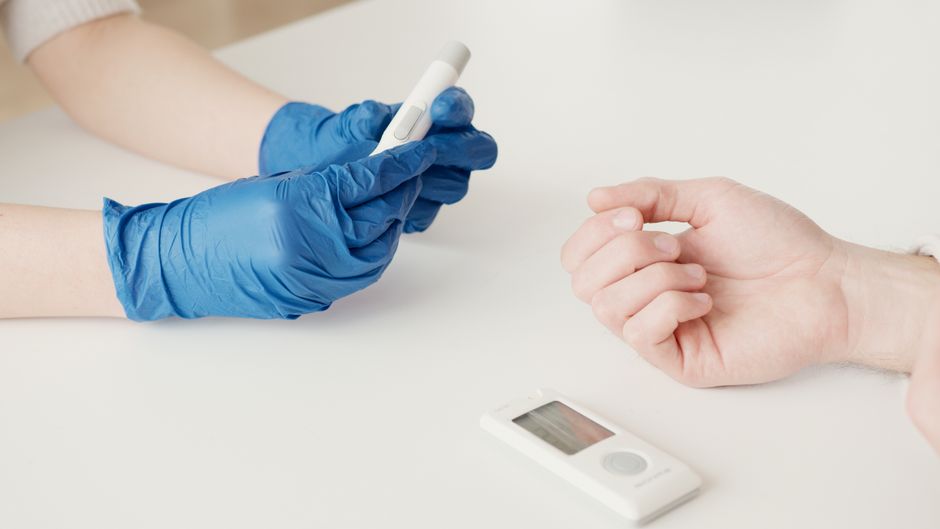
If you are an expat in Pattaya and have not had a diabetes review in some time, a fasting glucose and HbA1c test can be done without an appointment. These are point-of-care blood tests and you do not need to arrange anything in advance. Doctor Pattaya also covers hotel visits across Jomtien and surrounding areas if you cannot travel to us.
Insulin Storage in the Heat: A Separate Concern
Keeping insulin cool in Thailand is its own practical challenge. Insulin that has been exposed to high temperatures may lose potency before you notice a change in the vial. This guide focuses on managing blood sugar and medication risks once you are in Pattaya. For guidance on travel storage cases, hotel mini-bar storage, and what to do if your insulin supply is damaged or lost, see the advice on storing insulin in hot weather at the Doctor Pattaya emergency care page.
If you need a prescription to replace lost or damaged medication, a walk-in consultation with a doctor in South Pattaya can confirm local availability and issue a prescription on the same visit.
If your blood sugar is not responding normally, you are vomiting and on insulin or an SGLT2 drug, or you want a same-day glucose or HbA1c check while you are in Pattaya, Doctor Pattaya is open 24 hours a day, seven days a week. No appointment needed. Walk in at our South Pattaya clinic near Bali Hai Pier, or book a hotel visit anywhere across Pattaya, Jomtien, or Naklua. We carry out point-of-care blood glucose, HbA1c, and ketone testing on-site. Visit doctorpattaya.com to reach us.
Frequently Asked Questions
References
- Koivisto VA, Felig P. Effects of leg exercise on insulin absorption in diabetic patients. N Engl J Med. 1978;298(2):79-83. Cited in: Insulin absorption review, PMC.
- JDRF Australia. Type 1 diabetes and alcohol: why drinking can cause an overnight hypo.
- Frier BM, Schernthaner G, Heller SR. Hypoglycemia and cardiovascular risks. Diabetes Care. 2011;34 Suppl 2:S132-7.
The information in this article is for educational purposes only and does not constitute medical advice. It should not be used to self-diagnose or replace a consultation with a qualified physician. If you have concerns about your health, contact a licensed medical professional. For appointments at Doctor Pattaya, visit doctorpattaya.com.

Dr. Pipat Finn is the senior doctor at Doctor Pattaya Takecare Clinic, a 24/7 walk-in medical practice on South Pattaya Road, Chonburi, Thailand. They provide primary care, travel medicine, sexual health, vaccination, minor surgery, IV therapy, and emergency outpatient services for tourists, expatriates, and Pattaya residents. Languages: English and Thai. WhatsApp consultations: +66 95 073 5550. Call: +66 81 668 5557.