Clinically reviewed by Dr. Pipat Finn, M.D., Senior Doctor, Doctor Pattaya.
Last reviewed: November 2026
If you started a vaccine series before your trip and need the next dose while in Pattaya, you do not need to restart from scratch. For most multi-dose travel vaccines, you simply pick up where you left off. Bring whatever records you have, even a photo on your phone. A clinic can review your schedule, give the correct next dose, and provide written documentation to take home.
You booked the flights, got the first hepatitis B dose, and figured you would handle the rest when you returned. Then the trip stretched out, the schedule shifted, or Pattaya just got its hooks into you and two weeks became six. Now the second dose is due and your GP is twelve time zones away.
The short answer is: yes, a private clinic in Pattaya can continue your course. Here is what to bring, what to expect, and what to watch out for.

Vaccines That Come as a Course, Not a Single Dose
Several common travel vaccines require more than one injection given weeks or months apart. Hepatitis A is usually two doses. Hepatitis B is typically three doses, though some formulations use an accelerated schedule. Rabies pre-exposure prophylaxis, the kind you get before travelling rather than after a bite, is typically given as a two- or three-dose course depending on which schedule your provider used.
Typhoid is worth a separate mention. The injectable version is a single dose and poses no problem. The oral typhoid capsule series is different, and that matters: different oral formulations are not interchangeable. If your oral typhoid course lapsed, it may need restarting rather than continuing. Bring the original packaging if you still have it.
Stray dog encounters happen in Pattaya, particularly in quieter areas around Pratumnak Hill and along beach roads at night. If you were bitten or scratched and started rabies post-exposure treatment abroad, that series follows its own rules. See the timing section below, and do not delay if that applies to you.
What Records to Bring So a Clinic Can Give the Correct Next Dose
Bring whatever you have. A printed vaccine certificate is ideal. A GP letter, a vaccination app record, or a clear photo of your vaccine booklet on your phone all work. The key details are: the vaccine name, the brand if you know it, the lot number if it is recorded, the date of each previous dose, and the name of the clinic or provider who gave it.
The lot number helps confirm the product and batch. It is on the label your provider stuck in your booklet, or sometimes on a printed receipt. If you do not have it, that is not a reason to cancel: the doctor will work with what you have.
Yellow fever is worth raising separately. It is not a standard multi-dose series, but an International Certificate of Vaccination or Prophylaxis (ICVP), the yellow card, is required for entry to certain countries and must be stamped by an authorised centre. If yellow fever is part of your travel plan, ask the clinic in advance whether they are an authorised issuing centre or whether you need a referral.
Timing Windows: When a Dose Is Still Valid, and When a Course May Need Review
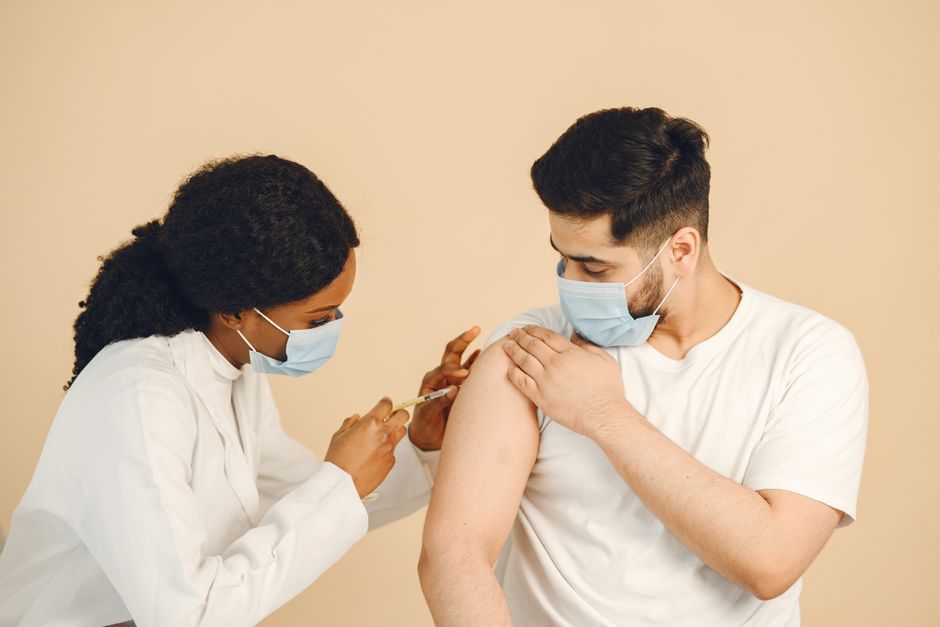
For most vaccines, a delayed dose does not invalidate earlier ones. You resume the series at the next dose. You do not go back to dose one. This principle is consistent across WHO and ACIP guidelines and applies even with significant delays.
Rabies post-exposure treatment is the important exception. If you are mid-course after a bite and have deviated substantially from the schedule, ACIP guidance recommends a blood test to check your antibody levels before continuing. This is not a reason to panic. It is a reason to come in and get assessed rather than try to manage the schedule yourself. An incomplete post-exposure course is a clinical matter, not an administrative one.
For most other vaccines, including hepatitis A and B, the same straightforward rule applies: earlier doses are not wasted, and the gap does not reset the clock.
Rabies in Pattaya: Why This Vaccine Has Its Own Rules
Thailand is a country where rabies remains a genuine risk. Stray dogs are present throughout Pattaya, including busy tourist areas near Walking Street and quieter residential streets in Naklua. Monkeys at certain viewpoints have also been known to bite.
If you were bitten or scratched before arriving in Pattaya and started post-exposure treatment at home or in another country, do not let the remaining doses lapse. The window between doses in a post-exposure course is tighter than in a pre-exposure series. If you are unsure whether your schedule is still on track, come in and have the doctor review it.
Doctor Pattaya’s rabies vaccination service runs around the clock. The consultation is the right starting point before any further doses are given. If you started rabies pre-exposure prophylaxis before your trip and simply need the next scheduled dose, that is simpler. Standard catch-up rules apply and no blood test is needed unless the schedule has gone significantly off course.
Vaccines Where Restarting Is Recommended, Not Optional
For the vast majority of vaccines, the advice is resume, not restart. But a few specific products are exceptions.
Oral typhoid is the clearest one. The capsule formulation requires doses on alternating days, and the full course must be completed within a strict window. If the timing was missed, the course is considered incomplete and a new course is typically recommended. The injectable typhoid vaccine does not have this issue.
Oral cholera vaccine (Dukoral) also has a defined administration window between doses. If that window has passed, the course may need to be restarted. Check the original product information or ask the doctor to confirm.
These exceptions aside, the general principle holds. Tell the doctor what you had, when you had it, and let them make the call.
Combining This Visit With Other Travel Vaccines
If you are coming in to continue a series, it is worth asking whether any other vaccines are due for your itinerary. Pattaya is a natural base for travel across Southeast Asia, and a quick review of your overall status at the same appointment takes very little extra time.
Vaccines commonly reviewed for travel in this region include hepatitis A and B, typhoid, Japanese encephalitis for longer rural stays, and influenza. If you are heading to Africa or South America after Thailand, yellow fever comes back into the picture. A 24-hour private clinic can handle most of this in a single visit.
For anything requiring a certificate from an authorised yellow fever centre, the doctor can advise on where to get that sorted before you fly.
Getting a Written Record to Take Home
Leave the appointment with a written record, not just a verbal confirmation. The document should include the vaccine name, brand, lot number, dose number in the series, date given, and the name and details of the administering clinician.
That is what your GP, travel health clinic, or occupational health provider back home needs to continue your care. Take a photo of the document the moment you receive it. Email it to yourself. Do not rely on the paper copy alone.
For expats who have been in Thailand for years and are picking up a half-finished course, the same applies. Keep the documentation in English and consistent. It makes continuity of care much cleaner whenever you move on. If you need a walk-in appointment in the meantime, Doctor Pattaya in Jomtien and Pratumnak Hill both cover hotel visits across the area.
If you have a vaccine dose due while you are in Pattaya, Doctor Pattaya’s 24-hour clinic in South Pattaya can review your records, confirm the correct next dose, and issue written documentation to take home. Walk-ins are welcome. Hotel visits are available across Pattaya, Jomtien, and Naklua. If your situation involves a rabies course or an animal bite, come in without delay.
Frequently Asked Questions
References
- World Health Organization. Rabies vaccines: WHO position paper. Weekly Epidemiological Record, No. 16, 2018, pp. 201-220.
- Centers for Disease Control and Prevention. General Best Practice Guidelines for Immunization: Timing and Spacing of Immunobiologics. 2024.
- Centers for Disease Control and Prevention. Rabies: Post-Exposure Prophylaxis. 2024.
- Immunize.org. Ask the Experts: Rabies. Immunization Action Coalition.
- Centers for Disease Control and Prevention. CDC Yellow Book 2024: Rabies. Chapter on Travel-Related Infectious Diseases.
- Advisory Committee on Immunization Practices (ACIP). Prevention of Hepatitis B Virus Infection in the United States. MMWR Recomm Rep. 2018;67(1):1-31.
The information in this article is for educational purposes only and does not constitute medical advice. It should not be used to self-diagnose or replace a consultation with a qualified physician. If you have concerns about your health, contact a licensed medical professional. For appointments at Doctor Pattaya, visit doctorpattaya.com.

Dr. Pipat Finn is the senior doctor at Doctor Pattaya Takecare Clinic, a 24/7 walk-in medical practice on South Pattaya Road, Chonburi, Thailand. They provide primary care, travel medicine, sexual health, vaccination, minor surgery, IV therapy, and emergency outpatient services for tourists, expatriates, and Pattaya residents. Languages: English and Thai. WhatsApp consultations: +66 95 073 5550. Call: +66 81 668 5557.