Clinically reviewed by Dr. Pipat Finn, M.D., Senior Doctor, Doctor Pattaya. Last reviewed: August 2026
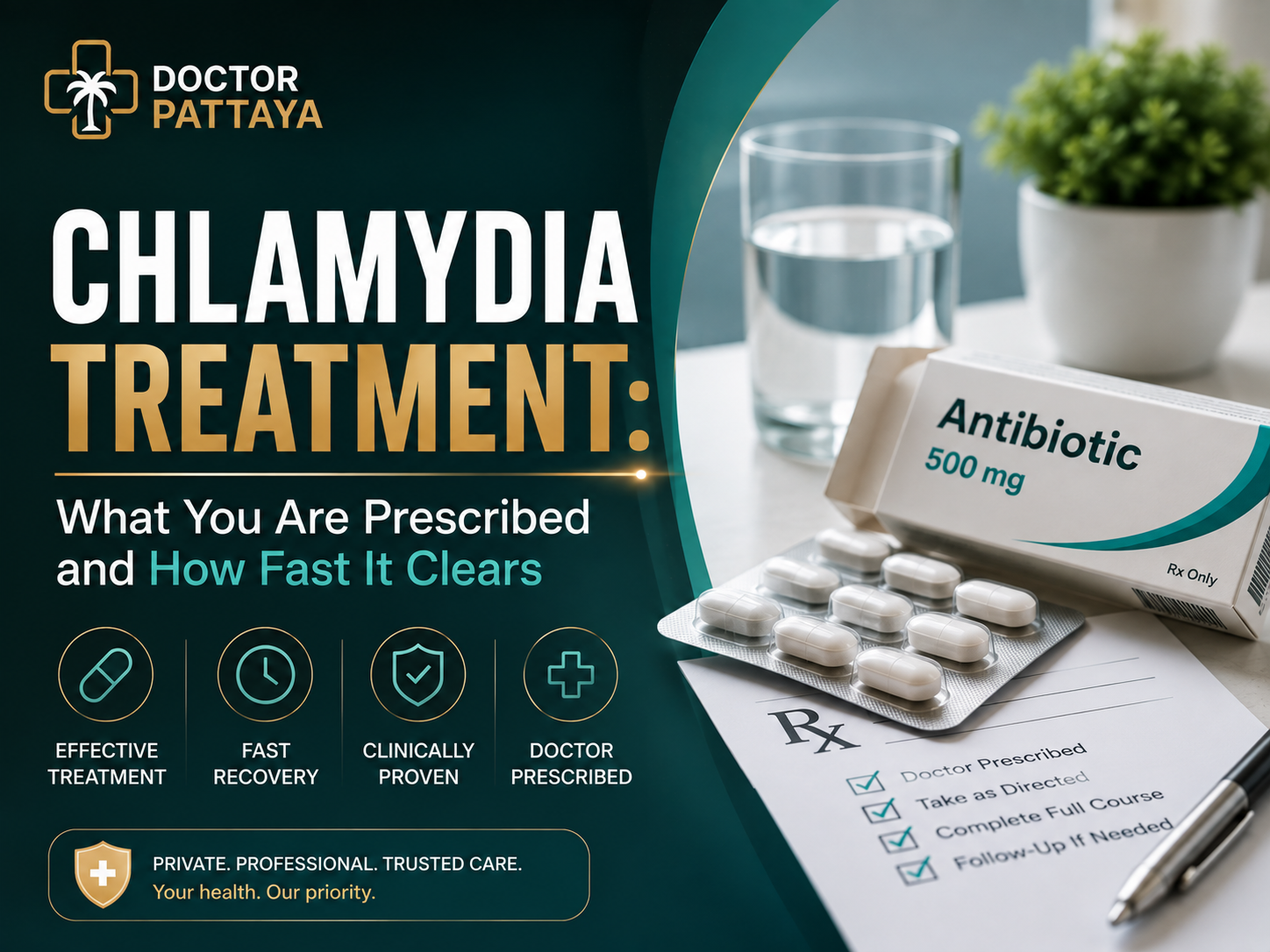
Chlamydia is a bacterial infection and it is curable with antibiotics. Most patients are prescribed a 7-day course of doxycycline 100mg twice daily. When taken correctly, it clears the infection in one to two weeks. You need to avoid sex until seven days after finishing the full course, and your partner needs treatment too.
You came to Pattaya for a good time, not to spend an afternoon in a clinic Googling antibiotic names on your phone. But here you are, and honestly, this is one of the easier things we deal with every single day. Chlamydia is one of the most common infections we test for at Doctor Pattaya, and it is completely curable. The treatment is straightforward, and most people are surprised by how little it disrupts their trip.
What catches people off guard is not the treatment itself. It is the questions that come after. Why did the doctor prescribe a 7-day course instead of the old single tablet? How fast does it actually work? Can you still go out while taking it? What happens if your partner is already on a flight home? This article answers all of that, plainly, without the lecture.
Why Chlamydia Needs a Specific Antibiotic
Not every antibiotic can clear this infection. Chlamydia lives inside your own cells, and only certain antibiotic types can reach it there. This is why your doctor will not just hand you any prescription, and why finishing the full course matters. Stopping early gives any remaining bacteria a chance to persist. Every dose counts.
Doxycycline vs Azithromycin: Which Will You Be Prescribed and Why
If you were expecting a single-tablet fix, you are not alone. A single dose of azithromycin used to be standard. Since 2021, updated guidance from the CDC has made doxycycline the preferred first-line chlamydia treatment for most people.
The reason is cure rate. For genital chlamydia, both drugs work well. For rectal chlamydia, doxycycline cures close to 100 percent of cases. Azithromycin cures roughly 74 percent of rectal infections, which is a gap that matters clinically. There are also growing concerns about resistance developing in the antibiotic class that azithromycin belongs to.
Azithromycin is still the right choice in certain situations: pregnancy, breastfeeding, or when completing a 7-day course is genuinely not possible. Your doctor chooses based on your specific situation, not habit.
| Doxycycline 100mg | Azithromycin 1g | |
|---|---|---|
| Dosing | Twice daily for 7 days | Single dose |
| Genital cure rate | Very high | Very high |
| Rectal cure rate | Close to 100% | Around 74% |
| Used in pregnancy | No | Yes |
| Main side effects | Nausea, sun sensitivity | Nausea, stomach upset |

How to Take Your Antibiotics Correctly
Take doxycycline with food and a full glass of water. This is not optional. Taking it on an empty stomach or lying down straight after can irritate your throat and food pipe. Take doses roughly twelve hours apart, morning and evening works well for most people.
Avoid sunbathing while on doxycycline. Your skin becomes more sensitive to UV light, and the Pattaya sun is not gentle. If you are spending time at Jomtien or Pratumnak Beach, cover up or use a strong SPF. Alcohol does not stop the antibiotic from working, but it does make nausea and dizziness worse. Keep it minimal during the course.
If you miss a dose, take it as soon as you remember. If it is almost time for the next one, skip the missed dose and carry on. Do not double up.
How Fast Chlamydia Treatment Works
Antibiotics start working within the first 24 to 48 hours. Symptoms like discharge or discomfort usually begin to ease within the first few days. Most patients feel noticeably better by day three or four. The infection is cleared by the end of the full seven-day course, sometimes a little sooner.
One thing that confuses a lot of patients: a positive test result shortly after finishing treatment does not mean the antibiotics failed. The urine and swab tests used for chlamydia can pick up genetic material from dead bacteria for three to four weeks after the infection has cleared. A positive result that soon after treatment almost always reflects dead bacterial material, not a live infection. Wait at least three to four weeks before any follow-up test. Retesting too early is one of the most common sources of unnecessary worry we see.
For a fuller breakdown of the timeline and what to expect at the clinic, our page on chlamydia treatment in Pattaya covers the process in more detail.
Pregnancy, Rectal Infections, and Throat Infections
If you are pregnant, your treatment changes. Doxycycline is not safe during pregnancy. Azithromycin is used instead, under clinical supervision. Tell your doctor before starting anything if you think you might be pregnant or are trying to conceive.
Rectal chlamydia is more common than most people expect, and it often causes no symptoms at all. It is one of the main reasons doxycycline has become the preferred treatment. If you have had receptive anal sex, tell your doctor. A rectal swab gives a more accurate result than a urine test for that site.
Throat chlamydia is also possible and is tested with a throat swab. Both sites use the same doxycycline course, but your doctor needs to know which sites to test so nothing gets missed.
After Treatment: What You Need to Do Next
No sex for seven days after finishing the full course. That means seven days after the last tablet, not seven days after starting. If you were given single-dose azithromycin, the same seven-day rule applies from the day you took it. This applies to all types of sex.
Your partner needs treatment too. Everyone you have had sex with in the past 60 days needs to be told, tested, and treated. We know this is complicated when partners are back home or have already left Thailand. Most countries have online partner notification services, and your home clinic or GP can help coordinate. We handle this kind of remote situation regularly in Pattaya. It is a normal conversation.
The CDC recommends retesting at three months after treatment. Not because the antibiotics fail, but because reinfection is common. Chlamydia can return quickly if a partner goes untreated or if there is a new exposure. If you are back in Thailand at the three-month mark, Doctor Pattaya can arrange that for you.
If you are sexually active and think you may be at higher risk of bacterial STIs, ask your doctor about Doxy-PEP, which is doxycycline taken after unprotected sex as a preventive measure. It is not right for everyone, but it is worth a conversation.
What If You Have More Than One Infection
Co-infection with gonorrhoea is common enough that we test for both routinely. Left untreated, both can cause serious complications: pelvic inflammatory disease in women, epididymitis in men. If both come back positive, you will be prescribed treatment for both at the same time. Gonorrhoea usually requires a separate antibiotic, typically an injection of ceftriaxone, alongside your doxycycline course.
If you have any symptoms including unusual discharge, pain, or swelling, ask for a full panel rather than a single test.
Getting Tested and Treated for Chlamydia in Pattaya
Walk into Doctor Pattaya any time of day or night. No appointment is needed. We run a urine test or self-collected swab, which is the most accurate way to test for chlamydia. Results and a prescription can often be sorted on the same visit, depending on the time of day.
We see patients from across the area: tourists staying in central Pattaya and Jomtien, expats in Naklua and Pratumnak, and visitors who found us through their hotel concierge. Every consultation is confidential. We will not contact your hotel, your travel company, or anyone else. If you cannot get to us, our doctors do hotel visits across Pattaya.
A 7-day antibiotic course does not mean seven days in bed. Most patients carry on with their trip as normal. Take the tablets twice a day with food, stay out of strong sun, go easy on the alcohol, and hold off on sex until the course is done.
If you need a chlamydia test and treatment in Pattaya, Doctor Pattaya is open 24 hours a day, seven days a week. Walk in to our South Pattaya clinic or book a doctor hotel visit. We offer same-day testing, confidential consultations in English, and prescriptions on the spot. No referral needed.
Frequently Asked Questions

Dr. Pipat Finn is the senior doctor at Doctor Pattaya Takecare Clinic, a 24/7 walk-in medical practice on South Pattaya Road, Chonburi, Thailand. They provide primary care, travel medicine, sexual health, vaccination, minor surgery, IV therapy, and emergency outpatient services for tourists, expatriates, and Pattaya residents. Languages: English and Thai. WhatsApp consultations: +66 95 073 5550. Call: +66 81 668 5557.