Clinically reviewed by Dr. Pipat Finn, M.D., Senior Doctor, Doctor Pattaya. Last reviewed: August 2026
Chlamydia and gonorrhea are both bacterial STIs spread through unprotected sex, and both can cause burning, discharge, or no symptoms at all. The only reliable way to tell them apart is a PCR test. Both are curable with the right antibiotics, but gonorrhea in Thailand now has serious drug-resistance issues that make self-treatment risky and professional diagnosis essential.
You had a good few nights in Pattaya. Maybe it was Walking Street, maybe a beach bar down in Jomtien, maybe just a late night you did not plan for. Now something feels off, and you are sitting here hoping this article tells you it is nothing. Sometimes it is nothing. But if there is any chance you picked up an infection, read this properly before you decide to wait it out.
Here is the honest answer upfront: chlamydia and gonorrhea can look almost identical, and either one can cause zero symptoms at all. Discharge colour, burning when you urinate, a bit of discomfort — none of that tells you which one you have. A test does. Both are bacterial, both are curable, and both are common in Pattaya’s high-transmission environment. What matters now is getting the right diagnosis and the right treatment.
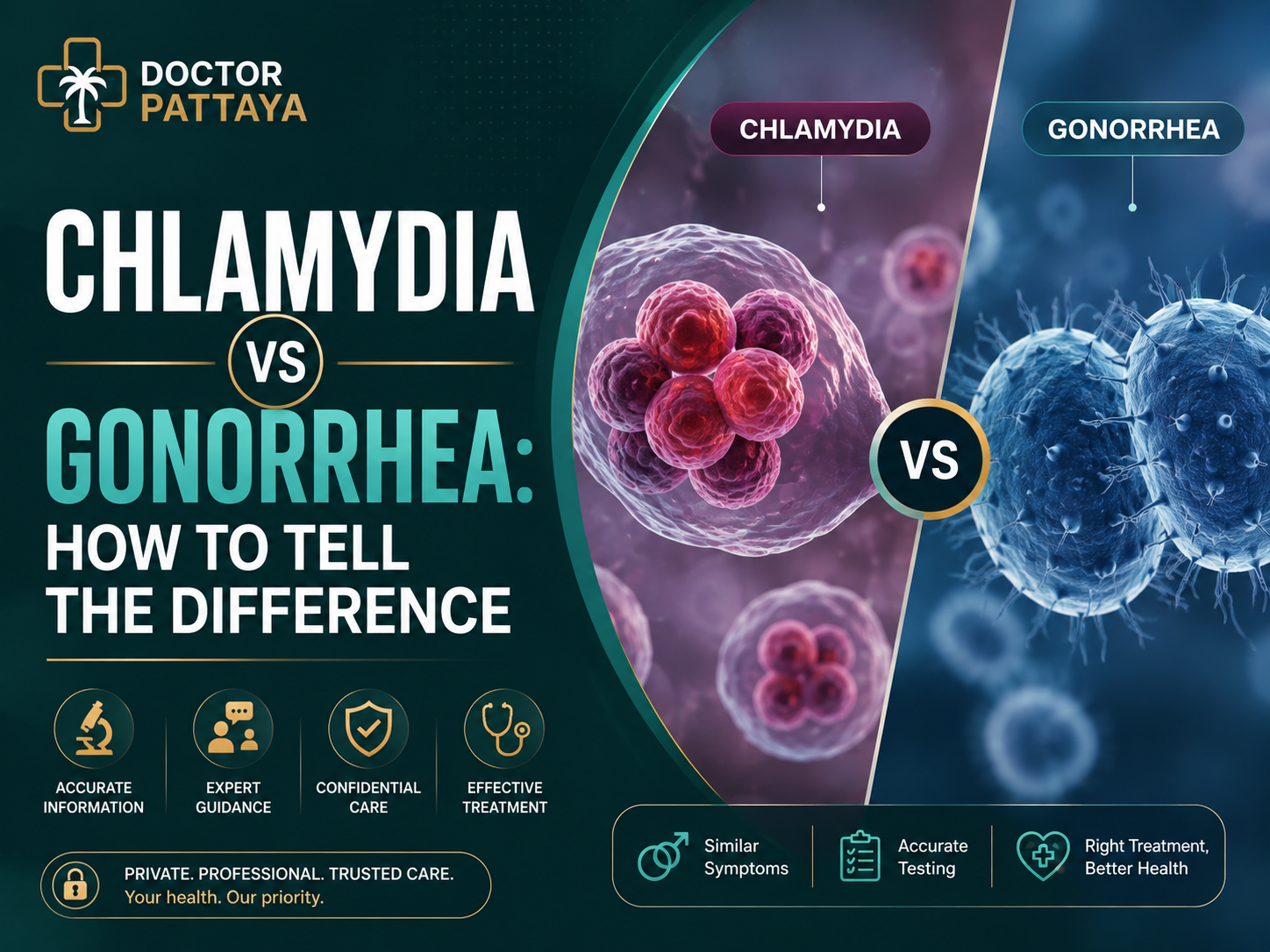
Chlamydia vs Gonorrhea — Symptom Comparison at a Glance
The most common question I get is: can I tell which one it is just by looking? Usually, no. But there are some patterns worth knowing.
Chlamydia tends to be quieter. Most people have no symptoms at all, especially in the early weeks. When symptoms do appear, they are often mild: a slight burn when urinating, clear or watery discharge, or a dull ache in the testicles for men.
Gonorrhea tends to be louder. Discharge is more often yellow, green, or white. Burning can be more intense. Symptoms often show up sooner, sometimes within a few days of exposure. But plenty of gonorrhea cases are also silent, particularly throat and rectal infections, which cause almost no symptoms and get missed unless someone asks for a full-site screen.
To understand how these two infections compare symptom by symptom, see our detailed guide on how to tell chlamydia from gonorrhea.
| Feature | Chlamydia | Gonorrhea |
|---|---|---|
| Caused by | Chlamydia trachomatis | Neisseria gonorrhoeae |
| Typical onset | 7 to 21 days after exposure | 2 to 7 days after exposure |
| Discharge (if present) | Clear, watery, or milky | Yellow, green, or white |
| Burning on urination | Mild to moderate | Moderate to severe |
| Throat infection symptoms | Usually none | Usually none — often missed |
| Rectal infection symptoms | Mild discharge or none | Discharge, discomfort, or none |
| Asymptomatic cases | Very common | Common |
| Curable with antibiotics | Yes | Yes, but resistance is a real issue |
Both Infections Can Hide — Especially in the Throat and Rectum
This is the part most people do not think about. Both chlamydia and gonorrhea can infect the throat and rectum, not just the genitals. Pharyngeal gonorrhea is almost always silent. No sore throat, no obvious signs. Rectal infections are often the same.
If you have had oral or anal sex without protection, a genital swab alone is not enough. You need swabs from the relevant sites. We say this every day at Doctor Pattaya: if you are only testing one area, you are only getting part of the picture.

Can You Have Both at the Same Time?
Yes, and it happens more often than people expect. Co-infection rates are estimated between roughly 10 and 40 percent. Both infections are transmitted the same way, so if conditions were right for one, they were right for both.
This matters for treatment. When we confirm or strongly suspect co-infection, the clinical standard is dual therapy: a ceftriaxone injection for gonorrhea alongside a course of doxycycline for chlamydia. At our clinic, if the picture suggests both are possible, we treat both. Testing for one without the other is not recommended. A proper STI panel screens for both from the same sample.
How Long After Exposure Should You Get Tested?
Timing matters, especially if you have a flight home in a few days. Gonorrhea can show up on a PCR test from around 5 to 7 days after exposure. Chlamydia takes a bit longer, typically 7 to 14 days before testing is reliable. Testing in the first 2 to 3 days will likely give you a false negative even if you are infected.
If it has been 5 or more days since exposure, come in. If fewer than 5 days and no symptoms, wait a few more days then come in. If you have symptoms right now regardless of timing, come in today.
Tourists heading home soon should not wait until they land. Doctor Pattaya is open 24 hours, 7 days a week. Walk in, get tested, get treated the same day if indicated, and fly out knowing the situation.
The Drug-Resistance Problem — Why Gonorrhea in Thailand Is Harder to Treat
This is the section most comparison articles skip, and it is the most important one if you are in Pattaya right now.
Gonorrhea has been developing antibiotic resistance for decades, and Thailand is one of the countries where this problem is most advanced. Ciprofloxacin resistance is documented in over 90 percent of gonorrhea cases in Thai surveillance data. Azithromycin resistance is also high. Ceftriaxone-resistant strains have been confirmed in Thailand.
What does this mean practically? The oral antibiotics you can pick up at a Pattaya pharmacy are very likely to fail against gonorrhea. You may feel slightly better, the infection may partially suppress, and then it comes back harder and more resistant than before. You may also pass it on without knowing.
The correct treatment for gonorrhea is an injectable ceftriaxone given at a clinic, not tablets from a pharmacy shelf. For chlamydia, doxycycline taken correctly over 7 days remains effective. These are not interchangeable.
Why Buying Antibiotics Over the Counter in Pattaya Is a Bad Idea
I understand the appeal. Pharmacies here are easy, cheap, and staff usually speak enough English to sell you what you ask for. No appointment, no awkward conversation, no waiting.
But self-treating gonorrhea with the wrong antibiotic does not clear the infection. It makes it resistant and pushes the problem forward. You may test negative temporarily and still be infectious. The next time treatment fails, the stakes are higher.
The other problem is that you cannot confirm which infection you have without a test. If you have chlamydia and take ciprofloxacin, nothing happens. If you have both and treat one, you still have the other. Come in, get the test, get the right drug. That is the whole solution.
How Chlamydia and Gonorrhea Are Diagnosed at the Clinic
Both infections are diagnosed using a PCR test. This is the most accurate method currently available and can detect both from the same urine sample or swab. You do not need a blood test for these two.
Depending on your exposure history, we may swab the urethra, throat, rectum, or cervix. The test itself takes seconds. Results typically come back within 24 to 48 hours.
If symptoms are strong and exposure was recent, I sometimes recommend treating on clinical grounds while awaiting confirmation. This approach is accepted practice when the clinical picture is clear, and for tourists with limited time it avoids the risk of flying home untreated.
What Happens If You Leave Either Infection Untreated?
Neither infection clears on its own. Without treatment, both can spread and cause real complications.
In women, untreated chlamydia or gonorrhea can move into the reproductive tract and cause pelvic inflammatory disease. This can lead to chronic pelvic pain, blocked fallopian tubes, and in some cases infertility. In men, untreated infection can cause epididymitis, a painful inflammation behind the testicle, and in some cases urethral scarring.
Gonorrhea can also spread into the bloodstream, causing joint pain, skin lesions, and in rare cases affecting the heart. Untreated STIs also raise the risk of HIV transmission. Prompt treatment prevents all of this.
After Your Diagnosis — Next Steps
If your test comes back positive, the first thing to know is that both infections are curable. You take the right antibiotic, complete the course, and follow up to confirm clearance.
You also need to let anyone you have been sexually active with recently know they should get tested. I know that is uncomfortable. But most people, when approached honestly, appreciate it.
Avoid sex until clearance is confirmed. For gonorrhea, that typically means a follow-up test one to two weeks after finishing treatment. For chlamydia, the same applies if there is any clinical doubt. Doctor Pattaya handles all of this as part of standard STI follow-up care, including chlamydia treatment in Pattaya for patients who test positive.
Worried you may have been exposed to chlamydia, gonorrhea, or both? Doctor Pattaya is open 24 hours a day, 7 days a week. Walk in or book a same-day appointment for confidential STI testing and treatment. We see tourists, expats, and residents across Pattaya, Jomtien, Naklua, and Pratumnak. Same-day results and treatment are available with no referral needed. If you cannot make it to the clinic, a doctor hotel visit can be arranged across Pattaya city.
FAQ

Dr. Pipat Finn is the senior doctor at Doctor Pattaya Takecare Clinic, a 24/7 walk-in medical practice on South Pattaya Road, Chonburi, Thailand. They provide primary care, travel medicine, sexual health, vaccination, minor surgery, IV therapy, and emergency outpatient services for tourists, expatriates, and Pattaya residents. Languages: English and Thai. WhatsApp consultations: +66 95 073 5550. Call: +66 81 668 5557.