Clinically reviewed by Dr. Pipat Finn, M.D., Senior Doctor, Doctor Pattaya.
Last reviewed: October 2026
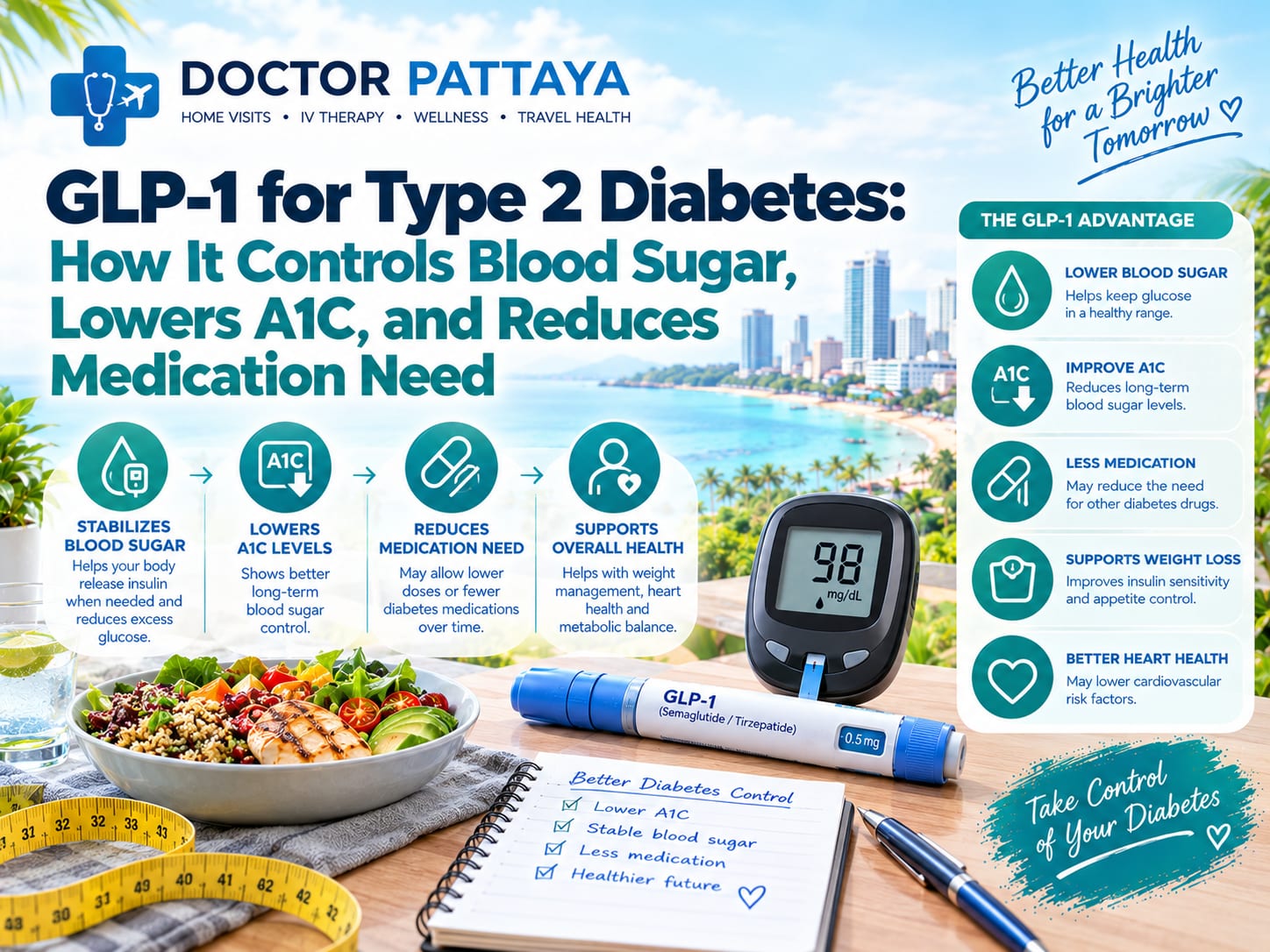
GLP-1 receptor agonists lower blood sugar by boosting insulin release, suppressing glucagon, and slowing how fast food leaves your stomach. Together, these three effects reduce both fasting and post-meal glucose levels, which lowers your A1C over time. In some patients with type 2 diabetes, this improvement allows other diabetes medications to be reduced, though any change to your regimen must be supervised by a doctor.
You have been managing type 2 diabetes for years. You take your tablets, you watch what you eat, and the numbers still are not where your doctor wants them. Maybe you are an expat who has settled in Pattaya and your specialist back home keeps bringing up GLP-1 injections. Maybe you flew into Bangkok, connected down here, and realised somewhere between the airport and your hotel that your blood sugar has been climbing all week. Either way, you have questions, and they are fair ones.
GLP-1 medications have genuinely shifted the way type 2 diabetes is managed. They do more than push glucose down. They work in a way that keeps the risk of pushing it too low very small, and for many people they make it possible to simplify the rest of their medication list over time. Here is what GLP-1 actually does, what you can realistically expect, and how to get proper care if you need it while you are here in Pattaya.

What GLP-1 Is and How It Controls Blood Sugar
GLP-1 stands for glucagon-like peptide-1. Your gut releases it naturally after a meal. In people with type 2 diabetes, this response is weaker than it should be. GLP-1 receptor agonists are medications that mimic this hormone, with a stronger and longer-lasting effect.
They work through three connected actions. First, they tell your pancreas to release more insulin, but only when your blood glucose is actually elevated. Once your levels return to normal, the signal stops. Second, they suppress glucagon, the hormone that tells your liver to release more sugar into your blood. Third, they slow the rate at which food leaves your stomach, so glucose from a meal enters your bloodstream more gradually.
The result is lower post-meal glucose, lower fasting glucose over time, and a steadily falling A1C. You can read more about the mechanism at our GLP-1 service page.
How Much Can GLP-1 Lower Your A1C
Your A1C reflects your average blood sugar over roughly three months. GLP-1 receptor agonists consistently reduce it, with the amount depending on the specific medication, the dose, your starting A1C, and how long you have been on treatment.
Phase 3 trials of semaglutide, one of the most studied GLP-1 medications, have shown A1C reductions of roughly 1.5 to 2.2 percentage points at therapeutic doses in patients with elevated baselines, with larger reductions seen at higher doses and higher starting A1C values. Patients starting with a lower A1C will see a smaller drop, which is expected. The evidence base here is strong, which is why GLP-1 has moved into first- or second-line treatment guidelines for many patients with type 2 diabetes.
GLP-1, Weight Loss, and Better Glucose Control
Weight loss is not just a side effect with GLP-1. It is directly connected to the blood sugar benefit. These medications reduce appetite and increase the feeling of fullness, which leads to eating less. As body weight falls, insulin resistance improves. That means your own insulin starts working more effectively.
So the A1C benefit comes from two places at once: the direct effect of the drug, and the downstream effect of losing weight. For overweight or obese patients with type 2 diabetes, this makes GLP-1 a particularly strong clinical choice. The weight-related glucose benefit keeps building over months, not just the first few weeks.
Can GLP-1 Reduce or Replace Your Other Diabetes Medications
For some patients, yes. As A1C falls and weight reduces, it can become possible to lower doses of other medications including metformin, sulphonylureas, or insulin. This is real, it is evidence-supported, and it is achievable for the right patient.
The key word is supervised. Reducing insulin without medical guidance is dangerous. Doses need to be adjusted carefully and tracked with regular glucose monitoring. Sulphonylureas carry their own low-blood-sugar risk and need to be tapered with care. No medication change should happen because you feel better. It should happen because your numbers support it and a doctor is watching those numbers with you.
If you are an expat managing diabetes in Pattaya without a regular local doctor, this is exactly the kind of care that needs a consistent clinical relationship. A single consultation is a starting point, not a substitute for proper follow-up.
Is GLP-1 Safe and What Is the Hypoglycaemia Risk
Used on its own, GLP-1 carries a very low risk of hypoglycaemia, meaning dangerously low blood sugar. Because the medication only stimulates insulin when glucose is elevated, it does not keep pushing levels down once you are in the normal range.
The picture changes when GLP-1 is combined with insulin or sulphonylureas. In that situation, the risk rises, and the doses of those other medications typically need reducing when GLP-1 is started. This is a clinical decision, not something to manage by feel.
Most patients starting GLP-1 experience nausea, loose stools, or reduced appetite in the first few weeks. These effects are most common at the starting dose and usually ease as the body adjusts. Starting at a lower dose and increasing gradually reduces these effects. Severe or persistent abdominal pain needs prompt medical review, as it can rarely indicate pancreatitis. GLP-1 medications should not be used by people with a personal or family history of medullary thyroid cancer or a condition called MEN2. Signs of very low blood sugar, including shaking, sweating, or confusion, need attention right away, particularly if you are also on insulin or a sulphonylurea.
Starting GLP-1 in Pattaya: What to Expect in the First Weeks
GLP-1 medications are started at a low dose and increased in steps over several weeks. Your doctor sets the schedule based on which medication you are prescribed and how you are tolerating it.
Blood glucose monitoring during this phase gives you early feedback before your A1C test reflects the full picture. A1C is a three-month average, so meaningful changes typically show at your first follow-up. Tracking fasting glucose at home in the meantime is useful and practical.
Having a clinic you can reach easily during the adjustment period matters. Nausea that becomes severe, vomiting that stops you keeping fluids down, or any sign of very low blood sugar should be reviewed the same day.
GLP-1 Diabetes Blood Sugar Control: Getting Treatment in Pattaya
GLP-1 injectable medications are prescription-only in Thailand and fall under Thai FDA special-control rules. You need a licensed physician to assess you and issue a prescription. You cannot buy these over the counter.
If you have run out of your supply mid-trip, or if you have recently moved to Pattaya and need a local doctor to take over your diabetes management, Doctor Pattaya can help. We are open around the clock, every day. A consultation covers your current medications, a review of your recent glucose and A1C data, and a clinical assessment to determine the right path forward.
For patients who need ongoing monitoring, we offer follow-up appointments and blood testing. If you are staying near Pratumnak Hill or along the Jomtien beachfront and cannot get to the clinic easily, a doctor hotel visit is available. Tourists who need a prescription bridge and expats building a longer-term care plan are both well looked after. You come in, we assess you, and we go from there.
Benefits Beyond Blood Sugar Control
A1C and glucose are not the only numbers that matter in type 2 diabetes. GLP-1 receptor agonists, particularly semaglutide, have shown cardiovascular risk reduction in major trials including SUSTAIN-6. These benefits include reductions in major adverse cardiac events in patients with established cardiovascular disease or significant cardiovascular risk factors, and they are separate from the blood sugar improvement.
This is part of why international guidelines have moved these medications up the treatment ladder for diabetic patients who also have heart disease or significant cardiovascular risk factors. The glucose benefit and the heart benefit come together in the same treatment.
If you have type 2 diabetes and want to know whether GLP-1 is right for you, or if you need a prescription while you are in Pattaya, Doctor Pattaya is open 24 hours a day, every day. We assess, prescribe, and monitor. We see tourists who need a short-term supply bridge and expats who want a consistent local doctor for ongoing diabetes management. Walk in to our clinic in South Pattaya, or request a doctor visit to your hotel in Jomtien, Naklua, or anywhere across Pattaya. No appointment needed.
FAQ
References
- Marso SP, et al. Semaglutide and Cardiovascular Outcomes in Patients with Type 2 Diabetes. N Engl J Med. 2016;375:1834-1844.
- American Diabetes Association. Standards of Medical Care in Diabetes 2024. Diabetes Care. 2024;47(Supplement 1).
- Drucker DJ. Mechanisms of Action and Therapeutic Application of Glucagon-like Peptide-1. Cell Metabolism. 2018;27(4):740-756.30189-X)
- Rodbard HW, et al. Semaglutide 2.0 mg versus 1.0 mg in type 2 diabetes (SUSTAIN FORTE): A randomised, double-blind trial. Lancet Diabetes Endocrinol. 2021;9(9):563-574. Reported via diatribe.org.
- Wilding JPH, et al. Once-Weekly Semaglutide in Adults with Overweight or Obesity (STEP 1). N Engl J Med. 2021;384:989-1002.
The information in this article is for educational purposes only and does not constitute medical advice. It should not be used to self-diagnose or replace a consultation with a qualified physician. If you have concerns about your health, contact a licensed medical professional. For appointments at Doctor Pattaya, visit doctorpattaya.com.

Dr. Pipat Finn is the senior doctor at Doctor Pattaya Takecare Clinic, a 24/7 walk-in medical practice on South Pattaya Road, Chonburi, Thailand. They provide primary care, travel medicine, sexual health, vaccination, minor surgery, IV therapy, and emergency outpatient services for tourists, expatriates, and Pattaya residents. Languages: English and Thai. WhatsApp consultations: +66 95 073 5550. Call: +66 81 668 5557.