Clinically reviewed by Dr. Pipat Finn, M.D., Senior Doctor, Doctor Pattaya.
Last reviewed: October 2026
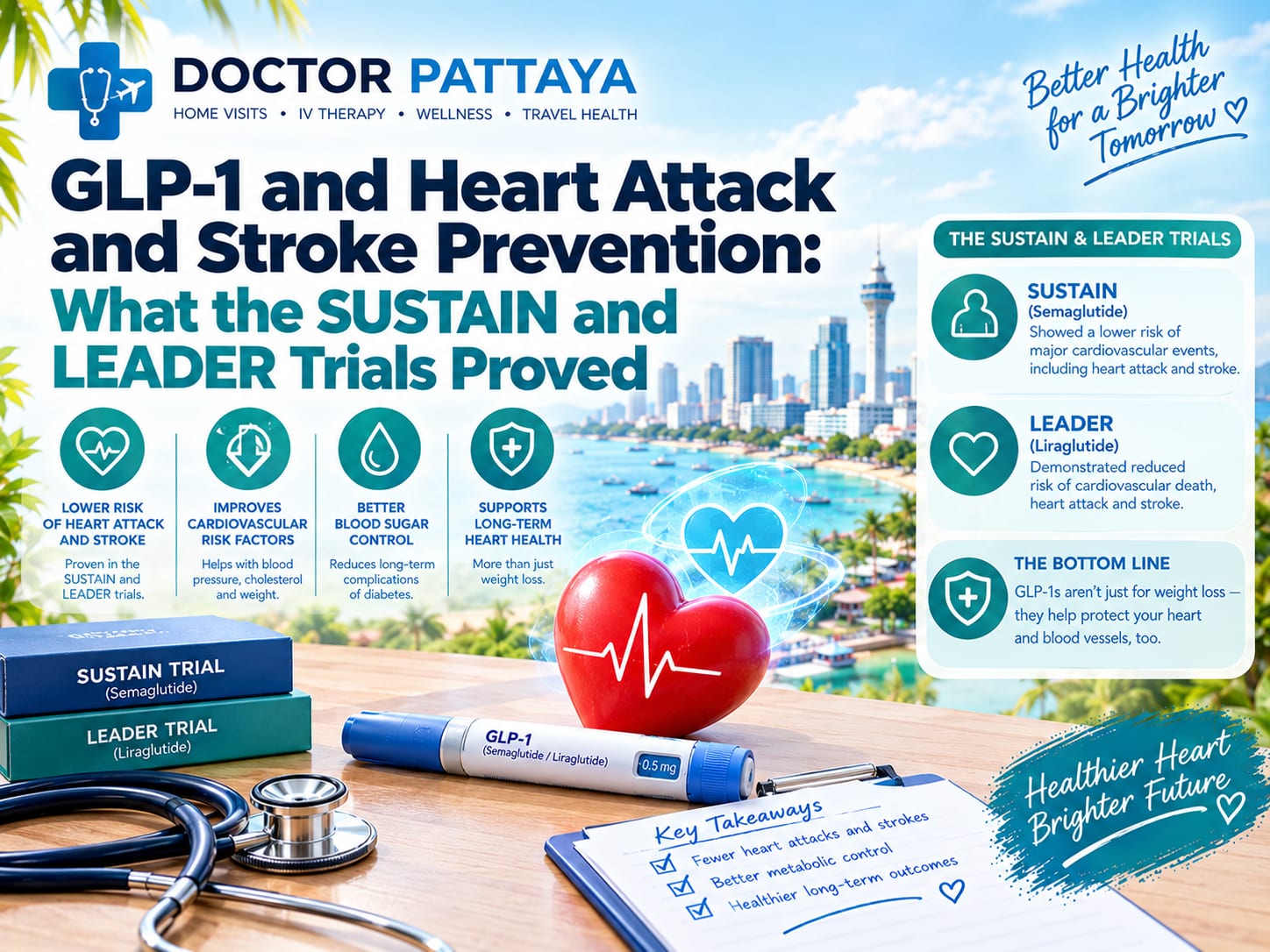
The LEADER trial showed liraglutide reduced major cardiovascular events by 13% in high-risk type 2 diabetes patients. SUSTAIN-6 showed semaglutide reduced those same events by 26%, with a notable drop in nonfatal stroke. The SELECT trial then extended this benefit to non-diabetic obese patients with established heart disease. These are not theoretical benefits. They are hard trial outcomes in tens of thousands of patients.
You have probably been in Pattaya long enough to know the lifestyle is not always kind to your heart. Good food, late nights, a few too many sundowners at a beach bar, and the kind of slow-burn stress that long-term expats carry around for years. Maybe your doctor back home flagged your cardiovascular risk. Maybe you had a scare. Now you are reading about GLP-1 drugs and wondering whether the science actually backs up the hype.
It does. Not for every drug in the class, and not as a replacement for proper cardiovascular care. But for semaglutide and liraglutide specifically, the trial evidence for reducing heart attacks and strokes is real, peer-reviewed, and significant enough that major cardiology guidelines have taken notice. Here is what the trials showed, who qualifies, and what it looks like practically if you want to explore this at a clinic in Pattaya.

What LEADER and SUSTAIN-6 Actually Showed
The LEADER trial tested liraglutide against placebo in over 9,000 adults with type 2 diabetes and high cardiovascular risk. The primary outcome was MACE: major adverse cardiovascular events, meaning nonfatal heart attack, nonfatal stroke, or cardiovascular death. Liraglutide reduced MACE by 13% compared to placebo. That result was statistically significant and shifted prescribing guidelines.
SUSTAIN-6 tested injectable semaglutide in roughly 3,300 patients with type 2 diabetes and high cardiovascular risk. The MACE reduction was 26%, with the strongest signal in nonfatal stroke, which dropped by 39%. Both trials used a hazard ratio below 1.0 as the benchmark, and both cleared it.
They were also designed specifically to satisfy regulatory requirements for cardiovascular safety. That is why the results carry weight beyond academic interest. These are not soft endpoints.
Not All GLP-1 Drugs Are Equal
This is the part that matters most and gets glossed over. GLP-1 receptor agonist is a drug class, not a single drug. Some members have proven cardiovascular benefit. Some do not.
Liraglutide and semaglutide have the strongest evidence. LEADER and SUSTAIN-6 are the landmark trials. The SELECT trial in 2023 then tested once-weekly semaglutide in obese, non-diabetic adults with established cardiovascular disease and found approximately a 20% MACE reduction, confirming the benefit extends beyond patients with diabetes.
In contrast, lixisenatide and albiglutide showed neutral cardiovascular outcomes in their respective trials. No significant harm, but no significant benefit either. If someone tells you all GLP-1 drugs protect your heart, that is not accurate. The cardioprotective effect appears specific to certain agents, particularly semaglutide and liraglutide, at the doses studied in the cardiovascular outcome trials.
How GLP-1 Drugs Actually Protect the Heart and Brain
Most people assume the cardiac benefit comes from weight loss and better blood sugar control. Those do contribute. But a 2025 mediation analysis of the SELECT trial found only around one-third of the MACE benefit was attributable to changes in waist circumference. The rest appeared to come from other mechanisms.
Current evidence points toward direct anti-inflammatory effects on blood vessel walls, reduced progression of atherosclerosis, lower blood pressure, and improvements in lipid levels. These are often called pleiotropic cardiovascular effects: benefits beyond the drug’s primary metabolic action.
This distinction matters clinically. The cardiovascular protection is not simply a roundabout way of achieving what a good diet and exercise programme would achieve. In the LEADER trial, the event curves between drug and placebo separated gradually over time, consistent with a slow atherosclerosis-modifying effect. This is a long-term investment, not a short-term fix.
Who Qualifies for GLP-1 Cardiovascular Therapy Beyond Diabetes
Until SELECT reported in 2023, the cardiovascular benefit was largely limited to patients with type 2 diabetes and established or high cardiovascular risk. SELECT changed that. The trial enrolled 17,604 adults who were obese but had no diabetes diagnosis, all with established cardiovascular disease. Semaglutide reduced MACE by approximately 20% in that population.
This matters for a lot of expats and long-term residents here. If you are carrying extra weight, have had a previous heart event, and do not have a diabetes diagnosis, you may still fall within the population where trial evidence supports GLP-1 therapy for cardiovascular risk reduction. Secondary prevention, reducing the risk of a second event after a first, is now a legitimate clinical indication.
The starting point is always a proper cardiovascular risk assessment, not just a conversation about weight loss. That assessment is available at Doctor Pattaya, where a doctor can review your history, run baseline bloods, and help you work out whether GLP-1 therapy fits your situation.
GLP-1 After a Stroke: Secondary Prevention Evidence
If you have already had a stroke, your risk of another one is meaningfully elevated. Observational data presented at the AHA Scientific Sessions 2024 from a Mayo Clinic analysis showed that stroke survivors prescribed GLP-1 receptor agonists or SGLT2 inhibitors had substantially lower rates of subsequent heart attack and death over a follow-up period of roughly three years. These were observational findings, not randomised controlled trial data, so they need to be interpreted carefully. But the direction of effect is consistent with what LEADER and SUSTAIN-6 showed mechanistically.
For anyone who has already had a stroke and is managing ongoing risk, this adds to the case for discussing GLP-1 therapy with an internist or cardiologist. It does not replace antiplatelet therapy, blood pressure control, or the other pillars of secondary prevention. It is an additional tool with a credible evidence base.
Getting GLP-1 Safely in Pattaya
Injectable GLP-1 drugs were reclassified in Thailand in September 2026 as special-control medicines. They now require a doctor’s prescription and must be dispensed by a licensed pharmacist. You cannot legally buy them over the counter, and you should not be buying them from unverified online sources or informal markets.
There is a documented counterfeit GLP-1 problem in Thailand. Using a fake or improperly stored product carries real risks, including dosing errors and infection from contaminated pens. This is not a hypothetical concern.
At Doctor Pattaya, a GLP-1 consultation includes a full cardiovascular risk review before any prescription is issued. We check your medical history, run baseline blood tests, assess your eligibility based on current evidence, and ensure you receive a genuine product from a verified supply chain. Ongoing monitoring is part of the service, because starting a GLP-1 drug and then going months without follow-up is not responsible prescribing. GLP-1 receptor agonists are not suitable for everyone. People with a personal or family history of medullary thyroid cancer or multiple endocrine neoplasia type 2 should not use them, and anyone who develops severe abdominal pain, persistent vomiting, or signs of an allergic reaction while taking them should seek medical attention promptly.
For expats based near Jomtien or Pratumnak Hill, both areas are covered under our doctor consultation service in South Pattaya. You can also find more detail on the trial evidence on our dedicated GLP-1 page. If you are visiting from Naklua or the north end of town, our North Pattaya clinic can also arrange consultations. Come in, talk to a doctor, and get a proper assessment before any prescription is written.
Thinking about GLP-1 therapy for cardiovascular protection? Doctor Pattaya offers GLP-1 consultations with a full cardiovascular risk assessment, baseline blood testing, and access to genuine prescription-only semaglutide and liraglutide products. Whether you are an expat managing long-term heart risk or a visitor who wants a proper medical opinion before starting treatment, we are open 24/7 in South Pattaya. Walk in, or contact us to arrange a hotel visit across Pattaya, Jomtien, or Naklua. A prescription is only issued after a proper clinical assessment.
Frequently Asked Questions
References
- Marso SP, et al. Liraglutide and Cardiovascular Outcomes in Type 2 Diabetes (LEADER Trial). New England Journal of Medicine. 2016;375(4):311-322.
- Marso SP, et al. Semaglutide and Cardiovascular Outcomes in Patients with Type 2 Diabetes (SUSTAIN-6). New England Journal of Medicine. 2016;375(19):1834-1844.
- Lincoff AM, et al. Semaglutide and Cardiovascular Outcomes in Obesity without Diabetes (SELECT Trial). New England Journal of Medicine. 2023;389(24):2221-2232.
- Deanfield J, et al. Semaglutide and cardiometabolic risk factors in obesity without diabetes: a mediation analysis of the SELECT randomised trial. The Lancet. 2025.
- Sheffeh MA, et al. GLP-1 RA and SGLT2 inhibitors in stroke survivors (Mayo Clinic analysis). Presented at American Heart Association Scientific Sessions 2024.
- American College of Cardiology. SELECT: Semaglutide Reduces Risk of MACE in Adults With Overweight or Obesity. ACC.org. 2023.
The information in this article is for educational purposes only and does not constitute medical advice. It should not be used to self-diagnose or replace a consultation with a qualified physician. If you have concerns about your health, contact a licensed medical professional. For appointments at Doctor Pattaya, visit doctorpattaya.com.

Dr. Pipat Finn is the senior doctor at Doctor Pattaya Takecare Clinic, a 24/7 walk-in medical practice on South Pattaya Road, Chonburi, Thailand. They provide primary care, travel medicine, sexual health, vaccination, minor surgery, IV therapy, and emergency outpatient services for tourists, expatriates, and Pattaya residents. Languages: English and Thai. WhatsApp consultations: +66 95 073 5550. Call: +66 81 668 5557.