Clinically reviewed by Dr. Pipat Finn, M.D., Senior Doctor, Doctor Pattaya.
Last reviewed: October 2026
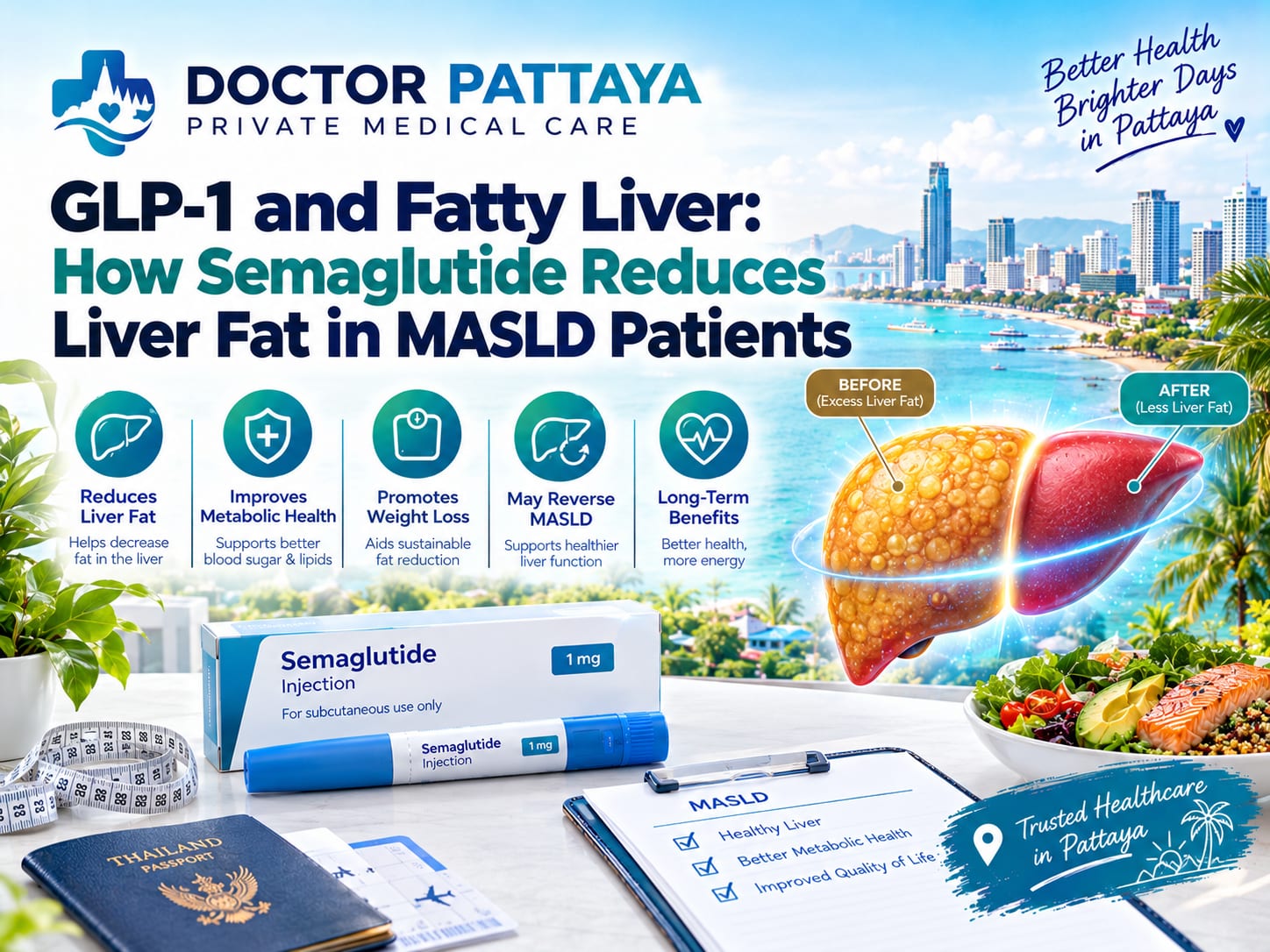
GLP-1 receptor agonists, particularly semaglutide 2.4 mg, have strong trial evidence for reducing liver fat in metabolic dysfunction-associated steatotic liver disease (MASLD). In August 2025, the FDA granted accelerated approval for semaglutide in MASH patients with moderate-to-advanced fibrosis, based on the ESSENCE Phase 3 trial. Treatment starts with a blood panel and liver assessment, not a prescription pad. If you have had a fatty liver finding on ultrasound in Thailand, a staged workup is the right first move.
You had a routine health check, or maybe a scan picked something up during a medical trip through Thailand. The doctor mentioned "fatty liver" and now you are wondering what that actually means and whether a GLP-1 injection is what you need. It is a reasonable question, and the answer depends on more than what showed up on the ultrasound.
Fatty liver sits on a spectrum. Some people have simple fat accumulation with no inflammation and no scarring. Others have progressed to a stage where the liver is actively inflamed, and that is where GLP-1 therapy, specifically semaglutide, has its strongest evidence. This article walks you through the difference, what the 2025 trial data actually shows, and what a first appointment looks like if you are in Pattaya and want to know your options.

What Is the Difference Between MASLD, MASH, and Simple Steatosis?
Think of fatty liver as a ladder. The bottom rung is simple hepatic steatosis: fat in the liver cells with no significant damage. Most people found at this stage do well with lifestyle changes alone.
Higher up is MASLD, metabolic dysfunction-associated steatotic liver disease. This is the umbrella term for liver fat that comes with metabolic risk factors: excess weight, insulin resistance, high blood sugar, or raised triglycerides. Most adults with a fatty liver finding in Thailand will fall into this category.
At the top is MASH, metabolic dysfunction-associated steatohepatitis. Here the liver is not just fatty, it is inflamed. Over time, repeated inflammation leads to fibrosis, which is scarring of the liver tissue. This is the stage where serious long-term consequences begin, and where GLP-1 therapy has the most evidence.
Who Gets Fatty Liver Disease and Why Does It Matter?
Fatty liver is strongly linked to metabolic syndrome: excess abdominal fat, high blood sugar, raised blood fats, and high blood pressure. It is very common in Thailand, and it often has no symptoms until fibrosis is already present.
One important point for patients here: people of Asian heritage, including Thai nationals and long-term residents, can develop significant MASLD at body weights that would not raise concern in Western clinical guidelines. If you are relatively lean but have metabolic risk factors, a fatty liver finding is still worth taking seriously.
For expats and long-stay visitors in Pattaya, the combination of alcohol exposure, a high-carbohydrate local diet, disrupted sleep, and reduced physical activity creates a risk cluster that can speed up hepatic steatosis. It is not any one factor. It is the combination.

How Is Fatty Liver Severity Assessed Before Starting GLP-1?
A fatty liver on ultrasound tells you fat is there. It does not tell you how much inflammation or fibrosis is present. Staging that is the critical step before any treatment decision.
The first tests are a liver enzyme panel, specifically ALT and AST, which are your liver’s inflammation markers, alongside a FIB-4 score. The FIB-4 is calculated from your age, ALT, AST, and platelet count. It gives a non-invasive fibrosis estimate without a biopsy. A low FIB-4 is reassuring. A high one warrants further evaluation, usually with a fibroscan or, in some cases, a liver biopsy.
At Doctor Pattaya, a same-day blood panel covers ALT, AST, and the values needed for FIB-4 scoring. Ultrasound is also available to assess the degree of steatosis. This is the workup you need before anyone puts a prescription in your hand.
What Does the Latest Evidence Say About GLP-1 Fatty Liver Steatosis Treatment?
The ESSENCE Phase 3 trial, published in 2025, is the most important piece of evidence on this topic right now. It tested semaglutide 2.4 mg weekly against placebo in adults with MASH and moderate-to-advanced liver fibrosis, specifically F2 or F3 stage.
The trial showed meaningful improvements in liver histology and liver fibrosis scores. Participants also lost an average of around 10.5% of body weight, which compounds the liver benefit. Based on these results, the FDA granted accelerated approval for semaglutide 2.4 mg as a treatment for MASH with F2 or F3 fibrosis in August 2025.
For earlier-stage MASLD without significant fibrosis, the evidence is less definitive. GLP-1 therapy can still reduce liver fat as measured by MRI, and improvements in liver enzymes are commonly seen. But the evidence for reversing disease at the earliest stages is not as strong, and lifestyle intervention remains the foundation at that stage.
How Does GLP-1 Reduce Liver Fat?
GLP-1 receptor agonists reduce liver fat through more than just weight loss. Weight loss alone does reduce liver fat significantly, and the roughly 10.5% body weight reduction seen in the ESSENCE trial accounts for a large part of the benefit.
There are also effects on the liver that appear independent of weight. Evidence suggests semaglutide reduces the liver’s production of new fat from carbohydrates and may lower hepatic inflammation. Insulin signalling in liver cells also appears to improve.
In plain terms: semaglutide hits liver fat from several directions at once. That is why liver benefits in trials tend to be larger than weight loss alone would predict.
GLP-1 for Fatty Liver in Pattaya: Who Is a Good Candidate?
The strongest candidates are people with confirmed MASH and F2 or F3 fibrosis on staging. That is where the 2025 FDA approval sits, and where the evidence is clearest.
People with MASLD but no significant fibrosis may still benefit, particularly if they have struggled to lose weight through diet and exercise, or if they have type 2 diabetes or significant insulin resistance alongside their liver disease. The decision is individual and should be based on your full metabolic picture, not just one scan result.
Some people should not start semaglutide at all. These include anyone with a personal or family history of medullary thyroid carcinoma or multiple endocrine neoplasia type 2, or known hypersensitivity to the drug. Per the FDA label, these are listed contraindications. Pregnancy is a separate concern: the label advises stopping semaglutide when pregnancy is recognised, and at least two months before a planned pregnancy because of the drug’s long half-life. A history of pancreatitis is a warning rather than a listed contraindication, but the label instructs stopping the drug if pancreatitis is suspected and not restarting if it is confirmed. Anyone with these conditions should discuss the risks with a doctor before starting treatment.
Starting GLP-1 Treatment for Fatty Liver at Doctor Pattaya
A first appointment covers the same ground whether you are a tourist passing through or an expat based on Pratumnak Hill who has been putting this off for months. You need a liver function blood panel, a FIB-4 calculation, and an ultrasound assessment. Those results guide the conversation about whether GLP-1 is the right next step.
If treatment is appropriate, semaglutide starts at a low dose and is titrated upward over several weeks. This dose escalation approach manages tolerability, because the most common side effects are concentrated in the escalation phase. Going slowly reduces how disruptive that phase feels.
Ongoing monitoring includes repeat liver enzyme checks when clinically indicated, weight tracking, and a review of metabolic markers. Tourists here long enough for the initial workup can start treatment and leave with lab results and a documented titration plan for their doctor back home to continue. For those based locally, the full programme runs through our GLP-1 service at Doctor Pattaya.
Side Effects, Monitoring, and What to Expect on GLP-1
The most common side effects of semaglutide are gastrointestinal: nausea, diarrhoea, constipation, and occasionally vomiting. Based on the ESSENCE trial, these effects are most pronounced during dose escalation and tend to settle at maintenance dose. A meaningful proportion of patients stop GLP-1 therapy within the first year due to tolerability, and that is worth knowing before you start.
Smaller meals, avoiding heavy or fatty food in the early weeks, and not pushing through dose increases too quickly all help. Slowing the titration is not failure. It is just how this drug works for some people.
Liver enzyme monitoring is not required on a fixed schedule per current AASLD guidance unless there is a specific clinical reason. Your doctor will advise if your baseline results call for more frequent checks.
Ready to find out where you actually sit on the fatty liver spectrum? Doctor Pattaya runs same-day liver function panels, FIB-4 scoring, and ultrasound assessment at our clinic in South Pattaya. If GLP-1 therapy is the right next step, we can start the assessment and titration plan the same visit. We are open 24 hours a day, seven days a week. Walk in or contact us to arrange an appointment. Doctor hotel visits are also available across Pattaya, Jomtien, and Naklua if you would rather be seen where you are staying.
FAQ
References
- Sanyal AJ, Newsome PN, Kliers I, et al. Semaglutide in Metabolic Dysfunction-Associated Steatohepatitis. N Engl J Med. 2025;392:2089-2099. doi:10.1056/NEJMoa2413258
- FDA. FDA Approves Wegovy (semaglutide) 2.4 mg for Noncirrhotic MASH with Fibrosis Stages F2-F3. August 15, 2025.
- European Association for the Study of the Liver (EASL). EASL-EASD-EASO Clinical Practice Guidelines on the Management of Metabolic Dysfunction-Associated Steatotic Liver Disease. Journal of Hepatology. 2024.
- Rinella ME, et al. A multisociety Delphi consensus statement on new fatty liver disease nomenclature. Hepatology. 2023.
- Novo Nordisk. FDA prescribing information for Wegovy (semaglutide) injection. U.S. Food and Drug Administration. 2025.
- Younossi ZM, et al. Global epidemiology of nonalcoholic fatty liver disease. Hepatology. 2016.
The information in this article is for educational purposes only and does not constitute medical advice. It should not be used to self-diagnose or replace a consultation with a qualified physician. If you have concerns about your health, contact a licensed medical professional. For appointments at Doctor Pattaya, visit doctorpattaya.com.

Dr. Pipat Finn is the senior doctor at Doctor Pattaya Takecare Clinic, a 24/7 walk-in medical practice on South Pattaya Road, Chonburi, Thailand. They provide primary care, travel medicine, sexual health, vaccination, minor surgery, IV therapy, and emergency outpatient services for tourists, expatriates, and Pattaya residents. Languages: English and Thai. WhatsApp consultations: +66 95 073 5550. Call: +66 81 668 5557.