Clinically reviewed by Dr. Pipat Finn, M.D., Senior Doctor, Doctor Pattaya.
Last reviewed: October 2026
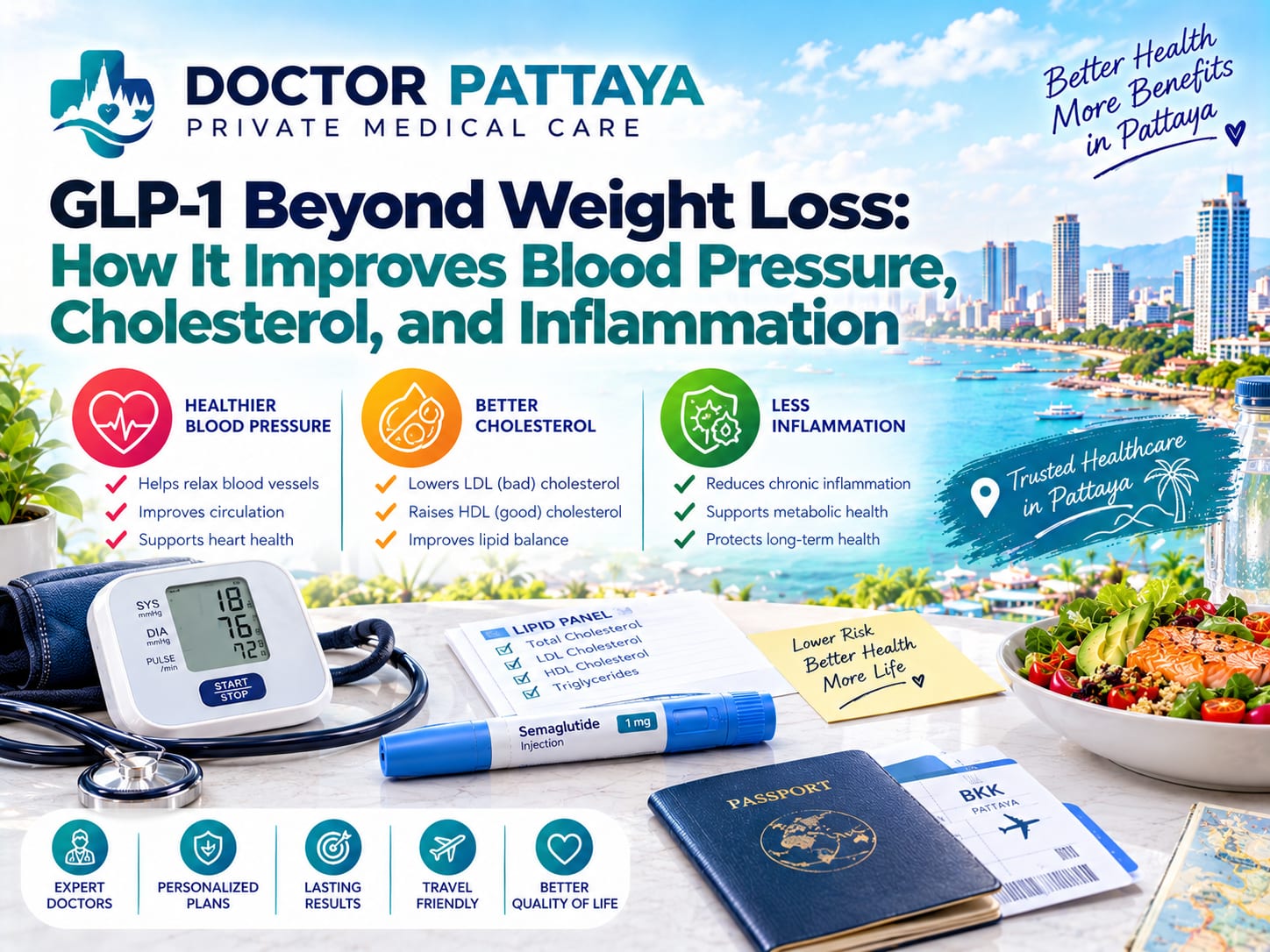
GLP-1 receptor agonists like semaglutide and tirzepatide do more than lower your weight. Clinical trials show meaningful improvements in systolic blood pressure, LDL cholesterol, triglycerides, and inflammatory markers like CRP. Some of these effects appear independent of weight loss itself. If you have metabolic syndrome or elevated cardiometabolic risk, tracking these markers before and during treatment tells you whether the medication is actually working.
You started GLP-1 medication and the scale is moving. Good. But your doctor back home mentioned your blood pressure and cholesterol were worth watching too, and now you are a few weeks into a stay in Pattaya wondering whether anyone here can actually check those numbers for you. The answer is yes, and this article explains what to look for and why it matters.
GLP-1 receptor agonists, semaglutide and tirzepatide being the two most common right now, affect your blood vessels, your liver, and your immune system in ways that can shift your metabolic markers even before significant weight loss occurs. What those markers are, what the evidence actually shows, and how to track them properly is what we are covering here.
The Metabolic Markers That Matter on GLP-1
Knowing which numbers to watch makes the rest of this much easier to follow.
Systolic blood pressure is the top number in a reading. It reflects the force on your artery walls when your heart beats, and sustained elevation raises your risk of heart attack and stroke.
LDL cholesterol is the type linked to plaque buildup inside artery walls. Triglycerides are fats in your blood that rise with poor diet, excess weight, and insulin resistance. HbA1c reflects your average blood sugar over roughly three months. CRP, or C-reactive protein, is a marker of low-grade inflammation throughout the body.
These five, alongside liver enzymes and kidney function, form a standard cardiometabolic panel. If you are starting GLP-1 treatment and have not had these checked recently, that is your first step.
How GLP-1 Improves Blood Pressure
The blood pressure benefit is real and fairly consistent across trials. In the SURPASS-2 trial, tirzepatide produced systolic blood pressure reductions of roughly 5 to 6.5 mmHg from baseline. Semaglutide trials show similar reductions.
Part of this comes from weight loss. Less body fat means less strain on the cardiovascular system. But GLP-1 receptors also sit directly on blood vessel walls, and activating them appears to reduce vascular inflammation and improve endothelial function. The endothelium is the thin lining inside your vessels. When it works well, your vessels dilate and contract properly.
There is also evidence that GLP-1 receptor agonists promote mild sodium excretion through the kidneys, which lowers fluid volume and reduces blood pressure independently of weight. The drug and the weight loss both contribute, and the clinical result across trials is consistent.
GLP-1 and Cholesterol: What the Trials Actually Show
GLP-1 is not a statin. It is worth being clear about that before looking at the numbers.
The SURPASS-2 trial showed LDL reductions of roughly 5 to 8 mg/dL with tirzepatide, alongside meaningful falls in triglycerides. The LDL reductions are modest compared to what a statin achieves directly. The triglyceride reductions tend to be proportionally larger, and elevated triglycerides are a strong independent marker of cardiometabolic risk, so that matters.
The mechanism involves reduced liver fat. GLP-1 receptor agonists slow fat deposition in the liver and improve its ability to process lipids. For patients with non-alcoholic fatty liver disease, this is a meaningful benefit that goes well beyond the number on the scale.
In available trial data, tirzepatide has shown larger triglyceride reductions than semaglutide. LDL reductions with tirzepatide were modest and not significantly different from semaglutide in the SURPASS-2 trial. If lipid reduction is a specific goal for you, that comparison is worth raising with your prescribing doctor.
GLP-1 and Inflammation: CRP, TNF-alpha, and What the Evidence Says
This is where the research gets genuinely interesting, and also where you need to be careful about overclaiming.
A 2025 systematic review in Frontiers in Endocrinology found significant reductions in CRP with GLP-1 receptor agonists in patients with type 2 diabetes. Reductions in TNF-alpha were also reported in some analyses, though findings on TNF-alpha are more variable across studies. TNF-alpha is a signalling protein that drives inflammation throughout the body. Both markers improved meaningfully across the studies reviewed.
The oxidative stress data, which looks at cellular damage from reactive oxygen molecules, is less consistent. Some studies show benefit, others do not. The honest position is that anti-inflammatory effects on CRP and TNF-alpha are well-supported, while broader claims about oxidative stress should be treated with more caution.
Chronic low-grade inflammation underpins cardiovascular disease and type 2 diabetes progression. If GLP-1 is reducing it through receptor activity in immune cells and the vasculature, that is a real benefit that goes beyond weight alone.
Direct Drug Effects Versus Weight-Loss-Mediated Effects
Some clinicians and a lot of marketing material blur this distinction. It is worth being straight about it.
When you lose a significant amount of weight, blood pressure, cholesterol, and inflammatory markers all tend to improve. That is well established. So the question is whether GLP-1 medication produces these metabolic benefits on its own, or whether we are seeing the downstream effects of weight loss.
The honest answer is both. There is good evidence that GLP-1 receptors in the liver, vasculature, and immune tissue produce effects independent of body weight. The SELECT trial, which tested semaglutide in patients with established cardiovascular disease, showed a significant reduction in major cardiovascular events. Not all of that can be explained by weight change alone.
At the same time, weight loss amplifies every one of these benefits. The more fat you lose, particularly visceral fat around the organs, the more your metabolic markers improve. The drug and the weight loss work together.
When Metabolic Improvements Appear on GLP-1 Treatment
Blood pressure and blood glucose tend to shift earlier than lipid markers. Measurable changes in blood pressure are visible within eight to twelve weeks for many patients. HbA1c improvements often follow a similar early trajectory in people with type 2 diabetes or insulin resistance.
Lipid changes, particularly LDL, take longer to stabilise. In the SURPASS-2 trial, lipid improvements were measured at forty weeks. CRP and other inflammatory markers can begin shifting earlier, particularly in patients with elevated baseline inflammation, but individual variation is high.
Regular retesting is the only way to know what is actually happening in your specific case.
Getting GLP-1 Safely in Thailand
Thailand made GLP-1 pens prescription-only in 2026 following concerns about counterfeit products entering the supply chain. This matters whether you are a tourist considering starting treatment or an expat already on a regimen.
Obtaining a prescription through a licensed private clinic ensures the medication is genuine, correctly dosed, and dispensed in an appropriate clinical context. A counterfeit or incorrectly stored product will not produce the metabolic outcomes the trials describe, and it may cause harm.
If you are already on GLP-1 medication from your home country and you are in Pattaya for an extended stay, a doctor here can review your current dose, check your metabolic markers, and manage any adjustments. You do not need to stop treatment or fly home for monitoring.
Monitoring GLP-1 Metabolic Markers at Doctor Pattaya
A baseline cardiometabolic panel is the foundation of everything else if you are starting or already on GLP-1 treatment. That means fasting glucose, HbA1c, a full lipid profile covering LDL, HDL, and triglycerides, CRP, liver enzymes (ALT and AST), kidney function markers, and blood pressure.
Doctor Pattaya runs this kind of blood work in-clinic with same-day or next-day results depending on the panel. No referral needed, no existing relationship with a specialist required. Walk in any time, or if you are staying at a hotel in Jomtien, Pratumnak Hill, or Naklua, we can come to you. You can read more about the full scope of metabolic benefits of GLP-1 on our dedicated service page.
After starting treatment, retesting key markers at roughly three and six months gives a clear picture of how your body is responding. If your LDL is not shifting, that is a conversation about whether additional lipid management is needed. If your CRP is falling, that is a sign the drug is working at a systemic level.
For expats in Naklua or along the north end of the city, our clinic in Naklua is convenient for routine blood work. If you are closer to Jomtien Beach, the Jomtien clinic and hotel visit service covers that end of the bay. And if you are staying near Pratumnak Hill, our Pratumnak Hill clinic and home visit service can come to you directly.
Ready to check your markers? If you are on GLP-1 medication or considering starting, get your cardiometabolic panel done at Doctor Pattaya before you begin and at regular intervals while on treatment. We run blood tests in-clinic with fast results, provide GLP-1 prescriptions through licensed physicians, and can visit your hotel across Pattaya, Jomtien, and Naklua. Walk in any time, 24 hours a day, seven days a week.
Frequently Asked Questions
References
- Frias JP et al. Tirzepatide versus Semaglutide Once Weekly in Patients with Type 2 Diabetes (SURPASS-2). New England Journal of Medicine, 2021.
- Lincoff AM et al. Semaglutide and Cardiovascular Outcomes in Obesity without Diabetes (SELECT). New England Journal of Medicine, 2023.
- Andreadou I et al. Inflammatory biomarker response to GLP-1 receptor agonists versus other glucose-lowering medications in patients with type 2 diabetes: a systematic review and meta-analysis. Frontiers in Endocrinology, 2025.
- Lingvay I et al. Systolic blood pressure reduction with tirzepatide in patients with type 2 diabetes: insights from SURPASS clinical program. Cardiovascular Diabetology, 2023.
- Nation Thailand. Thailand makes GLP-1 injections prescription-only from September 15. Nation Thailand, 2026.
The information in this article is for educational purposes only and does not constitute medical advice. It should not be used to self-diagnose or replace a consultation with a qualified physician. If you have concerns about your health, contact a licensed medical professional. For appointments at Doctor Pattaya, visit doctorpattaya.com.

Dr. Pipat Finn is the senior doctor at Doctor Pattaya Takecare Clinic, a 24/7 walk-in medical practice on South Pattaya Road, Chonburi, Thailand. They provide primary care, travel medicine, sexual health, vaccination, minor surgery, IV therapy, and emergency outpatient services for tourists, expatriates, and Pattaya residents. Languages: English and Thai. WhatsApp consultations: +66 95 073 5550. Call: +66 81 668 5557.