Clinically reviewed by Dr. Pipat Finn, M.D., Senior Doctor, Doctor Pattaya.
Last reviewed: October 2026
At your first GLP-1 clinic visit, the doctor takes a full medical history, checks your weight and blood pressure, and orders baseline blood tests including fasting glucose, HbA1c, lipid panel, liver function, and kidney markers. They screen for contraindications such as a personal or family history of medullary thyroid cancer or MEN2, and review your history for warnings such as prior pancreatitis. If everything looks clear, you leave with a prescription, a starting dose, and a follow-up plan. At Doctor Pattaya, all of this can happen on the same day, with no referral needed.
You have done the research. You know roughly what GLP-1 receptor agonists are, you have heard what semaglutide and tirzepatide can do, and you have decided you want to start properly, with a real doctor, not a questionnaire and a courier box. Maybe you are an expat who has been putting this off for months. Maybe you are visiting Pattaya and figured this was as good a time as any to get the ball rolling. Either way, you are ready. You just want to know what actually happens at the appointment.
The short answer: it is more thorough than most people expect, and that is a good thing. The doctor is not just handing over a pen. They are making sure this medication is safe for you specifically, picking the right starting dose, and setting you up so the first few weeks do not catch you off guard. Here is exactly what to expect.
Before Your GLP-1 First Clinic Visit: What to Bring
Come fasting if you can. Blood tests at the first visit often include fasting glucose and a lipid panel, and both need you to have avoided food for at least eight to ten hours beforehand. Water is fine. Coffee is not.
Bring whatever medication you are already taking, or at least a written list. Include supplements, herbal products, and anything over the counter. Some combinations matter. If you have previous blood test results, bring those too. They can save time and sometimes spare you a needle.
If you are a tourist in Pattaya, bring your passport. Expats with a Thai ID card can use that instead. No insurance or home GP referral is needed. You pay directly, and the consultation, tests, and prescription are handled in a single visit.
The Consultation: Questions Your Doctor Will Ask
The doctor will ask about your weight history: how long you have been at your current weight, what has changed over the years, and what you have already tried. This is not a judgement. It helps them understand whether your pattern is recent or long-standing, which shapes how they approach your care.
They will ask about your eating habits and activity level. Not to lecture you, but to set a realistic baseline. Your medical history matters too: heart conditions, kidney disease, liver problems, any past pancreatitis, gallbladder issues, or eating disorders are all relevant to whether GLP-1 therapy is right for you and at what dose.
Your medication list comes back into play here. Insulin and other diabetes medications in particular can affect how the doctor calibrates your starting dose. Mental health history may come up briefly, since some patients with a history of eating disorders need a modified approach.
One question that surprises people: the doctor will ask about your family history of thyroid cancer. Specifically, medullary thyroid carcinoma. This is a known contraindication for the entire GLP-1 class, and it is a routine screening question, not a cause for alarm.

Screening Tests at Your GLP-1 Clinic Visit
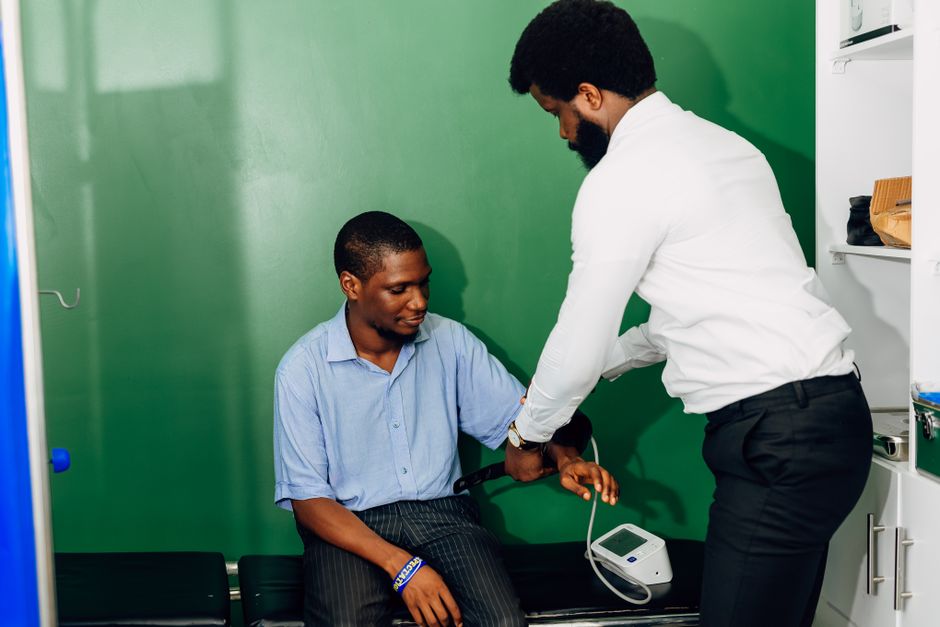
After the history, you go through the physical checks. Weight and height for BMI. Blood pressure. Sometimes waist circumference, depending on your goals.
The blood draw covers several markers. Fasting glucose and HbA1c show where your blood sugar sits now and how it has been trending. The lipid panel checks cholesterol and triglycerides. Liver function tests confirm your liver is handling things well. Kidney markers, including creatinine and eGFR, confirm the medication is safe at the dose being considered. Thyroid function is added if your history or symptoms call for it.
These are not formalities. If your HbA1c comes back showing undiagnosed type 2 diabetes, that changes the prescription. If your kidney function is reduced, it may affect which medication is chosen. The bloods are what make this a medical consultation rather than a transaction.
Results from Doctor Pattaya’s in-house lab are typically ready the same day or within 24 hours, depending on which markers are ordered.
Contraindications: What Rules You Out or Changes the Plan
Some findings are hard stops. A personal or family history of medullary thyroid carcinoma or Multiple Endocrine Neoplasia type 2 means GLP-1 medications are not prescribed. A history of pancreatitis is another reason the doctor may not prescribe, or may proceed with extra caution. Medullary thyroid carcinoma and MEN2 are established contraindications across current prescribing guidelines. Pancreatitis history appears as a warning or precaution and is treated as a clinical reason to pause, not a formal hard stop in the same category.
Active or recent eating disorders, severe gastroparesis, and certain situations during pregnancy are also reasons the doctor may defer or decline. None of this means you have permanently missed out. It means the doctor has done their job.
If you are on insulin or sulfonylureas for diabetes, the prescription can still go ahead, but with careful dose adjustments to reduce the risk of low blood sugar.
Choosing Your Medication and Starting Dose
The two main options you will hear about are semaglutide and tirzepatide. Semaglutide, available as Ozempic or Wegovy depending on the indication, acts on GLP-1 receptors. Tirzepatide, available as Mounjaro, acts on both GLP-1 and GIP receptors and has shown greater average weight reduction compared to semaglutide in head-to-head and indirect trials, though individual responses vary. The doctor will not promise a specific result.
Both are given by weekly subcutaneous injection, meaning a small needle under the skin, usually in the abdomen, thigh, or upper arm. Both follow a dose escalation schedule: you start at the lowest approved dose and increase every four weeks, which is the clinical standard for keeping side effects manageable. The doctor will not start you higher to get faster results. That is how people end up sicker than they need to be.
The choice between the two depends on your health profile, your goals, availability, and cost. The doctor walks you through the options at the consultation.
Your First Injection and Going Home With the Pen
Some patients receive their first injection at the clinic. Others leave with a prescription, fill it at the pharmacy, and do the first injection at home or in their hotel room. Either way, the clinic team will show you the technique before you leave: how to prime the pen, where to inject, how to rotate sites, and how to dispose of the needle safely.
Storage matters here, especially in Pattaya’s climate. Unopened pens need refrigeration between 2 and 8 degrees Celsius. Your hotel room fridge works fine. Once a pen is in use, it can be kept at room temperature, but check the specific brand’s label for the maximum temperature and duration, since these vary by product. Do not leave the pen in a hot car, a bag in direct sun, or anywhere the temperature climbs above 30 degrees Celsius.
If you are flying home during your treatment, the pen travels in your carry-on, not checked luggage. The clinic will provide documentation if you need to explain it at security.
What to Expect After Your First Injection
Nausea is the most common early side effect. It is usually mild and tends to ease over the first week or two. Eating smaller meals, avoiding very fatty or spicy food, and staying hydrated all help. Many patients find that timing the injection in the evening reduces how much the nausea affects their day.
Loose stools, reduced appetite, and mild fatigue are also common early on. These are expected and usually settle without intervention.
What is not normal: severe or persistent abdominal pain, pain that radiates to your back, repeated vomiting you cannot control, or signs of an allergic reaction such as swelling, rash, or difficulty breathing. These need medical attention promptly. Doctor Pattaya is open 24 hours, seven days a week. If something feels wrong in the middle of the night, you do not have to wait until morning.
Follow-Up and Ongoing Care After Starting GLP-1
The first visit is not a one-off. GLP-1 therapy requires monitoring: dose adjustments every four weeks during the titration phase, periodic repeat bloods, and check-ins on how your body is responding. For expats based in Pattaya long-term, this is built into an ongoing care schedule.
For tourists or short-stay visitors, the doctor provides a written treatment summary at the end of your first visit. This includes your baseline results, the medication and dose prescribed, and what your prescribing doctor at home needs to continue your care. You are not left to figure that out on your own.
Starting GLP-1 in Pattaya: No Referral, No Wait
This is where a private walk-in clinic in Pattaya is genuinely different from a public health system. No referral. No waiting list. No six-month lifestyle programme before the doctor will discuss medication. You come in, the doctor assesses you properly, the blood tests get done, and if you are a suitable candidate, the prescription follows the same day.
Consultations at Doctor Pattaya are in English. The doctors here work with tourists, expats, and local residents every day. GLP-1 consultations are a routine part of that. The same-day model suits both the expat who finally wants to get this sorted and the tourist with a limited window who wants to start properly rather than through a faceless online service.
If you are staying near Jomtien Beach or up in Naklua, Doctor Pattaya covers those areas with clinic and hotel visit options. If you are closer to Pratumnak Hill, that works too. Check the area page for wherever you are staying and come in when it suits you.
Ready to get your GLP-1 consultation sorted? Doctor Pattaya offers same-day GLP-1 consultations with baseline blood tests, full medical screening, and your prescription all in one visit. No referral needed. Open 24 hours, seven days a week. Walk in or book ahead. We cover South Pattaya, Jomtien, Pratumnak, Naklua, and surrounding areas, with hotel visits available if you cannot get to the clinic. Speak to a doctor today at Doctor Pattaya.
FAQ
References
- Wilding JPH, et al. Once-Weekly Semaglutide in Adults with Overweight or Obesity. New England Journal of Medicine, 2021.
- Jastreboff AM, et al. Tirzepatide Once Weekly for the Treatment of Obesity. New England Journal of Medicine, 2022.
- Lilly Medical. How should Mounjaro (tirzepatide) doses be increased? Eli Lilly, 2024.
- Kiernan M, et al. Tirzepatide 10 and 15 mg compared with semaglutide 2.4 mg for the treatment of obesity: An indirect treatment comparison. Obesity, 2023.
The information in this article is for educational purposes only and does not constitute medical advice. It should not be used to self-diagnose or replace a consultation with a qualified physician. If you have concerns about your health, contact a licensed medical professional. For appointments at Doctor Pattaya, visit doctorpattaya.com.

Dr. Pipat Finn is the senior doctor at Doctor Pattaya Takecare Clinic, a 24/7 walk-in medical practice on South Pattaya Road, Chonburi, Thailand. They provide primary care, travel medicine, sexual health, vaccination, minor surgery, IV therapy, and emergency outpatient services for tourists, expatriates, and Pattaya residents. Languages: English and Thai. WhatsApp consultations: +66 95 073 5550. Call: +66 81 668 5557.