Clinically reviewed by Dr. Pipat Finn, M.D., Senior Doctor, Doctor Pattaya.
Last reviewed: October 2026
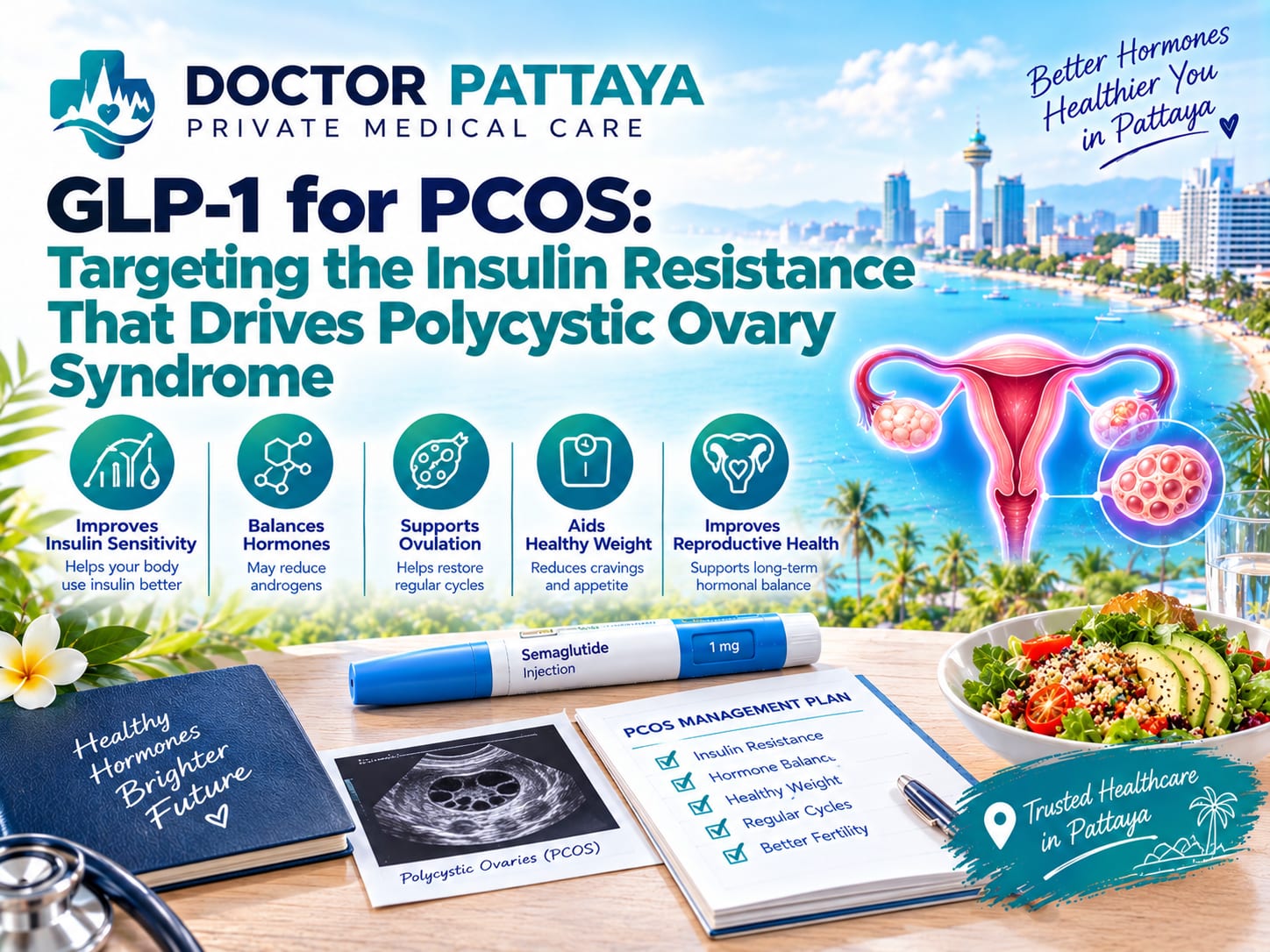
GLP-1 receptor agonists like semaglutide and tirzepatide improve insulin sensitivity in women with PCOS by reducing the excess insulin that drives androgen overproduction. A 2025 meta-analysis found GLP-1 agonists outperform metformin on weight, BMI, and insulin resistance markers in this population. In Thailand, GLP-1 use for PCOS is off-label and requires a physician assessment before starting. Menstrual and hormonal improvements are real but partly weight-dependent, and realistic timelines matter.
You have managed your PCOS for years back home. You have the diagnosis, you know your numbers, maybe you are on metformin. Then life brings you to Pattaya, either for a holiday that has stretched into something longer, or because you moved here and your usual GP is suddenly on the other side of the world. The symptoms you had under control start creeping back. Irregular cycles. Weight that sits stubbornly around your middle no matter what you eat. You start reading about GLP-1 and wonder whether this is the piece you have been missing.
It might be. But there is a lot of noise online about GLP-1 and PCOS. This article covers how insulin resistance drives your symptoms, what these medications genuinely do and do not fix, and what you need to know before starting one, especially if pregnancy is on your radar.

How Insulin Resistance Drives PCOS Symptoms
PCOS is not just a hormone problem. For most women with the condition, it starts with insulin. When cells stop responding to insulin normally, the pancreas makes more of it to compensate. That state, called hyperinsulinaemia, is what tips the ovaries into overproducing androgens like testosterone.
Higher testosterone disrupts ovulation. Disrupted ovulation means irregular or absent periods. The cysts visible on ultrasound are partly a result of that ovulatory dysfunction, not the cause of it. Treating only the hormonal symptoms without addressing the underlying insulin resistance often produces limited results.
Chronic low-grade inflammation runs alongside this process and makes it worse. More insulin leads to more androgens, which disrupts cycles further, which feeds the whole loop again. That is the cycle GLP-1 medications are designed to interrupt.
How Insulin Resistance Is Measured, and Why Many Women Go Undiagnosed
Here is something that surprises a lot of patients: you can have significant insulin resistance with a completely normal blood sugar and a normal HbA1c. Standard tests for diabetes miss it.
The better tools are fasting insulin and a calculation called HOMA-IR, which uses your fasting glucose and fasting insulin together to estimate how resistant your cells are. A high HOMA-IR score, even with normal glucose, points to clinically meaningful insulin resistance. This is the test that often changes the conversation for women with PCOS who have been told their bloods are fine.
At Doctor Pattaya, a fasting insulin panel can be run on the same day as your consultation. If you have never had insulin resistance specifically tested, not just glucose or HbA1c, it is worth doing before deciding on treatment.

How GLP-1 Targets the Root Metabolic Driver in PCOS
GLP-1 receptor agonists increase insulin release when blood sugar rises, reduce glucose output from the liver, and slow how quickly food leaves your stomach. The result is lower post-meal glucose spikes and, over time, lower fasting insulin levels.
Lower insulin means less androgen stimulation at the ovaries. Clinical review data suggest some of this insulin-sensitising effect is at least partly independent of weight loss. That said, weight loss amplifies the benefit considerably.
Visceral fat, the fat stored deep around your organs, is particularly sensitive to reduction by GLP-1 medications. Reducing it improves insulin sensitivity further. So the direct metabolic effects and the weight effects work in the same direction, which is why outcomes in PCOS can be meaningful.
Semaglutide vs Tirzepatide for PCOS Insulin Resistance
Both drugs are GLP-1 receptor agonists. Tirzepatide also activates a second pathway called the GIP receptor, which produces greater average weight loss and stronger insulin resistance reduction in clinical trials. In head-to-head trials in people with obesity and type 2 diabetes, tirzepatide produced greater average weight loss than semaglutide. PCOS-specific comparative data between the two drugs are limited.
Does that make tirzepatide the automatic choice? Not always. Both are off-label for PCOS in Thailand. Individual tolerability, nausea, your current medications, and whether pregnancy is planned all factor into the decision. Tirzepatide carries an additional consideration for women on the pill: it may reduce oral contraceptive efficacy, which matters both for contraception and for cycle management.
| Semaglutide | Tirzepatide | |
|---|---|---|
| Drug class | GLP-1 agonist | GLP-1 + GIP dual agonist |
| Administration | Weekly subcutaneous injection | Weekly subcutaneous injection |
| Weight effect in PCOS | Moderate (meta-analysis data) | Greater (2025 meta-analysis) |
| HOMA-IR improvement | Yes | Yes, greater effect shown |
| OCP efficacy interaction | Not established | May reduce efficacy |
| Thai FDA PCOS indication | Off-label | Off-label |
| Preconception washout | At least 2 months (per label) | Approximately 4 weeks (per UK guidance); US label does not specify |
GLP-1 vs Metformin for PCOS: What the Evidence Shows
Metformin has been the standard insulin-sensitising treatment for PCOS for years. It works. A 2025 meta-analysis comparing GLP-1 agonists directly to metformin in PCOS found GLP-1 outperformed it on BMI reduction, weight loss, and insulin resistance markers.
That does not mean metformin is redundant. For women with significant insulin resistance who do not respond fully to GLP-1 alone, combining the two may provide better results than either drug separately. A 2025 scoping review noted combination therapy as a consideration for cases where one drug alone is not enough.
Your individual metabolic profile, weight, and tolerance guide the choice. This is a conversation worth having with a doctor, not a decision to make based on what someone posted in a forum.
What Women Trying to Conceive Need to Know Before Starting GLP-1
If you are trying to get pregnant or planning to in the near future, there are two things you need to know before starting either semaglutide or tirzepatide.
Both medications should be stopped before attempting conception. Semaglutide labels specify stopping at least 2 months before a planned pregnancy. For tirzepatide, UK guidance recommends stopping approximately 4 weeks before, and you should confirm the current recommendation with your prescribing doctor. They are not considered safe in pregnancy based on current data, and you need that time for the drug to clear your system.
Second, if you are using oral contraceptives to regulate your cycle while on tirzepatide, the drug may reduce their efficacy. A backup contraception method during treatment is clinically appropriate. If fertility is your goal, the timing and sequencing of treatment needs specific planning. You can discuss all of this before starting anything.
Who Should Not Use GLP-1 Medications
GLP-1 agonists are not suitable for everyone. You should not start these medications if you have a personal or family history of medullary thyroid carcinoma or Multiple Endocrine Neoplasia syndrome type 2. They are also not appropriate during pregnancy or breastfeeding.
Women with a history of pancreatitis should discuss the risks carefully with a doctor before starting. Severe gastrointestinal conditions may also affect tolerability or suitability.
If you are on other medications, particularly diabetes drugs, tell your doctor before starting. Dose adjustments may be needed to avoid low blood sugar.
GLP-1 for PCOS in Thailand: Access, Regulation, and Getting Started
In Thailand, GLP-1 receptor agonists are approved by the Thai FDA for type 2 diabetes and obesity. Their use for PCOS is off-label, meaning the prescribing doctor takes clinical responsibility for the decision. This is standard practice internationally for PCOS management, but it does require a proper clinical assessment.
What that assessment looks like at a private clinic: a consultation covering your PCOS history, current symptoms, relevant medications, and baseline blood work. At minimum, fasting glucose, fasting insulin, and a hormonal panel. If you do not have recent imaging, referral for a pelvic ultrasound can be arranged.
If you are a tourist in Pattaya, a full ongoing treatment course is not realistic during a two-week trip. But an initial consultation, baseline testing, and a clear plan for continuing treatment with a provider at home is entirely practical. If you are an expat based near Pratumnak Hill, Jomtien Beach, or further north toward Naklua, ongoing monitoring and prescription management is straightforward with a local clinic you can return to.
You can read more about how these medications work on the GLP-1 service page at Doctor Pattaya. If you are near Jomtien, the Doctor Pattaya Jomtien Beach clinic handles walk-ins and hotel visits seven days a week. Expats and visitors in the south of the city can also find us via the South Pattaya clinic page.
What Realistic Improvement Looks Like on GLP-1 for PCOS
Insulin resistance markers like HOMA-IR may start improving within 8 to 12 weeks on a GLP-1 agonist. Menstrual cycle improvements take longer and are more variable. A 2025 narrative review noted cycle improvements in women with mild obesity by the end of their treatment period, but the degree of benefit tracked closely with metabolic improvement achieved.
Some women notice changes in cycle regularity, acne, or energy before their full metabolic response is complete. Others need several months before seeing consistent hormonal shifts. Androgen levels may improve, but published trial data on direct testosterone reduction from GLP-1 are still limited.
Set realistic expectations before you start. GLP-1 is a meaningful metabolic intervention that works best alongside dietary changes and regular monitoring. It is not a fast fix for PCOS.
If you have PCOS and have never had your insulin resistance properly tested, that is the right place to start. Doctor Pattaya is open 24/7 in South Pattaya and can run a fasting insulin panel, hormonal profile, and full clinical consultation on the same visit. We can assess whether GLP-1 therapy is appropriate, explain the off-label process clearly, and provide ongoing prescriptions and monitoring if you are based locally. Tourists can start the process here and leave with a clear treatment plan to hand over to their doctor at home. Walk in, or contact us to arrange a same-day appointment.
Frequently Asked Questions
References
- Lin Y, et al. Efficacy and safety of GLP-1 receptor agonists in women with polycystic ovary syndrome: a systematic review and meta-analysis. Scientific Reports, 2025. doi:10.1038/s41598-025-99622-4
- PMC12543721. GLP-1 receptor agonists in PCOS: systematic review, 2025. National Library of Medicine.
- World Health Organization. Polycystic Ovary Syndrome. WHO Fact Sheet, 2023.
- Teede HJ, et al. International Evidence-Based Guideline for the Assessment and Management of Polycystic Ovary Syndrome 2023. Monash University / NHMRC.
- Therapeutic Goods Administration (Australia). Updated contraception advice: Mounjaro (tirzepatide). TGA Safety Update, 2024.
- U.S. FDA / NCBI Bookshelf. Semaglutide (Ozempic, Wegovy, Rybelsus) prescribing information summary including preconception discontinuation guidance.
The information in this article is for educational purposes only and does not constitute medical advice. It should not be used to self-diagnose or replace a consultation with a qualified physician. If you have concerns about your health, contact a licensed medical professional. For appointments at Doctor Pattaya, visit doctorpattaya.com.

Dr. Pipat Finn is the senior doctor at Doctor Pattaya Takecare Clinic, a 24/7 walk-in medical practice on South Pattaya Road, Chonburi, Thailand. They provide primary care, travel medicine, sexual health, vaccination, minor surgery, IV therapy, and emergency outpatient services for tourists, expatriates, and Pattaya residents. Languages: English and Thai. WhatsApp consultations: +66 95 073 5550. Call: +66 81 668 5557.