Clinically reviewed by Dr. Pipat Finn, M.D., Senior Doctor, Doctor Pattaya.
Last reviewed: October 2026
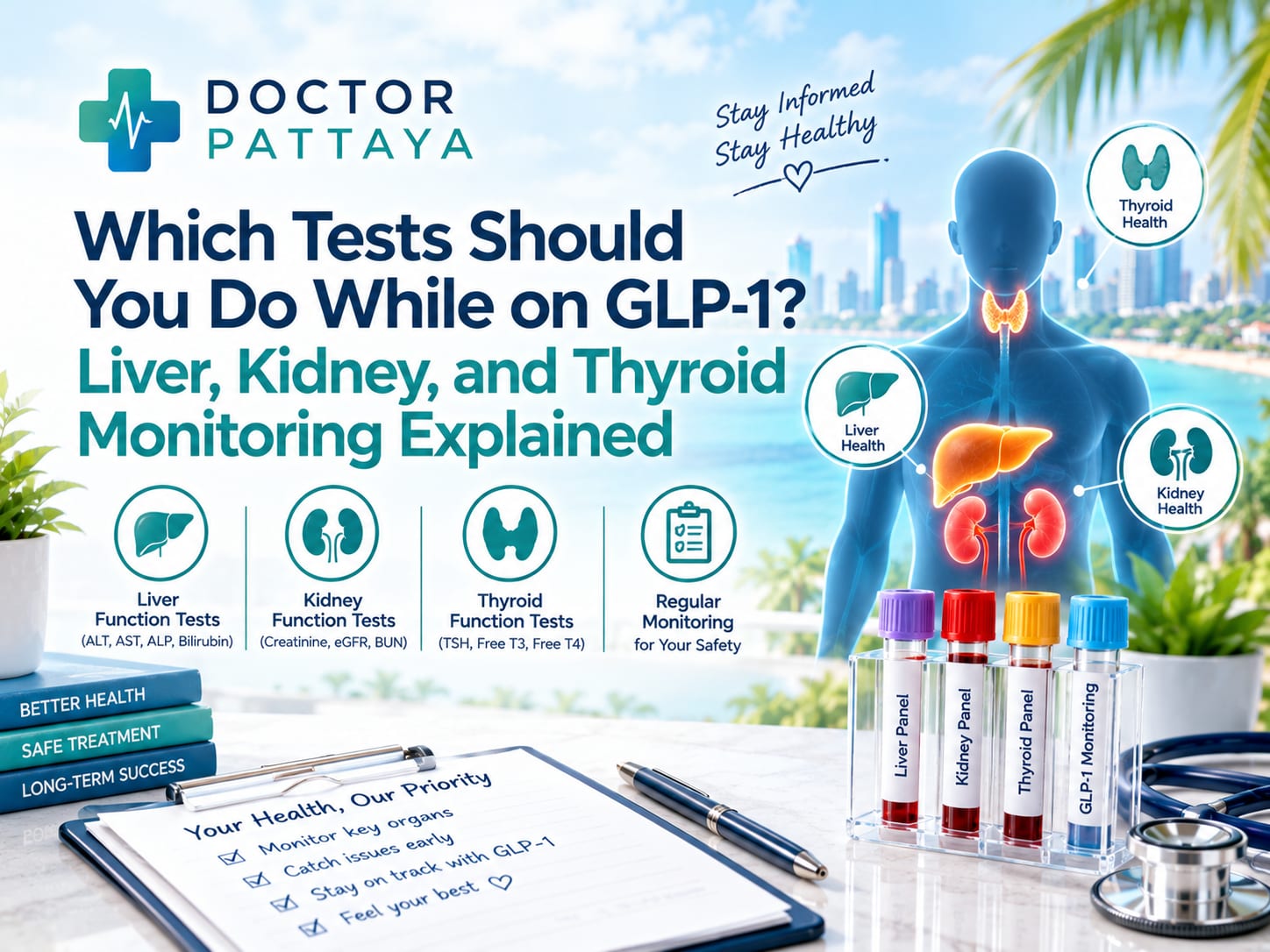
GLP-1 receptor agonists like semaglutide and tirzepatide require regular blood tests to keep your liver, kidneys, thyroid, and pancreas safe. The core panel includes liver enzymes (ALT, AST), kidney markers (creatinine, eGFR), thyroid function (TSH), HbA1c, a lipid panel, and lipase. Testing before you start is the most important panel of all. After that, frequency depends on how you are responding and whether you are still in the dose escalation phase.
You started a GLP-1 medication, you are losing weight, and things feel like they are going well. Then someone mentions you should be getting blood tests, and suddenly you are not sure if you have been missing something important. If that is where you are right now, you are not alone, and the answer is straightforward.
GLP-1 receptor agonists, the class that includes semaglutide (Ozempic, Wegovy) and tirzepatide (Mounjaro), work well for most people. But they do put certain organ systems under new stress, and monitoring tests on GLP-1 exist for a reason. Skip them, and a problem that would have been easy to catch can go unnoticed for months. Here is which tests you actually need, when to get them, and what happens if you do not.

Baseline Testing Before You Start
Before your first dose, get a full baseline panel. This is the most important set of tests you will run on a GLP-1, because every result that follows only makes sense when you have something to compare it to.
Say your ALT, a liver enzyme, comes back slightly elevated at month three. Is that new? Is it a trend? Without a pre-treatment result, there is no way to know. A baseline turns every future reading from a number into a story.
The baseline panel should cover liver function tests (ALT, AST, and GGT), kidney function (creatinine and eGFR, which measures how well your kidneys are filtering), HbA1c (your three-month average blood sugar), a fasting lipid panel, TSH (your main thyroid signal), and lipase (a pancreatic marker). If you have not had these done before starting, get them now. A recent panel is still useful.
What Is the Core Monitoring Panel for GLP-1 Users?
Once you are on the medication, the panel does not change much. What changes is how often you run it.
A comprehensive metabolic panel covers liver and kidney markers together. Add a lipid panel, HbA1c, and lipase to that, and you have most of what you need in a single blood draw. Your doctor may also add TSH if it was not done recently, or if you have any thyroid symptoms.
| Test | What It Checks | Why It Matters on GLP-1 |
|---|---|---|
| ALT / AST | Liver enzyme levels | Detect drug-induced liver stress |
| GGT | Liver marker, especially relevant with alcohol | Adds context to ALT/AST findings |
| Creatinine / eGFR | Kidney filtration rate | GI side effects can cause dehydration and acute kidney stress |
| BUN (blood urea nitrogen) | Kidney and hydration status | Rises when dehydration is a factor |
| HbA1c | 3-month blood sugar average | Essential for diabetic patients; useful for all |
| Lipid panel | Cholesterol and triglycerides | GLP-1 can improve lipids; useful to track |
| Lipase | Pancreatic enzyme | Screen for pancreatitis |
| TSH / free T4 | Thyroid function | Relevant for those with thyroid history or symptoms |

Liver Monitoring on GLP-1
Your liver processes almost everything that enters your body, including your medication. GLP-1 agents are generally associated with improved liver health in people with fatty liver disease, but drug-induced liver stress does occur with various medications and warrants watching. ALT and AST are the primary markers. GGT adds useful context, especially if alcohol is part of the picture.
The real risk of skipping liver tests is that mild liver stress often has no symptoms in the early stages. You feel fine. The numbers quietly rise. By the time fatigue or nausea goes beyond the usual GI side effects, or you notice yellowing of the skin, things are further along than they needed to be.
Get your liver panel before starting, then again at around three months, then every six to twelve months once you are stable.
Kidney Monitoring and Why Dehydration Is the Real Threat
Nausea and vomiting are common side effects, especially during dose escalation. If you are not keeping fluids down, your kidneys feel it fast. Creatinine and eGFR together show how well your kidneys are filtering. BUN rises when you are dehydrated and gives an early signal before creatinine moves much.
Acute kidney stress from dehydration is easy to miss because the link is not obvious. You feel sick, you stop eating, you lose fluids, and a few days later your kidney numbers are off. If you have had a rough week of nausea and vomiting, it is worth running a kidney panel even outside your usual schedule.
People with pre-existing kidney disease need closer monitoring throughout, and dose adjustments may be necessary. If you are managing a kidney condition alongside a GLP-1, talk to your prescribing doctor about the right interval.
Thyroid Monitoring on GLP-1
Thyroid monitoring is the area where online advice is most inconsistent. Some sources recommend TSH testing at every visit. That is an overstatement.
The main thyroid concern with these medications comes from animal studies. The FDA prescribing information for semaglutide and tirzepatide includes a warning for people with a personal or family history of medullary thyroid carcinoma or MEN2 syndrome (multiple endocrine neoplasia type 2). Those patients should not use these medications at all.
For everyone else, a baseline TSH before starting is reasonable. Routine calcitonin measurement at every check is noted in current prescribing guidelines as being of uncertain clinical value. Follow-up thyroid testing with free T4 is warranted if you develop symptoms: a lump in your neck, difficulty swallowing, hoarseness, or rapid changes in heart rate. Do not wait for a scheduled test if those appear.
Pancreatic Safety Markers
Pancreatitis is listed in the prescribing information for GLP-1 agents as a risk that warrants attention. Lipase is the most sensitive marker for pancreatic stress. Serum amylase is less specific but often checked alongside it. Neither is part of a standard metabolic panel, so you may need to ask for it specifically.
Routine lipase monitoring matters most during dose escalation and for anyone with a history of pancreatitis, gallstones, or heavy alcohol use. If you develop persistent upper abdominal pain that radiates toward your back, do not wait for a blood result. Seek same-day assessment.
Micronutrient Monitoring During Rapid Weight Loss
When you lose weight quickly, your food intake drops significantly. Vitamin B12, vitamin D, and iron can all fall to levels that cause real symptoms: fatigue, poor concentration, hair loss, and changes in bone health.
Vitamin B12 is particularly relevant if you are also on metformin, which impairs B12 absorption. Iron studies, including ferritin, are worth checking if you notice unusual tiredness that does not match your activity level. Vitamin D deficiency is common in this region regardless of GLP-1 use, so a baseline 25-OH vitamin D is a useful add.
These are not urgent tests. Add them to your six-month panel, or sooner if symptoms develop.
When to Run Monitoring Tests on GLP-1
Timing matters as much as which tests you choose. There are four phases most GLP-1 users move through, and the monitoring schedule should shift with them.
Before starting, run the full baseline panel described above. During dose escalation, roughly the first three to six months, run liver enzymes, kidney markers, and HbA1c at the three-month mark. Add lipase if you have any abdominal symptoms. Once you reach a stable maintenance dose, a full panel every six months covers most people well. For long-term users beyond twelve months, annual comprehensive panels with micronutrient checks added in are appropriate.
If you are diabetic, your HbA1c frequency may be higher based on your endocrinologist’s guidance. The schedule above applies broadly to adults on GLP-1 without complex co-existing conditions.
Getting Your GLP-1 Monitoring Done in Pattaya
A lot of people using GLP-1 medications in Pattaya are in a situation that standard advice does not cover. You got your prescription abroad, you are staying here for a few months, and you do not have a local GP managing your care. Or you are an expat who has been self-managing and you know you are overdue for a panel.
Doctor Pattaya runs same-day lab panels for GLP-1 users, including liver function, kidney function, thyroid, HbA1c, lipid panel, and lipase, with no referral needed. A doctor reviews the results with you and flags anything that needs attention. You can walk in to the South Pattaya clinic or book a hotel visit if you are staying in Jomtien or Naklua. For full details on what the clinic covers, the GLP-1 service page at Doctor Pattaya is the right place to start.
If you need lab work across a wider range of health concerns, the lab test and STI services page covers the full menu. For hotel visits anywhere from Jomtien Beach to Pratumnak Hill, a doctor can come to you.
Need a GLP-1 monitoring blood panel in Pattaya? Doctor Pattaya offers same-day liver, kidney, thyroid, and metabolic panels with no referral needed, seven days a week, around the clock. Walk in to the South Pattaya clinic or request a doctor visit at your hotel anywhere in Pattaya, Jomtien, or Naklua. A doctor will review your results with you and advise on next steps.
Frequently Asked Questions
References
- U.S. Food and Drug Administration. Mounjaro (tirzepatide) Prescribing Information. Eli Lilly, 2026.
- American Diabetes Association. Standards of Medical Care in Diabetes — 2025. Diabetes Care. 2025;48(Suppl 1).
- LiverTox: Clinical and Research Information on Drug-Induced Liver Injury. Semaglutide. National Institute of Diabetes and Digestive and Kidney Diseases, NIH.
- Eli Lilly and Company. Medical Information: Is tirzepatide contraindicated in adults with thyroid conditions other than personal or family history of MTC or in patients with history of MEN 2?
The information in this article is for educational purposes only and does not constitute medical advice. It should not be used to self-diagnose or replace a consultation with a qualified physician. If you have concerns about your health, contact a licensed medical professional. For appointments at Doctor Pattaya, visit doctorpattaya.com.

Dr. Pipat Finn is the senior doctor at Doctor Pattaya Takecare Clinic, a 24/7 walk-in medical practice on South Pattaya Road, Chonburi, Thailand. They provide primary care, travel medicine, sexual health, vaccination, minor surgery, IV therapy, and emergency outpatient services for tourists, expatriates, and Pattaya residents. Languages: English and Thai. WhatsApp consultations: +66 95 073 5550. Call: +66 81 668 5557.