Clinically reviewed by Dr. Pipat Finn, M.D., Senior Doctor, Doctor Pattaya.
Last reviewed: October 2026
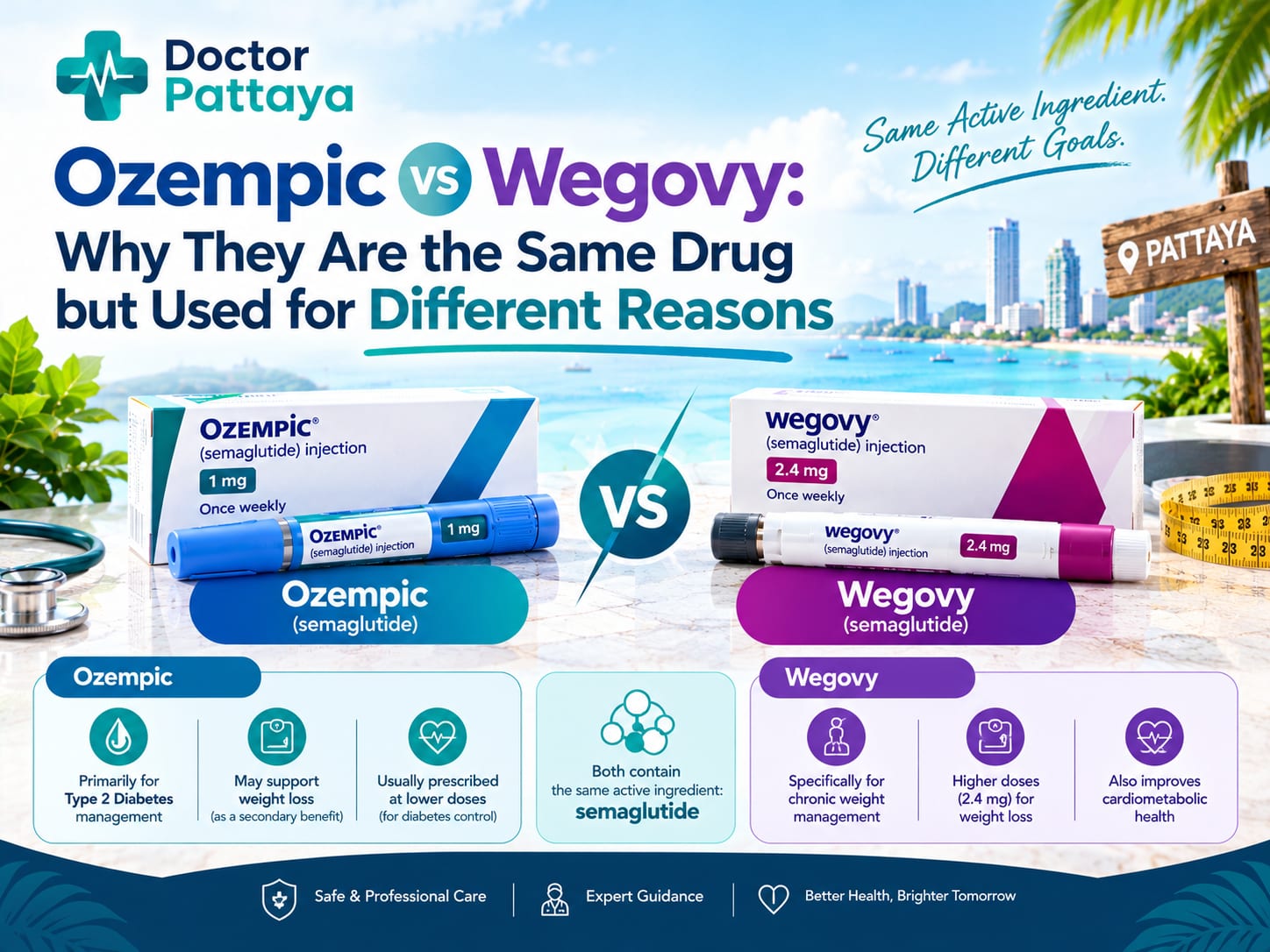
Ozempic and Wegovy both contain semaglutide, the same active molecule, made by the same manufacturer. The difference is not the drug itself but the approved use, the maximum dose, and the regulatory approval behind each one. Ozempic is approved for type 2 diabetes. Wegovy is approved for chronic weight management at a higher dose. They are not interchangeable, and a doctor needs to assess which one is right for you before you start either.
You are halfway through your Pattaya trip, the pen you packed from home is running low, and the pharmacy near your hotel is looking at you blankly. You have heard that Wegovy and Ozempic are basically the same thing, but you are not quite sure if that is true or just something someone said at the pool bar in Pratumnak. It is a fair question, and the answer is a bit of both.
Both contain semaglutide. That part is straightforward. Where it gets more specific is the dose, the approval, and what your doctor is actually trying to achieve with each one. Getting that right matters whether you are managing type 2 diabetes, working on your weight, or trying to continue a programme you started back home while you are here in Thailand.

Same Molecule, Two Brand Names, What Ozempic and Wegovy Actually Are
Semaglutide is a GLP-1 receptor agonist. GLP-1 is a hormone your gut releases after eating. Semaglutide mimics it. It prompts your pancreas to release insulin when blood sugar rises, slows how quickly your stomach empties, and signals your brain to reduce appetite. One molecule doing several things at once.
Novo Nordisk developed two separate brand approvals for the same compound. Ozempic came first, approved for type 2 diabetes. Wegovy followed, approved for chronic weight management at a higher maximum dose. Same active ingredient, different regulatory pathway and dose ceiling.
This is not unusual in medicine. What matters is that each approval comes with specific criteria, a specific dosing schedule, and specific monitoring expectations. You cannot swap one for the other without a doctor making that call.
The Three Forms of Semaglutide Side by Side
There is also a third version: Rybelsus, an oral tablet form of semaglutide approved for type 2 diabetes. If all three names have left you confused, this breakdown should help.
| Ozempic | Wegovy | Rybelsus | |
|---|---|---|---|
| Form | Weekly injection | Weekly injection | Daily oral tablet |
| Active ingredient | Semaglutide | Semaglutide | Semaglutide |
| Approved indication | Type 2 diabetes | Chronic weight management | Type 2 diabetes |
| Maximum approved dose | 2 mg weekly | 2.4 mg weekly | 14 mg daily |
| Manufacturer | Novo Nordisk | Novo Nordisk | Novo Nordisk |
| Prescription required | Yes | Yes | Yes |
All three require a prescription in Thailand. None are available over the counter, and no reputable clinic will dispense them without a proper assessment first.
Why the Dose Difference Between Ozempic and Wegovy Actually Matters
On paper, 2 mg versus 2.4 mg sounds like a small gap. Clinically, it is not. Semaglutide’s effect on appetite is dose-dependent: at higher concentrations, the signal to the brain’s appetite centres is stronger and more sustained. The STEP clinical trial programme showed an average weight reduction of around 15% of body weight at Wegovy’s 2.4 mg maintenance dose. At Ozempic doses, the effect on weight is meaningful but generally lower.
That gap matters if significant weight reduction is the goal. Someone who reaches Ozempic’s 2 mg ceiling and hits a plateau may not achieve the same result at 2.4 mg. The additional dose step was specifically studied to produce better weight outcomes.
Both programmes involve dose titration. You start low and increase over several months. Jumping straight to the maintenance dose raises the risk of nausea, vomiting, and gastrointestinal side effects. The titration schedule is built in for a reason.
Beyond Weight Loss, What Semaglutide Does at Each Dose
Weight loss is the most talked-about benefit right now, but it is not the full picture for either drug.
Ozempic carries approval for reducing the risk of major cardiovascular events in adults with type 2 diabetes who also have established heart disease. It also has an approval for slowing kidney disease progression in adults with type 2 diabetes and chronic kidney disease. These are backed by large outcome trials, separate from its glucose-lowering effect.
Wegovy received its own cardiovascular approval following the SELECT trial, which showed a reduction in major cardiovascular events in adults with obesity or overweight who did not have diabetes. That is a different patient group from Ozempic’s cardiovascular indication, and the distinction matters when a doctor is deciding which approval applies to you.
Neither drug is a cure. Both require ongoing use to maintain the effect. Stopping either one is associated with weight regain or loss of glucose control, depending on why it was prescribed.
Using Ozempic Off-Label for Weight Loss, What a Doctor Considers
Because Wegovy is not always available, and because Ozempic was on the market first, many patients end up on Ozempic for weight loss even though it is not formally approved for that purpose. This is called off-label prescribing. It is legal, it is common in private medicine, and it is not inherently wrong.
What a doctor considers: does the patient meet appropriate criteria for semaglutide therapy? Is the off-label use documented and explained? Is the patient being monitored for side effects and response? The lower dose ceiling may limit weight-loss outcomes compared to Wegovy, and that should be part of the conversation.
If someone is offering semaglutide injections without a consultation, that is a red flag worth taking seriously.
Getting Semaglutide in Pattaya, What You Need to Know Before You Ask
Semaglutide is a prescription-only medicine in Thailand under Thai FDA regulations. A Thai-registered doctor must assess you, confirm your eligibility, and issue a valid prescription before any dispensing happens. Any source offering these injections without that step is operating outside the rules.
In terms of availability, Ozempic tends to be more consistently stocked in Thailand. Wegovy supply can be variable. If you are already on Wegovy at home and need continuity during your stay, a doctor can advise on the most practical option given what is locally available, including whether a temporary bridge on Ozempic is clinically appropriate.
Doctor Pattaya is a 24/7 private clinic in South Pattaya. We assess new patients for GLP-1 eligibility, review existing programmes from home-country prescribers, issue local prescriptions where appropriate, and provide medical handover documentation so your home doctor has a clear record of anything that happened during your trip. Walk-in appointments are available, and doctor hotel visits cover Pattaya, Jomtien, Naklua, and Pratumnak.
Already on Ozempic or Wegovy at Home, Travelling to Thailand With Your Pen
Thailand is hot. Pattaya can hold above 35 degrees Celsius for much of the year. Injectable semaglutide pens must be kept refrigerated before first use and stored below 30 degrees Celsius after opening, according to Novo Nordisk’s product labelling. Leaving a pen in a hotel room without air conditioning, in a car, or in a bag in direct sun puts the medication at risk. A pen that looks fine can still deliver a degraded dose.
Practical steps: keep your pen in the hotel room minibar or a cool bag. Do not leave it in your checked luggage for hours in an airport hold, and do not take it to the beach without proper cooling. If you are unsure whether your pen has been exposed to excessive heat, come in and we can help you assess the situation and arrange a replacement prescription if needed.
Semaglutide is not a controlled substance in Thailand, so travelling with it for personal use alongside your home prescription and a doctor’s letter is generally manageable. If you run low, lose your pen, or need a new supply mid-trip, Doctor Pattaya can handle that without disrupting your stay.
Who Should Not Use Semaglutide
This is not a medicine for everyone. Current guidelines identify several groups who should not use semaglutide. These include people with a personal or family history of medullary thyroid carcinoma, people with a rare condition called multiple endocrine neoplasia type 2, and people who are pregnant or breastfeeding. Anyone with a history of pancreatitis needs careful assessment before starting, and those with severe gastrointestinal conditions may not tolerate it.
Side effects worth knowing about include nausea, vomiting, diarrhoea, and constipation. If you experience severe abdominal pain that does not pass, stop the medication and seek medical attention promptly. That symptom can indicate pancreatitis, which needs urgent evaluation.
A doctor consultation before starting is not a formality. It is how these risks get screened for properly.
Thinking about starting Ozempic or Wegovy in Pattaya, or already on a programme and need support while you are here? Doctor Pattaya is open 24 hours a day, seven days a week, in South Pattaya. We assess GLP-1 eligibility, issue prescriptions under Thai FDA guidelines, and support continuity of care for tourists, expats, and local residents. Doctor hotel visits are available across Pattaya, Jomtien, Naklua, and Pratumnak. Walk-ins welcome.
Frequently Asked Questions
References
- Wilding JPH et al. "Once-Weekly Semaglutide in Adults with Overweight or Obesity." New England Journal of Medicine, 2021
- Lincoff AM et al. "Semaglutide and Cardiovascular Outcomes in Obesity without Diabetes." New England Journal of Medicine, 2023 (SELECT trial)
- U.S. Food and Drug Administration. "Highlights of Prescribing Information: Wegovy (semaglutide)."
- U.S. Food and Drug Administration. "Highlights of Prescribing Information: Ozempic (semaglutide)."
- World Health Organization. "WHO Model List of Essential Medicines — GLP-1 Receptor Agonists."
The information in this article is for educational purposes only and does not constitute medical advice. It should not be used to self-diagnose or replace a consultation with a qualified physician. If you have concerns about your health, contact a licensed medical professional. For appointments at Doctor Pattaya, visit doctorpattaya.com.

Dr. Pipat Finn is the senior doctor at Doctor Pattaya Takecare Clinic, a 24/7 walk-in medical practice on South Pattaya Road, Chonburi, Thailand. They provide primary care, travel medicine, sexual health, vaccination, minor surgery, IV therapy, and emergency outpatient services for tourists, expatriates, and Pattaya residents. Languages: English and Thai. WhatsApp consultations: +66 95 073 5550. Call: +66 81 668 5557.