Clinically reviewed by Dr. Pipat Finn, M.D., Senior Doctor, Doctor Pattaya.
Last reviewed: October 2026
Trulicity (dulaglutide) is a once-weekly injectable medication for type 2 diabetes. It lowers blood sugar, reduces cardiovascular risk, and supports modest weight loss. It requires a prescription in Thailand and must be stored in a refrigerator. A same-day consultation at Doctor Pattaya can get you assessed, prescribed, and supplied on the same visit.
You have been managing your diabetes well at home. Weekly injection, stable readings, no drama. Then the holiday happens. Maybe the pen spent too long in a cargo hold. Maybe you miscounted and you are three days short. You are in Pattaya now, the sun is out, and sorting this out feels more complicated than it should be. It is not. Thailand has access to dulaglutide, and a licensed doctor can see you the same day.
This guide covers what Trulicity actually does, how the doses work, what side effects to watch for in a hot climate, how it compares to semaglutide, and what you need to know about getting it here, whether you are passing through or have lived here for years.
How Dulaglutide Works
Dulaglutide is a GLP-1 receptor agonist. GLP-1 is a hormone your gut releases after eating. It tells your pancreas to produce more insulin, tells it to release less glucagon (the hormone that raises blood sugar), and slows how fast your stomach empties. The result is lower blood sugar after meals and a longer feeling of fullness.
Your own natural GLP-1 breaks down within minutes. Dulaglutide is engineered to last a full week. One injection, and those effects run continuously until the next dose.
Because dulaglutide only pushes insulin release when blood sugar is actually elevated, dangerously low blood sugar is rare when used alone, without insulin or sulphonylureas alongside it.
Dosage: Starting Low and Moving Up Safely
Trulicity comes in four dose levels: 0.75 mg, 1.5 mg, 3 mg, and 4.5 mg. Most people start at 0.75 mg once weekly for four weeks before moving to 1.5 mg. Higher doses are added gradually, only if more blood sugar control is needed and the lower dose is well tolerated.
Slow titration exists for a reason. Nausea is most pronounced at the start, and moving up too early tends to make it harder to push through.
| Dose | Typical timing | Notes |
|---|---|---|
| 0.75 mg | Weeks 1 to 4 | Starting dose for most patients |
| 1.5 mg | From week 5 onward | Standard maintenance dose |
| 3 mg | If more control needed | Step up after at least 4 weeks at 1.5 mg |
| 4.5 mg | Maximum dose | Only if 3 mg tolerated and HbA1c still above target |
If you miss a dose, you can take it as soon as you remember, as long as your next scheduled dose is at least three days away. If the next dose is fewer than three days out, skip the missed one and carry on as normal.

Trulicity vs Ozempic: What the Evidence Shows
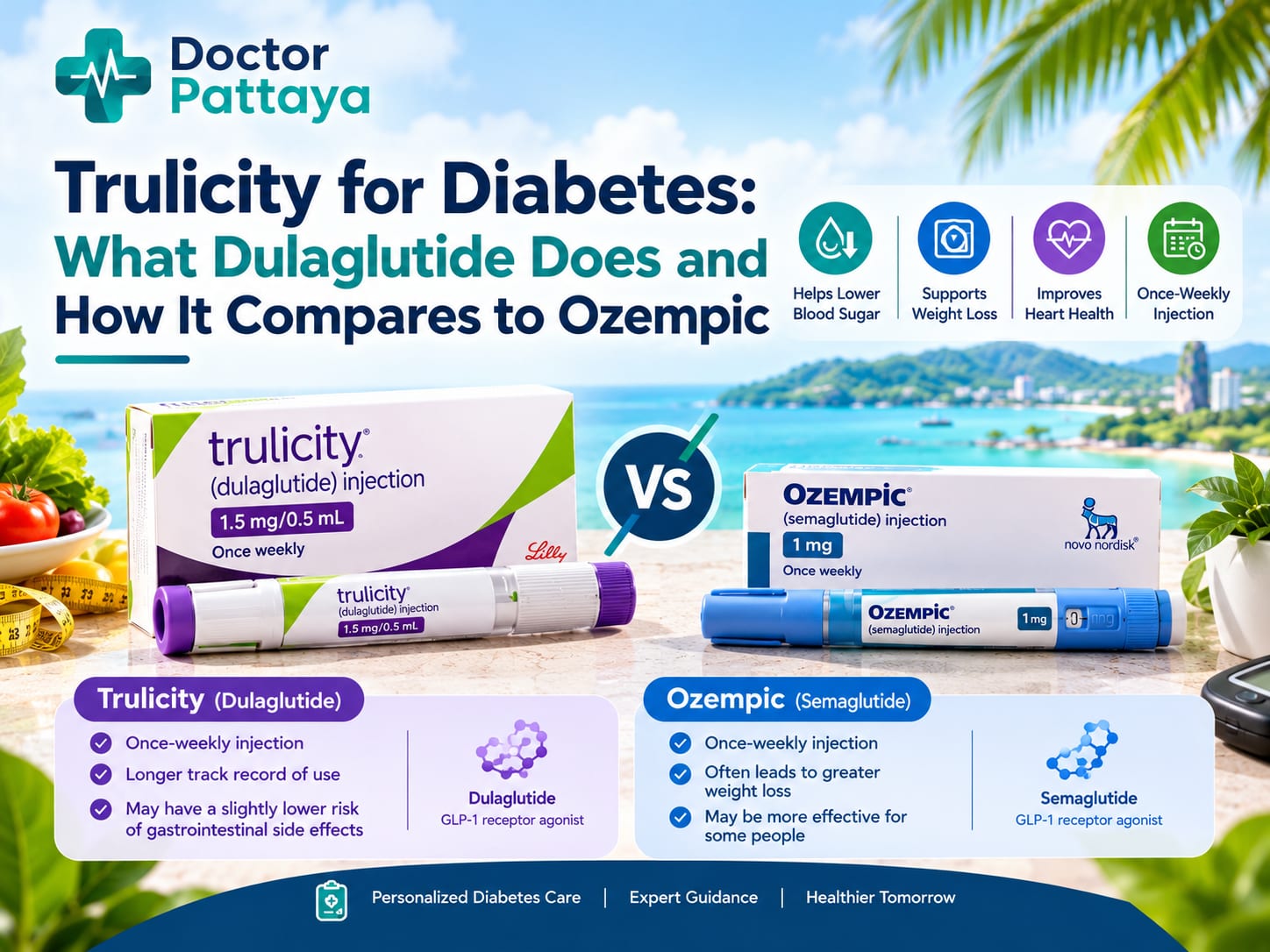
Both dulaglutide and semaglutide (Ozempic) are once-weekly GLP-1 receptor agonists that work through the same mechanism. The differences are in degree, not in kind.
The SUSTAIN 7 head-to-head trial shows semaglutide at 1 mg produces greater HbA1c reduction and more weight loss than dulaglutide at 1.5 mg. If your main goals are maximum HbA1c reduction and the most weight loss, semaglutide has the stronger numbers.
Dulaglutide has its own strong evidence. The REWIND cardiovascular outcomes trial showed that dulaglutide significantly reduced the risk of major cardiovascular events in people with type 2 diabetes, including those without established heart disease at enrolment. That is a meaningful distinction from many GLP-1 trials, which enrolled only high-risk patients.
The right choice depends on your HbA1c target, cardiovascular profile, weight goals, and how you tolerate each drug. Our GLP-1 comparison page covers the dulaglutide vs semaglutide question in detail, and a consultation at Doctor Pattaya can help you work out which fits your situation best.
Side Effects and Safety in a Hot Climate
Nausea is the most common side effect, especially in the first few weeks. Vomiting and diarrhoea occur less often but do happen. These usually ease as your body adjusts, and they are less likely if you titrate slowly.
Here is what matters in Pattaya specifically. If you are vomiting or have diarrhoea in tropical heat, you dehydrate faster than you would at home. Dehydration can strain your kidneys, and dulaglutide can reduce kidney blood flow in some circumstances. If GI side effects hit hard, stay in the shade, drink fluids consistently, and get seen if you cannot keep fluids down.
Pancreatitis is rare but serious. Severe abdominal pain that radiates to your back and does not ease is a reason to see a doctor the same day, not tomorrow.
Low blood sugar on its own is uncommon with dulaglutide. The risk rises if you are also taking insulin or a sulphonylurea. Know the signs: shakiness, sweating, confusion. Treat it quickly with fast-acting sugar.
Who Should Not Use Trulicity
Do not use Trulicity if you have a personal or family history of medullary thyroid carcinoma or Multiple Endocrine Neoplasia syndrome type 2. These are absolute contraindications listed in the prescribing information.
Do not use it for type 1 diabetes or diabetic ketoacidosis. Dulaglutide is not an insulin replacement and will not manage these conditions.
Use with caution if you have a history of pancreatitis, severe gastrointestinal disease, or significant kidney impairment. If any of these apply, mention them during your consultation so the doctor can weigh the risks with your full picture in front of them.
Cardiovascular and Kidney Benefits: The REWIND Trial
The REWIND trial followed over 9,000 adults with type 2 diabetes across more than 20 countries for a median of more than five years. Dulaglutide reduced the risk of major adverse cardiovascular events compared to placebo. Around 70 percent of participants had no prior cardiovascular event at enrolment, meaning the benefit applied to people managing risk, not only those who had already had a heart attack or stroke.
The trial also showed a reduction in new or worsening kidney disease markers. Kidney function monitoring remains relevant during treatment, particularly for patients already living with mild to moderate kidney impairment.
Dulaglutide as Part of a Wider Diabetes Plan
Most people on Trulicity are not using it alone. Dulaglutide combines well with metformin, the standard first-line treatment for type 2 diabetes in most guidelines. The two work through different pathways and complement each other without significantly increasing low blood sugar risk.
It is also used alongside SGLT-2 inhibitors such as empagliflozin or dapagliflozin, which lower blood sugar through the kidneys and add their own cardiovascular and kidney benefits. Some patients are also on insulin, which does increase low blood sugar risk and usually requires dose adjustments when a GLP-1 is added.
If you are on a combination regimen and travelling, bring documentation of everything you are taking. A new prescribing doctor needs that full picture before making any adjustments.
Getting Trulicity in Pattaya: What Tourists and Expats Need to Know
Dulaglutide is prescription-only in Thailand. You cannot buy it over the counter. You need a consultation with a Thai-registered physician, and the prescription must come from them directly.
Doctor Pattaya offers same-day walk-in consultations for exactly this situation. The clinic can review your existing blood work, order new tests if needed, assess whether dulaglutide is appropriate for you, and supply the pen directly. No appointment needed, no referral letter required.
Storage matters here more than it might at home. Trulicity must be kept at 2 to 8 degrees Celsius. If refrigeration is unavailable, the pen can tolerate temperatures below 30 degrees for up to 14 days, but it must never be frozen and should not be used if it has been left in a hot car, a non-air-conditioned room, or poolside for an extended period. In Pattaya’s heat, a pen in a bag in direct sun can reach damaging temperatures within an hour. Use the hotel minibar or fridge. Cold-chain storage is maintained at the clinic.
If you are an expat managing diabetes long-term in Pattaya and want continuity of care rather than a one-off prescription, a longer consultation to review your full diabetes plan makes sense. HbA1c testing, kidney function panels, and cardiovascular risk review are all available here.
Running low on Trulicity, or thinking about starting it? Doctor Pattaya is open 24 hours, seven days a week, with no appointment needed. We offer same-day diabetes consultations, GLP-1 prescriptions, HbA1c and kidney function testing, and direct supply of dulaglutide from the clinic. Hotel visits across Pattaya, Jomtien, Naklua, and Pratumnak are available if you cannot travel. Walk in or contact us to arrange a visit.
Frequently Asked Questions
References
- Gerstein HC, et al. Dulaglutide and cardiovascular outcomes in type 2 diabetes (REWIND): a double-blind, randomised placebo-controlled trial. The Lancet. 2019
- Pratley R, et al. Semaglutide versus dulaglutide once weekly in patients with type 2 diabetes (SUSTAIN 7): a randomised, open-label, phase 3b trial. The Lancet Diabetes and Endocrinology. 2018
- World Health Organization. Classification of diabetes mellitus. WHO. 2019
- American Diabetes Association. Standards of Medical Care in Diabetes. Diabetes Care. 2024
The information in this article is for educational purposes only and does not constitute medical advice. It should not be used to self-diagnose or replace a consultation with a qualified physician. If you have concerns about your health, contact a licensed medical professional. For appointments at Doctor Pattaya, visit doctorpattaya.com.

Dr. Pipat Finn is the senior doctor at Doctor Pattaya Takecare Clinic, a 24/7 walk-in medical practice on South Pattaya Road, Chonburi, Thailand. They provide primary care, travel medicine, sexual health, vaccination, minor surgery, IV therapy, and emergency outpatient services for tourists, expatriates, and Pattaya residents. Languages: English and Thai. WhatsApp consultations: +66 95 073 5550. Call: +66 81 668 5557.