Clinically reviewed by Dr. Pipat Finn, M.D., Senior Doctor, Doctor Pattaya.
Last reviewed: October 2026
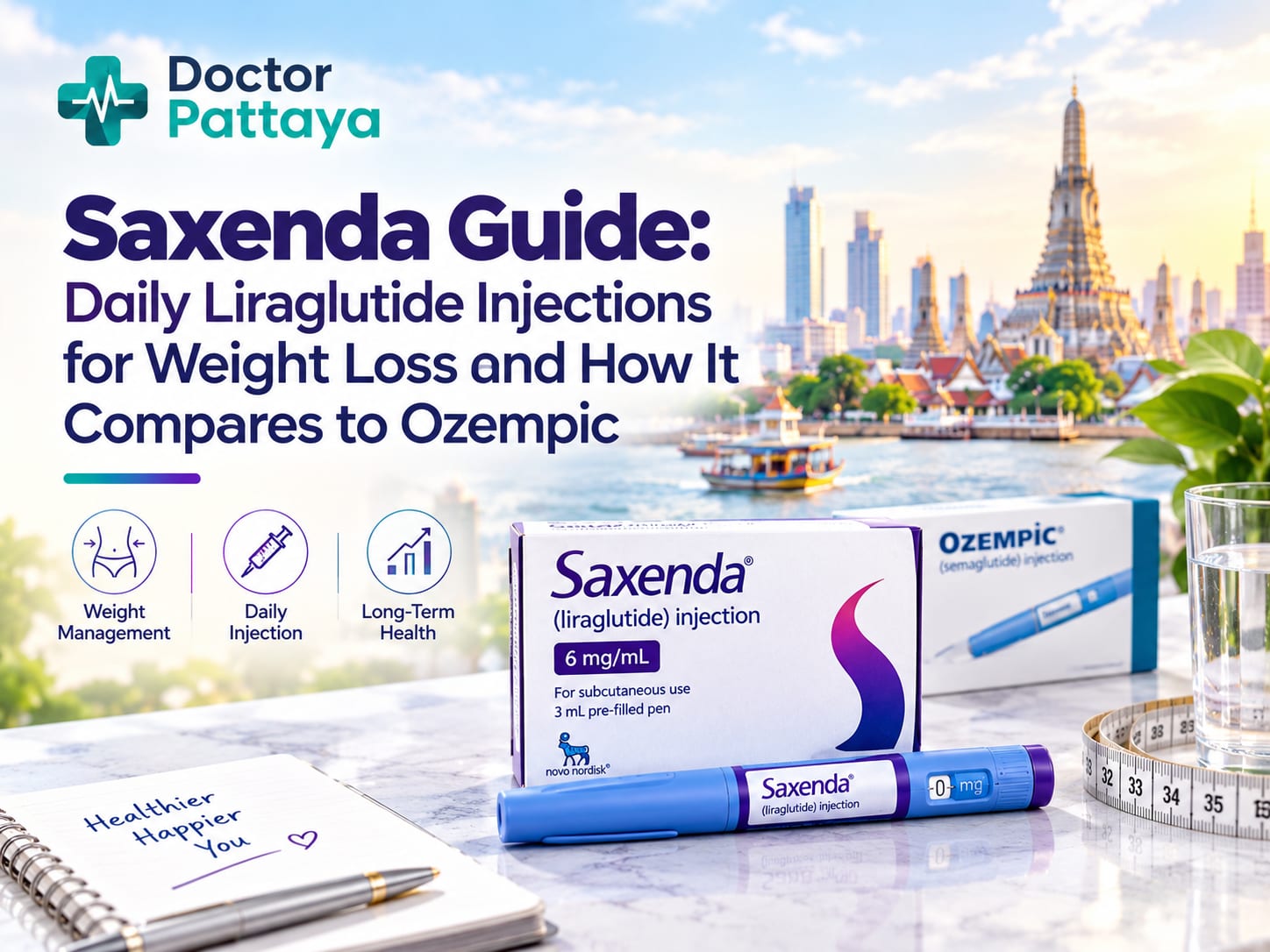
Saxenda (liraglutide) is a once-daily injectable medication approved for chronic weight management in adults with a BMI of 30 or above, or 27 and above with a weight-related health condition such as high blood pressure or type 2 diabetes. It works by mimicking a natural gut hormone that reduces appetite and slows digestion. In Thailand, it requires a prescription, and the monthly cost at the full dose varies widely, from roughly ฿10,000 to over ฿20,000 depending on where you buy it. A doctor consultation is the starting point before your first dose.
You have been putting this off. Maybe you have cut back, moved more, done most of the right things, and the weight just does not shift. Now you are in Pattaya with a bit of headspace, and you want to actually get something started. Or you are a long-term expat who has been watching the GLP-1 space and wants a straight answer from a clinic that knows this town.
Either way, here is what you need to know. Saxenda, made by Novo Nordisk, is a prescription injection that mimics a hormone your gut releases after eating. It tells your brain you are full, slows your stomach down, and takes the edge off appetite in a way that willpower alone cannot replicate. This guide covers who it is for, how to use it, how it compares to Ozempic, what it costs here, and how to store it in Pattaya’s heat without ruining the pen. If you want to explore your options, our GLP-1 weight loss service at Doctor Pattaya is the right place to start.
What Saxenda Is and Who It Is For
Saxenda contains liraglutide, the same active ingredient found in Victoza, which is a diabetes medication, but at a higher dose approved specifically for weight loss. It is not a tablet or a diet supplement. It is a prescription injection you give yourself once a day, and it works best alongside changes to how you eat and move.
The eligibility criteria come from the product label. Adults qualify with a BMI of 30 or above, or 27 or above with at least one weight-related condition such as high blood pressure, type 2 diabetes, or high cholesterol. Saxenda is also approved for adolescents aged 12 to 17 with obesity. Wegovy, a newer weekly GLP-1 medication, is also approved from age 12 in the US and some other markets. Your doctor will go through your full medical history before prescribing.
How Saxenda Works
After you eat, your gut releases a hormone called GLP-1. Saxenda mimics that signal. You feel full sooner, stay full longer, and eat less without fighting hunger the whole time.
It also slows how quickly food leaves your stomach. That is part of why nausea is common early on, and why the dose steps up gradually over several weeks rather than starting at full strength. The medication does not burn fat directly. It reduces your calorie intake by changing how your body reads hunger, and the deficit is what drives the weight loss.

Saxenda Dosing and Titration Schedule
The dose starts low and steps up over five weeks. This is not optional. It is how the medication is designed to be used. Starting too high too fast makes nausea more likely and can lead people to stop before things settle.
| Week | Daily Dose |
|---|---|
| 1 | 0.6 mg |
| 2 | 1.2 mg |
| 3 | 1.8 mg |
| 4 | 2.4 mg |
| 5 onwards | 3.0 mg (maintenance) |
If a dose increase causes significant nausea or vomiting, staying at the current dose for an extra week before stepping up is the right call. Do not push through severe symptoms. If you cannot tolerate the 3 mg maintenance dose even after slowing the titration, the medication should be stopped and your prescribing doctor will advise you on what comes next.
At around 16 weeks, your doctor should assess whether you have lost enough weight to justify continuing. If the medication is not producing results at the maintenance dose after that window, continuing it is generally not recommended.
How to Inject Saxenda
Saxenda comes as a prefilled pen. You inject it under the skin, into the abdomen, thigh, or upper arm, once daily. The time of day does not matter, but picking a consistent time and rotating your injection site each day helps prevent skin irritation.
Pinch the skin lightly, insert the needle at the angle described in the pen instructions, press and hold until the dose counter reads zero, then wait a few seconds before withdrawing. If it is your first time using any injection pen, a quick demonstration from a clinician builds confidence fast.
Saxenda Side Effects and How to Manage Them
Nausea is the most common side effect, particularly during the titration phase. It usually improves as your body adjusts. Smaller meals, avoiding greasy or heavily spiced food, and not lying down immediately after eating all help. In Pattaya, where most people eat out every night, those habits take a little more planning.
Other common side effects include vomiting, diarrhoea, constipation, and reduced appetite. Headache and dizziness are also reported. These typically ease within the first few weeks. If vomiting is frequent and you cannot keep fluids down, that needs same-day medical review. Doctor Pattaya can also assist with rehydration if nausea or vomiting becomes a problem during your early titration weeks.
Who Should Not Take Saxenda
Saxenda is contraindicated if you or a close family member has a history of medullary thyroid carcinoma or Multiple Endocrine Neoplasia syndrome type 2. These are hard stops on the product label. You should also not use it if you have had a serious allergic reaction to liraglutide or anything else in the pen.
Saxenda is not recommended during pregnancy or breastfeeding. Use it with caution if you have a history of pancreatitis, and stop immediately if severe, persistent abdominal pain develops, especially pain that radiates to your back. That needs same-day medical review. Also get help quickly for pain in the upper right belly with fever or yellow skin, swelling of the face or trouble breathing, or any new low mood or thoughts of self-harm. If you also take insulin or a sulfonylurea for diabetes, watch for low blood sugar signs such as shakiness, sweating, or confusion. Saxenda also carries a thyroid C-cell tumour warning observed in animal studies. It is not known if this happens in humans. Tell a doctor if you notice a lump or swelling in your neck, trouble swallowing, shortness of breath, or a hoarse voice that does not go away. A full consultation will identify any other individual contraindications before you begin.
Storing Your Saxenda Pen in Pattaya’s Heat
Unopened pens must be refrigerated between 2 and 8 degrees Celsius and must not be frozen. A frozen pen is a ruined pen.
Once you have started using a pen, it can be kept at room temperature below 30 degrees Celsius for up to 30 days, according to the product label. The problem in Pattaya is that outdoor temperatures often climb above 30 degrees. A hotel room with the air conditioning off, a bag sitting in a motorbike basket, or anything left in direct sun at Jomtien beach will push your pen well above that. Keep in-use pens in an air-conditioned room or a small insulated cool pack when you go out. If you are heading to Koh Larn for the day, plan ahead. Use the hotel minibar fridge for overnight storage, and never leave a pen in a parked car. If a pen has been exposed to excessive heat, do not use it. The medication may have degraded and you cannot tell by looking at it.
Saxenda vs Ozempic: How They Actually Compare
Both are GLP-1 receptor agonists. Saxenda contains liraglutide. Ozempic and Wegovy contain semaglutide. The STEP 8 trial compared the two directly for weight management and found semaglutide produced more than twice the average weight loss of liraglutide over 68 weeks, about 15.8% of body weight compared with 6.4%. That is a real difference and worth knowing.
The comparison is not that simple in practice, though. Saxenda is injected daily, which gives your doctor finer control during titration. Because it leaves the body much faster than a weekly injection, side effects may settle sooner if a dose is paused. In STEP 8, though, stomach side effects were common with both drugs, and more people stopped liraglutide early. Both Saxenda and Wegovy are approved for adolescents from age 12 in the US and some other markets. Individual response varies, so some people may tolerate one better than the other. Semaglutide produces stronger average results, but the right choice depends on your history, your tolerability, and what your doctor recommends.
| Feature | Saxenda (Liraglutide) | Ozempic/Wegovy (Semaglutide) |
|---|---|---|
| Injection frequency | Daily | Weekly |
| Approved for weight loss | Yes (Saxenda) | Yes (Wegovy); Ozempic is diabetes-approved |
| Adolescent use (12 to 17) | Yes | Yes (Wegovy), varies by market |
| Average weight loss | Moderate | Greater (per STEP 8 trial) |
| Titration control | Finer (daily dosing) | Coarser (weekly) |
| GI side effect profile | Common, usually manageable | Common, usually manageable |
Saxenda Cost in Thailand Compared to Back Home
At the full dose one pen lasts about six days, so a month needs about five pens. In Thailand that typically costs roughly ฿10,000 to over ฿20,000 per month, depending on where you buy it. In the United States without insurance, the same medication runs above USD 1,000 per month. In the UK, it is not routinely available on the NHS, and private prescriptions are expensive. For expats and longer-stay visitors already based in Thailand, the saving is real.
A doctor consultation is required before dispensing, both legally under Thai prescription rules and clinically for good reason. Self-starting any prescription weight loss medication without a proper medical review is not something any responsible clinic will do.
Getting Your Saxenda Prescription in Pattaya
Saxenda is prescription-only in Thailand. You cannot buy it over the counter. The process starts with a consultation: your doctor reviews your BMI, your medical history, any medications you are already taking, and whether Saxenda is the right fit. If it is, you leave with your prescription and a clear plan for titration.
If you are staying near Pratumnak Hill, Jomtien, or anywhere in South Pattaya, Doctor Pattaya’s clinic is open around the clock with no appointment needed. If you would rather be seen at your hotel, our doctor hotel visit service covers Pattaya, Jomtien, and Naklua. Patients near Jomtien Beach or Pratumnak Hill can also walk in directly.
Starting Saxenda as a Tourist: What to Realistically Expect
Starting Saxenda on a two or three week holiday is possible, but go in with clear expectations. The first week is the lowest dose and usually the most manageable. If nausea comes, it tends to be mild at 0.6 mg. The titration does not reach the maintenance dose until week five, so you will not be at full therapeutic effect during a short stay.
What you can do is begin properly, get through the early weeks with medical support nearby, and take your consultation notes home to share with your GP. That continuity matters. Alcohol is worth mentioning directly: Pattaya is not a dry town, alcohol can make stomach upset worse, and drinking can add to the risk of low blood sugar in people who also take insulin or a sulfonylurea for diabetes. Keep that in mind whether you are out near Naklua or somewhere closer to the beach. Starting here and continuing at home is a legitimate option. Just go in knowing what the first few weeks look like.
Ready to find out if Saxenda is right for you? Doctor Pattaya offers 24/7 consultations for tourists and expats across South Pattaya, Jomtien, Pratumnak, and Naklua. No appointment needed. Our doctors can assess your eligibility, prescribe if appropriate, and support you through the titration period, whether you are here for two weeks or the long term. Visit our GLP-1 weight loss page to learn more, or walk in any time.
Frequently Asked Questions
References
- US Food and Drug Administration. SAXENDA (liraglutide) injection, Highlights of Prescribing Information. Novo Nordisk, 2024.
- Novo Nordisk. Saxenda Frequently Asked Questions: How is Saxenda stored? Saxenda.com.
- Bariatric News. STEP 8: Greater weight loss for once-weekly semaglutide vs daily liraglutide (reporting Rubino DM et al., JAMA 2022).
- Medscape. FDA Approves Wegovy (Semaglutide) for Obesity in Teens 12 and Up. 2022.
- The Nation Thailand. Thai FDA classifies weight-loss pens as specially controlled medicines. 2026.
- National Institute for Health and Care Excellence. Liraglutide for managing overweight and obesity (TA664). NICE, 2020.
The information in this article is for educational purposes only and does not constitute medical advice. It should not be used to self-diagnose or replace a consultation with a qualified physician. If you have concerns about your health, contact a licensed medical professional. For appointments at Doctor Pattaya, visit doctorpattaya.com.

Dr. Pipat Finn is the senior doctor at Doctor Pattaya Takecare Clinic, a 24/7 walk-in medical practice on South Pattaya Road, Chonburi, Thailand. They provide primary care, travel medicine, sexual health, vaccination, minor surgery, IV therapy, and emergency outpatient services for tourists, expatriates, and Pattaya residents. Languages: English and Thai. WhatsApp consultations: +66 95 073 5550. Call: +66 81 668 5557.