Clinically reviewed by Dr. Pipat Finn, M.D., Senior Doctor, Doctor Pattaya. Last reviewed: September 2026
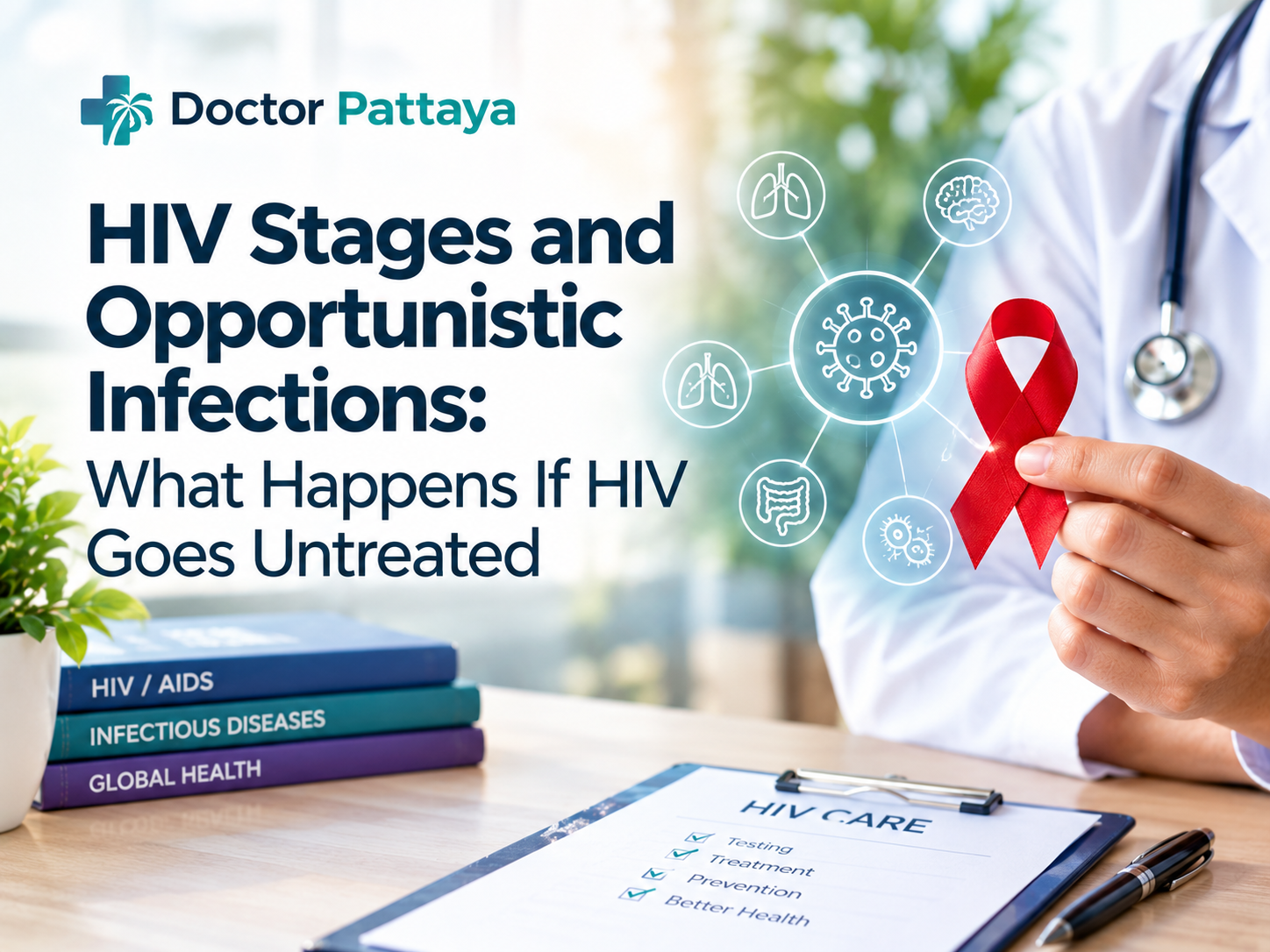
When HIV goes untreated, your immune system gradually weakens until it can no longer fight off infections a healthy body handles without trouble. These are called opportunistic infections, and they become a real risk once your CD4 count drops below 200. CD4 cells are the white blood cells that lead your immune defence. The good news: with treatment, most of these infections are entirely preventable. A same-day blood test at Doctor Pattaya can tell you exactly where you stand.
Something has been off for longer than you want to admit. The weight is not shifting back. The fever keeps returning. There is a headache that paracetamol will not touch. Maybe you know your HIV status and you have not been in care for months. Maybe you are a long-term expat who quietly drifted off your medication. Maybe you are three weeks into what was supposed to be a two-week trip, Googling symptoms at midnight in a hotel room in Jomtien.
We hear this regularly at Doctor Pattaya. Late diagnosis and lapsed treatment are the two situations that walk through our door most often, and both are manageable once you are back in care. This article explains what happens to your body when HIV goes unmanaged, which infections become a risk and when, and what makes the picture here in Thailand different from what most HIV resources will tell you.

What HIV Does to Your Immune System Over Time
HIV targets your CD4 cells. These are the cells your immune system uses to coordinate its defence against infection. Every year HIV goes untreated, your CD4 count tends to fall, and as it falls, so does your body’s ability to protect itself.
Above 500, most people feel broadly well and may not know anything is wrong. Between 200 and 500, early signs start appearing: recurring skin infections, oral thrush, shingles, persistent fatigue. Below 200 is the threshold that matters most. That is when HIV meets the WHO criteria for AIDS-stage disease, and the infections that follow are the dangerous ones. Below 50, things move fast.
HIV Opportunistic Infections — What They Are and Why They Matter Here
An opportunistic infection is one that a healthy immune system would fight off without difficulty. When HIV has sufficiently weakened your defences, pathogens that are normally harmless or dormant find an opening.
The most common ones we see referenced in patients: Pneumocystis jirovecii pneumonia, known as PCP, causes a dry progressive cough, breathlessness, and fever. It is the leading cause of death in advanced HIV. Cryptococcal meningitis starts as a severe, worsening headache, often with neck stiffness and confusion — that is a medical emergency. Toxoplasmosis affects the brain and can cause sudden one-sided weakness, seizures, or confusion. CMV retinitis causes visual blurring or floaters and leads to blindness if untreated. Oesophageal candidiasis causes pain and difficulty swallowing that does not resolve on its own.
Thailand adds a layer that most Western HIV resources skip entirely. In Southeast Asia, people with advanced HIV face additional risks from tropical pathogens. Talaromyces marneffei, the fungus behind penicilliosis, is endemic here. Disseminated histoplasmosis and strongyloidiasis are also regional risks, and the latter can become catastrophic in someone who is immunosuppressed. Melioidosis, caused by bacteria found in local soil and water, is another one to know about. Our physicians at Doctor Pattaya are familiar with this regional profile. A doctor in London or New York may not think to test for these. We do.
The CD4 Thresholds That Actually Matter
| CD4 Count | What Becomes a Risk |
|---|---|
| Below 500 | Shingles, oral thrush, recurring bacterial infections |
| Below 350 | TB reactivation, HPV-related complications, weight loss |
| Below 200 | PCP, toxoplasmosis, cryptococcal meningitis, disseminated fungal infection |
| Below 50 | CMV retinitis, Mycobacterium avium complex, disseminated candidiasis |
A single blood test gives us your CD4 count and your viral load, which shows how much HIV is actively circulating. Together, those two numbers tell us exactly how urgent your situation is and which infections you are currently at risk for.
Warning Signs That HIV May Be Progressing
Some people come in knowing their status. Others come in with symptoms and no idea what is driving them. Either way, these are the signs we do not ignore.
A fever lasting more than two weeks without an obvious cause needs investigation. Unexplained weight loss over several weeks, especially if your appetite has not changed, is a clinical flag. Recurring oral thrush — white patches inside the mouth or throat — suggests immune suppression. A severe headache that keeps getting worse, especially with neck stiffness or any confusion, needs same-day attention. Visual changes, even subtle ones, should not be left for later.
Night sweats, chronic diarrhoea lasting more than a month, and unusual or spreading skin lesions complete the picture. None of these symptoms tells us definitively what is happening. But each one tells us we need to find out.
What Happens When You Restart HIV Treatment After a Long Gap
We see this constantly among expats in Pattaya — people who stopped ART while travelling, during a difficult stretch, or somewhere they could not access care safely. Restarting is the right move. But there is something to know first.
When ART begins to work and your CD4 count starts to recover, your immune system can sometimes overreact to infections that were already present but dormant. This is called immune reconstitution inflammatory syndrome, or IRIS. It can make you feel significantly worse before you feel better. It causes swelling, fever, and inflammation that looks like a new infection. It is manageable, but it needs to be monitored by a clinician, not handled alone.
Do not restart ART without a clinical assessment. You need a current CD4 count and viral load first so the right decisions can be made about sequencing your care. If you have been off your medication while here in Pattaya and are unsure what to do next, come and see us. We can do the initial blood work the same day and help you get back into care without navigating a Thai government hospital on your own.
Preventing HIV Opportunistic Infections — What Treatment Does
ART is the foundation. When your viral load is undetectable, your CD4 count stabilises and climbs. Most opportunistic infections become unlikely once CD4 is consistently above 200.
For patients already below that threshold, preventive medication adds another layer of protection while ART takes effect. Co-trimoxazole is used to prevent PCP. Fluconazole reduces the risk of cryptococcal disease in high-risk patients. Your treating physician will review which apply to you based on your current numbers.
U=U applies here too. Undetectable equals untransmittable. When viral load is suppressed on ART, you cannot sexually transmit HIV to a partner. This is supported by strong clinical evidence. Getting into care protects more than just you.
Getting Assessed in Pattaya — What Actually Happens at the Clinic
You do not need an appointment. You can walk into our South Pattaya clinic any time, day or night. If you would rather not come in, we offer discreet doctor hotel visits across Pattaya, Jomtien, Naklua, and Pratumnak. Everything is confidential. Results and conversations stay between you and the doctor.
At the visit, we take a history, discuss your symptoms, and arrange same-day HIV testing if needed. For patients already known to be living with HIV, that includes CD4 count and viral load. If results point toward an active opportunistic infection, we begin initial management and arrange urgent specialist referral. If you need ART and are not currently accessing it, we help bridge that gap.
If you are worried about what HIV has been doing while you have been in Pattaya, that worry is the right instinct. Our confidential HIV testing and care page has full detail on what we offer and what to expect, including what happens if HIV has been left untreated for some time.
Come and see us. If you are living with HIV and have not had a CD4 or viral load check recently, or if you have stopped your ART while in Thailand, do not sit on it. Doctor Pattaya is open 24 hours a day, seven days a week. We offer confidential HIV testing, initial assessment, and referral to ongoing ART care. Walk in to our South Pattaya clinic or book a discreet hotel visit to your room in Pattaya, Jomtien, Naklua, or Pratumnak. No appointment needed. No judgment. Straightforward care.
Frequently Asked Questions

Dr. Pipat Finn is the senior doctor at Doctor Pattaya Takecare Clinic, a 24/7 walk-in medical practice on South Pattaya Road, Chonburi, Thailand. They provide primary care, travel medicine, sexual health, vaccination, minor surgery, IV therapy, and emergency outpatient services for tourists, expatriates, and Pattaya residents. Languages: English and Thai. WhatsApp consultations: +66 95 073 5550. Call: +66 81 668 5557.